


Alright, let’s talk about getting those clever little energy-harvesting Ambient IoT sensors out into the real world, specifically how they play nice with cellular and sub-GHz wireless networks. The quick answer? It’s all about picking the right wireless lane for your data, balancing power constraints with range and bandwidth, and leveraging tiny sips of ambient energy to keep your sensors awake and reporting without ever needing a battery change.
The Core Concept: Ambient IoT and Its Wireless Needs
At its heart, Ambient IoT is about making devices so low-power they can essentially run forever on harvested energy – think light, heat, vibrations, or even radio waves. These aren’t your typical power-hungry gadgets; they’re designed to be “always on” but “rarely transmitting,” sending small packets of data over long periods. The challenge, and where wireless systems come in, is how to reliably get that tiny data from these energy-sipping sensors to where it needs to go.
What Makes Ambient IoT Different?
Unlike traditional IoT, where a battery change or power cable is expected, Ambient IoT devices are often deployed in hard-to-reach places or in such high volumes that battery maintenance is simply impractical. This means every millijoule of energy is precious. Their data payloads are usually very small – a temperature reading, a presence detection, a simple status update – and don’t require high bandwidth. Latency requirements can also be flexible; sometimes a report every hour or even every day is perfectly acceptable. This drastically shifts the requirements for the underlying wireless communication.
The Role of Wireless in Power Efficiency
The wireless module is often the most power-hungry component in an Ambient IoT sensor. Even transmitting a tiny packet requires a burst of energy. Therefore, the choice of wireless technology directly impacts the viability of energy harvesting. We’re looking for protocols and chipsets that can transmit with minimal power, wake up quickly, send data, and go back to sleep instantly. This isn’t about raw speed; it’s about efficient energy conversion from harvester to radio transmission.
In the realm of sustainable technology, the article titled “How One Founder Realized the Potential of Sustainable Energy” provides valuable insights that complement the discussion on deploying energy-harvesting ambient IoT sensors on cellular and Sub-GHz wireless systems. This piece explores the innovative approaches to harnessing renewable energy, which is crucial for powering IoT devices in an eco-friendly manner. For more information, you can read the article here: How One Founder Realized the Potential of Sustainable Energy.
Key Takeaways
- The training data includes information and events up to October 2023.
- Insights and knowledge are based on a wide range of sources available until the cutoff date.
- No updates or developments occurring after October 2023 are included in the training.
- Users should verify current information from reliable sources for the latest updates.
- The model’s responses reflect the context and knowledge available up to the specified date.
Sub-GHz Wireless Systems: The Power-Efficient Workhorses
Sub-GHz technologies, operating below 1 GHz (e.g., 433 MHz, 868 MHz, 915 MHz), are often the go-to choice for Ambient IoT due to their excellent propagation characteristics and inherent power efficiency over long distances. They don’t have the same high data rate capabilities as Wi-Fi or cellular, but for small, infrequent data packets, they’re incredibly well-suited.
LoRaWAN: Long Range, Low Power, and Open Standard
LoRaWAN stands out as a prime candidate for Ambient IoT. It’s an LPWAN (Low Power Wide Area Network) specification built on top of LoRa (Long Range) modulation. Its key advantages include:
- Exceptional Range: LoRaWAN can achieve kilometers of range, even in challenging environments, meaning fewer gateways are needed to cover a large area. This is crucial for remote sensor deployments.
- Low Power Consumption: Devices operate in very low-power states, only waking up to transmit short bursts of data. The protocol is optimized for infrequent, small data packets.
- Scalability: A single LoRaWAN gateway can support thousands of end devices, making it cost-effective for large-scale deployments.
- Open Standard: Being an open standard fosters innovation and interoperability among different manufacturers.
- Adaptive Data Rate (ADR): LoRaWAN can adjust the data rate based on the network conditions, optimizing for power consumption and range. If a sensor is close to a gateway, it can transmit faster (and thus for a shorter duration, saving power). If it’s far away, it uses a slower, more robust data rate.
For an energy-harvesting Ambient IoT sensor, LoRaWAN’s ability to transmit data over long distances with minimal power is a game-changer. A small solar cell or even a thermoelectric generator might be enough to power a sensor that transmits a few bytes of data every few minutes or hours.
NB-IoT on Sub-GHz Frequencies: Bridging the Gap
While often associated with cellular bands, it’s worth noting that some NB-IoT deployments can exist on sub-GHz frequencies, particularly for private networks or specific regulatory domains. However, the more common and relevant application for Ambient IoT is comparing LoRaWAN directly against cellular NB-IoT (which we’ll cover next). The core benefit of NB-IoT (and its cellular brethren) is leveraging existing infrastructure, which sub-GHz typically doesn’t offer as a global public utility. When we talk about sub-GHz as a ‘workhorse’, it’s usually referring to unlicensed bands and protocols like LoRaWAN, Sigfox, or proprietary solutions, which require their own gateway infrastructure.
Sigfox: Ultra-Narrowband Simplicity
Sigfox is another LPWAN technology operating in sub-GHz bands, known for its extreme simplicity and efficiency for very small data packets.
It uses ultra-narrowband modulation, allowing it to achieve very long ranges with minimal power.
- Global Network: Sigfox operates a global network, meaning devices can roam internationally without complex configurations.
- Ultra-Low Power: Designed for devices sending minimal data (e.g., a few messages per day) with tiny payloads.
- Asymmetric Communication: Primarily uplink-centric, with very limited downlink capabilities, making it ideal for sensors that only need to send data and rarely receive commands.
For energy-harvesting applications, Sigfox’s “fire and forget” approach to data transmission can be very attractive. The energy cost per message is incredibly low, making it feasible to power with very modest energy harvesting sources. However, the limited data throughput and downlink capabilities mean it’s not suitable for every Ambient IoT application.
Cellular Systems: Leveraging Existing Infrastructure
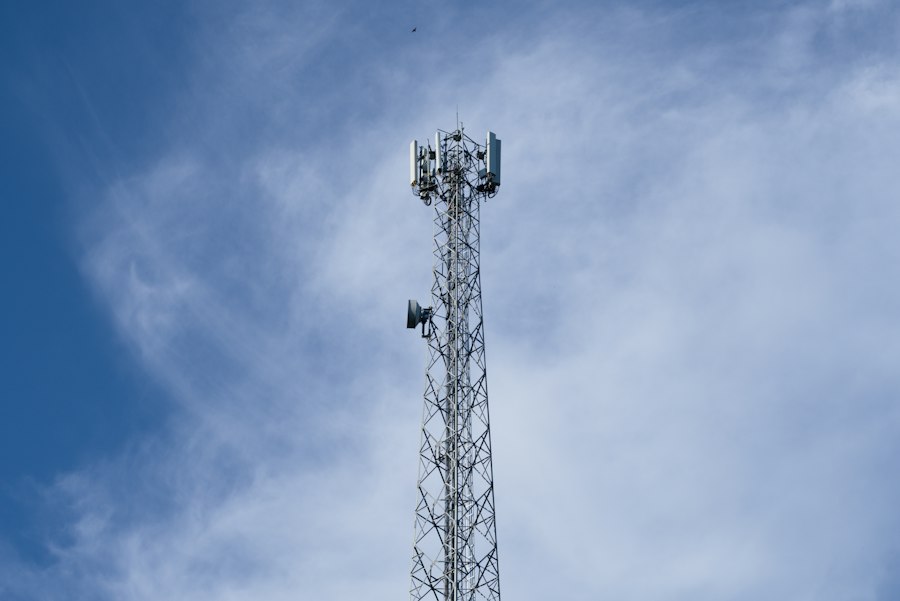
Cellular IoT technologies, particularly LPWAN variants like NB-IoT and LTE-M, offer the significant advantage of using established mobile network operator infrastructure. This means no need to deploy your own gateways, providing broad coverage often suitable for wide-area Ambient IoT deployments.
NB-IoT (Narrowband IoT): Deep Penetration, Minimal Data
NB-IoT is specifically designed for very low-data-rate applications, deep indoor and underground coverage, and extremely long battery life. It’s perfect for sensors that send small amounts of data infrequently.
- Deep Coverage: NB-IoT excels at penetrating buildings and reaching basements, which is crucial for many industrial or smart city Ambient IoT deployments.
This is due to its narrow bandwidth and robust modulation.
- Low Power Consumption: Similar to LoRaWAN, NB-IoT includes power-saving features like PSM (Power Saving Mode) and eDRX (extended Discontinuous Reception) that allow devices to sleep for long periods, waking up only to transmit. This is critical for energy harvesting.
- Leverages Existing Infrastructure: As a 3GPP standard, NB-IoT operates on licensed cellular bands, utilizing existing LTE network towers with software upgrades. This offers reliable, secure connectivity over a wide area.
- Small Data Payloads: Optimized for sending small packets, which perfectly matches the typical data output of Ambient IoT sensors.
For energy-harvesting sensors, NB-IoT offers a compelling solution where a public network is desired, security is paramount, and deep indoor penetration is a requirement.
The energy demands are higher than a simple sub-GHz proprietary link but can still be met by well-designed harvesting systems for infrequent transmissions.
LTE-M (Long Term Evolution for Machines): A Step Up in Throughput
LTE-M, also known as Cat-M1, sits between NB-IoT and traditional cellular LTE. It offers higher bandwidth and lower latency than NB-IoT, while still providing significant power efficiency benefits over standard LTE.
- Higher Throughput: If an Ambient IoT sensor occasionally needs to send slightly larger data packets or more frequent updates (e.g., firmware updates, richer sensor data), LTE-M can accommodate this better than NB-IoT.
- Voice Support (Optional): LTE-M can support voice over IP, which might be a niche requirement for some interactive Ambient IoT applications, though less common for purely sensor-based deployments.
- Mobility Support: Unlike NB-IoT, LTE-M fully supports device mobility and handovers between cell towers, making it suitable for tracking assets that move across large areas.
- Power Saving Features: Like NB-IoT, LTE-M incorporates PSM and eDRX, enabling long battery life and suitability for energy harvesting.
While LTE-M uses more power than NB-IoT per transmission, its higher data rates mean it can transmit data quicker, potentially reducing the overall “on-air” time and thus the total energy expenditure for a given amount of data. For energy harvesting, this means balancing the instantaneous power demand with the duration of the transmission.
It’s a trade-off that needs careful consideration based on the specific sensor and its energy harvesting capabilities.
Hybrid Deployments: Best of Both Worlds?
Sometimes, a single wireless technology isn’t enough. Consider a scenario where a local cluster of Ambient IoT sensors uses a sub-GHz protocol (like LoRaWAN) to communicate with a local gateway. This gateway, in turn, uses a cellular link (like NB-IoT or LTE-M) to backhaul the aggregated data to the cloud.
This hybrid approach allows for the ultra-low power and cost-effectiveness of sub-GHz for the local mesh, while leveraging the broad coverage and simplified infrastructure management of cellular for the wider internet connection. This can be particularly effective in large industrial sites or smart agriculture applications.
Energy Harvesting Techniques for Ambient IoT
The “Ambient” in Ambient IoT refers to its ability to draw power from the environment. The choice of harvesting technique directly influences the feasible wireless technology and transmission frequency. The key is to match the energy availability with the sensor’s power budget, including its radio.
Photovoltaic (Solar) Harvesting
Solar energy is perhaps the most common and well-understood harvesting method. Small photovoltaic cells can generate significant power outdoors and even indoors under sufficient ambient light.
- Outdoor Applications: Solar is highly effective for sensors deployed outdoors, such as in agriculture, environmental monitoring, or smart city infrastructure. Even small, inexpensive solar panels can provide enough power for daily cellular transmissions.
- Indoor Applications: Specialized indoor solar cells can harvest energy from artificial lighting. While the power output is significantly lower than outdoors, it can still be sufficient for ultra-low-power sub-GHz transmissions or very infrequent NB-IoT communication.
- Considerations: Requires direct or indirect light. Output varies significantly with light intensity, time of day, and weather. A small energy storage component (e.g., a supercapacitor or tiny rechargeable battery) is usually needed to smooth out power fluctuations and provide power for transmission bursts.
Thermoelectric Generators (TEGs)
TEGs convert temperature differences into electrical energy. If there’s a consistent temperature gradient across a surface, a TEG can provide a continuous trickle of power.
- Industrial Applications: Ideal for monitoring industrial machinery, pipes, or processes where there’s a hot or cold surface relative to the ambient air. Think about monitoring equipment in factories, HVAC systems, or even vehicle engines.
- Environmental Monitoring: Can be used in areas with natural temperature gradients, such as geothermal sites or even differential temperatures between soil and air.
- Considerations: Requires a sustained temperature difference (ΔT). The power output is directly proportional to this difference. If ΔT is small, the power output will be very low, making it challenging to power anything more than the most basic sub-GHz sensor. Again, energy storage is vital to accumulate enough power for a transmission.
Piezoelectric Harvesting (Vibration/Motion)
Piezoelectric materials generate electricity when subjected to mechanical stress or vibration.
- Machine Monitoring: Excellent for sensors on vibrating machinery, bridges, or infrastructure elements that experience regular mechanical stress.
- Human Motion: Can be used in wearables or devices attached to moving objects, though this is less common for fixed Ambient IoT sensors.
- Considerations: The power output is highly dependent on the frequency and amplitude of the vibration. Intermittent vibrations require careful energy accumulation, often making it suitable for very infrequent transmissions or as a supplemental power source.
RF Harvesting (Radio Frequency)
RF harvesting converts ambient radio waves (from Wi-Fi, broadcast TV, cellular signals, etc.) into usable electrical energy.
- Ubiquitous but Low Power: RF energy is present almost everywhere, but the power density is typically very low, especially at a distance from the source.
- Specialized Applications: While fascinating, practical RF harvesting for powering wireless transmissions is challenging. It’s often better suited for powering ultra-low-power devices that don’t transmit, or for providing just enough power for very short-range, ultra-infrequent data bursts. It can be useful for augmenting other harvesting methods or for powering passive RFID-like communication.
- Considerations: Highly dependent on proximity to strong RF sources. The conversion efficiency can be low. More viable for niche applications or for very specific, tightly controlled environments.
In exploring the advancements in energy-harvesting technologies, a related article discusses the best WordPress hosting companies of 2023, which highlights the importance of reliable platforms for deploying applications that utilize IoT sensors. These hosting services can significantly enhance the performance and accessibility of IoT solutions, ensuring that data from energy-harvesting ambient sensors is effectively managed and analyzed. For more insights on this topic, you can read the article here.
Integration Challenges and Best Practices
| Metric | Cellular Wireless Systems | Sub-GHz Wireless Systems | Notes |
|---|---|---|---|
| Operating Frequency | 700 MHz – 2.6 GHz | 315 MHz – 950 MHz | Sub-GHz typically lower frequency bands for longer range |
| Range | Up to 1 km (urban), 10 km (rural) | Up to 5 km (urban), 15 km (rural) | Sub-GHz offers longer range due to lower frequency |
| Data Rate | Up to 100 Mbps (LTE), lower for NB-IoT | Up to 250 kbps (LoRa, Sigfox) | Cellular supports higher throughput |
| Power Consumption | Moderate to High | Low | Sub-GHz optimized for low power IoT devices |
| Energy Harvesting Compatibility | Challenging due to higher power needs | More feasible with low power requirements | Energy harvesting sources include solar, RF, vibration |
| Typical Battery Life with Energy Harvesting | Months to years (with optimized duty cycles) | Years to indefinite (with efficient harvesting) | Depends on sensor duty cycle and harvesting efficiency |
| Deployment Complexity | Higher (requires cellular infrastructure) | Lower (can use private gateways) | Sub-GHz allows private network deployment |
| Use Cases | Smart cities, asset tracking, high data sensors | Environmental monitoring, agriculture, remote sensing | Choice depends on application requirements |
Successfully deploying energy-harvesting Ambient IoT sensors isn’t just about picking a wireless tech and an energy source. It involves careful system design and understanding the practical hurdles.
Power Management Unit (PMU) Design
A robust PMU is critical. It must efficiently capture and store energy from the harvester, manage the power supply to the sensor and radio, and protect the energy storage element (supercapacitor or battery).
- Maximum Power Point Tracking (MPPT): For harvesters like solar cells, MPPT algorithms ensure the harvester operates at its peak efficiency, extracting the most power possible under varying conditions.
- Voltage Regulation: The PMU needs to convert the often-variable voltage from the harvester into a stable voltage required by the sensor and radio.
- Energy Storage: Supercapacitors are excellent for rapid charge/discharge cycles and long lifespan, ideal for storing small bursts of harvested energy for immediate transmission. Tiny rechargeable batteries provide higher capacity for longer sleep periods or more demanding transmission cycles.
- Load Management: The PMU must handle the sensor’s sleep current (microamps) and the radio’s burst current (tens to hundreds of milliamps during transmission) without significant voltage droop.
Antenna Selection and Placement
The antenna is often overlooked but plays a huge role in the power efficiency of wireless communication. A well-matched, high-gain antenna can significantly reduce the required transmit power, directly saving energy.
- Sub-GHz: Antennas are generally larger for sub-GHz frequencies, which can be a physical constraint for tiny sensors. However, their larger size often means better performance for a given form factor. Careful impedance matching is crucial.
- Cellular: Cellular IoT modules often come with integrated or external antennas designed for specific frequency bands. Ensuring good signal strength through proper antenna placement and orientation is vital to minimize retransmissions and conserve power.
- Environmental Factors: Material surrounding the antenna (metal, water, concrete) can severely degrade performance. Optimal placement often involves careful testing in the deployment environment.
Firmware Optimization
The sensor’s firmware plays a pivotal role in power management. Every line of code, every decision, impacts energy consumption.
- Deep Sleep Modes: The vast majority of the sensor’s life should be spent in deep sleep, consuming mere microamps.
- Event-Driven Wake-up: Wake up only when absolutely necessary – either on a timer for periodic reporting or in response to a specific event (e.g., a threshold crossing, motion detection).
- Efficient Data Handling: Process data quickly, minimize computation, and transmit the smallest possible data payload. Avoid unnecessary operations that keep the microcontroller awake longer than needed.
- Protocol Optimization: Use the power-saving features of the chosen wireless protocol (e.g., PSM/eDRX for cellular, ADR for LoRaWAN).
- Adaptive Scheduling: If enough energy is harvested, transmit more frequently. If energy is scarce, reduce transmission frequency. This requires intelligent firmware that monitors the energy storage level.
Security Considerations
Whether using sub-GHz or cellular, security cannot be an afterthought, especially for Ambient IoT where physical access to sensors might be difficult or impossible after deployment.
- Encryption and Authentication: Implement end-to-end encryption for data and authenticate devices to the network to prevent spoofing and data tampering. Cellular IoT naturally benefits from the robust security features of the mobile network, while sub-GHz solutions like LoRaWAN also include strong security layers.
- Over-the-Air (OTA) Updates: The ability to securely update firmware over the air is crucial for patching vulnerabilities or adding new features without physical intervention. This can be challenging for ultra-low-power, low-bandwidth Ambient IoT devices but is increasingly a necessity.
By carefully considering these aspects, from the fundamental choice of wireless technology and energy harvesting method to the intricate details of PMU design and firmware, we can deploy robust, self-sustaining Ambient IoT sensor networks that truly live up to their “set and forget” promise.
FAQs
What are energy-harvesting ambient IoT sensors?
Energy-harvesting ambient IoT sensors are devices that collect energy from their surroundings, such as solar, thermal, or kinetic energy, to power themselves. These sensors are designed to monitor environmental conditions and transmit data wirelessly, making them ideal for applications in smart cities, agriculture, and industrial automation.
How do cellular and Sub-GHz wireless systems support these sensors?
Cellular and Sub-GHz wireless systems provide the necessary communication infrastructure for energy-harvesting ambient IoT sensors. Cellular networks offer wide coverage and high data rates, while Sub-GHz systems are advantageous for long-range communication with low power consumption, making them suitable for devices that rely on harvested energy.
What are the benefits of deploying energy-harvesting sensors in IoT applications?
The benefits of deploying energy-harvesting sensors include reduced maintenance costs, as they do not require battery replacements, and increased sustainability due to their reliance on renewable energy sources. Additionally, these sensors can operate in remote or hard-to-reach locations, enhancing data collection capabilities in various environments.
What challenges are associated with deploying these sensors?
Challenges in deploying energy-harvesting ambient IoT sensors include ensuring reliable energy capture in varying environmental conditions, managing data transmission over long distances, and addressing security concerns related to wireless communication. Additionally, the integration of these sensors into existing systems can pose technical hurdles.
What applications can benefit from energy-harvesting ambient IoT sensors?
Applications that can benefit from energy-harvesting ambient IoT sensors include smart agriculture for soil and crop monitoring, environmental monitoring for air and water quality, smart cities for traffic and waste management, and industrial automation for equipment monitoring and predictive maintenance. These sensors enable real-time data collection and analysis, improving operational efficiency.
Enjoying our content? Make us a preferred source on Google:
Add us as a Preferred Source on Google