

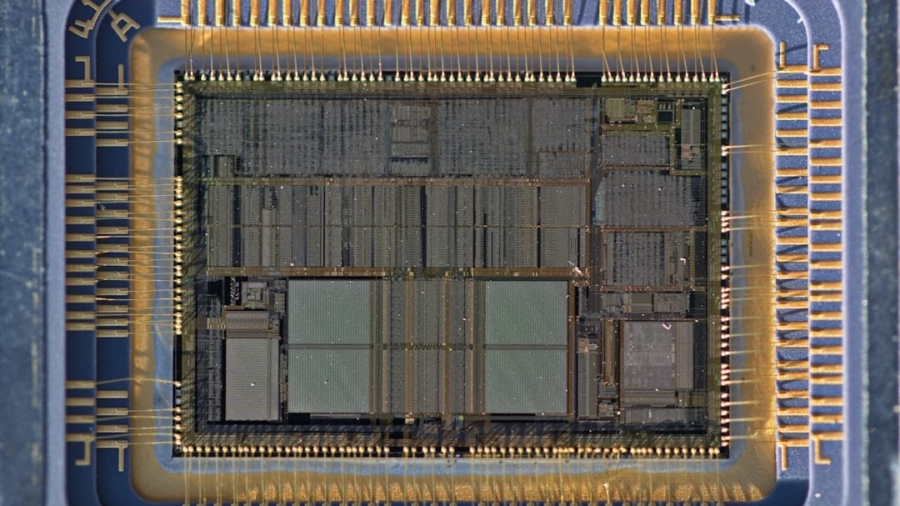
So, you’re curious about this whole quantum computing thing, and more importantly, how you, as a developer, researcher, or even just an enthusiast, can actually get your hands on the fancy hardware? It’s a question a lot of people are asking, and thankfully, the answer is becoming increasingly accessible: cloud-based quantum platforms. Think of it like this: instead of needing a multi-million dollar lab and a team of physicists to run experiments, you can now rent time on these powerful quantum machines through the internet.
It’s a game-changer, really, and it’s democratizing access in a big way.
Imagine you want to use a super-powerful, highly specialized piece of equipment – say, a cutting-edge telescope or a particle accelerator. In the past, you’d likely have to be part of a major research institution to even get close. Cloud-based quantum platforms flip that model. They essentially host these complex quantum computers in their own facilities and then offer users the ability to remotely access and run computations on them. You don’t own the hardware, you don’t maintain it, and you certainly don’t need to be a quantum physicist to operate it (though understanding the basics helps!). You pay for what you use, much like you’d stream a movie or use cloud storage for your files.
The “Why” Behind the Cloud Approach
Why go through all the trouble of setting up these massive, delicate machines just to let strangers use them? It boils down to a few key factors that make this model so effective for making quantum computing accessible.
Overcoming the Infrastructure Hurdle
Building and maintaining a quantum computer is incredibly difficult and expensive. These machines require extremely controlled environments – think near absolute zero temperatures, isolation from electromagnetic noise, and highly precise manufacturing. Most individuals and even many companies simply don’t have the resources or expertise to create and sustain such an environment. The cloud takes this burden away.
Enabling Faster Progress and Innovation
When access is limited to a few elite institutions, progress can be slower. By opening up access to a wider community, cloud platforms accelerate the pace of discovery. More minds can experiment, more ideas can be tested, and more applications can be explored, leading to faster breakthroughs.
Reducing the Barrier to Entry for Developers
For developers and students, the cost of hardware is a significant barrier. Cloud access allows them to learn, experiment, and build applications without investing in their own hardware. This fosters a new generation of quantum-savvy professionals.
In the quest to democratize access to quantum hardware, cloud-based platforms are emerging as a pivotal solution, allowing researchers and developers to experiment with quantum computing without the need for expensive physical infrastructure. This shift is reminiscent of the discussions surrounding technology accessibility in other domains, such as the considerations for selecting a child’s first smartphone. For insights on making informed choices in technology that can empower the next generation, you can refer to the article on how to choose your child’s first smartphone at this link.
Key Takeaways
- Clear communication is essential for effective teamwork
- Active listening is crucial for understanding team members’ perspectives
- Conflict resolution skills are necessary for managing disagreements
- Trust and respect are the foundation of a successful team
- Collaboration and cooperation are key for achieving common goals
The Role of Major Tech Companies
You’ll find that the big players in the tech world are heavily involved in this space. Companies like IBM, Microsoft, Amazon, and Google are not only building their own quantum computers but also developing the software and platforms that make them accessible via the cloud. This competition and investment are driving innovation and making the technology more robust and user-friendly.
IBM Quantum Experience: A Pioneer’s Perspective
IBM was one of the earliest movers, offering public access to their quantum processors through the IBM Quantum Experience. This platform has been instrumental in educating a generation of users and fostering early research.
- Early Access and Education: IBM’s commitment to providing free access to some of their processors allowed countless individuals to experiment and learn about quantum programming.
- Evolving Hardware: As IBM continues to develop more powerful and stable quantum hardware, these advancements are often made available through their cloud platform, giving users access to the latest technology.
Microsoft Azure Quantum: An Integrated Ecosystem
Microsoft has taken a slightly different approach, aiming to build a comprehensive quantum computing ecosystem within its Azure cloud. This includes access to various quantum hardware providers, as well as tools for quantum development and optimization.
- Hardware Agnosticism: Azure Quantum allows users to choose from different quantum hardware providers, offering a diverse range of qubit technologies and architectures.
- Software Development Kits (SDKs): Microsoft provides powerful SDKs like Q# that integrate with Azure Quantum, simplifying the process of writing and running quantum algorithms.
Amazon Braket: A Unified Service
Amazon Web Services (AWS) entered the quantum fray with Amazon Braket, another platform designed to provide a single point of access to different quantum hardware and simulators. Their focus is on offering a seamless experience for users.
- Choice of Hardware: Similar to Azure Quantum, Braket allows users to select from various quantum processors, including those from D-Wave, IonQ, and Rigetti, among others.
- Integrated Tools: The platform offers a managed Jupyter notebook environment and tools for building, testing, and running quantum programs.
How Does It Actually Work?

The practicalities of using cloud-based quantum hardware are surprisingly straightforward, at least from a user’s perspective. It’s designed to be as familiar as possible to existing cloud computing paradigms.
The User Workflow
Let’s break down the typical journey of a user interacting with a quantum cloud platform.
- Account Creation and Access: First, you sign up for an account with a provider like IBM Quantum, Azure Quantum, or Amazon Braket. This usually involves providing some basic information and agreeing to their terms of service.
- Choosing Your Hardware: Once you’re in, you’ll see a list of available quantum processors.
These will have different specifications, such as the number of qubits, connectivity, and error rates. You’ll also find simulators, which are useful for testing your code without using precious quantum time.
- Writing Your Quantum Program: You’ll use a quantum programming language or a high-level SDK. Popular choices include Qiskit (from IBM), Q# (from Microsoft), Cirq (from Google), and PennyLane (which supports multiple backends). These tools translate your abstract quantum algorithm into instructions that the quantum processor can understand.
- Submitting Your Job: You package your quantum program and send it to the chosen quantum processor. This is often done through an API call or a graphical interface.
- Queuing and Execution: Your job will likely enter a queue, as these machines are in high demand.
Once it’s your turn, the quantum processor executes your program.
- Retrieving Results: The results of your computation are sent back to you. These are typically classical data representing the measurement outcomes of your qubits. You’ll then analyze this data to extract the solution to your problem.
Programming Languages and SDKs
The ease of programming is crucial for democratization.
Developers don’t want to learn an entirely new, arcane way to code if they can avoid it.
- Qiskit (IBM): This is a widely adopted, open-source SDK that allows users to build quantum circuits, run them on quantum hardware or simulators, and analyze the results. It’s incredibly versatile.
- Q# (Microsoft): Designed to be a pure quantum programming language, Q# focuses on expressing quantum algorithms clearly and integrates seamlessly with Azure Quantum. It’s known for its strong mathematical foundation.
- Cirq (Google): Another open-source framework, Cirq is designed for writing, manipulating, and optimizing quantum circuits. It’s often used for research and development on Google’s quantum hardware.
- PennyLane: This library is particularly interesting because it acts as a universal interface for various quantum hardware and software platforms.
It allows you to write quantum machine learning code and run it on different backends without significant code changes.
What Can You Actually Do With It?

The practical applications of quantum computing are still in their early stages, but the cloud platforms are enabling exploration in areas that were previously beyond reach.
Exploring Quantum Algorithms
Many foundational quantum algorithms are now accessible for experimentation.
- Shor’s Algorithm: Famous for its potential to break modern encryption, Shor’s algorithm can be tested on smaller instances to understand its principles and limitations.
- Grover’s Algorithm: This algorithm offers a speed-up for searching unsorted databases. While the speed-up is quadratic, it’s a significant demonstration of quantum advantage for certain search problems.
- Quantum Fourier Transform (QFT): A crucial subroutine in many quantum algorithms, QFT is another excellent candidate for study and implementation on cloud platforms.
Advancing Quantum Machine Learning
The intersection of quantum computing and machine learning is a particularly hot area, and cloud access is vital for this research.
- Variational Quantum Eigensolver (VQE): VQE is a hybrid quantum-classical algorithm often used for chemistry and materials science. It involves optimizing parameters on a classical computer based on results from a quantum computation.
- Quantum Neural Networks (QNNs): Researchers are exploring how quantum computers can be used to build more powerful and efficient neural networks. Cloud platforms provide the necessary computational resources to train and test these nascent QNN models.
- Data Analysis and Feature Extraction: Quantum computers might be able to identify complex patterns and correlations in data that are invisible to classical algorithms, opening new avenues for machine learning applications.
Tackling Complex Simulation Problems
The ability of quantum computers to model quantum systems is one of their most promising aspects.
- Materials Science and Drug Discovery: Simulating the behavior of molecules and materials at the quantum level is incredibly challenging for classical computers. Quantum computers hold the promise of accurately modeling these systems, leading to the discovery of new materials and more effective drugs.
- Quantum Chemistry: Understanding chemical reactions and molecular properties requires precise quantum simulations. Cloud platforms allow researchers to perform these simulations and gain insights that were previously impossible.
In the quest to democratize access to quantum hardware, cloud-based platforms are emerging as a pivotal solution, enabling researchers and developers to harness the power of quantum computing without the need for expensive physical infrastructure. A related article discusses how innovative technologies, like the Samsung S22 Ultra, are transforming the landscape of mobile computing and connectivity, which can complement the advancements in quantum hardware accessibility. For more insights on this topic, you can read the article here: Samsung S22 Ultra.
The Future of Quantum Access
| Platform | Features | Accessibility |
|---|---|---|
| IBM Quantum Experience | Quantum circuits, Qiskit SDK, tutorials | Free access, cloud-based |
| Rigetti Forest | Quantum programming environment, pyQuil library | Cloud access, developer tier |
| Microsoft Quantum Development Kit | Q# programming language, simulators | Free download, local simulation |
The current state of cloud-based quantum access is impressive, but it’s just the beginning. We can expect these platforms to become even more powerful, accessible, and integrated.
Hardware Advancements and Accessibility
As quantum hardware matures, we’ll see processors with more qubits, lower error rates, and higher connectivity becoming available through the cloud.
- Error Correction: A major focus in quantum computing is fault tolerance through error correction. As these techniques are implemented, we’ll see more reliable quantum computations being performed.
- New Qubit Technologies: Beyond superconducting qubits and trapped ions, other promising qubit technologies are emerging, and cloud platforms will likely offer access to these diverse architectures.
Improved Software Tools and User Experience
The software side of quantum computing is evolving just as rapidly.
- Higher-Level Abstractions: We’ll likely see even more intuitive programming interfaces and libraries that abstract away the low-level details of quantum operations, making it easier for non-experts to use quantum computers.
- Integration with Classical Workflows: Seamless integration with existing classical computing workflows will be crucial for widespread adoption. This means better tools for hybrid quantum-classical algorithms and hybrid cloud environments.
Democratization Beyond Access: Education and Community
True democratization isn’t just about access to hardware; it’s also about democratizing knowledge and fostering a supportive community.
- Enhanced Educational Resources: Expect more comprehensive tutorials, online courses, and interactive learning modules specifically designed for cloud-based quantum platforms.
- Collaborative Environments: Platforms may evolve to include more features for collaboration, allowing researchers and developers to share code, results, and insights more effectively.
In essence, cloud-based quantum platforms are the bridge that’s connecting the cutting edge of quantum technology to a much wider audience. They’re making the previously exclusive realm of quantum computing a place where more people can learn, experiment, and contribute, ultimately accelerating the journey towards unlocking its full potential.
FAQs
What is quantum hardware?
Quantum hardware refers to physical devices that are designed to manipulate and utilize quantum states of particles to perform quantum computations. These devices are used to carry out quantum algorithms and simulations, and are a key component in the development of quantum computing technology.
What is a cloud-based platform for quantum hardware?
A cloud-based platform for quantum hardware is a service that allows users to access and utilize quantum hardware resources over the internet. These platforms provide remote access to quantum computing devices, enabling users to run quantum algorithms and experiments without needing to physically own or operate the hardware.
How does democratizing access to quantum hardware benefit researchers and developers?
By democratizing access to quantum hardware, researchers and developers are able to overcome the barriers of cost and expertise associated with building and maintaining their own quantum computing infrastructure. This allows for a wider range of individuals and organizations to explore and experiment with quantum computing, accelerating the development of quantum technologies.
What are some examples of cloud-based platforms for quantum hardware?
Examples of cloud-based platforms for quantum hardware include IBM Quantum Experience, Microsoft Azure Quantum, and Amazon Braket. These platforms provide access to a variety of quantum computing resources, including quantum processors, simulators, and development tools.
What are the potential implications of democratizing access to quantum hardware?
Democratizing access to quantum hardware has the potential to drive innovation and discovery in quantum computing, leading to advancements in fields such as cryptography, materials science, and optimization. It also enables a broader community of researchers and developers to contribute to the development of quantum algorithms and applications.
Enjoying our content? Make us a preferred source on Google:
Add us as a Preferred Source on Google