


So, you’re wondering about circular electronics and how we actually get parts back? The short answer is: it’s all about how we design the electronics in the first place. If we build devices with an eye towards easy disassembly and component separation, we dramatically increase the chances of recovering valuable materials and functional parts. This isn’t just about recycling; it’s about making sure components can be reused, repaired, or their raw materials efficiently extracted, keeping them in circulation and out of landfills.
The Big Picture: Why Circularity Matters
Let’Let’s face it, our current model of “take, make, dispose” for electronics isn’t sustainable. Every year, we generate a staggering amount of electronic waste (e-waste), and much of it contains valuable, often finite, resources. Think about the rare earth metals, gold, silver, and palladium in your smartphone or laptop. Extracting these from virgin sources is environmentally intensive, often socially questionable, and increasingly expensive.
Circular electronics manufacturing aims to break this linear pattern. It’s about designing products to last longer, to be repaired, reused, and ultimately, to have their components and materials efficiently recovered and reintroduced into the manufacturing stream. This isn’t some idealistic pipe dream; it’s a practical, economic necessity. By extending the life of components and materials, we reduce the demand for new resource extraction, lower energy consumption, and minimize waste.
The Economic Upside of Resource Recovery
Beyond the environmental benefits, there’s a significant economic argument for circularity. The sheer volume of raw materials locked away in discarded electronics represents a massive untapped resource. Companies that can efficiently recover and reintroduce these materials into their supply chains stand to gain a competitive advantage through reduced raw material costs and increased supply chain resilience. It also opens up new business models, such as product-as-a-service or dedicated repair and refurbishment networks. Investing in robust recovery infrastructure and designing for disassembly now will pay dividends as resource scarcity becomes more pronounced and regulatory pressures increase. It’s about turning waste into a valuable input.
In the realm of Circular Electronics Manufacturing, the focus on designing modular hardware for high-yield component recovery is increasingly relevant, especially as industries seek sustainable practices. A related article that explores emerging trends in this field is available at What Trends Are Predicted for 2023.
This article delves into various innovations and strategies that are shaping the future of electronics manufacturing, emphasizing the importance of sustainability and efficiency in component design and recovery processes.
Key Takeaways
- The training data includes information and events up to October 2023.
- Insights and knowledge are based on a wide range of sources available until the cutoff date.
- No updates or developments occurring after October 2023 are included in the training.
- Users should verify current information from reliable sources for the latest updates.
- The model’s responses reflect the context and knowledge available up to the specified date.
Modular Hardware: The Cornerstone of High-Yield Recovery

Here’s where the rubber meets the road. If we want to recover components effectively, we can’t just throw everything into a shredder. Traditional electronics are often glued, soldered, and melded together, making disassembly a nightmare. This is where modular hardware design comes in.
Imagine a smartphone where the camera module, battery, screen, and even the main logic board are designed as independent, easily replaceable units. Instead of replacing the entire phone for a cracked screen, you could simply swap out the screen module. When the device eventually reaches its end-of-life, these modules can be separated relatively easily, significantly improving the yield of component recovery. This isn’t just about repairability; it’s about making sure that when a device is retired, its valuable parts don’t become inseparable junk.
Designing for Disassembly (DfD) Principles
Designing for Disassembly (DfD) isn’t just a buzzword; it’s a set of concrete principles that guide engineers and product designers. The core idea is to make products that can be taken apart efficiently, preferably without specialized tools and excessive force.
- Minimizing Fasteners and Adhesives: Think screws instead of glue, snap-fits instead of permanent welding. If adhesives are necessary, they should be easily releasable or designed to degrade cleanly.
- Standardized Connectors: Using common, easily disconnectable connectors for internal components reduces the need for cutting and desoldering.
- Clear Component Identification: Labeling materials and components helps sorting and ensures they go to the right recovery stream.
- Accessibility of Key Components: Batteries, screens, and critical processing units should be easily accessible for removal. This is crucial for both repair and end-of-life recovery.
- Material Homogeneity within Modules: Grouping similar materials together within a module simplifies the sorting process once the module is separated. For example, a module might be designed primarily from one type of plastic, or all its metal parts are of a similar alloy.
- Modular Architecture: Breaking down complex devices into independent, self-contained functional blocks. Each block should ideally have a single purpose and interact with other blocks through well-defined interfaces. This allows for easier upgrades, repairs, and, crucially, high-yield separation of different material streams at end-of-life.
The Role of Tooling and Techniques in Modular Design
The best modular design is only as good as the tools and techniques available for its implementation and subsequent disassembly. For instance, while screws are better than glue, using standardized screw types and heads (e.g., Phillips or Torx) rather than proprietary or unusual ones makes the disassembly process much smoother for repair centers and recyclers.
Automated disassembly also plays a growing role. Robots can be programmed to unscrew, unclip, or even laser-cut specific connections if the product design allows for it. This is far more efficient than manual labor for high-volume products. Materials science also contributes; advancements in reversible adhesives or conductive inks that can be easily removed are continuously being explored, providing designers with more options than traditional soldering or permanent bonding agents. The choice of materials for the housing itself, such as plastics that can be easily sorted and re-pelletized, also directly impacts the “tooling” of recovery processes.
From Disassembly to High-Yield Component Recovery
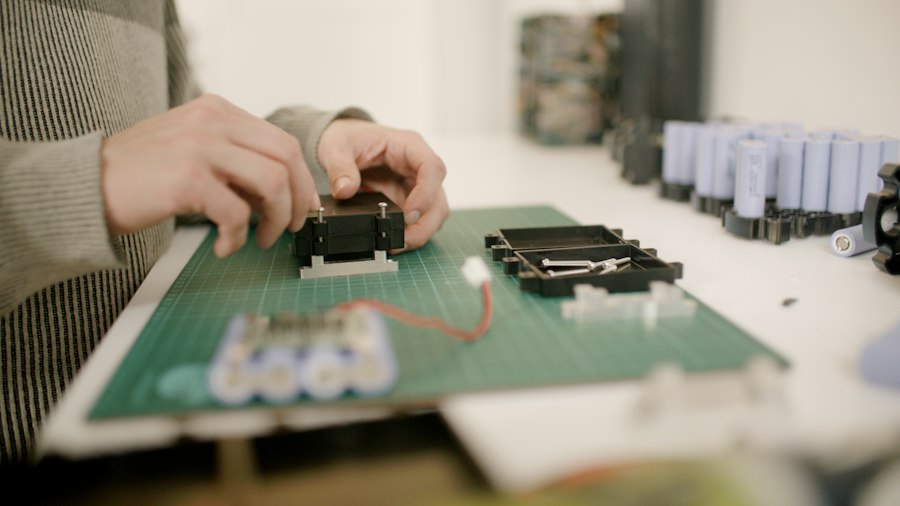
So, we’ve designed our electronics with modularity in mind and followed DfD principles. Now, how does that translate into actual recovery? It changes the game entirely. Instead of a messy, energy-intensive shredding process that yields a mixed “soup” of materials that are hard to separate, we can approach end-of-life products with precision.
When components are easily separated, they retain more of their inherent value. A functional camera module recovered from a laptop has significantly more value than the tiny specks of copper and gold that might be extracted from it after shredding. This precision recovery leads to higher yields of not just raw materials, but also functional components ready for reuse.
The Tiered Approach to Recovery
High-yield recovery isn’t a single process; it’s a tiered approach, prioritizing the highest value retention.
- Reuse: The absolute gold standard. If a component (like a memory module, a display, or a power supply) is still fully functional and meets performance standards, it should be cleaned, tested, and directly reused in another product, either as a spare part or in a refurbished device. Modular design makes this feasible as components can be easily extracted without damaging them.
- Repair: If a component or device has a minor fault, modularity enables targeted repair. Instead of discarding an entire device, a faulty module can be replaced or repaired, extending the life of the product significantly.
- Refurbishment: Taking a used device, replacing worn-out or faulty modules, cleaning it thoroughly, and updating its software to bring it back to a “like new” condition. Modular design makes refurbishment much more cost-effective and efficient.
- Material Recovery (High-Purity): When a component is no longer functional or economical to repair, its materials are extracted. Modular design allows for the separation of different material streams (e.g., plastics, ferrous metals, non-ferrous metals, precious metals) before shredding or smelting. This results in much higher purity material streams, which command higher prices and require less energy for reprocessing compared to mixed e-waste streams. For example, separating a copper coil from a steel casing prior to melting ensures a higher quality copper ingot.
The Challenge of Traceability and Inventory Management
While modularity makes recovery possible, managing the sheer volume and variety of recovered components is a significant challenge. This is where advanced traceability and inventory management systems become crucial.
- Unique Component IDs: Each module could have a unique identifier (e.g., a serial number or QR code) that links it to its manufacturing history, material composition, and performance specifications. This allows for clear tracking throughout its life cycle.
- Digital Twins: Creating a “digital twin” of each device and its modules – a virtual replica containing all relevant data – can aid in tracking component health, facilitating predictive maintenance, and informing optimal recovery pathways at end-of-life.
- Automated Sorting and Grading: As recovered components arrive at a processing facility, automated systems using vision recognition and RFID/barcode scanning can quickly identify, sort, and grade modules based on their functionality and material composition.
- Marketplace for Recovered Parts: Developing robust marketplaces or internal systems to connect the supply of recovered, functional modules with the demand for spare parts, refurbishment, or even new manufacturing. This requires clear quality assurance protocols to build trust in the recovered component ecosystem.
Overcoming Obstacles and Driving Adoption
Despite the clear benefits, widespread adoption of circular electronics manufacturing, particularly modular hardware design, faces several hurdles. It’s not as simple as snapping a few new pieces together.
One major challenge is the initial investment required for redesigning products and retooling manufacturing lines. Traditional linear manufacturing processes are deeply entrenched, and shifting to a circular model demands significant capital outlay and a rethinking of established supply chains.
Another obstacle is consumer perception and demand. While there’s growing awareness of sustainability, consumers often prioritize upfront cost and sleek aesthetics over long-term repairability or circularity. Educating consumers about the benefits and creating a market for modular, repairable products is crucial.
The Role of Regulations and Policy
Government policies and regulations are perhaps the most powerful levers for driving the shift towards circularity. Without them, it’s often difficult for individual companies to justify the initial costs.
- Right to Repair Legislation: Laws that mandate manufacturers to provide spare parts, repair manuals, and diagnostic tools to consumers and independent repair shops are vital. This directly supports the lifespan of modular products.
- Extended Producer Responsibility (EPR): EPR schemes hold manufacturers responsible for the entire life cycle of their products, including collection and recycling at end-of-life. This incentivizes them to design for durability, repairability, and efficient material recovery.
- Material Disclosure Requirements: Mandating companies to disclose the materials used in their products can aid recyclers in identifying hazardous substances and optimizing recovery processes.
- Incentives for Circular Design: Governments can offer tax breaks, grants, or preferential procurement policies for companies that adopt circular design principles and demonstrate high rates of material and component recovery.
- Standardization Efforts: Promoting international standards for modular interfaces, connectors, and material labeling can facilitate broader interoperability and simplify recovery processes across different brands and regions.
Shifting Business Models and Collaboration
For circularity to truly take hold, businesses need to evolve beyond simply selling products.
- Product-as-a-Service (PaaS): Instead of owning a device, customers pay for its use. This shifts the incentive for manufacturers: they profit from the product’s longevity and efficient maintenance, encouraging durable and repairable designs. When the product reaches end-of-service, the manufacturer retains ownership and can efficiently recover components.
- Take-Back Schemes: Manufacturers implementing robust take-back programs for their old products, making it easy for consumers to return them for proper handling and recovery.
- Industry Collaboration: No single company can tackle this alone. Collaboration across the electronics industry – including manufacturers, recyclers, material suppliers, and even competitors – is essential for developing common standards, sharing best practices, and building the necessary infrastructure for circularity. This could involve joint research into new materials, shared recovery facilities, or common data platforms for traceability.
- Design for Upgradeability: Not just repair, but designing modules that can be easily upgraded to extend product life. For example, a laptop with a modular CPU and GPU that can be swapped out for newer, more powerful versions as technology advances. This retains the core chassis and other components, reducing overall material consumption.
In the realm of sustainable technology, the concept of Circular Electronics Manufacturing is gaining traction, particularly with the focus on designing modular hardware that facilitates high-yield component recovery. This innovative approach not only minimizes electronic waste but also enhances the efficiency of resource utilization. For those interested in exploring additional strategies for optimizing product lifecycle management, a related article on effective group-buy SEO tools can provide valuable insights. You can read more about it here.
The Future: A Truly Circular Electronics Ecosystem
| Metric | Description | Value | Unit |
|---|---|---|---|
| Modularity Index | Degree of modular design in hardware components | 85 | Percentage (%) |
| Component Recovery Rate | Percentage of components successfully recovered after use | 92 | Percentage (%) |
| Yield Improvement | Increase in component recovery yield compared to traditional designs | 30 | Percentage (%) |
| Average Disassembly Time | Time required to disassemble a device into modular components | 15 | Minutes |
| Material Reuse Rate | Percentage of materials reused in new manufacturing cycles | 75 | Percentage (%) |
| Energy Savings | Reduction in energy consumption due to modular design | 20 | Percentage (%) |
| Waste Reduction | Decrease in electronic waste generated per unit | 40 | Percentage (%) |
Looking ahead, the vision for circular electronics manufacturing is one where products are seen not as finite items, but as temporary configurations of valuable resources. Modular hardware is the critical enabler for this transformation, turning end-of-life electronics from an environmental burden into a significant resource pool.
Imagine a world where your old phone contributes its precious metals and functional screen to the creation of a new device, rather than ending up in a landfill.
Where laptops are upgraded with newer processors rather than being entirely replaced.
This future isn’t just about “doing less harm”; it’s about actively creating more value and resilience in our supply chains. It’s an iterative process, requiring continuous innovation in materials science, robotics, data management, and, crucially, a shift in mindset from linear consumption to cyclical resource management. The journey is complex, but the destination—a truly sustainable electronics industry—is worth every effort.
FAQs
What is circular electronics manufacturing?
Circular electronics manufacturing refers to a sustainable approach in the production of electronic devices that emphasizes the design for longevity, repairability, and recyclability. This method aims to minimize waste and resource consumption by creating products that can be easily disassembled and have their components reused or recycled at the end of their life cycle.
How does modular hardware contribute to component recovery?
Modular hardware is designed with interchangeable parts that can be easily replaced or upgraded without needing to discard the entire device. This design facilitates high-yield component recovery by allowing manufacturers and consumers to extract valuable components for reuse or recycling, thereby reducing electronic waste and conserving resources.
What are the benefits of designing electronics for modularity?
Designing electronics for modularity offers several benefits, including enhanced repairability, reduced obsolescence, and lower environmental impact. Modular designs allow users to upgrade specific components rather than replacing entire devices, which can lead to cost savings and a longer product lifespan, ultimately contributing to a more sustainable electronics ecosystem.
What challenges are associated with circular electronics manufacturing?
Challenges in circular electronics manufacturing include the need for standardized components, the complexity of supply chains, and the initial costs of redesigning products for modularity. Additionally, consumer awareness and acceptance of modular products can be a barrier, as many consumers are accustomed to traditional, non-modular electronics.
How can companies implement circular electronics manufacturing practices?
Companies can implement circular electronics manufacturing practices by investing in research and development for modular designs, collaborating with suppliers to ensure component compatibility, and adopting sustainable materials. Additionally, they can educate consumers about the benefits of modular products and establish take-back programs to facilitate component recovery at the end of a product’s life cycle.
Enjoying our content? Make us a preferred source on Google:
Add us as a Preferred Source on Google