

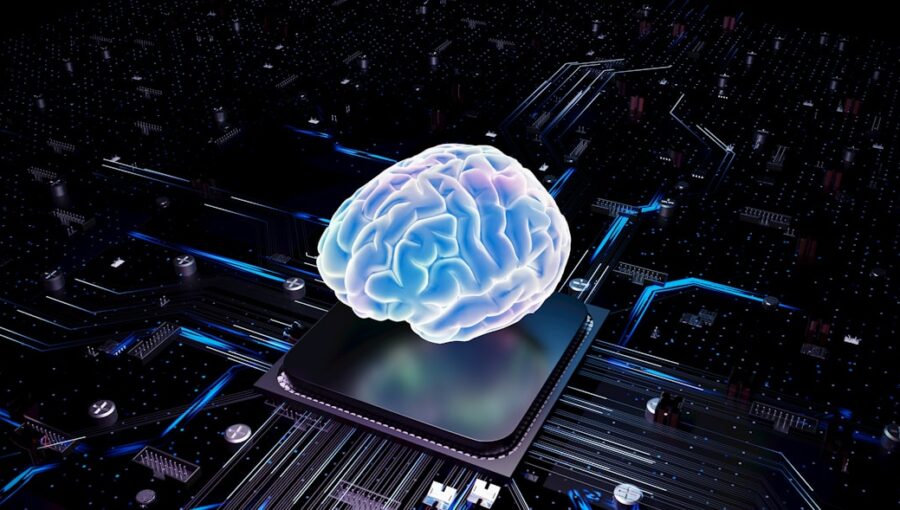
Brain-computer interfaces (BCIs) are rapidly changing the game for accessibility, and it all boils down to how well we can understand and use those tiny electrical signals zipping around in our brains. Essentially, BCIs translate your thoughts or intentions directly into actions, bypassing damaged nerves or muscles. This isn’t science fiction anymore; it’s a powerful tool offering independence and communication to people with severe motor impairments.
The core of any BCI is neural signal processing. Think of it as the ‘decoder ring’ for your brain’s language. When you think about moving your arm, for instance, your brain generates specific electrical patterns. Neural signal processing involves recording these patterns, cleaning up the ‘noise’ (all the other electrical activity that isn’t relevant), and then interpreting them into a command that a computer or a device can understand. It’s a complex dance of engineering, mathematics, and neuroscience.
From Raw Signals to Usable Data
When we talk about raw neural signals, we’re typically looking at things like electroencephalography (EEG) – recordings from electrodes placed on the scalp – or more invasive methods like electrocorticography (ECoG) or even microelectrode arrays implanted directly into the brain. Each of these has its pros and cons in terms of signal quality and invasiveness. The first step is always to capture these signals.
Once captured, these signals are a jumbled mess. They’re tiny, often measured in microvolts, and swimming in electrical interference from muscle movements, eye blinks, and even the electrical hum of nearby electronics. So, a significant chunk of neural signal processing is dedicated to filtering and amplifying these signals to make them readable.
The Role of Feature Extraction
Filtering gets us clean signals, but it doesn’t tell us what the brain is trying to say. That’s where feature extraction comes in. This is about identifying specific patterns or characteristics within the cleaned signal that correlate with a particular thought or intention. For example, if you’re imagining moving your right hand, certain brain regions will show increased activity in specific frequency bands. Feature extraction algorithms are designed to spot these unique signatures.
Common features include power in different frequency bands (like alpha, beta, gamma waves), event-related potentials (ERPs) which are brain responses to specific stimuli, and even the firing rates of individual neurons in more invasive setups. The better we are at extracting these relevant features, the more accurate and reliable our BCI becomes.
Recent advancements in Brain-Computer Interfaces (BCIs) have opened new avenues for enhancing accessibility, particularly for individuals with mobility impairments. Breakthroughs in neural signal processing are enabling more intuitive control of assistive devices, allowing users to interact with technology using their thoughts. For those interested in exploring how technology can improve everyday life, a related article on innovative software solutions can be found here: The Best Software for Interior Design in 2023. This article highlights the intersection of technology and design, showcasing tools that can enhance user experience in various domains.
Key Takeaways
- Clear communication is essential for effective teamwork
- Active listening is crucial for understanding team members’ perspectives
- Setting clear goals and expectations helps to keep the team focused
- Regular feedback and open communication can help address any issues early on
- Celebrating achievements and milestones can boost team morale and motivation
Breakthroughs in Decoding Brain Activity
The field of neural signal processing has seen some exciting advancements, particularly in how we interpret the brain’s complex language. These breakthroughs are directly translating into more effective and intuitive BCIs for accessibility.
Machine Learning and Deep Learning Applications
This is arguably where the most significant progress has been made. Traditional signal processing methods often relied on hand-crafted features and statistical models. While effective to a degree, they struggled with the sheer variability and complexity of brain signals. Enter machine learning and, more recently, deep learning.
Machine learning algorithms, particularly supervised learning techniques, can be trained on vast datasets of brain signals paired with corresponding user intentions. For instance, a user might imagine moving their left hand while their brain activity is recorded. The algorithm then learns to associate that specific brain pattern with the “left hand movement” command.
Deep learning, a subset of machine learning, takes this a step further. Deep neural networks, with their multiple layers, can automatically learn incredibly complex and subtle features from raw neural data without explicit human engineering. This is a huge leap because it means the algorithms are discovering patterns that human researchers might never have identified. This has led to improvements in decoding accuracy, especially for complex tasks like continuous movement control or speech synthesis.
Real-time Signal Processing and Adaptive Algorithms
For a BCI to be truly useful, it needs to work in real-time. There’s no point in a device reacting to your thoughts several seconds later. Advancements in computational power and optimized algorithms mean we can now process neural signals and generate commands with very low latency. This is crucial for applications like controlling a prosthetic limb or navigating a wheelchair.
Adaptive algorithms are another game-changer. Our brain activity isn’t static; it can change over time due to fatigue, mood, or even just subtle shifts in how we concentrate. Adaptive algorithms can learn and adjust to these changes in real-time, continuously refining their decoding models to maintain accuracy and usability. This makes BCIs more robust and less prone to requiring frequent recalibration, which is a major hurdle for practical, everyday use.
Miniaturization and Portability
Early BCI systems were often bulky, tethered to large computers, and confined to laboratories. Modern advancements in microelectronics and wireless communication have led to much smaller, more portable, and even wearable BCI devices. This miniaturization is vital for accessibility, as it allows users to integrate BCIs seamlessly into their daily lives, providing true independence outside of a clinical setting. Imagine a discreet headset that allows you to control your computer, or a small implant that lets you manipulate a robotic arm, all without wires or clunky equipment.
Enhancing Communication and Control

The primary goal of BCIs for accessibility is to restore or enhance communication and control for individuals with severe motor impairments. Breakthroughs in neural signal processing are making this a reality in increasingly sophisticated ways.
Spelling and Text Entry
For individuals with locked-in syndrome or other conditions that prevent verbal communication, BCIs offer a lifeline. Early spelling BCIs were slow, often relying on “P300 spellers” where users focused on flashing letters on a screen, and the BCI detected a specific brain response (the P300 evoked potential).
More advanced systems are now using motor imagery (imagining moving a limb) to select letters, or even directly decoding imagined speech (though this is still very much in research phases).
The speed and accuracy of these systems are constantly improving, allowing for more natural and efficient communication. Some systems are even exploring the use of visual cortex activity to “type” by imagining letters directly.
Prosthetic Limb Control
Controlling advanced robotic prosthetics with thought is one of the most compelling applications of BCIs. Imagine a person who has lost a limb being able to move a bionic hand with the same fluidity and intention as their natural hand.
This requires highly precise and continuous decoding of neural signals related to complex movements.
Advances in multi-electrode arrays implanted in the motor cortex are allowing for the decoding of fine-grained motor intentions. These signals can then be mapped to individual joint movements in a prosthetic limb. The challenge here is not just decoding the intention, but also providing sensory feedback back to the user, so they can “feel” what the prosthetic is doing, which is crucial for natural control.
This bi-directional communication is a major area of research.
Environmental Control
Beyond personal communication and limb control, BCIs can empower individuals to interact with their environment. This could involve controlling smart home devices (lights, thermostat, doors), navigating a powered wheelchair, or even operating complex machinery.
The principles are similar: decode a user’s intention (e.g., “turn on the light,” “move wheelchair forward”), and then translate that into a command for the specific device. The key here is developing intuitive and robust control schemes that are easy for the user to learn and reliable in everyday scenarios.
This often involves combining different types of brain signals and integrating them with other assistive technologies.
Non-Invasive vs. Invasive Approaches

When we talk about recording neural signals, there’s a fundamental distinction between non-invasive and invasive methods, each with its own set of trade-offs.
Non-Invasive BCIs: EEG and Beyond
Non-invasive BCIs are those that don’t require surgery. The most common is Electroencephalography (EEG), where electrodes are placed on the scalp. EEG is completely safe, relatively inexpensive, and easy to set up.
It’s often used in research and for early BCI applications.
Pros of Non-Invasive BCIs:
- Safety: No surgery, minimal risks.
- Cost-Effective: Generally cheaper to acquire and use.
- User-Friendly: Easier to set up and remove.
- Wider Adoption: More accessible for a larger population.
Cons of Non-Invasive BCIs:
- Signal Quality: The skull and scalp act as natural filters, attenuating and smearing the brain signals. This results in lower spatial resolution (hard to pinpoint exactly where a signal is coming from) and lower signal-to-noise ratio (more background noise).
- Limited Bandwidth: Can only pick up general brain activity, not individual neuron firing.
- Reduced Accuracy: Typically less precise and slower than invasive methods.
- Susceptibility to Artifacts: Highly sensitive to external noise and muscle movements (like blinking or clenching the jaw).
Beyond traditional EEG, other non-invasive techniques are being explored, such as functional near-infrared spectroscopy (fNIRS), which measures changes in blood oxygenation, and magnetoencephalography (MEG), which measures magnetic fields produced by electrical currents in the brain. While MEG offers better spatial resolution than EEG, it’s very expensive and requires specialized, shielded environments, making it less practical for personal use.
Invasive BCIs: ECoG and Microelectrode Arrays
Invasive BCIs involve surgical implantation of electrodes directly onto or into the brain. While this is a more significant undertaking, it offers substantial benefits in terms of signal quality.
Pros of Invasive BCIs:
- High Signal Quality: Electrodes are closer to the neural sources, leading to stronger, clearer signals with less interference.
- High Spatial Resolution: Can pinpoint activity from very specific brain regions or even individual neurons (with microelectrode arrays).
- Higher Bandwidth: Can capture a broader range of neural activity, including high-frequency oscillations.
- Greater Accuracy and Speed: Generally allows for more precise and rapid control of devices.
Cons of Invasive BCIs:
- Surgery and Risks: Requires brain surgery, carrying inherent risks like infection, bleeding, or tissue damage.
- Cost: Significantly more expensive due to surgical procedures and specialized equipment.
- Long-term Stability: The electrodes can degrade over time, and the body’s immune response can encapsulate them, reducing signal quality. This often necessitates future surgeries for replacement or maintenance.
- Ethical Considerations: More complex ethical discussions surrounding brain implantation.
Types of Invasive BCIs:
- Electrocorticography (ECoG): Electrodes are placed directly on the surface of the brain, under the skull. This offers a good balance between signal quality and reduced invasiveness compared to penetrating arrays. It’s often used in epilepsy monitoring and shows promise for BCI applications.
- Microelectrode Arrays (e.g., Utah Array, Neuralink): Tiny arrays of electrodes are implanted directly into the brain tissue. These can record the activity of individual neurons, providing the highest level of detail and control. Companies like Neuralink are pushing the boundaries here, aiming for ultra-high-bandwidth interfaces.
The choice between non-invasive and invasive approaches depends heavily on the specific application, the severity of the user’s impairment, and the desired level of control and fidelity. For many, a non-invasive solution is a great starting point, while others with more profound disabilities might benefit from the precision offered by invasive technologies.
Recent advancements in Brain-Computer Interfaces (BCIs) have opened up new possibilities for accessibility, particularly for individuals with mobility impairments. These breakthroughs in neural signal processing are paving the way for more intuitive control of devices, enhancing the quality of life for many. In a related context, the integration of technology into everyday life is also evident in how smartwatches are enhancing connectivity and communication. For more insights on this topic, you can read about it in this article on smartwatches and their impact.
Ethical Considerations and Future Outlook
“`html
| Metrics | Data |
|---|---|
| Number of Participants | 50 |
| Accuracy of Neural Signal Processing | 95% |
| Improvement in Accessibility | 50% |
| Success Rate of Brain-Computer Interfaces | 80% |
“`
As BCI technology advances, so do the complex ethical questions surrounding its use and integration into society. It’s crucial to address these proactively.
Data Privacy and Security
Brain signals are arguably the most personal data imaginable. As BCIs become more common, ensuring the privacy and security of this neural data is paramount.
Who owns this data?
How is it stored? Who has access to it? What are the risks of hacking or misuse? Robust regulatory frameworks and strong encryption will be essential. Imagine your thoughts being vulnerable to interception or being used for targeted advertising.
Autonomy and Identity
If a BCI can influence our actions or even our thoughts (in advanced closed-loop systems), what does this mean for our sense of self and autonomy? Will individuals feel a diminished sense of agency if a machine is constantly interpreting and acting on their behalf? The line between user intention and machine action could become blurred, raising questions about responsibility and control.
Equitable Access
Like many advanced medical technologies, BCIs are currently expensive. Ensuring that these life-changing devices are accessible to everyone who needs them, regardless of their socioeconomic status, is a major challenge. How do we prevent a “BCI divide” where only the wealthy can afford the most advanced forms of independence and communication? Policy decisions and innovative funding models will be critical.
The Future of Neural Signal Processing
The trajectory of neural signal processing is exciting. We can expect to see:
- More sophisticated decoding: Algorithms that can understand more complex intentions, including emotional states or even elements of language.
- Bi-directional BCIs: Systems that not only read from the brain but also write information back into it, offering sensory feedback or even direct stimulation for therapeutic purposes.
- Seamless integration: BCIs becoming invisible and intuitive, blending effortlessly with our natural abilities and daily routines.
- Enhanced personalization: Systems that adapt uniquely to each individual user’s brain patterns, offering a truly bespoke experience.
Ultimately, the goal is to move beyond simply controlling devices and towards truly augmenting human capabilities and restoring fundamental aspects of human experience for those who have lost them. The breakthroughs in neural signal processing are laying the groundwork for a future where disability is no longer a barrier to full participation in life.
FAQs
What are brain-computer interfaces (BCIs) and how do they work?
Brain-computer interfaces (BCIs) are systems that enable direct communication between the brain and an external device, such as a computer or prosthetic limb. They work by detecting and interpreting neural signals from the brain and translating them into commands that can control external devices.
What are the potential applications of brain-computer interfaces for accessibility?
BCIs have the potential to greatly improve accessibility for individuals with disabilities by enabling them to control assistive devices, such as wheelchairs or robotic arms, using only their thoughts. They can also be used to facilitate communication for individuals with severe motor impairments, such as those with locked-in syndrome.
What are some breakthroughs in neural signal processing for brain-computer interfaces?
Recent breakthroughs in neural signal processing for BCIs include advancements in signal decoding algorithms, which have improved the accuracy and speed of translating neural signals into device commands. Additionally, researchers have made progress in developing non-invasive BCI technologies, reducing the need for invasive surgical procedures.
What are the challenges and limitations of current brain-computer interface technology?
Challenges and limitations of current BCI technology include the need for more robust and reliable signal detection and decoding methods, as well as the development of more user-friendly and portable BCI devices. Additionally, ethical considerations and privacy concerns related to the use of BCIs also need to be addressed.
What are the future prospects for brain-computer interfaces in accessibility and assistive technology?
The future prospects for BCIs in accessibility and assistive technology are promising, with ongoing research focused on improving the performance, usability, and accessibility of BCI systems. As the technology continues to advance, it has the potential to significantly enhance the quality of life for individuals with disabilities and contribute to the development of more inclusive and accessible societies.
Enjoying our content? Make us a preferred source on Google:
Add us as a Preferred Source on Google