

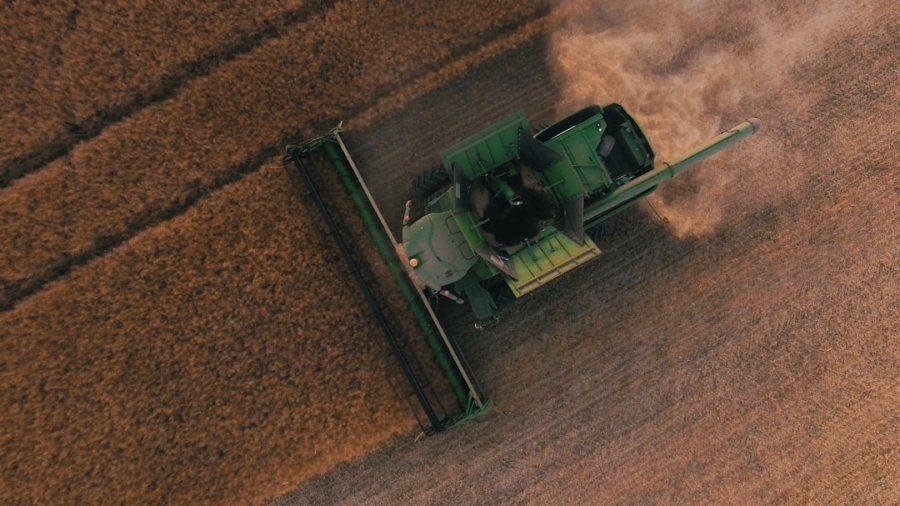
So, how can we actually boost agricultural yields using precision machine learning analytics? In a nutshell, it’s about making smarter, data-driven decisions at every stage of farming. Instead of guessing, we’re using powerful computer models to analyze heaps of information – everything from soil health to weather patterns – to tell us exactly what crops need, where, and when. This means less waste, healthier plants, and ultimately, more food from the same amount of land. It’s like having a super-intelligent agricultural assistant.
Before diving into the how-to, it’s helpful to understand why machine learning is such a game-changer for agriculture. Traditional farming, while effective for centuries, often relies on generalizations or intuition. A farmer might treat an entire field the same way, even if parts of it have different soil compositions or pest challenges. This can lead to inefficient resource use, wasted effort, and suboptimal yields.
The Limitations of Traditional Approaches
Think about it: even the most experienced farmer can only process so much information. They can’t see microscopic changes in soil nutrient levels across an entire 100-acre field, nor can they accurately predict a localized pest outbreak weeks in advance without powerful tools. Traditional methods often involve:
- Uniform Treatments: Applying the same amount of fertilizer or water across an entire field, regardless of actual plant needs.
- Reactive Pest/Disease Management: Addressing issues after they’ve become widespread, rather than preventing them.
- Manual Scouting: Time-consuming and often imprecise visual inspection of crops.
- Historical Data Reliance (Limited Scope): Looking at past yield averages without deep contextual analysis.
Machine learning steps in here, offering a way to move beyond these limitations by bringing a level of detail and predictive power that was previously impossible. It’s about turning raw agricultural data into actionable insights, moving from generalized farming to highly specific, “precision” agriculture.
The Data Revolution in Agriculture
The rise of inexpensive sensors, drones, satellites, and interconnected devices (the Internet of Things, or IoT) has created an explosion of agricultural data. This isn’t just about recording rainfall anymore; we’re talking about:
- Environmental Data: Hyper-local weather stations, soil moisture sensors, temperature probes.
- Crop Health Data: Multispectral and hyperspectral imagery from drones or satellites, revealing plant stress before it’s visible to the human eye.
- Machinery Data: Tractor telemetry, yield monitors on harvesters.
- Economic Data: Market prices, input costs.
This mountain of data, however, is useless without a way to process it and extract meaningful patterns. That’s where machine learning shines. It’s designed to find those hidden connections and predictive relationships within massive datasets that humans simply can’t discern.
In the quest to enhance agricultural productivity, the integration of precision machine learning analytics has emerged as a transformative approach. A related article that explores the intersection of technology and education, particularly in the context of equipping young learners with essential skills for the future, can be found at Best Laptops for Kids 2023. This resource highlights the importance of providing children with the right tools to engage with advanced technologies, which is crucial for fostering the next generation of innovators in fields like agriculture and beyond.
Key Takeaways
- Clear communication is essential for effective teamwork
- Active listening is crucial for understanding team members’ perspectives
- Setting clear goals and expectations helps to keep the team focused
- Regular feedback and open communication can help address any issues early on
- Celebrating achievements and milestones can boost team morale and motivation
Key Applications of Machine Learning in Boosting Yields
Now, let’s get into the practical applications.
Machine learning isn’t a silver bullet, but it’s a powerful tool that, when applied thoughtfully, can significantly impact various aspects of farming.
Precision Resource Management
One of the biggest areas where machine learning makes a difference is in optimizing how resources are used. This isn’t just about saving money; it’s about minimizing environmental impact and maximizing plant health.
- Optimizing Irrigation: Instead of watering on a fixed schedule or just responding to visible dryness, ML models use soil moisture sensor data, weather forecasts, crop type, and growth stage to predict exactly when and how much water different parts of a field need. This avoids both over-watering (which wastes water and can lead to nutrient leaching) and under-watering (which stresses plants).
- How it works: Algorithms analyze real-time sensor data, historical weather patterns, and plant-specific water requirements to create dynamic irrigation schedules.
- Targeted Fertilization: Applying fertilizer uniformly across a field often means some areas get too much (wasting resources and potentially polluting groundwater) and others get too little (limiting growth). ML models, using data from soil tests, satellite imagery (showing nutrient deficiencies), and yield maps, can create variable rate application maps. These instruct smart spreaders to apply fertilizer only where and in the amounts needed.
- How it works: Satellite imagery identifies areas of nutrient stress; soil samples provide ground truth; ML combines these to predict optimal nutrient mix and quantity for specific zones.
- Pest and Disease Prediction & Early Detection: This is a crucial area. Machine learning can analyze weather patterns, historical pest outbreak data, and even multispectral imagery (which can detect subtle changes in plant health before symptoms become obvious) to predict the likelihood of pest or disease outbreaks. This allows farmers to apply treatments proactively and in targeted areas, rather than broadcasting pesticides across an entire field.
- How it works: Time-series analysis of weather, historical pest populations, and even image recognition of early signs of plant distress from drone footage.
Crop Monitoring and Health Assessment
Keeping a close eye on crops is fundamental, and ML excels at automating and enhancing this process.
- Automated Disease and Pest Identification: Drones equipped with specialized cameras can capture images of fields. Machine learning algorithms can then analyze these images to identify specific diseases, pest infestations, or nutrient deficiencies at an early stage, often before they’re visible to the human eye. This allows for early, targeted intervention.
- How it works: Convolutional Neural Networks (CNNs) are trained on vast datasets of healthy plants and plants exhibiting various diseases or pest damage. When new images are fed into the system, the CNN can classify the anomalies.
- Yield Prediction: Accurately predicting yield isn’t just about knowing how much to expect at harvest; it helps with inventory management, marketing, and understanding the efficacy of various farming practices. ML models integrate a multitude of factors – weather conditions throughout the growing season, soil health, planting density, historical yield data, and even climate predictions – to provide more accurate yield forecasts.
- How it works: Regression models (like Random Forests or Gradient Boosting) take in a large number of correlated factors and predict future outcomes.
- Weed Detection and Mapping: Weeds compete with crops for resources, reducing yields. ML algorithms can analyze drone or sensor images to precisely locate weeds within a field, distinguishing them from crops. This paves the way for automated weed removal systems (like robotic weeders) or targeted herbicide application, reducing chemical use.
- How it works: Similar to disease detection, image classification models are trained to differentiate between crops and weeds based on shape, color, and texture.
Soil Analysis and Management
The foundation of any healthy crop is healthy soil. Machine learning helps unlock its secrets.
- Predictive Soil Nutrient Mapping: While lab tests provide precise nutrient levels for specific samples, they can be costly and time-consuming to do across an entire field. ML models can integrate data from initial lab tests with hyperspectral imagery and even environmental data to predict nutrient levels across an entire field, creating detailed, dynamic maps. These maps guide precision fertilizer application.
- How it works: Geostatistical models combined with supervised learning help extrapolate point-source (lab) data across a larger area using correlated aerial imagery data.
- Soil Moisture Prediction: Beyond real-time sensors, ML can predict future soil moisture levels based on weather forecasts, soil type, and crop water needs. This allows for proactive irrigation planning, ensuring plants never experience undue water stress.
- How it works: Time-series forecasting models (like LSTMs or ARIMA) use historical and predicted weather data to forecast future soil moisture.
- Optimizing Crop Seeding and Spacing: Not all parts of a field are equal. Machine learning can analyze soil maps, historical yield data, and topography to recommend optimal seeding rates and spacing for different zones within a field. This ensures each plant has the ideal conditions to thrive, maximizing overall yield potential.
- How it works: Clustering algorithms can identify similar zones within a field; then, models optimize seeding rates based on historical performance in those zones.
Implementing Machine Learning: From Data to Decision

So, if all this sounds good, how do farmers actually get started? It’s less about buying one magic box and more about integrating various technologies and approaches.
Data Collection – The Foundation
You can’t do machine learning without data. And not just any data – good data.
- IoT Sensors: Devices in the field measuring soil moisture, temperature, pH, light intensity, etc.
- Remote Sensing: Drones (for high-resolution, on-demand imagery) and satellites (for broader, frequent coverage and historical data).
This includes RGB, multispectral, and hyperspectral imaging.
- Farm Machinery Data: Data directly from tractors, combines, and planters, including yield monitors, fuel consumption, speed, and applied rates of inputs.
- Weather Stations: Localized weather data and forecasts.
- Manual Observations/Lab Tests: Ground-truthing for remote sensing data, detailed soil analysis.
Data Preprocessing – Getting it Ready
Raw data is often messy. It needs to be cleaned, organized, and transformed into a format that machine learning algorithms can understand. This involves:
- Cleaning: Removing errors, missing values, outliers.
- Integration: Combining data from different sources (e.g., merging satellite imagery with soil sensor readings).
- Feature Engineering: Creating new, more informative variables from existing ones (e.g., calculating a vegetation index from multispectral bands).
- Normalization/Scaling: Ensuring all data streams are comparable.
Model Development & Training – The Brains of the Operation
This is where the actual machine learning happens.
- Algorithm Selection: Choosing the right ML algorithm (e.g., regression for predictions, classification for identification, clustering for segmentation).
- Model Training: Feeding the cleaned, preprocessed data into the algorithm so it can learn patterns and relationships.
This involves splitting data into training and testing sets.
- Validation & Optimization: Testing the model’s accuracy, tuning its parameters to improve performance, and ensuring it generalizes well to new, unseen data.
Deployment & Action – Putting it to Work
A fancy model is useless if it doesn’t lead to action.
- Visualization: Presenting insights through user-friendly dashboards and maps (e.g., showing which areas need more water, where pests are likely to emerge).
- Decision Support Systems: Translating predictions into recommendations for farmers (e.g., “apply X amount of nitrogen to this specific hectare”).
- Automated Systems: Integrating ML outputs directly with autonomous farm machinery (e.g., a smart irrigation system that waters only specific zones based on real-time ML predictions).
- Continuous Improvement: Machine learning models aren’t static. They should be continually fed new data and retrained to adapt to changing conditions and improve their accuracy over time.
Challenges and Considerations

While promising, adopting machine learning in agriculture isn’t without its hurdles.
Data Accessibility and Quality
A big one is getting enough good data. Small farms might not have the resources for extensive sensor networks or drone flights. And even when data is collected, ensuring its accuracy and consistency across different sources can be a headache. Farmers often need support in setting up these systems and managing the data flow.
Cost of Technology and Infrastructure
While prices are coming down, investing in sensors, drones, specialized machinery, and the computing power needed for ML can still be a significant upfront cost for many farmers, especially in developing regions. Reliable internet connectivity, essential for data transmission, also remains an issue in many rural areas.
Skills Gap
Working with machine learning requires a specific set of skills – data science, programming, agricultural domain knowledge, and the ability to interpret complex outputs. There’s a growing need for professionals who can bridge the gap between agricultural practice and advanced analytics. Farmers need help understanding the insights derived from ML and translating them into practical decisions.
Model Interpretability and Trust
Farmers often prefer to understand why a particular recommendation is being made. “Black box” machine learning models, while potentially very accurate, can be hard to interpret. Building trust requires demonstrating the reliability and reasoning behind the AI’s suggestions. Providing simple, clear explanations is crucial for adoption.
Integration with Existing Practices
Machine learning solutions need to fit seamlessly into existing farm workflows rather than completely overhauling them. This means building intuitive interfaces and ensuring compatibility with current equipment where possible.
In the quest to enhance agricultural productivity, the integration of precision machine learning analytics has emerged as a transformative approach. By leveraging data-driven insights, farmers can optimize their practices and significantly boost yields. For those interested in exploring how technology can revolutionize various fields, a related article discusses the best DJ software for beginners, showcasing the impact of digital tools in creative industries. You can read more about it here.
The Future of Farming with Machine Learning
| Metrics | 2019 | 2020 | 2021 |
|---|---|---|---|
| Yield per acre (kg) | 2500 | 2700 | 2900 |
| Accuracy of predictions (%) | 85 | 88 | 91 |
| Reduction in resource use (%) | 10 | 12 | 15 |
Looking ahead, machine learning is set to become an even more indispensable tool in agriculture. We’re moving towards fully autonomous farm systems, where robots perform tasks like planting, weeding, and harvesting, all guided by sophisticated AI. We’ll see even more precise environmental controls in greenhouses, optimizing every parameter for maximum yield. The ability to cross-reference global agricultural data to predict market trends and potential food shortages will also become more common.
Ultimately, precision machine learning analytics isn’t just about growing more food; it’s about growing it more sustainably and intelligently. By empowering farmers with accurate, real-time insights, we can significantly reduce waste, conserve resources, and cultivate a more resilient and productive agricultural system for the future. It’s an exciting time to be involved in food production, and machine learning is a big part of that excitement.
FAQs
What is precision machine learning analytics in agriculture?
Precision machine learning analytics in agriculture refers to the use of advanced data analysis and machine learning techniques to optimize agricultural processes. This technology helps farmers make data-driven decisions to improve crop yields, reduce resource wastage, and increase overall efficiency.
How does precision machine learning analytics benefit agricultural yields?
Precision machine learning analytics can benefit agricultural yields by providing insights into factors such as soil health, weather patterns, crop diseases, and pest infestations. By analyzing these factors, farmers can make informed decisions about planting, irrigation, fertilization, and pest control, leading to improved yields.
What are some examples of precision machine learning analytics in agriculture?
Examples of precision machine learning analytics in agriculture include using satellite imagery to monitor crop health, analyzing historical weather data to predict future conditions, and using sensor data to optimize irrigation and fertilization schedules. These technologies help farmers make proactive decisions to maximize yields.
How does precision machine learning analytics contribute to sustainable agriculture?
Precision machine learning analytics contributes to sustainable agriculture by enabling farmers to optimize resource usage, reduce chemical inputs, and minimize environmental impact. By using data-driven insights, farmers can practice more sustainable and environmentally friendly farming methods.
What are the challenges of implementing precision machine learning analytics in agriculture?
Challenges of implementing precision machine learning analytics in agriculture include the need for reliable data sources, access to advanced technology, and the requirement for specialized knowledge and skills. Additionally, there may be initial costs associated with adopting these technologies.
Enjoying our content? Make us a preferred source on Google:
Add us as a Preferred Source on Google