

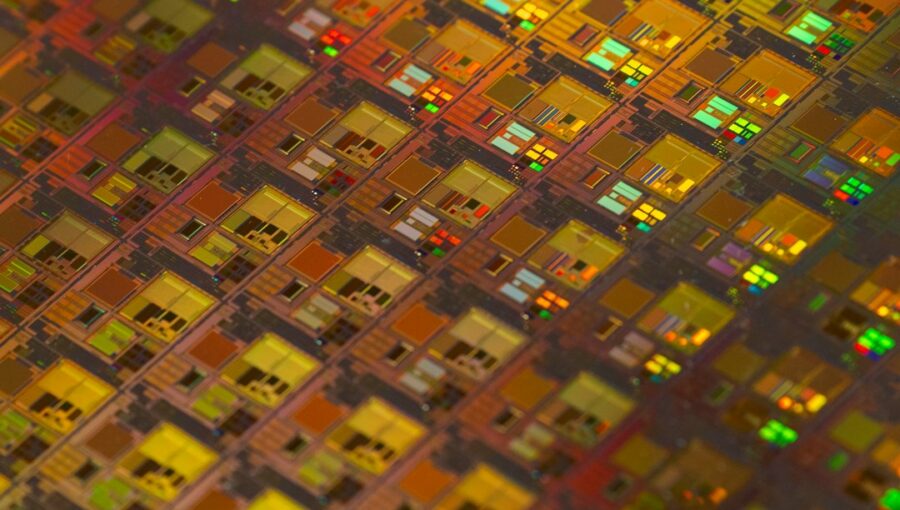
Biodegradable semiconductors are an exciting development aimed at tackling the significant environmental footprint of traditional electronics manufacturing and disposal. Essentially, these are electronic components, particularly the tiny chips that power our devices, made from materials that can safely break down and return to nature after their useful life. This means less persistent electronic waste accumulating in landfills, and a greener approach to technology.
The Problem with Current Semiconductor Manufacturing
Let’s be honest, our modern world runs on semiconductors. From the phone in your pocket to the servers powering the internet, they’re everywhere.
But this widespread use comes at a cost, both during their creation and when they’re eventually discarded.
Resource-Intensive Production
Making a single silicon chip is a complex, multi-step process that’s incredibly demanding on resources. It starts with extracting raw materials like silicon, which involves mining and significant energy consumption. Then, these raw materials undergo extensive purification processes, often requiring vast amounts of ultra-pure water and a variety of chemicals. Think about the sheer volume of water used to cool equipment and clean wafers – it’s staggering. Furthermore, the energy needed to power cleanrooms, run high-temperature furnaces, and operate specialized machinery contributes substantially to carbon emissions. The entire supply chain, from raw material extraction to chip packaging, is energy-hungry and leaves a substantial carbon footprint.
Toxic Waste and Byproducts
Beyond the energy and water, semiconductor fabrication generates a cocktail of hazardous waste. Etching processes use strong acids and solvents, doping introduces toxic heavy metals, and various cleaning steps produce chemical byproducts. While regulations are in place to manage these, accidental spills or improper disposal can lead to severe soil and water contamination. The health risks to workers exposed to these chemicals are also a serious concern. It’s not just the direct manufacturing that’s the issue; the production of the materials themselves often involves environmentally damaging processes.
The Growing E-Waste Mountain
Perhaps the most visible problem is electronic waste, or e-waste. Every year, millions of tons of discarded electronics pile up in landfills around the world. These devices, filled with non-biodegradable plastics, heavy metals, and persistent organic pollutants, slowly leach toxins into the soil and groundwater. The sheer volume is overwhelming, and even with recycling efforts, a significant portion still ends up in landfills. This is where the long lifespan of traditional semiconductor materials becomes a liability; they simply don’t break down.
In the quest for sustainable technology, the article on Biodegradable Semiconductors: Reducing Environmental Impact in Chip Manufacturing highlights innovative approaches to minimize the ecological footprint of electronic components. For further insights into the implications of these advancements and how they can shape the future of the semiconductor industry, you can explore more at this link.
Key Takeaways
- The training data includes information and events up to October 2023.
- Insights and knowledge are based on a wide range of sources available until the cutoff date.
- No updates or developments occurring after October 2023 are included in the training.
- Users should verify current information from reliable sources for the latest updates.
- The model’s responses reflect the context and knowledge available up to the specified date.
What Exactly Are Biodegradable Semiconductors?
So, how do we tackle this? The concept of biodegradable semiconductors is all about finding materials that can do the job of conducting electricity, but then safely decompose once they’re no longer needed. It’s a radical shift from the “make it last forever” mentality.
Materials in Focus
The core of biodegradable semiconductors lies in using organic or bio-derived materials. Instead of silicon, researchers are exploring things like cellulose (found in plants), silk fibroin (from silkworms), and various biopolymers. These materials are inherently designed by nature to break down. For conductive elements, things get a bit trickier, but even here, there are innovative approaches. Think about using certain metal nanoparticles that can safely disperse in the environment, or even conductive polymers that can degrade. The goal is to find materials that offer comparable electronic properties to traditional semiconductors but without the environmental baggage. It’s a complex balancing act between performance, cost, and biodegradability.
How They Break Down
The breakdown process for biodegradable semiconductors is designed to be safe and natural. Instead of persisting for centuries, these materials would decompose into benign components like water, carbon dioxide, and non-toxic organic matter. This can happen through various mechanisms: microbial degradation (where bacteria and fungi do the work), hydrolysis (breakdown by water), or even enzymatic degradation. The conditions under which they degrade can be engineered too – some might break down quickly in a compost heap, while others might require specific environmental cues like moisture or certain enzymes to kickstart the process. The key is that they don’t leave behind harmful residues.
Potential Applications and Benefits
The potential applications for biodegradable semiconductors are vast and exciting. Think about temporary medical implants that dissolve harmlessly after doing their job, smart agricultural sensors that degrade into the soil after providing data, or even disposable smart packaging that doesn’t contribute to landfill waste. Beyond these niche applications, imagine a future where the everyday electronics we use – our phones, smartwatches, and laptops – are designed with biodegradability in mind. The primary benefit is a drastic reduction in e-waste, lessening the burden on landfills and preventing toxic leakage. It also encourages a more circular economy, where materials are returned to the Earth rather than discarded.
Challenges and Limitations

It’s not all smooth sailing, of course. Developing and implementing biodegradable semiconductors comes with a unique set of challenges that need to be overcome before they can become mainstream.
Performance and Durability Trade-offs
One of the biggest hurdles is matching the performance of traditional silicon-based semiconductors. Silicon is incredibly robust, stable, and has excellent electrical properties.
Biodegradable materials, by their very nature, are designed to break down, which can conflict with the need for long-term stability and high performance in electronic devices. Achieving comparable processing speeds, power efficiency, and operational lifespan is a significant scientific and engineering challenge. Devices often need to withstand various environmental stresses like heat, humidity, and mechanical strain during their operational life, something that current biodegradable materials struggle with.
Manufacturing Scalability and Cost
Even if we can get the performance right, scaling up production of biodegradable semiconductors to meet global demand is another complex issue.
The manufacturing processes for these new materials are often very different from established silicon fabrication lines. This means entirely new infrastructure, equipment, and supply chains would need to be developed, which is a massive undertaking requiring substantial investment. Furthermore, the cost of raw biodegradable materials and their specialized processing might initially be higher than conventional materials, making them less competitive in the market.
Reducing these costs while maintaining quality will be crucial for widespread adoption.
Degradation Control and Predictability
While biodegradability is the goal, controlling when and how a device degrades is paramount. You don’t want your smart sensor dissolving prematurely in a humid environment, nor do you want it to persist for too long after its intended use. Engineering materials that degrade reliably under specific conditions (e.g., only in compost, or only after a certain chemical trigger) but remain stable otherwise is a complex problem.
Predicting the exact degradation rate and ensuring no harmful byproducts are released during the decomposition process also requires extensive research and rigorous testing.
Recycling and End-of-Life Management
Even with biodegradable components, the entire device might not be fully biodegradable. Many electronics contain non-biodegradable parts like batteries, traditional circuit boards, or screens. This means that a purely “throw it in the compost” solution might not be realistic for all future biodegradable electronic devices. We’ll still need robust end-of-life management strategies, potentially involving selective disassembly and separate recycling or composting streams for different components. The goal shifts from simply discarding to ensuring responsible return to the environment or reuse.
Current Research and Future Outlook
Despite the challenges, the field of biodegradable semiconductors is buzzing with innovation. Researchers worldwide are making significant strides, pushing the boundaries of what’s possible.
Innovative Materials and Device Architectures
A lot of the current research focuses on discovering and refining new biodegradable materials. We’re seeing exciting developments with things like transient electronics, which are designed to dissolve or disappear completely after a programmed amount of time. Scientists are experimenting with various organic polymers, modified natural materials like starch and chitin, and even soluble inorganic compounds. Beyond the materials themselves, engineers are also rethinking device architectures – how these materials are layered and integrated to create functional circuits. This includes flexible biodegradable substrates and novel conductive inks that can be printed onto these substrates, opening up new manufacturing possibilities.
Promising Prototypes and Demonstrations
While commercial products are still somewhat futuristic, many promising prototypes have already been demonstrated in labs. We’ve seen biodegradable sensors for health monitoring, transient power sources that safely dissolve, and even rudimentary biodegradable memory devices. These proofs-of-concept are critical for validating the underlying science and demonstrating that biodegradable electronics are not just a theoretical concept but a tangible reality, even if in early stages. These prototypes help identify practical challenges and inform further research directions.
Collaboration and Interdisciplinary Approaches
The complexity of biodegradable semiconductors necessitates a highly interdisciplinary approach. It brings together materials scientists, electrical engineers, chemists, biologists, and environmental scientists. This kind of collaboration is crucial for success, as it requires expertise from diverse fields to tackle challenges ranging from material synthesis and device fabrication to understanding biological degradation pathways and environmental impact. Governments and industry players are also increasingly investing in this research, recognizing its potential to address pressing environmental concerns.
The Road Ahead: Gradual Integration
It’s unlikely that biodegradable semiconductors will completely replace traditional silicon overnight. The more probable scenario is a gradual integration, starting with niche applications where their unique properties offer distinct advantages. Think about medical devices, environmental sensors, or certain types of temporary packaging. As the technology matures, performance improves, and costs come down, we might see them used in a broader range of consumer electronics. The future likely involves a hybrid approach, where traditional robust components are combined with biodegradable elements, allowing for easier recycling and reduced environmental impact. The goal is to move towards a more sustainable electronics ecosystem, piece by piece.
Biodegradable semiconductors are gaining attention for their potential to significantly reduce the environmental impact of chip manufacturing, a topic that is increasingly relevant in today’s tech-driven world. For those interested in exploring how technology intersects with health management, a related article discusses the best Android health management watches, which can help users monitor their well-being while also considering the sustainability of their devices. You can read more about it