

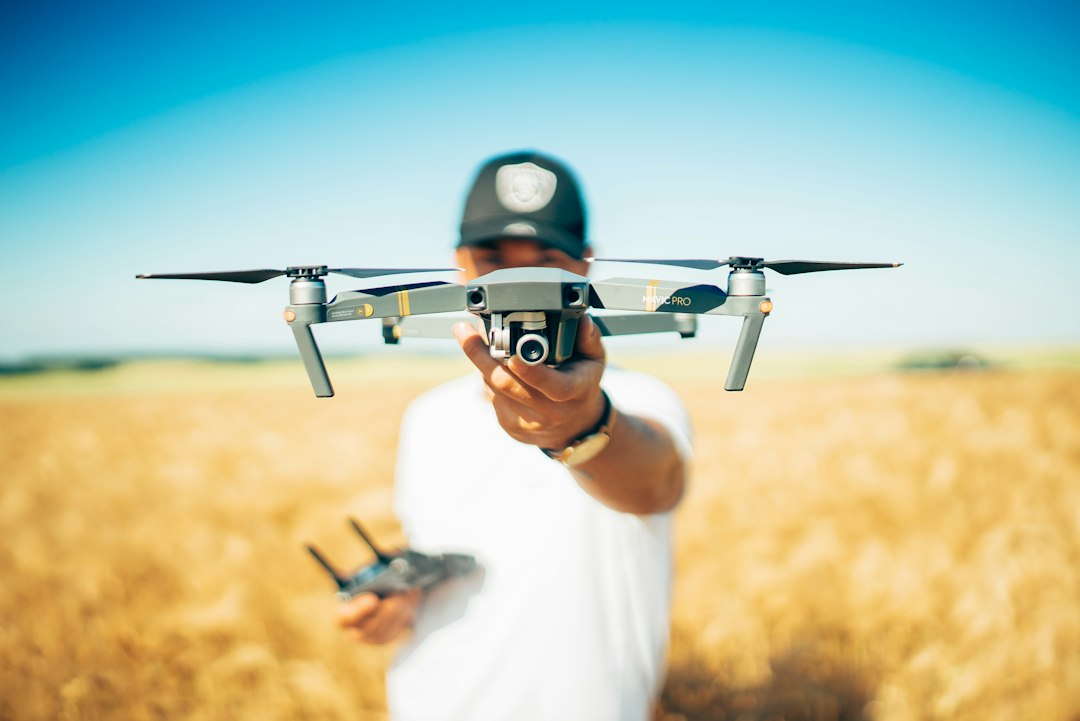
So, you’re wondering about flying drones commercially where you can’t see them? It’s a big topic, but the short answer is yes, it’s becoming increasingly possible, though it requires navigating a complex set of regulations, technologies, and operational considerations. This isn’t just about getting a waiver; it’s about building a whole new approach to drone operations that prioritizes safety and integrates drones into shared airspace responsibly. Let’s dig into what that actually means for your business.
Understanding BVLOS and Its Commercial Promise
Beyond Visual Line of Sight (BVLOS) operations for commercial drones mean flying an uncrewed aircraft system (UAS) beyond the pilot’s direct, unaided visual sight. This isn’t just a convenience; it’s a game-changer. Imagine inspecting hundreds of miles of pipeline, delivering critical medical supplies across vast distances, or mapping large agricultural fields with a single drone flight. These kinds of applications are practically impossible or highly inefficient under Visual Line of Sight (VLOS) rules. BVLOS unlocks true scalability and economic viability for many drone applications, moving them from niche demonstrations to everyday utility.
Why BVLOS Matters for Business Growth
For many industries, the current VLOS limitations are a significant bottleneck. Think about linear infrastructure inspections – power lines, railways, oil and gas pipelines. Performing these with VLOS means frequent landing and repositioning, often requiring multiple pilots and ground crews. This drives up costs, increases operational complexity, and extends project timelines. BVLOS allows a drone to cover far greater distances, gather more data in a single flight, and often complete tasks much faster. This efficiency translates directly into cost savings and increased capacity for businesses. For example, a utility company could inspect a much larger portion of its grid more frequently, improving preventative maintenance and reducing downtime. Similarly, in logistics, BVLOS is essential for moving goods over any significant distance, pushing drones past last-mile delivery into regional transport.
The Inherent Challenges of BVLOS Operations
While the benefits are clear, the challenges are substantial. The biggest hurdle is safety. When you can’t see the drone, you lose your primary sense for detecting and avoiding other aircraft, obstacles, and unexpected situations. This means relying entirely on technology and robust procedures. Airspace integration is another major concern; how do we safely mix autonomous drones with crewed aircraft, especially at lower altitudes? There are also significant technical demands, such as needing reliable communication links over long distances, sophisticated navigation systems, and robust sense-and-avoid capabilities to detect and react to potential collisions.
Lastly, the regulatory framework is still evolving in many parts of the world, creating a moving target for compliance and innovation.
These aren’t trivial issues; they require a systemic approach to solve.
In the ever-evolving landscape of drone technology, understanding the regulatory framework surrounding Beyond Visual Line of Sight (BVLOS) operations is crucial for commercial drone operators. For those interested in enhancing their knowledge of compliance and operational strategies, a related article that offers insights into technology and performance can be found here: Best Laptops for Gaming. While it primarily focuses on gaming laptops, the technological advancements discussed can also be relevant for drone operators seeking powerful computing solutions to manage their BVLOS operations effectively.
Key Takeaways
- The training data includes information and events up to October 2023.
- Insights and knowledge are based on a wide range of sources available until the cutoff date.
- No updates or developments occurring after October 2023 are included in the training.
- Users should verify current information from reliable sources for the latest updates.
- The model’s responses reflect the context and knowledge available up to the specified date.
The Regulatory Landscape: Navigating Approvals
Obtaining BVLOS approval isn’t a simple application form. It’s typically an iterative process that requires demonstrating a comprehensive understanding of risk and a robust safety case. Different aviation authorities around the world – like the FAA in the US, EASA in Europe, and Transport Canada – have their own specific pathways and requirements, but the underlying principles are generally similar: safety first. You’ll need to prove that your proposed operation can be conducted with an equivalent level of safety to traditional crewed aviation.
Key Regulatory Requirements and Waivers
In many jurisdictions, commercial BVLOS operations currently require a specific exemption or waiver from existing VLOS rules. This isn’t a blanket approval for all BVLOS; it’s specific to your proposed operation, your drone, your pilots, and your risk mitigation strategies. For example, in the United States, this often involves applying for a Part 107 waiver (specifically, 107.31 waiver for Visual Line of Sight operation), which is granted based on a detailed safety case. You’ll need to specify what you’re doing, where, when, how, and with what equipment. The FAA looks for robust operational procedures, detailed risk assessments, and often a proven track record of safe VLOS operations. Similarly, EASA’s Specific Category operations often require a Specific Operations Risk Assessment (SORA) to define the necessary mitigations for a given risk level. These waivers are not permanent licenses; they are usually time-limited and require renewal, often with updated information.
Building a Robust Safety Case
This is the cornerstone of any BVLOS application. A safety case isn’t just a list of things you plan to do; it’s a detailed argument, backed by data and analysis, that proves your operation will be safe. It typically covers:
- Operational Concept: A clear description of the mission, including flight routes, altitudes, and payload.
- Aircraft Details: Specifications of the drone, including its airworthiness, reliability, and maintenance program.
- Pilot Qualifications: Beyond standard drone pilot certifications, often requiring additional training specific to BVLOS operations, emergency procedures, and advanced flight management.
- Risk Assessment: Identification of all potential hazards (e.g., mid-air collisions, loss of link, system failure, unauthorized access) and a thorough analysis of their likelihood and severity.
- Mitigation Strategies: Detailed plans for how each identified risk will be reduced to an acceptable level. This could include detect-and-avoid systems, redundant communication links, geofencing, emergency recovery procedures (e.g., parachute deployment), and crew resource management.
- Human Factors: How pilot fatigue, training, and operational procedures address human error.
- Maintenance Program: A rigorous schedule and methodology for ensuring the drone is always airworthy.
- Emergency Procedures: Clear protocols for dealing with abnormal situations, including communication with air traffic control (ATC) if applicable, and emergency landing sites.
The safety case needs to be comprehensive and defensible. It often requires significant technical expertise and a deep understanding of aviation safety principles.
Technological Pillars of BVLOS Safety
The transition from VLOS to BVLOS fundamentally shifts safety reliance from human sight to advanced technology. Without a pilot’s eyes on the aircraft, a suite of sophisticated systems must step in to ensure safe operation. These technologies are not just add-ons; they are integral to the very possibility of BVLOS.
Reliable Communication and Navigation
At the heart of BVLOS is the ability to maintain continuous and reliable control of the drone and to know its precise location at all times.
- Command and Control (C2) Link: This is the lifeline between the ground control station (GCS) and the drone.
It must be robust, redundant, and secure. Many BVLOS operations rely on cellular networks (4G/5G) or satellite communication for long-range C2. The challenge lies in ensuring consistent coverage, low latency, and resistance to interference or spoofing.
Redundancy, such as having both cellular and satellite backup, is often a key mitigation.
- Global Navigation Satellite System (GNSS): GPS, GLONASS, Galileo, and BeiDou provide the drone with its precise position, velocity, and altitude. For BVLOS, high-precision GNSS receivers (e.g., RTK or PPK-enabled) are crucial for accurate navigation, especially when operating in complex airspace or near sensitive infrastructure. GNSS integrity monitoring and anti-jamming/spoofing capabilities are also becoming increasingly important.
- Inertial Measurement Units (IMUs): These sensors (accelerometers, gyroscopes, magnetometers) provide critical attitude and heading information, complementing GNSS data and allowing the drone to maintain stability and navigate even if GNSS signals are temporarily lost.
Detect and Avoid (DAA) Systems
Perhaps the most critical technological enabler for BVLOS is the ability of the drone to detect other aircraft and obstacles and then either alert the remote pilot or automatically execute avoidance maneuvers.
This is the machine’s equivalent of a pilot looking out the window.
- Radar: Small, lightweight radars can detect other aircraft (both crewed and uncrewed) and environmental obstacles like weather or terrain, even in low visibility conditions. The challenge is balancing size, weight, power consumption, and detection range/accuracy.
- Electro-Optical/Infrared (EO/IR) Cameras: High-resolution cameras, often combined with AI-powered vision processing, can visually detect and track other aircraft. This is particularly useful for identifying and classifying targets.
However, their effectiveness can be limited by lighting conditions, weather, and obscuration.
- Automatic Dependent Surveillance-Broadcast (ADS-B) In/Out: ADS-B is a system where aircraft broadcast their position, velocity, and other data. “ADS-B In” allows the drone to receive these broadcasts from other ADS-B equipped aircraft, providing clear situational awareness. “ADS-B Out” allows the drone to transmit its own position, making it visible to other ADS-B equipped aircraft and air traffic control.
While highly effective, not all aircraft (especially smaller ones) are ADS-B equipped, which is a significant limitation.
- Acoustic Sensors: Microphones can potentially detect the sound signatures of approaching aircraft, though this technology is still maturing for reliable DAA.
- Lidar: While primarily used for mapping and obstacle avoidance close to the drone, Lidar can also contribute to DAA by detecting obstacles in the drone’s immediate flight path.
The optimal DAA system often involves a fusion of multiple sensor types to leverage their individual strengths and mitigate their weaknesses, providing a comprehensive “picture” of the surrounding airspace.
Airspace Management Integration
For BVLOS to scale, drones cannot operate in isolation. They need to be seamlessly integrated into existing airspace management systems and, increasingly, into new Unmanned Aircraft System Traffic Management (UTM) systems.
- UTM Systems: These are essentially air traffic control for drones, designed to manage low-altitude airspace. UTM services can include strategic deconfliction (pre-flight route planning to avoid conflicts), tactical deconfliction (real-time conflict resolution), dynamic geofencing, weather information, and emergency management.
These systems are crucial for enabling multiple BVLOS operations in a localized area safely.
- Integration with Air Traffic Control (ATC): For operations in controlled airspace or near airports, direct communication and coordination with ATC may be required. This could involve filing flight plans, receiving clearances, and providing real-time position updates, often through automated interfaces.
Operational Considerations and Best Practices
Beyond the technology and regulations, successful BVLOS operations hinge on meticulous planning, skilled personnel, and rigorous adherence to best practices. This isn’t just about getting a waiver; it’s about embedding a culture of safety and professionalism into every aspect of your drone program.
Comprehensive Pre-Flight Planning
The planning phase for a BVLOS mission is significantly more involved than for VLOS.
- Detailed Route Planning: Not just a line on a map, but a thorough analysis of terrain, potential obstacles (towers, power lines, buildings), restricted airspace, and populated areas. This often involves using sophisticated flight planning software that integrates topographical data, airspace maps, and weather forecasts.
- Airspace Analysis: A deep dive into the specific airspace classification, proximity to airports, military operations areas, and any temporary flight restrictions (TFRs). Coordination with relevant authorities (e.g., ATC, local landowners) is often essential.
- Weather Assessment: BVLOS operations are highly sensitive to weather. Wind speed and direction, precipitation, cloud cover, temperature, and visibility all impact flight safety and performance. A robust weather monitoring plan, including real-time updates and defined operational limits, is crucial.
- Contingency Planning: What happens if a communication link is lost? What if a motor fails? What if an unexpected crewed aircraft enters the operational area? Pre-defined emergency procedures, including auto-land protocols, lost-link procedures, and emergency recovery sites, are non-negotiable.
- Site Surveys: Even for BVLOS, understanding the ground environment is important. Identifying emergency landing zones, potential interference sources, and local stakeholders is part of thorough planning.
Remote Pilot and Observer Training
The skills required for BVLOS operations go far beyond basic drone piloting.
- Advanced Aeronautical Knowledge: Remote pilots need a deeper understanding of aerodynamics, meteorology, air traffic control procedures, and crewed aviation principles.
- System Proficiency: Mastery of the specific drone platform, its ground control station, and all associated sensors and software is essential. This includes understanding system limitations and emergency modes.
- BVLOS-Specific Procedures: Extensive training on lost-link procedures, detect-and-avoid protocols, emergency landing scenarios, and communication protocols with ATC (if applicable).
- Human Factors Training: Emphasizing crew resource management (CRM), decision-making under stress, and fatigue management, particularly for longer duration missions.
- Visual Observers (VOs): While the drone is BVLOS, VOs may still be deployed in strategic locations to provide additional situational awareness, especially during takeoff and landing phases or in complex operational environments. They require specific training to identify potential hazards and communicate effectively with the remote pilot.
Post-Flight Review and Continuous Improvement
Learning from every flight, successful or not, is vital for long-term safety and operational maturity.
- Data Logging and Analysis: Comprehensive recording of flight data, sensor readings, and pilot inputs. This data is invaluable for troubleshooting, performance analysis, and identifying areas for improvement.
- Incident Reporting: A clear and non-punitive system for reporting anomalies, near-misses, and incidents. This allows the organization to learn from mistakes and implement corrective actions.
- Regular Audits and Reviews: Periodic internal and external audits of operational procedures, training programs, and safety management systems ensure ongoing compliance and identify emerging risks.
- Feedback Loops: Encouraging pilots, observers, and ground crew to provide feedback on equipment, procedures, and training. This fosters a culture of continuous improvement.
In the evolving landscape of drone operations, understanding the complexities of Beyond Visual Line of Sight (BVLOS) regulations is crucial for commercial success. A related article that delves into the history of influential technology companies and their impact on the industry can provide valuable context for those navigating BVLOS compliance. For instance, the story of a prominent tech figure, Michael Arrington, and his venture that was later sold to AOL, highlights the innovative spirit that drives advancements in drone technology. You can read more about this fascinating journey in the article here.
The Future of Commercial BVLOS Operations
| Metric | Description | Typical Value / Requirement | Regulatory Reference |
|---|---|---|---|
| Maximum Flight Altitude | Maximum allowed altitude for BVLOS drone operations | 400 feet Above Ground Level (AGL) | FAA Part 107.51 |
| Visual Observer (VO) Requirement | Number of visual observers required to maintain situational awareness | At least 1 VO recommended | FAA BVLOS Waiver Guidelines |
| Detect and Avoid (DAA) System | Capability to detect other aircraft and obstacles | Mandatory for BVLOS operations | FAA BVLOS Waiver Requirements |
| Communication Link Reliability | Minimum communication link uptime between drone and pilot | > 99.9% | FAA BVLOS Operational Safety Standards |
| Flight Time Limit | Maximum continuous flight duration allowed | Varies by drone model; typically 30-60 minutes | Manufacturer Specifications & FAA Guidelines |
| Remote Pilot Certification | Certification required for BVLOS operation pilots | Part 107 Remote Pilot Certificate | FAA Part 107 |
| Operational Risk Assessment | Risk analysis required before BVLOS flight approval | Comprehensive risk assessment mandatory | FAA BVLOS Waiver Process |
| Geofencing Compliance | Restrictions to prevent drone entry into no-fly zones | Mandatory geofencing enabled | FAA UAS Facility Maps & Local Regulations |
BVLOS isn’t just a niche capability; it’s the future backbone of many drone applications. As regulations mature, technology advances, and operational experience grows, we’ll see a significant expansion in the types and scale of missions performed beyond visual line of sight.
Emerging Technologies and Their Impact
The pace of innovation in drone technology is relentless, and several areas are particularly impactful for BVLOS.
- Increased Autonomy and AI: Drones are becoming smarter, capable of making more sophisticated decisions independently, particularly in sense-and-avoid scenarios and navigation. AI-powered analytics can also process sensor data in real-time, providing immediate insights and reducing the post-processing workload.
- Enhanced Sensor Fusion: Combining data from multiple DAA sensors (radar, optical, ADS-B) with AI algorithms will lead to more robust and reliable airspace awareness.
- Advanced Connectivity: The rollout of 5G networks and advancements in satellite communication will provide more ubiquitous, reliable, and lower-latency C2 links, enabling operations in more remote areas.
- Electric Vertical Take-Off and Landing (eVTOL) Aircraft: While often associated with passenger transport, the technologies developed for eVTOLs (advanced propulsion, battery tech, autonomous flight systems) will inevitably trickle down and benefit commercial BVLOS drone operations, particularly for larger cargo drones.
- Counter-UAS (C-UAS) Integration: As BVLOS operations become more common, ensuring airspace security will be critical. C-UAS technologies, designed to detect and mitigate unauthorized drones, will need to be integrated into broader airspace management frameworks to protect legitimate BVLOS operations.
Regulatory Harmonization and Standardization
Currently, navigating BVLOS regulations can feel like a patchwork quilt, with different rules and processes in each country. A key trend for the future is increased international harmonization and standardization.
- Global Frameworks: Organizations like the International Civil Aviation Organization (ICAO) are working on global standards and recommended practices for UAS operations, including BVLOS. This will help reduce complexity for operators working across borders.
- UTM Integration: As UTM systems mature, there will be a push for interoperability and standardized interfaces between different UTM service providers and with traditional ATC systems.
- Performance-Based Regulations: A shift from prescriptive rules (e.g., specific technology requirements) to performance-based regulations, where operators must demonstrate that their systems and procedures meet specific safety performance objectives, regardless of the exact technology used. This fosters innovation.
The Expanding Commercial Use Cases
As BVLOS capabilities become more accessible and reliable, we can expect to see an explosion of new and expanded commercial applications.
- Long-Range Infrastructure Inspection: Vast networks of power lines, pipelines, rail lines, and roads can be inspected more frequently and efficiently, leading to improved reliability and reduced maintenance costs.
- Cargo and Logistics: From critical medical supply delivery to remote communities to integrated air cargo networks for e-commerce, BVLOS will enable efficient and rapid transport of goods.
- Precision Agriculture and Forestry: Large-scale crop monitoring, targeted spraying, and forest management over vast areas, leading to increased yields and sustainable resource management.
- Security and Surveillance: Persistent monitoring of large perimeters, borders, and critical infrastructure.
- Mapping and Surveying: Rapid creation of high-resolution maps and 3D models over extensive geographic areas.
- Emergency Services and Disaster Response: Rapid assessment of disaster zones, search and rescue operations, and delivery of emergency supplies in areas inaccessible by ground.
The move to BVLOS is transformative. It’s not just about flying further; it’s about unlocking the true potential of drones as an integrated, efficient, and ultimately, indispensable tool for a wide range of industries. It demands a rigorous, safety-focused approach, but the rewards for businesses that successfully navigate this complex landscape are substantial.
FAQs
What does BVLOS stand for in the context of drone operations?
BVLOS stands for “Beyond Visual Line of Sight.” It refers to the operation of drones at distances where the pilot cannot see the drone with the naked eye, requiring specific regulatory compliance and safety measures to ensure safe operations.
What are the key regulatory requirements for BVLOS drone operations?
Key regulatory requirements for BVLOS operations typically include obtaining a special waiver from aviation authorities, demonstrating the ability to maintain situational awareness through technology, and implementing safety protocols such as collision avoidance systems and communication links.
How does BVLOS differ from VLOS operations?
VLOS, or Visual Line of Sight, operations require the drone pilot to maintain visual contact with the drone at all times. In contrast, BVLOS operations allow pilots to control drones from a distance beyond their visual range, necessitating additional safety measures and regulatory approvals.
What are some common applications for BVLOS drone operations?
Common applications for BVLOS drone operations include infrastructure inspections, agricultural monitoring, delivery services, search and rescue missions, and surveying large areas where visual contact is impractical.
What technologies are essential for safe BVLOS drone operations?
Essential technologies for safe BVLOS operations include advanced navigation systems, real-time data transmission, obstacle detection and avoidance systems, and automated flight planning software to ensure compliance with safety regulations and operational efficiency.
Enjoying our content? Make us a preferred source on Google:
Add us as a Preferred Source on Google