

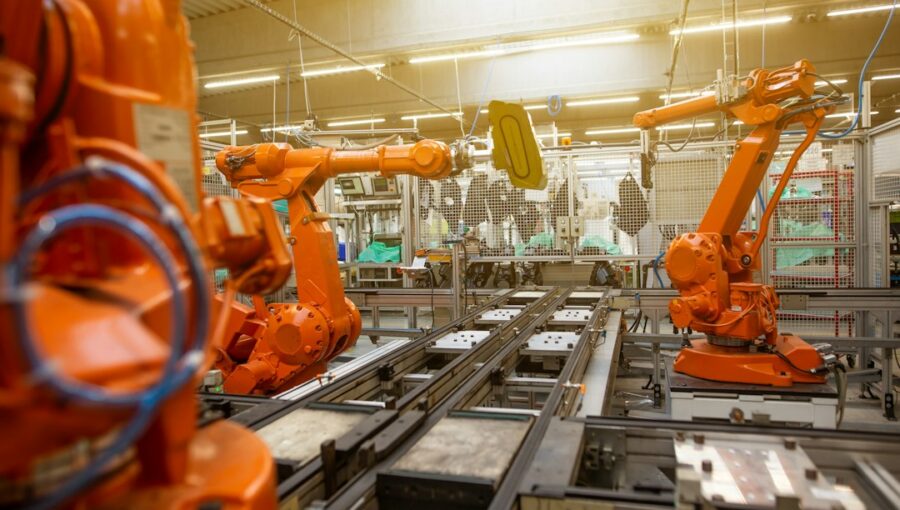
Autonomous systems and robotics engineering roles demand a blend of traditional engineering principles and specialized, cutting-edge knowledge. If you’re looking to break into this exciting field or advance your career, you’ll generally need a strong foundation in computer science, electrical engineering, or mechanical engineering, combined with practical skills in areas like AI, machine learning, and control systems. It’s not just about degrees; hands-on experience and a continuous learning mindset are crucial.
Foundational Engineering Disciplences
A solid engineering background is the bedrock for anyone aspiring to work in autonomous systems and robotics. While specific roles might lean more heavily on one discipline, a good understanding across these areas is incredibly beneficial.
Computer Science Essentials
Computer science forms the brain of autonomous systems. You’ll be dealing with algorithms, data structures, and the software that dictates how these systems perceive, decide, and act.
Strong Programming Skills
This is non-negotiable. Proficiency in languages like Python, C++, and Java is paramount. Python is often favored for its rapid prototyping capabilities, extensive libraries for AI/ML, and readability. C++ is critical for performance-sensitive applications, real-time operating systems (RTOS), and embedded systems where efficiency is key. Java might appear in certain enterprise-level applications or specific hardware integrations. Beyond just writing code, understanding software engineering principles – modularity, version control (Git is a must-know), debugging, and testing – is essential. You’ll be building complex systems, and maintainable, robust code is vital.
Algorithms and Data Structures
Knowing how to efficiently process information is central to robotics. Understanding algorithms for path planning, motion control, perception (e.g., computer vision algorithms), and decision-making is fundamental. Data structures like trees, graphs, heaps, and hash tables are not just academic exercises; they are the tools you’ll use to manage and manipulate the vast amounts of data that autonomous systems generate and consume.
Operating Systems and Real-Time Systems
Robots often operate in environments where timing is critical. Understanding operating systems, especially real-time operating systems (RTOS) like FreeRTOS, VxWorks, or even specialized Linux distributions (like PREEMPT_RT patched kernels), is crucial. You’ll need to know about scheduling, concurrency, inter-process communication, and managing hardware resources effectively to ensure predictable and timely responses from the robot.
Distributed Systems
As autonomous systems become more complex, they often involve multiple components or even fleets of robots communicating and cooperating. Knowledge of distributed systems, network protocols, message queues (like ROS topics/services, MQTT, ZeroMQ), and how to handle data synchronization and fault tolerance across a network of devices is becoming increasingly important.
Electrical and Electronics Engineering Prowess
The physical components and the power that drives them fall under electrical engineering. This is where the hardware interacts with the software.
Digital and Analog Electronics
You need to understand how sensors work, how to interface them with microcontrollers, and how to read and interpret their outputs. This includes knowledge of ADCs/DACs, amplifiers, filters, and basic circuit design. Debugging hardware often requires an understanding of oscilloscopes, multimeters, and logic analyzers.
Microcontrollers and Embedded Systems
Autonomous systems are fundamentally embedded systems. Proficiency with microcontrollers (like ARM Cortex-M series, ESP32, Arduino platforms) and microprocessors (like ARM Cortex-A series, Intel Atom) is key. This involves understanding their architecture, memory organization, peripherals (UART, SPI, I2C, CAN bus), and how to program them at a low level. Firmware development and debugging are core skills here.
Power Electronics and Battery Management
Robots need power, and often from batteries. Understanding power conversion (DC-DC converters, motor drivers), battery technologies (LiPo, Li-ion), and battery management systems (BMS) is crucial for designing reliable and energy-efficient autonomous platforms. Safety considerations related to high-power systems are also paramount.
Sensor and Actuator Interfacing
Robots perceive their environment through sensors (LIDAR, cameras, IMUs, encoders, ultrasonic) and act upon it with actuators (motors, servos, grippers). Knowing how to choose the right sensor for a task, interface it correctly, process its data, and control actuators precisely is a fundamental skill. This also involves understanding feedback control loops in the context of hardware.
Mechanical Engineering Fundamentals
Mechanical engineering provides the physical structure, movement, and interaction with the environment.
Kinematics and Dynamics
Understanding how robots move and interact with forces is critical. This includes forward and inverse kinematics for robotic manipulators, understanding joint limits, workspace analysis, and dynamics for simulating and controlling robot motion. Concepts like inertia, torque, and friction are daily considerations.
Mechatronics and Robotics Design
Mechatronics is the synergistic integration of mechanical engineering, electronics, control engineering, and computer science. This interdisciplinary approach is exactly what robotics is about. You’ll need to understand how to design mechanical components that can accommodate electronics, be manufactured efficiently, and perform reliably under various loads and stresses. CAD software (SolidWorks, Inventor, Fusion 360) for design and simulation is a core tool.
Materials Science
Choosing the right materials for a robot’s structure, components, and end-effectors is crucial for performance, durability, and weight. Understanding properties like strength-to-weight ratio, stiffness, fatigue resistance, and thermal expansion is important.
Manufacturing Processes
Knowing how parts are made – whether through 3D printing, CNC machining, injection molding, or welding – influences design decisions and feasibility. An awareness of manufacturing constraints and capabilities will lead to more practical and cost-effective robot designs.
In the rapidly evolving field of Autonomous Systems and Robotics Engineering, understanding the key qualifications for modern roles is essential for aspiring professionals. A related article that provides insights into making informed decisions in technology is available at How to Choose Your Child’s First Smartphone. While the article focuses on smartphone selection for children, it highlights the importance of technological literacy and informed decision-making, skills that are equally crucial in the realm of robotics and autonomous systems.
Key Takeaways
- The training data includes information and events up to October 2023.
- Insights and knowledge are based on a wide range of sources available until the cutoff date.
- No updates or developments occurring after October 2023 are included in the training.
- Users should verify current information from reliable sources for the latest updates.
- The model’s responses reflect the context and knowledge available up to the specified date.
Specialized Skills for Autonomous Systems

Beyond the foundational engineering, autonomous systems demand specific expertise in areas like artificial intelligence, control theory, and perception.
Artificial Intelligence and Machine Learning
AI and ML are the brains behind intelligent autonomy, enabling robots to learn, adapt, and make complex decisions.
Machine Learning Fundamentals
A strong grasp of supervised, unsupervised, and reinforcement learning paradigms is essential. You’ll need to understand common algorithms like regression, classification (SVMs, decision trees, neural networks), clustering, and dimensionality reduction. This also includes knowing how to evaluate model performance, deal with bias, and understand generalization.
Deep Learning for Perception and Control
Deep learning, particularly convolutional neural networks (CNNs) for computer vision and recurrent neural networks (RNNs) for sequential data, is a game-changer. You’ll likely use deep learning for object detection, semantic segmentation, scene understanding, and potentially for direct control policies. Familiarity with frameworks like TensorFlow or PyTorch is crucial.
Reinforcement Learning
For tasks where explicit programming is difficult, reinforcement learning allows robots to learn optimal behaviors through trial and error. This is particularly relevant for complex manipulation, navigation in dynamic environments, and human-robot interaction. Understanding concepts like Markov Decision Processes (MDPs), Q-learning, and policy gradients is valuable.
Data Science and Big Data
Autonomous systems generate vast amounts of data. Skills in data cleaning, feature engineering, data visualization, and managing large datasets are increasingly important. This includes familiarity with tools for data processing and storage.
In the rapidly evolving field of Autonomous Systems and Robotics Engineering, understanding the key qualifications for modern roles is essential for aspiring professionals. A related article discusses the importance of software tools in enhancing design capabilities, which can be particularly beneficial for engineers looking to create innovative solutions. For instance, exploring the best software for logo design can provide insights into how design principles can be applied in robotics. To learn more about these tools, you can read the article here.
Control Systems Engineering
Control systems ensure that robots move precisely and predictably according to commands.
Classical and Modern Control Theory
Understanding PID control is foundational, but you’ll also need knowledge of more advanced techniques like state-space control, optimal control (e.g., LQR), model predictive control (MPC), and adaptive control. These are vital for achieving stable, accurate, and robust robot motion, especially in the face of disturbances.
State Estimation and Filtering
Robots rarely have perfect information about their own state or the environment. Techniques like Kalman Filters, Extended Kalman Filters (EKF), Unscented Kalman Filters (UKF), and particle filters (e.g., Monte Carlo Localization) are used to estimate the robot’s pose, velocity, and environmental features from noisy sensor data. This is crucial for accurate navigation and perception.
Motion Planning and Navigation
This involves generating safe and efficient paths for robots.
Skills in algorithms like A, RRT (Rapidly-exploring Random Tree), D Lite, and sampling-based planners are essential for autonomous navigation in complex environments.
This also includes understanding collision avoidance strategies and obstacle detection.
Computer Vision and Perception
Perception allows robots to “see” and interpret their surroundings.
Image Processing and Feature Extraction
Understanding techniques for image enhancement, noise reduction, and extracting meaningful features (e.g., SIFT, SURF, ORB) from camera data is critical. This forms the basis for object recognition and tracking.
3D Vision and Scene Understanding
With the rise of LIDAR and depth cameras, 3D perception is paramount. Skills in point cloud processing, 3D reconstruction, object segmentation in 3D, and simultaneous localization and mapping (SLAM) are highly valued. SLAM allows robots to build maps of unknown environments while simultaneously tracking their own position within those maps.
Object Detection and Tracking
Using techniques like YOLO, SSD, or R-CNN for real-time object detection and algorithms like Kalman filters or optical flow for tracking objects in motion are key for tasks like autonomous driving, robotic manipulation, and human-robot collaboration.
Robotics-Specific Tools and Frameworks

Beyond theoretical knowledge, practical application often hinges on familiarity with specific software and hardware platforms.
Robot Operating System (ROS/ROS 2)
ROS is effectively the “operating system” for many robots. Proficiency in ROS (or its newer iteration, ROS 2) is almost a mandatory skill. You need to understand its architecture (nodes, topics, services, actions), how to create and debug packages, utilize its simulation tools (Gazebo, RViz), and integrate various hardware components.
Simulation Environments
Before deploying to physical robots, extensive testing and development occur in simulation.
Expertise with simulators like Gazebo (often integrated with ROS), Webots, MuJoCo, Isaac Sim, or V-REP/CoppeliaSim is highly beneficial. These tools allow for rapid iteration, testing various scenarios, and training AI models without risking physical hardware.
CAD Software and Mechanical Design Tools
As mentioned, SolidWorks, Inventor, Fusion 360, or Onshape are industry standards for mechanical design. Being able to model robot components, assemblies, and perform basic simulations (e.g., stress analysis, kinematic studies) is a valuable asset.
Embedded Development Environments
Familiarity with IDEs like VS Code with platform-specific extensions, PlatformIO, or specific vendor IDEs (e.g., STM32CubeIDE) for microcontroller programming is essential.
Understanding debugging techniques at the hardware level is also crucial.
Version Control Systems
Git is the undisputed standard for version control in software development. You must be proficient with Git and platforms like GitHub, GitLab, or Bitbucket for collaborative development, code management, and deployment.
Soft Skills and Continuous Learning
Technical prowess alone isn’t enough. The rapidly evolving nature of autonomous systems demands a particular mindset.
Problem-Solving and Critical Thinking
Robotics is inherently challenging. You’ll encounter novel problems that don’t have off-the-shelf solutions. The ability to break down complex problems, identify root causes, and devise creative solutions is paramount. This requires strong analytical skills and a willingness to experiment.
Adaptability and Lifelong Learning
The field of autonomous systems is constantly advancing. New algorithms, sensors, hardware, and techniques emerge regularly. A successful engineer in this domain must be a lifelong learner, eager to pick up new skills, research emerging technologies, and adapt to changing requirements. Staying current with academic papers, industry blogs, and open-source projects is key.
Teamwork and Communication
Autonomous systems projects are almost always multidisciplinary and involve large teams. You’ll work with electrical engineers, mechanical engineers, software developers, AI researchers, and project managers. Effective communication – both written and verbal – is essential for collaborating, articulating ideas, and documenting your work clearly.
Attention to Detail and Safety Consciousness
Even small errors in autonomous systems can have significant consequences. A meticulous approach to design, implementation, testing, and debugging is crucial. Furthermore, an unwavering commitment to safety, understanding functional safety standards (e.g., ISO 26262 for automotive, ISO 13849 for machinery), and designing for fault tolerance are not just good practices but ethical imperatives.
Project Management and Agile Methodologies
While not typically a “hard skill” for an individual engineer, understanding project management principles and agile development methodologies (Scrum, Kanban) helps you integrate effectively into development cycles, estimate tasks, and contribute to efficient project delivery. Many robotics companies operate with agile principles to manage complex, iterative development.
In conclusion, a career in autonomous systems and robotics engineering requires a robust foundation in traditional engineering disciplines, specialized skills in AI/ML, control, and perception, practical experience with industry tools, and a set of critical soft skills. It’s a demanding but incredibly rewarding field for those who enjoy solving complex challenges at the forefront of technology.
FAQs
What are the key qualifications needed for roles in Autonomous Systems and Robotics Engineering?
The key qualifications for roles in Autonomous Systems and Robotics Engineering include a strong background in computer science, electrical engineering, mechanical engineering, or a related field. Additionally, knowledge of programming languages, such as C++, Python, or Java, is essential.
What technical skills are important for professionals in Autonomous Systems and Robotics Engineering?
Professionals in Autonomous Systems and Robotics Engineering should have technical skills in areas such as machine learning, artificial intelligence, control systems, sensor fusion, and computer vision. These skills are crucial for designing and developing autonomous systems and robotics.
What educational background is typically required for a career in Autonomous Systems and Robotics Engineering?
A typical educational background for a career in Autonomous Systems and Robotics Engineering includes a bachelor’s degree in engineering, computer science, or a related field. Many professionals in this field also pursue advanced degrees, such as a master’s or Ph.D., to further specialize their knowledge.
What are some common job titles in the field of Autonomous Systems and Robotics Engineering?
Common job titles in the field of Autonomous Systems and Robotics Engineering include Robotics Engineer, Autonomous Systems Engineer, Control Systems Engineer, Machine Learning Engineer, and Computer Vision Engineer. These professionals work on designing, developing, and implementing autonomous systems and robotics technologies.
What are some industries that rely on professionals with expertise in Autonomous Systems and Robotics Engineering?
Industries that rely on professionals with expertise in Autonomous Systems and Robotics Engineering include automotive, aerospace, healthcare, manufacturing, and defense. These industries use autonomous systems and robotics technologies for tasks such as autonomous vehicles, medical robotics, industrial automation, and unmanned aerial vehicles.
Enjoying our content? Make us a preferred source on Google:
Add us as a Preferred Source on Google