


So, what is autonomous finance all about? In a nutshell, it’s where artificial intelligence, specifically AI agents, takes the reins in managing investment portfolios. We’re talking about sophisticated algorithms that don’t just execute predefined rules but learn, adapt, and make independent decisions to optimize investments. This isn’t just an upgrade to your typical algorithmic trading; it’s a fundamental shift towards self-governing financial systems that are redefining how portfolios are managed.
The Evolution of Algorithmic Portfolio Management
For a while now, algorithms have been a staple in finance. From high-frequency trading to complex risk models, they’ve brought speed and efficiency. But let’s be real, these early algorithms, while powerful, were largely rule-based. They followed instructions given to them by humans. If the market shifted in an unexpected way, or if a new data point emerged that wasn’t covered by their explicit rules, they often struggled.
From Rules to Learning: The AI Infusion
The real game-changer came with the integration of AI, particularly machine learning. This isn’t about simply coding if/then statements. It’s about algorithms that can ingest vast amounts of data – market prices, economic indicators, news sentiment, even social media trends – and identify patterns that human analysts might miss. They learn from historical data, predict future movements, and adapt their strategies based on new information. This means they aren’t just faster; they’re smarter and more dynamic.
The Rise of AI Agents
Now, take that a step further, and you get AI agents. These aren’t just a collection of algorithms; they are autonomous entities designed to achieve specific financial goals. Think of them as digital portfolio managers, but with superhuman processing power and an insatiable appetite for data. They can operate continuously, monitoring markets 24/7, executing trades, rebalancing portfolios, and managing risk without direct human intervention in real-time. This level of autonomy is what truly sets autonomous finance apart. It’s a shift from assisted decision-making to independent decision-making, albeit with human oversight and ultimate control still very much in the picture for responsible implementation.
In the rapidly evolving landscape of finance, the integration of artificial intelligence into portfolio management is becoming increasingly significant. A related article that explores the technological advancements in this field is titled “The Ultimate Guide to the Best Screen Recording Software in 2023.” While it primarily focuses on software tools, it highlights the importance of technology in enhancing productivity and efficiency, which is also a key aspect of how AI agents are reshaping algorithmic portfolio management. For more insights, you can read the article here.
Key Takeaways
- The training data includes information and events up to October 2023.
- Insights and knowledge are based on a wide range of sources available until the cutoff date.
- No updates or developments occurring after October 2023 are included in the training.
- Users should verify current information from reliable sources for the latest updates.
- The model’s responses reflect the context and knowledge available up to the specified date.
How AI Agents Operate in Portfolio Management
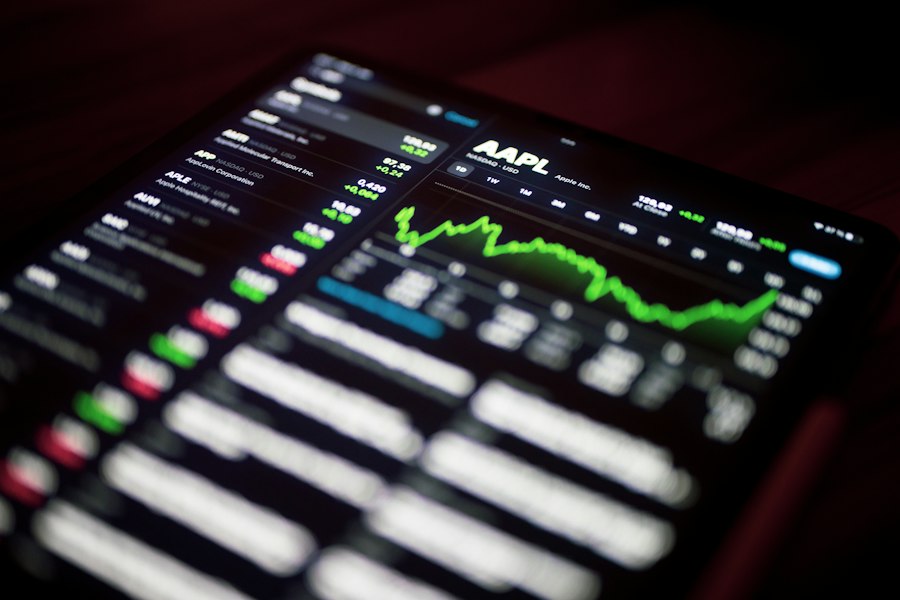
Understanding how these AI agents actually work is key. It’s not magic, but a complex interplay of different AI techniques working in concert. Their core function is to optimize a portfolio’s performance given a set of objectives, which could include maximizing returns, minimizing risk, or achieving a specific balance between the two.
Data Ingestion and Feature Engineering
At the foundation, AI agents are data-driven. They constantly ingest colossal amounts of information. This includes structured data like stock prices, trading volumes, interest rates, and macroeconomic indicators. But it also extends to unstructured data: news articles, company reports, social media posts, and even satellite imagery in some advanced cases (e.g., tracking cargo ships to predict economic activity).
Feature engineering is a crucial step here. It’s about transforming raw data into meaningful features that the AI can understand and learn from. For example, instead of just the stock price, an agent might analyze the 50-day moving average, the volume-weighted average price, or the implied volatility derived from options contracts. These engineered features provide a richer context for decision-making.
Predictive Modeling and Market Forecasting
Once the data is prepped, AI agents employ various machine learning models to make predictions. These can range from traditional time-series models like ARIMA to more advanced neural networks and deep learning architectures. Their goal is to forecast future market movements, asset prices, and even predict the probability of certain events occurring.
For instance, a model might predict the likelihood of a stock price increasing or decreasing over the next hour, day, or week. Others might forecast overall market volatility or the performance of a specific sector. These predictions aren’t perfect, of course, but they provide a probabilistic basis for investment decisions.
Reinforcement Learning for Decision Making
This is where things get really interesting in terms of autonomy. While predictive models forecast, reinforcement learning (RL) agents are designed to act. Think of it like training a sophisticated game player. The RL agent observes the market “environment,” takes an action (e.g., buy, sell, hold), and then receives a “reward” or “penalty” based on the outcome of that action. Over time, through countless simulated or real-world interactions, the agent learns the optimal sequence of actions to maximize its cumulative reward – in this case, portfolio returns adjusted for risk.
RL agents are particularly powerful because they can learn complex, non-linear relationships and adapt to changing market conditions. They don’t just follow predefined rules; they discover optimal strategies through trial and error, much like how humans learn, but at an incredibly accelerated pace.
Portfolio Construction and Rebalancing
Based on its predictions and learned strategies, the AI agent constructs and continually rebalances the investment portfolio. This involves deciding which assets to buy, how much of each, and when to sell. It considers factors like diversification, risk tolerance, and liquidity.
For example, if the agent predicts an upcoming market downturn, it might automatically shift the portfolio towards more defensive assets or increase its cash holdings. Conversely, if it identifies undervalued assets with high growth potential, it will allocate capital accordingly. The rebalancing process is continuous, ensuring the portfolio always aligns with its objectives and the agent’s latest market assessments.
Risk Management and Compliance
Crucially, AI agents are not just about maximizing returns; they are also designed with sophisticated risk management capabilities. They can monitor various risk metrics in real-time, such as Value-at-Risk (VaR), stress scenarios, and concentration risk. If a portfolio’s risk profile deviates from acceptable parameters, the agent can take corrective actions, such as reducing exposure to certain assets or hedging positions.
Compliance is another vital aspect. AI agents can be programmed to adhere to specific regulatory requirements, investment mandates, and client preferences. This helps ensure that all trades and portfolio adjustments are within legal and ethical boundaries, and meet the specific needs of the investor or institution.
The Advantages of Autonomous Finance

The shift to AI-driven portfolio management brings a host of compelling advantages, moving beyond the capabilities of traditional human-managed or even basic algorithmic approaches.
Enhanced Performance and Efficiency
One of the most immediate benefits is the potential for improved performance. AI agents can process and analyze vast quantities of data far quicker and more comprehensively than any human team. This allows them to identify subtle patterns and arbitrage opportunities that might otherwise be missed.
Their ability to react instantaneously to market changes means they can execute trades at optimal times, potentially capturing alpha that human traders might be too slow to capitalize on.
Moreover, efficiency gains are significant. The automation of tasks like data collection, analysis, and trade execution reduces operational costs and frees up human capital to focus on higher-level strategy, oversight, and client relations.
Unbiased Decision Making
Human emotions, biases, and fatigue are inherent parts of traditional investing. Fear and greed can lead to suboptimal decisions, especially during volatile market periods.
AI agents, by their nature, are devoid of these emotional biases.
They make decisions purely based on data and algorithms, adhering to their programmed objectives without succumbing to panic selling or irrational exuberance.
This unemotional consistency can lead to more disciplined and ultimately more rational investment outcomes.
Continuous Learning and Adaptation
Markets are dynamic and constantly evolving. What worked yesterday might not work tomorrow. A key advantage of AI agents, particularly those employing machine learning and reinforcement learning, is their capacity for continuous learning and adaptation.
As new data becomes available and market conditions shift, these agents can update their models, refine their strategies, and adjust their parameters. This adaptability allows them to remain effective even in unforeseen circumstances, constantly striving for optimal performance. They don’t just execute; they evolve.
Scalability and Accessibility
Autonomous finance solutions are highly scalable.
Once an AI agent is developed and tested, it can be deployed to manage multiple portfolios simultaneously, each tailored to specific client objectives, without a proportional increase in human resource costs. This scalability means that sophisticated portfolio management techniques, traditionally reserved for institutional investors, can become more accessible to a broader range of investors, potentially democratizing advanced financial strategies.
Robust Risk Management
While past algorithmic systems sometimes struggled with unexpected risks, modern AI agents are designed with advanced risk management built into their core. They can continuously monitor a multitude of risk factors, identify potential threats, and automatically adjust portfolio allocations to mitigate exposure.
For example, if a specific sector shows signs of impending volatility, the agent can proactively reduce exposure or implement hedging strategies, far faster and more consistently than a human analyst could. This proactive and continuous risk assessment contributes to more stable and resilient portfolios.
Challenges and Considerations
While the promise of autonomous finance is exciting, it’s not without its hurdles. Implementing and relying on AI agents for portfolio management brings a unique set of challenges that need careful consideration.
The Black Box Problem
One of the most frequently cited concerns is the “black box” nature of some advanced AI models, especially deep learning networks. It can be incredibly difficult, sometimes even impossible, to fully understand why a particular AI agent made a specific decision. While we can observe the input and output, the internal logic and complex interplay of millions of parameters might be opaque. This lack of interpretability can be problematic for regulators, compliance officers, and even portfolio managers who need to justify investment decisions or understand the root cause of a deviation.
Data Dependency and Quality
AI agents are only as good as the data they are fed. If the input data is incomplete, inaccurate, biased, or simply not representative of future market conditions, the AI’s decisions will be flawed. Ensuring data quality, cleansing, and curation is a massive ongoing task. Furthermore, over-reliance on historical data can lead to issues if future market dynamics diverge significantly from the past, as AI might struggle to adapt to truly novel events or “black swan” scenarios not present in its training data.
Algorithmic Bias and Fairness
If the training data itself contains historical biases (e.g., certain sectors historically underperforming due to societal biases), the AI agent might learn and perpetuate those biases in its investment decisions. While humans have biases too, identifying and mitigating algorithmic bias requires careful design and constant monitoring. Ensuring fairness, especially when applying AI to diverse client portfolios or socially responsible investing, is a critical ethical consideration.
Cybersecurity and System Resilience
Autonomous systems, by their very nature, are interconnected and operate with significant autonomy. This presents substantial cybersecurity risks. A successful breach could not only expose sensitive financial data but also potentially allow malicious actors to manipulate trading strategies or asset allocations, leading to massive financial losses. Robust security protocols, continuous monitoring, and resilient system architectures are absolutely paramount. Additionally, the risk of system failures, bugs, or unexpected behavior needs to be managed through rigorous testing, fail-safes, and human oversight.
Regulatory and Ethical Frameworks
The rapid evolution of autonomous finance often outpaces the development of regulatory frameworks. Questions abound: Who is ultimately responsible when an AI agent makes a losing trade? How do we ensure these systems don’t contribute to market instability? What are the ethical implications of fully automated financial decision-making? Regulators are grappling with how to oversee these sophisticated systems, balancing innovation with investor protection and market integrity. Establishing clear ethical guidelines for the development and deployment of AI in finance is also a nascent but crucial field.
Human Oversight and Intervention
Despite the “autonomous” label, human oversight and intervention remain critical. AI agents are tools, not replacements for human judgment, especially in complex, novel situations or during times of extreme market stress. There needs to be a clear process for humans to monitor agent performance, understand their decisions (to the extent possible), and step in to override or adjust strategies when necessary. The optimal scenario likely involves a collaborative approach where AI handles the heavy lifting of data analysis and execution, while human experts provide strategic direction, ethical guidance, and critical oversight.
The rise of autonomous finance is significantly transforming the landscape of investment strategies, particularly through the use of AI agents that enhance algorithmic portfolio management. As these intelligent systems analyze vast amounts of data and adapt to market changes in real-time, they offer investors unprecedented insights and efficiency. For those interested in exploring how technology is influencing various fields, a related article on the best laptops for video and photo editing can provide valuable information on the tools that creative professionals use to harness such advancements. You can read more about it here.
The Future Landscape of Autonomous Finance
| Metric | Description | Impact of AI Agents | Example Value |
|---|---|---|---|
| Portfolio Return | Annualized percentage gain of the portfolio | Improved through real-time data analysis and adaptive strategies | 12.5% |
| Risk-Adjusted Return (Sharpe Ratio) | Return per unit of risk taken | Enhanced by AI’s ability to optimize asset allocation dynamically | 1.8 |
| Trade Execution Speed | Time taken to execute trades after signal generation | Reduced significantly due to automated decision-making and execution | Milliseconds |
| Prediction Accuracy | Accuracy of AI models in forecasting asset price movements | Improved with machine learning and continuous model training | 75% |
| Portfolio Diversification | Number of distinct assets held to reduce risk | Optimized by AI to balance risk and return effectively | 15 assets |
| Operational Costs | Costs associated with portfolio management activities | Lowered through automation and reduced human intervention | 30% reduction |
| Market Adaptability | Speed and effectiveness in adjusting to market changes | Enhanced by AI’s continuous learning and real-time data processing | Near real-time |
Looking ahead, autonomous finance is poised for significant growth and deeper integration into the financial ecosystem. It’s not a question of if but how quickly these technologies will mature and become mainstream.
Increasing Sophistication of AI Agents
We can expect AI agents to become even more sophisticated. This means moving beyond current capabilities to incorporate more advanced forms of AI like causal inference (understanding cause-and-effect relationships rather than just correlations), explainable AI (XAI) to address the black box problem, and even quantum-inspired algorithms for truly massive computational problems. They’ll likely integrate an even broader array of alternative data sources, from satellite images tracking supply chains to sentiment analysis of global news in multiple languages, providing an unparalleled mosaic of market insights.
Hybrid Models and Human-AI Collaboration
The future isn’t necessarily about fully automated, hands-off systems. More likely, we’ll see a prevalence of hybrid models where AI agents handle the high-volume, repetitive, and data-intensive tasks, while human experts focus on strategic decision-making, client relationship management, and navigating complex, nuanced situations that require intuition and emotional intelligence. This collaborative approach leverages the strengths of both AI and human intelligence, creating a more robust and adaptable financial management system. Think of AI as providing a highly intelligent assistant that executes precisely according to broad human-defined parameters and alerts humans to anomalies.
Personalization at Scale
One of the most exciting prospects is the ability to offer hyper-personalized portfolio management at an unprecedented scale. AI agents can analyze individual investor goals, risk tolerance, liquidity needs, ethical preferences (e.g., ESG investing), and tax situations with extreme granularity. This allows for truly customized portfolios that dynamically adjust to life changes and market conditions, moving far beyond the standardized model portfolios common today. This level of personalization, once a luxury, could become widely accessible.
Broader Adoption Across Financial Services
While initially gaining traction in areas like quantitative hedge funds and institutional asset management, autonomous finance is expected to expand its reach across the entire financial services industry. We’ll see its principles applied to retail investment platforms, wealth management, retirement planning, insurance product design, and even corporate treasury management. Smaller firms and individual investors will likely gain access to tools and services that were once exclusive to large institutions.
Regulatory Evolution and Standardization
As autonomous finance matures, so too will the regulatory landscape. Expect to see clearer guidelines, standards, and possibly new regulatory bodies or frameworks designed specifically for AI in finance. The focus will be on ensuring transparency, accountability, fairness, and systemic stability. International cooperation will be crucial to establish consistent standards for these global systems. This regulatory evolution, while challenging, is essential for fostering trust and widespread adoption.
Autonomous finance, driven by intelligent AI agents, isn’t just a niche trend; it’s a foundational shift in how investment portfolios are managed. By combining unparalleled data analysis capabilities, emotional neutrality, and continuous learning, these systems are redefining efficiency, risk management, and personalization in the financial world. While challenges remain, particularly around transparency and regulation, the trajectory is clear: AI agents are set to play an increasingly central role, transforming algorithmic portfolio management from a set of rules into a dynamic, adaptive, and ultimately more autonomous domain.
FAQs
What is autonomous finance?
Autonomous finance refers to the use of artificial intelligence (AI) and machine learning technologies to automate financial decision-making processes, including investment strategies, risk management, and portfolio management. This approach allows for more efficient and data-driven financial operations, reducing the need for human intervention.
How do AI agents contribute to algorithmic portfolio management?
AI agents analyze vast amounts of financial data and market trends to make informed investment decisions. They can identify patterns, optimize asset allocation, and execute trades at high speeds, which enhances the overall performance of investment portfolios while minimizing risks associated with human error.
What are the benefits of using AI in portfolio management?
The benefits of using AI in portfolio management include improved accuracy in forecasting market movements, enhanced risk assessment capabilities, increased efficiency in trade execution, and the ability to continuously learn and adapt strategies based on real-time data. This leads to potentially higher returns and better risk management for investors.
Are there any risks associated with autonomous finance?
Yes, there are risks associated with autonomous finance, including the potential for algorithmic trading errors, over-reliance on technology, and the possibility of market manipulation through high-frequency trading. Additionally, AI systems can be vulnerable to biases in data, which may lead to suboptimal investment decisions.
How is the regulatory landscape adapting to autonomous finance?
The regulatory landscape is evolving to address the challenges posed by autonomous finance. Regulators are focusing on ensuring transparency, accountability, and fairness in AI-driven financial systems. This includes developing guidelines for algorithmic trading, data privacy, and the ethical use of AI in financial services to protect investors and maintain market integrity.
Enjoying our content? Make us a preferred source on Google:
Add us as a Preferred Source on Google