


The short answer is yes, Augmented Reality (AR) is significantly changing how we handle on-site construction inspections when integrated with Building Information Modeling (BIM). It’s making the process more efficient, accurate, and collaborative by overlaying digital BIM data directly onto the physical construction site in real-time. This means inspectors and project managers can literally “see through” walls, identify discrepancies instantly, and access crucial information without ever leaving the construction site.
Understanding the Challenges of Traditional On-Site Inspections
Before we dive deeper into AR, let’s acknowledge the common headaches that plague traditional construction inspections. These aren’t just minor inconveniences; they often lead to costly delays, rework, and even safety hazards.
The Paper Problem and Data Disconnect
Think about a typical site inspection. You’ve got stacks of blueprints, specification documents, checklists, and maybe a tablet with some PDF plans. The inspector has to constantly refer back and forth between the physical structure and these various documents. This manual cross-referencing is incredibly time-consuming and prone to human error. Updates to plans might not be immediately reflected in all physical documents, leading to outdated information being used. Then there’s the challenge of documenting findings. It often involves handwritten notes, photos taken with a separate camera, and then manually inputting all that data back into a system later. This creates a significant data disconnect between what’s happening on site and what’s recorded digitally.
Identifying Discrepancies and Rework
Spotting deviations from the design is another big one. Imagine trying to verify the exact placement of a pipe within a wall before it’s covered. With traditional methods, you’re relying on measurements, drawings, and a lot of guesswork. Even once a discrepancy is found, communicating it effectively to the relevant teams – engineers, foremen, subcontractors – can be cumbersome. Misinterpretations can occur, leading to further delays and, you guessed it, rework. Rework is not just about fixing mistakes; it’s about the wasted materials, labor hours, and the ripple effect on the project schedule and budget.
Communication Gaps and Collaboration Barriers
Construction projects are complex beasts involving numerous stakeholders. Effective communication is paramount, yet often challenging. During inspections, capturing an issue and conveying its precise nature to an off-site engineer or a subcontractor can be difficult. A photo might not fully convey the context, and written descriptions can be ambiguous. This leads to back-and-forth communication, requests for more information, and delays in decision-making. The lack of a unified, real-time platform for all stakeholders to view and comment on inspection findings creates significant collaboration barriers.
In the realm of construction technology, the integration of Augmented Reality (AR) with Building Information Modeling (BIM) is revolutionizing on-site inspections, enhancing accuracy and efficiency. For those interested in exploring how digital tools can further improve training and operational processes in construction, a related article discusses the best software to create training videos, which can complement AR and BIM applications. You can read more about it here: Best Software to Create Training Videos.
Key Takeaways
- The training data includes information and events up to October 2023.
- Insights and knowledge are based on a wide range of sources available until the cutoff date.
- Any developments or changes occurring after October 2023 are not reflected in the training.
- Users should verify current information from reliable sources for the latest updates.
- The model’s responses are informed by historical context and trends up to the specified date.
The Synergy of BIM and Augmented Reality
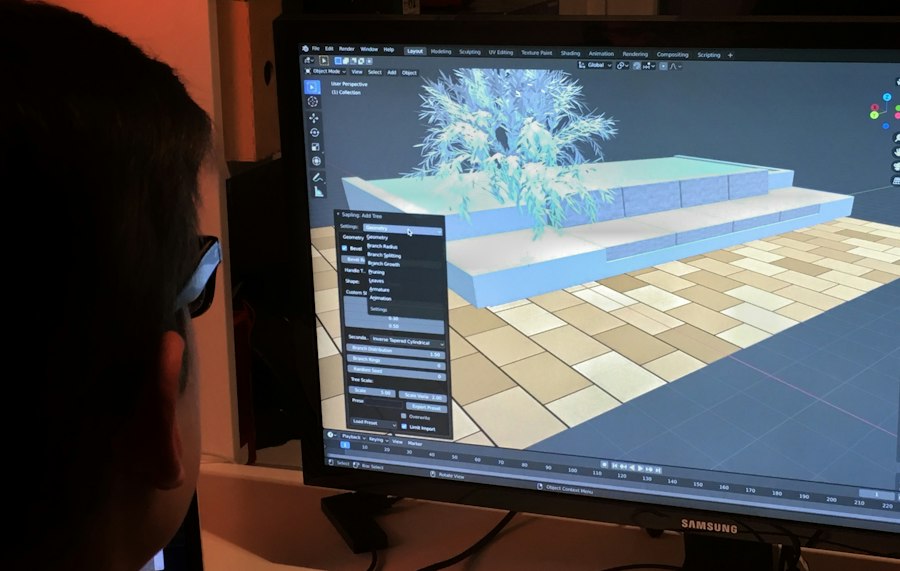
This is where the real game-changer comes in. BIM and AR are powerful individually, but together, they form a formidable duo for construction management.
BIM as the Digital Foundation
Let’s clarify what BIM brings to the table. It’s not just 3D modeling. BIM is a process that involves creating and managing a digital representation of a building’s physical and functional characteristics. This digital model contains a wealth of information beyond geometry, including material specifications, structural details, mechanical, electrical, and plumbing (MEP) systems, cost data, and scheduling information. It’s a single, shared source of truth for the entire project lifecycle. For inspections, this means all the necessary design data is embedded within a comprehensive digital model, readily accessible.
Augmented Reality: Bringing BIM to Life On-Site
AR takes that rich BIM data and overlays it onto the real-world environment. Unlike Virtual Reality (VR), which immerses you in a completely simulated world, AR enhances your perception of the real world by adding digital information. Think of it as a transparent layer of digital insights directly visible on your construction site.
For on-site inspections, this means using AR headsets, tablets, or even smartphones to “see” the BIM model superimposed onto the partially built structure. You can literally walk through a room and see the planned MEP systems, structural beams, or even furniture layouts as if they were already installed, even if they’re currently hidden behind walls or ceilings. This capability transforms how inspectors verify work against design.
How They Connect: Data Flow and Visualization
The connection between BIM and AR is crucial. BIM models are exported or linked to AR platforms. These platforms then process the geometric and informational data from BIM. When an AR device is used on-site, it employs various tracking technologies (GPS, visual markers, spatial mapping) to accurately position the digital BIM model within the real-world view.
Imagine an inspector wearing an AR headset. As they look at a partially constructed wall, the AR system recognizes their location and orientation. It then retrieves the relevant section of the BIM model and projects it onto their field of view. They can see the precise location of electrical conduits, ventilation ducts, or rebar within that wall, even if those elements are currently concealed. This real-time, context-aware visualization is the core of their synergistic power for inspections.
Streamlining On-Site Construction Inspections with AR

Now, let’s get into the practical applications and benefits of using AR for inspections. This is where the real value lies.
Real-time Design Verification and Anomaly Detection
This is arguably the most impactful benefit. Instead of constantly referring to paper plans or a 2D screen, inspectors can use AR to directly compare the as-built conditions with the as-designed BIM model in real-time.
Visualizing Hidden Elements
As mentioned, AR allows inspectors to see through walls, floors, and ceilings.
This is invaluable for verifying the correct placement and installation of hidden infrastructure like plumbing, electrical wiring, HVAC ducts, and structural components. Imagine checking the depth and spacing of rebar before concrete is poured – traditionally, this is a meticulous, often challenging process involving manual measurements and expert interpretation of drawings. With AR, the digital rebar cage from the BIM model is overlaid onto the physical formwork, offering instant visual verification of alignment and quantity.
Instant Discrepancy Identification
When the digital BIM model is accurately superimposed on the physical structure, any deviation immediately becomes apparent. If a pipe is installed a few inches off its intended path, or if a structural beam is misaligned, the AR overlay will clearly show the discrepancy. This allows for immediate identification of errors, rather than discovering them later in the construction process when they are far more expensive and time-consuming to rectify.
This significantly reduces the chances of costly rework down the line.
Enhanced Spatial Awareness
Inspectors gain a much better understanding of the overall spatial relationships of different building components. This can help them identify potential clashes or conflicts between different systems (e.
g.
, an electrical conduit running into an HVAC duct) that might not be immediately obvious on 2D drawings or even standard 3D models viewed on a screen. This proactive clash detection during inspection saves significant time and resources.
Efficient Data Capture and Reporting
Beyond just spotting issues, AR makes the entire process of documenting and reporting inspection findings far more efficient and accurate.
Geo-referenced Annotations and Photos
Many AR platforms allow inspectors to capture photos and videos directly within the AR view.
Crucially, these captures are often geo-referenced, meaning the exact location and orientation where the photo was taken are automatically recorded. Even better, inspectors can place digital annotations, notes, and markups directly onto the BIM model visible through their AR device. These annotations are then linked to specific elements or locations within the BIM model, providing precise context for any identified issues.
No more vague descriptions or drawing arrows on paper plans.
Automated Report Generation
With all the inspection data, photos, and annotations digitally captured and linked to the BIM model, generating comprehensive inspection reports becomes a much simpler, often semi-automated, process. The system can pull together all relevant information, including issue descriptions, photos, location data, and even responsible parties, into a structured report format. This reduces manual data entry, minimizes errors, and speeds up the reporting cycle, ensuring stakeholders receive timely updates.
Integration with Project Management Platforms
The most effective AR-BIM solutions integrate seamlessly with existing project management and Common Data Environment (CDE) platforms.
This means that once an issue is identified and documented through AR, it can be immediately pushed to the project’s task management system. For example, a detected clash can automatically generate a RFI (Request for Information) or a punch list item assigned to the relevant contractor, complete with all supporting AR-captured evidence. This fosters a continuous feedback loop and ensures issues are addressed promptly.
Improved Collaboration and Communication
Effective communication is the cornerstone of successful construction projects.
AR significantly breaks down traditional communication barriers.
Shared Understanding of Issues
When an inspector identifies an issue using AR, they can capture it with a level of detail and context that’s difficult to achieve otherwise. By sharing the AR view (either live or recorded) with other stakeholders, everyone can literally “see” the problem in its real-world context, superimposed with the design intent. This eliminates ambiguity and ensures a shared understanding of the issue among architects, engineers, contractors, and owners.
No more “I thought you meant that wall.”
Remote Expertise and Guidance
AR facilitates remote collaboration. An on-site inspector facing a complex issue can connect with an off-site expert (e.g., a structural engineer or a specialist subcontractor) who can view the inspector’s AR feed in real-time. The expert can then guide the inspector, point out specific details on the live AR overlay, and provide instructions without physically being present on site. This is particularly valuable for geographically dispersed teams or when specialized expertise is needed quickly.
Training and Onboarding
AR can also serve as an excellent training tool.
New inspectors or team members can be walked through a site with AR overlays, allowing them to quickly grasp design intent, identify critical elements, and understand construction sequencing. This accelerates their learning curve and ensures they are up-to-speed faster, contributing to more consistent and accurate inspections from day one.
The Practical Implementation and Considerations
While the benefits are compelling, adopting AR for inspections isn’t simply a matter of buying a headset. There are practical steps and considerations involved.
Hardware and Software Requirements
AR Devices
The choice of AR device depends on the specific use case and project budget.
- AR Headsets (e.g., Microsoft HoloLens, Magic Leap): These offer a hands-free experience, allowing inspectors to interact with the AR overlay using gestures or voice commands. They provide the most immersive and accurate spatial registration. However, they are generally more expensive.
- Tablets/Smartphones: These are more accessible and budget-friendly. Apps like Trimble SiteVision or Gamma AR leverage the cameras and processing power of existing mobile devices to project BIM data. While not as immersive or precise as dedicated headsets, they are an excellent entry point for AR adoption. The main drawback is often needing to hold the device, which can be cumbersome.
Software Platforms
Beyond the device, you need robust software to bridge BIM and AR.
- BIM Authoring Tools: Ensure your BIM models are created in standard formats (e.g., IFC, RVT) that can be easily exported or integrated with AR platforms.
- AR Software Solutions: These platforms ingest the BIM data, handle the spatial registration, allow for on-site data capture (annotations, photos), and often integrate with project management tools. Examples include applications from Autodesk, Trimble, Gamma AR, and various specialized startups.
- Cloud Connectivity: Reliable cloud services are often essential for storing BIM models, syncing data from AR devices, and facilitating collaboration among different team members.
Data Preparation and Model Accuracy
Garbage in, garbage out. The effectiveness of AR for inspections is directly tied to the quality and accuracy of your BIM model.
Level of Detail (LOD)
The BIM model needs to have an appropriate Level of Detail (LOD) for inspection purposes. For example, if you’re inspecting MEP systems, the model should accurately depict the size, location, and connections of pipes and ducts, not just generic representations. Overly complex models can be cumbersome, while under-detailed models won’t provide the necessary information.
Model Integrity and Coordination
Ensure the BIM model is well-coordinated and free from clashes before it’s used in AR. Any errors or uncoordinated elements in the BIM model will be projected onto the real world, leading to confusion and potentially incorrect decisions during inspection. Regular model validation and clash detection processes are critical.
Geo-referencing and Calibration
Accurate geo-referencing of the BIM model to the real-world site is paramount for AR to work effectively. This involves aligning the digital model with the actual coordinates of the construction site. On-site calibration procedures, often involving visual markers or GPS, are necessary to ensure the AR overlay precisely matches the physical reality. Inaccurate calibration can lead to misinterpretations and trust issues with the technology.
Training and Workflow Integration
Technology is only as good as the people using it.
User Training
Inspectors and project managers need proper training on how to use the AR devices and software effectively. This includes understanding the interface, navigating the BIM model in AR, capturing data, and reporting issues. Familiarity and confidence with the technology are key to maximizing its benefits.
Adapting Workflows
Integrating AR requires adapting existing inspection workflows. This might involve defining new procedures for data capture, issue reporting, and communication. It’s not about replacing current practices entirely but enhancing and streamlining them with AR capabilities. This could mean updating inspection checklists to include AR verification points or establishing protocols for sharing AR-captured data.
Phased Implementation
Consider a phased approach to implementation. Start with pilot projects or specific aspects of inspection (e.g., MEP rough-ins) to test the technology, gather feedback, and refine your processes before a broader rollout. This allows for learning and adjustments along the way.
Augmented Reality (AR) is revolutionizing the construction industry, particularly in the realm of Building Information Modeling (BIM), by enhancing on-site inspections and improving overall efficiency. For those interested in the intersection of technology and design, a related article discusses the best laptops for graphic design in 2023, which can be essential tools for architects and engineers working with AR and BIM technologies. You can explore this insightful piece further by visiting the best laptops for graphic design. This integration of advanced technology not only streamlines processes but also elevates the quality of construction projects.
The Future Landscape of AR in Construction Inspections
| Metric | Description | Value | Unit |
|---|---|---|---|
| Inspection Time Reduction | Percentage decrease in time taken for on-site inspections using AR-BIM integration | 30 | % |
| Error Detection Rate | Improvement in identifying construction errors during inspections with AR assistance | 25 | % |
| Data Accuracy | Accuracy of measurements and data captured on-site using AR tools compared to manual methods | 98 | % |
| User Adoption Rate | Percentage of construction inspectors adopting AR-BIM technology on-site | 75 | % |
| Training Time | Average time required to train personnel on AR-BIM inspection tools | 4 | hours |
| Cost Savings | Reduction in inspection-related costs due to AR-BIM implementation | 20 | % |
| On-Site Data Sync Frequency | Number of times BIM data is updated and synchronized on-site during inspections | 5 | times/day |
The journey of AR in construction inspections is still in its early stages, but the trajectory is clear: it’s moving towards greater integration, autonomy, and intelligence.
Enhanced Sensor Integration
Future AR devices will likely feature even more advanced sensors, including LiDAR for highly accurate 3D scanning of as-built conditions. This will enable real-time comparisons between the BIM model and a newly created point cloud of the actual construction, identifying deviations with even greater precision and autonomy. Imagine an AR system that not only shows you where a pipe should be but also automatically flags if its actual position is outside tolerance.
AI and Machine Learning for Predictive Analysis
The integration of AI and machine learning will further revolutionize inspections. AI could analyze the wealth of data collected through AR inspections, identifying patterns of common errors, predicting potential issues based on current progress, and even suggesting optimal inspection points. For example, if a particular subcontractor consistently makes a certain type of error, AI could highlight their work for closer scrutiny.
Digital Twin Evolution
AR plays a crucial role in the development and maintenance of a “digital twin” of a building – a live, virtual replica that continuously updates with real-world data. Inspection data captured via AR feeds directly into this digital twin, providing a perpetually updated record of the building’s as-built condition. This has implications not just for construction, but for the entire lifecycle of the building, including facility management and maintenance.
Robotics and Automated Inspections
While AR enhances human inspectors, future developments could see AR combined with robotics for autonomous or semi-autonomous inspections. Drones equipped with AR capabilities could scan large areas, overlaying BIM data and automatically identifying discrepancies. Human inspectors could then focus on complex issues flagged by these automated systems, further boosting efficiency and safety.
In conclusion, the convergence of Augmented Reality and Building Information Modeling is not just a technological fad; it’s a fundamental shift in how construction inspections are performed. By bridging the gap between the digital design and the physical reality, AR empowers inspectors with unparalleled visibility, accuracy, and efficiency. While implementation requires thoughtful planning and investment, the long-term benefits in terms of reduced rework, improved project timelines, and enhanced collaboration make it a technology that construction firms cannot afford to ignore. The future of streamlined, intelligent, and error-resistant construction inspections is undeniably augmented.
FAQs
What is Building Information Modeling (BIM) in the context of construction?
Building Information Modeling (BIM) is a digital representation of the physical and functional characteristics of a building. It is a collaborative process that allows multiple stakeholders to work together on a construction project by creating a 3D model that contains information about every aspect of the building.
How does Augmented Reality (AR) enhance the construction inspection process?
Augmented Reality (AR) overlays digital information onto the real world, allowing construction inspectors to see virtual elements such as BIM data, plans, and specifications superimposed onto the physical construction site. This technology provides inspectors with real-time access to critical information, streamlining the inspection process and improving accuracy.
What are the benefits of using Augmented Reality for construction inspections?
Using Augmented Reality for construction inspections can lead to increased efficiency, improved accuracy, enhanced collaboration among project stakeholders, reduced rework, and faster decision-making. It also allows inspectors to visualize complex construction details in a more intuitive and interactive way.
How can Augmented Reality help in detecting construction errors and discrepancies?
Augmented Reality can help in detecting construction errors and discrepancies by allowing inspectors to compare the actual construction against the BIM model in real-time. Inspectors can easily identify deviations, clashes, or missing elements, enabling them to address issues promptly and ensure that the construction meets the required standards.
What are some challenges associated with implementing Augmented Reality for construction inspections?
Some challenges associated with implementing Augmented Reality for construction inspections include the initial cost of the technology, the need for specialized training for users, potential technical glitches or compatibility issues, and ensuring the security and privacy of sensitive project data. Overcoming these challenges requires careful planning, investment, and ongoing support from all project stakeholders.
Enjoying our content? Make us a preferred source on Google:
Add us as a Preferred Source on Google