

Welcome! You’re likely here because you’re grappling with API security, specifically the pesky and all-too-common Broken Object Level Authorization (BOLA) vulnerabilities. In a nutshell, BOLA allows an attacker to access or manipulate data that they shouldn’t have access to, simply by changing the ID of an object in an API request. It’s like being able to change the apartment number on a package and have it delivered to your neighbor’s door instead of your own. This article will delve into practical API security architecture strategies to significantly mitigate BOLA vulnerabilities, moving beyond mere detection to proactive prevention.
Understanding Broken Object Level Authorization (BOLA)
Broken Object Level Authorization, sometimes referred to as Insecure Direct Object Reference (IDOR), is a critical security flaw. It occurs when an application doesn’t properly validate whether a user is authorized to access or modify a specific resource (object) based on its identifier. Attackers exploit this by simply manipulating the object ID in an API request (e.g., changing user_id=123 to user_id=456) to access data belonging to another user or entity without proper authorization checks.
The Mechanism of BOLA Exploitation
Imagine an API endpoint designed to retrieve a user’s profile: /api/users/{user_id}/profile. A legitimate user, with user_id=123, sends a request to /api/users/123/profile. If the application fails to perform an authorization check to ensure that the authenticated user (who made the request) is indeed 123, an attacker could simply change the ID to 456 (/api/users/456/profile) and potentially retrieve the profile information for user 456. This isn’t just limited to retrieving data; attackers can often modify or delete resources as well, leading to data breaches, data tampering, and even service disruption.
Why BOLA is So Common
BOLA vulnerabilities are prevalent for a few key reasons. Firstly, developers often focus on functional requirements, assuming that once a user is authenticated, they have a certain level of trust. The granular authorization checks for each specific object are sometimes overlooked or implemented inconsistently. Secondly, RESTful API design, which often exposes resource IDs directly in URLs or request bodies, makes these identifiers easy targets for manipulation. Finally, the complexity of authorization logic can lead to errors, especially in large microservices architectures where authorization might be handled by different services with varying levels of strictness.
In the realm of API security, understanding the nuances of authorization vulnerabilities is crucial for safeguarding applications.
A related article that delves into the importance of robust security measures in software development can be found at Best Software for 3D Animation. This resource highlights various tools and practices that can enhance security architecture, thereby helping developers mitigate risks associated with broken object level authorization vulnerabilities. By integrating these insights into their workflows, developers can create more secure APIs that protect sensitive data from unauthorized access.
Key Takeaways
- The training data includes information and events up to October 2023.
- Insights and knowledge are based on a wide range of sources available until the cutoff date.
- No updates or developments occurring after October 2023 are included in the training.
- Users should verify current information from reliable sources for the latest updates.
- The model’s responses reflect the context and knowledge available up to the specified date.
Architectural Principles for BOLA Mitigation

Effective BOLA mitigation isn’t about patching individual endpoints; it’s about embedding robust authorization into the core API security architecture. This requires a shift from reactive fixes to proactive design.
Centralized Authorization Enforcement
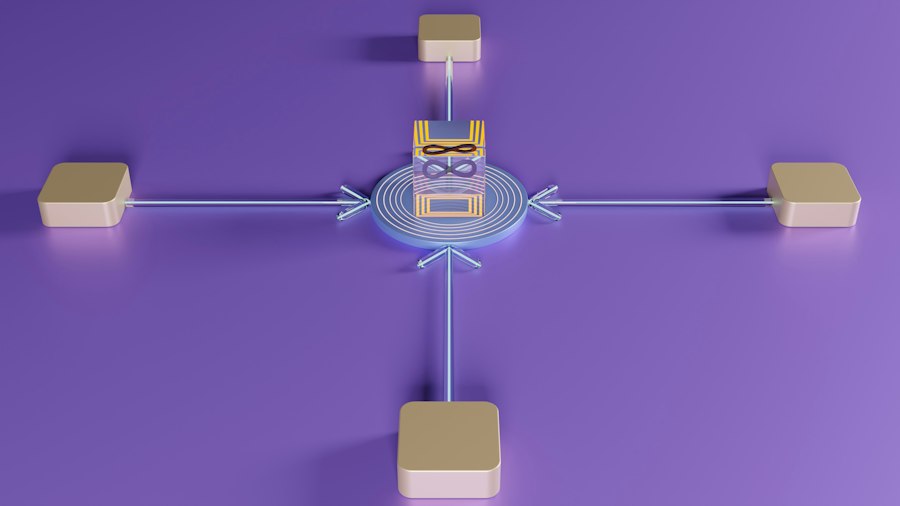
One of the most effective strategies is to centralize authorization enforcement. Instead of each microservice or API endpoint implementing its own authorization logic, a dedicated authorization service or a robust API gateway can handle these checks uniformly.
API Gateway with Authorization Policies
An API Gateway sits in front of your backend services and acts as the single entry point for all API requests. This is an ideal place to enforce authorization policies. The gateway can inspect incoming requests, extract user identity and requested resource information, and then consult an authorization policy engine. If the request is unauthorized for the specific object, the gateway can block it before it even reaches the backend service. This drastically reduces the surface area for BOLA vulnerabilities by ensuring consistent authorization checks across all APIs.
Dedicated Authorization Service
For more complex scenarios, a dedicated authorization service can provide fine-grained access control. This service would receive requests from the API Gateway or individual microservices, evaluate authorization rules based on user roles, permissions, and resource ownership, and then return an access decision (allow/deny). This separation of concerns means that authorization logic is managed centrally, making it easier to audit, update, and maintain. It also promotes reusability and reduces the likelihood of authorization gaps in individual services.
Robust Object Ownership and Access Control
At the heart of preventing BOLA is correctly identifying who owns or has permission to access what. This requires careful consideration during database design and application logic implementation.
User-Scoped Data Filtering
When querying data, always filter results based on the authenticated user’s ID. Instead of SELECT FROM orders WHERE order_id = ?, use SELECT FROM orders WHERE order_id = ? AND user_id = ?, where the user_id is derived from the authenticated user’s session or token, not from the request parameters. This ensures that even if an attacker manipulates the order_id, they won’t be able to access orders not belonging to their user_id.
Contextual Authorization Checks
Authorization should not just be about “is this user logged in?” but “is this user authorized to perform this specific action on this specific object?”. This involves considering the context of the request. For example, a user might be able to view their own profile but not delete it, or they might be able to edit a document if they are the owner, but only view it if they are a collaborator. These contextual checks need to be implemented at the service level, after initial gateway-level authentication and authorization.
Using Non-Guessable Identifiers
While authorization checks are paramount, making it harder for attackers to guess object IDs is a useful supplementary measure.
Universally Unique Identifiers (UUIDs)
Using UUIDs instead of sequential integer IDs for objects makes it significantly harder for attackers to guess valid object IDs. Sequential IDs (e.g., 1, 2, 3…) are easy to iterate through. UUIDs are long, random strings (e.g., a1b2c3d4-e5f6-7890-1234-567890abcdef) that are practically impossible to guess, making brute-force attacks much less feasible.
Hashed or Encrypted IDs
Another approach is to hash or encrypt object IDs before exposing them in the API. The client would then use the hashed/encrypted ID, and the server would decrypt/de-hash it before performing database lookups and authorization checks. This adds an extra layer of obscurity, but it’s important to note that obscurity alone is not a security measure; it must always be coupled with strong authorization. If the decryption key is compromised, or the hashing algorithm is weak, this protection can be easily bypassed.
Implementing Authorization Effectively
Moving from theoretical principles to practical implementation requires careful planning and consistent execution.
Fine-Grained Access Control (FGAC)
Fine-grained access control is crucial for mitigating BOLA. This means defining authorization at the most granular level possible – typically, at the resource-action pair.
Role-Based Access Control (RBAC)
RBAC assigns permissions to roles, and then users are assigned to roles. For example, a “Customer” role might have permissions to read_own_order, update_own_profile.
An “Admin” role might have read_any_order, update_any_profile. When a request comes in, the system checks the user’s roles and the permissions associated with those roles against the requested action on the object. While RBAC provides a good baseline, it often needs to be augmented with attribute-based access control (ABAC) for true fine-grained object-level authorization.
Attribute-Based Access Control (ABAC)
ABAC takes authorization a step further by using attributes associated with the user, the resource, the environment, and the action to make access decisions.
For example, “A user can modify a document if they are the document owner OR they are an editor in the same department as the document owner AND the document is not currently locked for editing.” ABAC policies are more flexible and powerful for BOLA mitigation because they can directly incorporate object ownership or other relevant object attributes into the authorization decision. This makes it much harder for an attacker to bypass checks by simply changing an ID, as the system would also check for matching attributes.
Secure Token Management
Tokens are fundamental to API authentication and authorization. Their secure management is vital.
Short-Lived Access Tokens
Access tokens should have a short lifespan. This limits the window of opportunity for an attacker if a token is compromised. When an access token expires, a refresh token can be used to obtain a new access token, but refresh tokens should be stored securely and have stricter validation.
Including Authorization Information in Tokens (Claims)
JWTs (JSON Web Tokens) are commonly used and can carry claims, which are pieces of information about the user or the token itself.
While putting all authorization logic into a JWT can lead to larger tokens and potentially expose sensitive information, certain claims can be useful. For example, a user_id claim in the JWT can be used by backend services to filter data to the authenticated user, thus directly addressing BOLA by ensuring the user_id for filtering comes from a trusted, signed source (the token) rather than an easily manipulated request parameter. However, critical object-level authorization decisions should still be made on the server side against a live policy, not solely relying on claims in the token which might become stale.
Testing and Monitoring for BOLA
Even with the best architectural design, vulnerabilities can creep in. Continuous testing and monitoring are essential layers of defense.
Penetration Testing and Bug Bounty Programs
Regular penetration testing by security experts is invaluable. These tests simulate real-world attacks, specifically looking for authorization bypasses like BOLA. Engaging with bug bounty programs can also leverage the collective intelligence of ethical hackers to discover and report vulnerabilities before malicious actors do. These programs often specifically target authorization flaws due to their severity.
Automated Security Testing
Integrating security testing into your CI/CD pipeline helps catch vulnerabilities early.
Dynamic Application Security Testing (DAST)
DAST tools test the running application by sending requests and analyzing responses, similar to an attacker. They can often identify BOLA vulnerabilities by manipulating parameters and observing if unauthorized access is granted. DAST is effective because it tests the deployed application as it would be used by an attacker, including all the authorization logic interactions.
Interactive Application Security Testing (IAST)
IAST tools combine elements of DAST and SAST (Static Application Security Testing). They instrument the running application and monitor its execution from within, allowing them to detect security flaws, including authorization issues, with greater accuracy and context than DAST alone. IAST can pinpoint exactly where in the code an authorization failure occurs, making remediation much faster.
API Security Gateways and WAFs
While API gateways are crucial for initial authorization, they also play a role in monitoring. Web Application Firewalls (WAFs) can provide an additional layer of protection.
Real-time Anomaly Detection
API security gateways can monitor API traffic in real-time for suspicious patterns, such as an unusual number of requests to different object IDs from a single user. Anomaly detection systems can flag these behaviors, potentially indicating an ongoing BOLA exploitation attempt.
Logging and Alerting
Comprehensive logging of all API requests, including user IDs, requested endpoints, object IDs, and authorization outcomes, is critical. This log data can be fed into a Security Information and Event Management (SIEM) system for analysis. Configured alerts based on failed authorization attempts or suspicious access patterns can notify security teams immediately when a potential BOLA attack is underway, allowing for rapid response and mitigation.
In the realm of API security, understanding the nuances of authorization is crucial, particularly when addressing vulnerabilities like Broken Object Level Authorization. A related article that delves into the features and benefits of advanced technology, such as the Samsung Galaxy Tab S8, can provide insights into how robust devices can enhance security measures. For a closer look at this powerful tablet and its capabilities, you can check out the article here: Samsung Galaxy Tab S8. This exploration not only highlights the importance of secure API architecture but also emphasizes the role of modern devices in supporting secure applications.
Evolving Your Security Posture
| Metric | Description | Recommended Value/Practice | Impact on Security |
|---|---|---|---|
| Authorization Checks Coverage | Percentage of API endpoints with enforced authorization checks | 100% | Ensures no endpoint is left vulnerable to unauthorized access |
| Access Control Granularity | Level of detail in access control (e.g., object-level, field-level) | Object-level authorization enforced per user/session | Prevents unauthorized data exposure and manipulation |
| Authentication Strength | Type and robustness of authentication mechanisms used | Multi-factor authentication (MFA) recommended | Reduces risk of unauthorized access through compromised credentials |
| Token Expiry Time | Duration before access tokens expire | Short-lived tokens (e.g., 15 minutes to 1 hour) | Limits window for token misuse if compromised |
| Audit Logging Coverage | Percentage of authorization decisions logged | 100% | Enables detection and investigation of unauthorized access attempts |
| Rate Limiting | Maximum allowed API requests per user per time unit | Configured based on usage patterns (e.g., 1000 requests/hour) | Mitigates brute force and enumeration attacks |
| Security Testing Frequency | How often APIs are tested for broken object level authorization | At least quarterly penetration testing and code reviews | Ensures timely identification and remediation of vulnerabilities |
| Use of Standardized Authorization Frameworks | Implementation of frameworks like OAuth 2.0, RBAC, or ABAC | Mandatory for all APIs handling sensitive data | Provides consistent and scalable authorization management |
API security is not a one-time setup; it’s an ongoing process that requires continuous adaptation to new threats and evolving business needs.
Regular Security Reviews and Updates
Your authorization policies, architecture, and code base should be subject to regular security reviews. As new features are added or existing ones are modified, ensure that authorization logic is consistently applied and reviewed. Staying updated with the latest security best practices and patching vulnerabilities in underlying libraries and frameworks is also paramount.
Developer Education and Awareness
Ultimately, secure code starts with secure development practices. Educating developers about common API vulnerabilities, especially BOLA, and how to prevent them during the design and coding phases is fundamental. Training should cover:
- Understanding the OWASP API Security Top 10: Specifically highlighting BOLA and its implications.
- Secure Coding Practices: How to implement proper authorization checks, use trusted sources for user IDs, and avoid exposing sensitive information.
- Tools and Frameworks: How to effectively use security features provided by frameworks and libraries to enforce authorization.
- Threat Modeling: Encouraging developers to think like attackers and identify potential authorization bypasses during the design phase.
By embedding security awareness and a “security-first” mindset into the development culture, you can significantly reduce the likelihood of introducing BOLA and other critical vulnerabilities into your API ecosystem. Remember, API security is a shared responsibility, and everyone involved in the API lifecycle has a role to play.
FAQs
What is Broken Object Level Authorization (BOLA)?
Broken Object Level Authorization (BOLA) is a security vulnerability that occurs when an application fails to properly enforce access controls on objects, allowing unauthorized users to access or manipulate data they should not have permission to. This can lead to data breaches and unauthorized actions within an application.
How can API security architecture help mitigate BOLA vulnerabilities?
API security architecture can help mitigate BOLA vulnerabilities by implementing robust access control mechanisms, such as role-based access control (RBAC) and attribute-based access control (ABAC). Additionally, it can enforce strict validation of user permissions for each API request, ensuring that users can only access resources they are authorized to interact with.
What are some common practices to prevent BOLA in APIs?
Common practices to prevent BOLA in APIs include validating user permissions for each request, using unique identifiers for objects, implementing logging and monitoring to detect unauthorized access attempts, and conducting regular security audits and penetration testing to identify and remediate vulnerabilities.
Why is it important to address BOLA vulnerabilities in API security?
Addressing BOLA vulnerabilities is crucial because they can lead to significant security incidents, including data leaks, unauthorized data manipulation, and loss of user trust. By ensuring proper authorization checks are in place, organizations can protect sensitive data and maintain compliance with regulatory requirements.
What tools or frameworks can assist in securing APIs against BOLA?
Several tools and frameworks can assist in securing APIs against BOLA, including API gateways that provide built-in authentication and authorization features, security testing tools like OWASP ZAP, and frameworks such as Spring Security or Auth0 that offer comprehensive security solutions for managing access controls and user permissions.
Enjoying our content? Make us a preferred source on Google:
Add us as a Preferred Source on Google