


Tired of constantly replacing batteries in your smart home gadgets or industrial sensors? You’re not alone. The good news is, there’s a fascinating field called ambient energy harvesting that’s working to make those battery swaps a thing of the past, especially for the upcoming wave of autonomous sensor networks. Essentially, it’s about capturing tiny bits of energy from the environment – think light, heat, vibrations, or radio waves – and converting them into usable electricity to power devices indefinitely. This isn’t just a futuristic dream; it’s a practical solution that’s already making inroads into making our connected world more sustainable and truly self-sufficient.
The Core Concept: Tapping into Environmental Energy
At its heart, ambient energy harvesting is about resourcefulness. Our environment is constantly bathed in various forms of energy, most of which we let go to waste. A solar panel on your roof is a common example of harvesting, but what about the subtle vibrations from a machine, the warmth of a room, or even the Wi-Fi signals zipping through the air? These seemingly small energy sources, when aggregated and efficiently converted, can provide enough power for low-power electronics like sensors.
The key here is “low-power.” We’re not talking about running your laptop from ambient energy (at least not yet!). Instead, the focus is on micro-watts and milli-watts – just enough to wake up a sensor, take a reading, transmit data, and then go back to sleep, waiting for the next energy top-up. This continuous, albeit small, trickle of power means a sensor can operate for years, or even decades, without human intervention for battery replacement.
Why Batteries Are a Bottleneck
While convenient, batteries come with significant drawbacks, especially for large-scale deployments of autonomous sensor networks.
Maintenance Headaches and Cost
Imagine thousands of sensors spread across a sprawling agricultural field, embedded in the structure of a bridge, or scattered throughout a smart city.
Each battery has a finite lifespan, and once it dies, someone has to physically locate it, replace it, and dispose of the old one.
This isn’t just a minor annoyance; it translates into substantial labor costs, logistics challenges, and potential downtime for the network. For remote or hard-to-access locations, battery replacement can be impractical or even impossible.
Environmental Impact
Batteries contain chemicals and heavy metals that can be harmful to the environment if not disposed of properly. The manufacturing process itself is also energy-intensive. As we move towards a future with billions, if not trillions, of interconnected sensors, the sheer volume of discarded batteries would create an unsustainable waste problem. Harvesting energy locally significantly reduces this environmental footprint.
Design Limitations
The physical size and weight of batteries can dictate the form factor of a sensor. For miniature or ultra-thin devices, bulky batteries are a non-starter. Energy harvesting allows for much smaller, lighter, and more flexible designs, opening up new possibilities for where and how sensors can be deployed.
Ambient energy harvesting is revolutionizing the way we power next-generation autonomous sensor networks, eliminating the need for batteries and enabling more sustainable and efficient operations. For those interested in exploring the broader implications of innovative technologies in logistics, a related article on the best software for freight forwarders in 2023 can provide valuable insights into how these advancements can enhance supply chain management. You can read more about it in this article: Best Software for Freight Forwarders 2023.
Key Takeaways
- The training data includes information and events up to October 2023.
- Insights and knowledge are based on a wide range of sources available until the cutoff date.
- No updates or developments occurring after October 2023 are included in the training.
- Users should verify current information from reliable sources for the latest updates.
- The model’s responses reflect the context and knowledge available up to the specified date.
Diverse Sources of Ambient Energy

The beauty of ambient energy harvesting lies in its versatility. There’s no single “best” source; rather, the optimal choice depends heavily on the specific environment where the sensor network will operate. Understanding these different sources is crucial for designing an effective harvesting system.
Solar (Photovoltaic) Energy
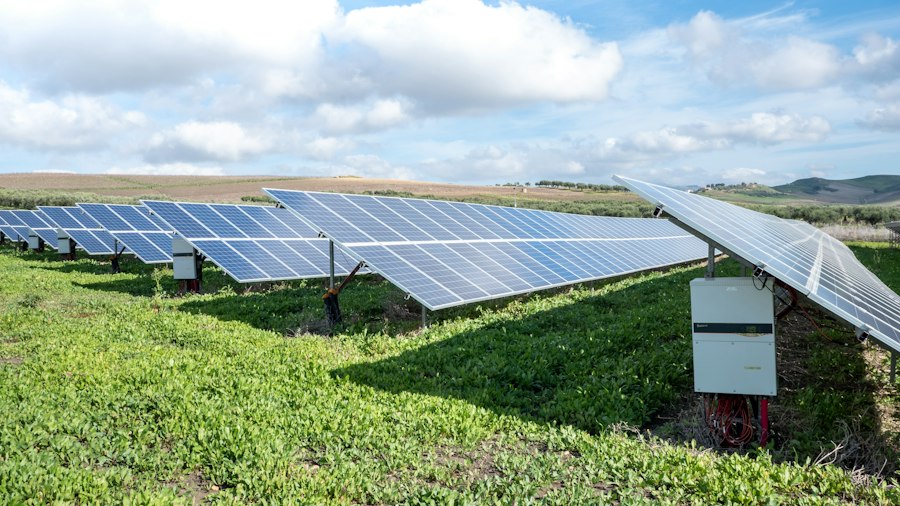
This is probably the most recognized form of energy harvesting. Solar cells convert light into electrical energy.
Advantages and Challenges
Solar energy is abundant outdoors during daylight hours and can provide relatively high power densities compared to other ambient sources. Modern photovoltaic cells are also becoming increasingly efficient, flexible, and even transparent.
However, solar energy is intermittent. It’s unavailable at night, significantly reduced on cloudy days, and can be blocked by obstacles. Indoor environments also present challenges due to lower light levels and different spectral compositions of artificial light. This intermittency means solar harvesting systems often require some form of energy storage (supercapacitors or small rechargeable batteries) to bridge periods of darkness or low light.
Applications
Solar harvesting is ideal for outdoor sensors, agricultural monitoring, remote weather stations, and smart city infrastructure where direct sunlight is available. Smaller, specialized cells can also power indoor devices under artificial light, like smart labels or desk sensors.
Thermal (Thermoelectric) Energy
Thermal energy harvesting converts temperature differences into electrical energy using the Seebeck effect. This relies on thermoelectric generator (TEG) modules.
How It Works
When there’s a temperature gradient across a TEG – one side is hotter than the other – a voltage is generated. The larger the temperature difference, the more power can be produced. This means that a TEG doesn’t just need heat; it needs differential heat.
Sources and Limitations
Sources for thermal energy harvesting include industrial machinery (heat waste), human body heat (wearable devices), exhaust pipes, or simply the temperature difference between ambient air and a warmer surface like a road or roof.
The main challenge is that TEGs are most efficient with significant temperature gradients, which aren’t always present or stable in many ambient environments. Even small temperature differences can be harvested, but they yield very little power.
The efficiency of converting heat to electricity is also generally lower than photovoltaics.
Use Cases
Suitable for monitoring equipment with inherent heat sources, such as industrial motors, pipelines, or even medical implants that can utilize the body’s internal heat.
Vibrational (Piezoelectric and Electromagnetic) Energy
Mechanical vibrations are ubiquitous – from human movement to traffic to industrial machinery. This energy can be converted into electricity through two primary mechanisms.
Piezoelectric Harvesters
Piezoelectric materials generate an electric charge when subjected to mechanical stress or deformation. Think of them as tiny stress-to-electricity converters. When a piezoelectric material vibrates, it bends or compresses, creating a voltage.
These harvesters are particularly good at converting high-frequency, low-amplitude vibrations into power. They can be very small and integrate well into structures.
Electromagnetic Harvesters
These work on the principle of electromagnetic induction, similar to a generator. A coil moves relative to a magnetic field, inducing an electric current. This is often achieved with a suspended mass that oscillates in response to vibrations.
Electromagnetic harvesters are generally more effective at converting lower-frequency, higher-amplitude vibrations. They tend to be larger than piezoelectric devices for similar power output but can produce more power from significant movements.
Challenges and Applications
The main challenge for both types is matching the harvester’s resonant frequency to the dominant frequency of the environmental vibrations for maximum efficiency. If the frequencies don’t match, the power output can be significantly reduced.
Applications include sensors embedded in bridges to monitor structural integrity (harvesting from traffic vibrations), wearable devices (from body motion), industrial equipment monitoring (from machine vibrations), and smart roads.
Ambient energy harvesting is revolutionizing the way we power next-generation autonomous sensor networks without relying on batteries. This innovative approach not only enhances the sustainability of these networks but also significantly reduces maintenance costs and environmental impact. For those interested in exploring related topics, you might find insights on efficient energy solutions in an article about the best shared hosting services in 2023, which discusses how energy efficiency plays a crucial role in modern technology. You can read more about it here.
Radio Frequency (RF) Energy Harvesting
This method captures electromagnetic waves (like Wi-Fi, cellular signals, broadcast TV) and converts them into DC electricity. It’s also known as “power beaming” or “wireless power transfer.”
How It Works
An antenna (often a rectenna – a rectifying antenna) is designed to capture RF signals at specific frequencies. These signals are then rectified (converted from AC to DC) and conditioned to power a device.
Advantages and Limitations
The primary advantage is that RF energy is pervasive in many modern environments, especially indoors. It can also provide continuous power if the RF source is always present.
However, RF signals typically have very low power densities at a distance from the source. Power drops off significantly with distance. This means RF harvesting is best suited for ultra-low power applications or for “wake-up” functions rather than continuous high-power operation. Dedicated RF power transmitters can overcome this distance limitation but introduce the need for a specific source.
Potential Uses
Ideal for very low-power indoor sensors, smart tags, or as a supplemental power source for other harvesting methods. It’s particularly promising for truly “install-and-forget” devices in smart buildings or retail environments.
Essential Components of an Energy Harvesting System
It’s not enough to just pick a source and a converter. A complete energy harvesting system needs several specialized components working in concert to reliably power a sensor.
Transducers (Harvesters)
These are the core components that convert ambient energy into electrical energy. We’ve discussed these extensively already: solar cells, TEG modules, piezoelectric elements, electromagnetic vibration harvesters, and rectennas. The selection of the transducer is the first and most critical step, dictated by the available energy source in the target environment.
Power Management Unit (PMU)
This is the brain of the harvesting system.
The energy harvested from ambient sources is often erratic, inconsistent, and at voltages/currents unsuitable for direct use by a sensor. The PMU’s job is to take this raw, unregulated power and make it usable.
Voltage Regulation and Conversion
Harvesters produce varying voltages. A solar cell’s output changes with light intensity, a piezoelectric device’s with vibration amplitude.
The PMU includes DC-DC converters (boost converters for low voltages, buck converters for high) to step the voltage up or down to a stable level required by the sensor (e.g., 3.3V).
Maximum Power Point Tracking (MPPT)
Especially crucial for solar and sometimes thermal harvesting, MPPT ensures that the harvester operates at its peak efficiency. It dynamically adjusts the electrical load presented to the harvester to extract the maximum possible power, even as environmental conditions change.
Low-Power Operation and Sleep Modes
Modern PMUs are designed to operate with incredibly low quiescent current, meaning they don’t consume much power themselves. They often include “sleep” modes to conserve power when the sensor isn’t active or when harvested energy is scarce.
Energy Storage
Because ambient energy is often intermittent, a mechanism to store harvested energy is almost always necessary to provide continuous power to the sensor.
Capacitors and Supercapacitors
These are excellent for short-term energy storage.
Standard capacitors are good for very brief bursts of power, while supercapacitors (also called ultracapacitors) can store significantly more energy and discharge it rapidly. They have very long cycle lives (can be charged and discharged millions of times) and can operate over wide temperature ranges. They are ideal for buffering small amounts of energy and providing quick power bursts.
Rechargeable Batteries (Solid-State, Thin-Film)
For longer periods of no or low ambient energy, small, rechargeable batteries are often integrated.
Unlike conventional batteries, these are often specialized solid-state or thin-film batteries designed for low-power applications, long cycle life (hundreds to thousands of cycles), and sometimes even flexibility. They act as a reservoir, providing power when the harvester can’t keep up and getting topped up when energy is plentiful. The goal here is for the battery to be charged by the harvester, not replaced.
The Sensor Itself (and its Power Requirements)
The final piece of the puzzle is the sensor network node itself.
For energy harvesting to be viable, the sensor and its associated microcontroller and radio must be ultra-low power.
Duty Cycling
This is a critical technique. Instead of being continuously on, the sensor “wakes up” for a very brief period (milliseconds to seconds), takes a reading, processes it, transmits the data, and then goes back to a deep sleep mode. The power consumption during sleep mode is minuscule, while the active time is minimized.
This dramatically reduces the overall energy budget.
Low-Power Microcontrollers and Radios
Manufacturers are continually developing microcontrollers and wireless transceivers specifically optimized for extreme low-power operation, often consuming just micro-watts in sleep mode and milli-watts during active transmission.
Real-World Applications and Future Outlook
Ambient energy harvesting isn’t just a laboratory curiosity; it’s increasingly being deployed in practical scenarios, laying the groundwork for truly autonomous and sustainable sensor networks.
Industrial Monitoring
Imagine sensors embedded in rotating machinery, pipelines, or structural components within a factory. These sensors can harvest energy from vibrations, heat differentials, or even stray RF from Wi-Fi networks to monitor temperature, pressure, or machine health. This eliminates the need to run wires or replace batteries in hard-to-reach or hazardous areas, vastly improving safety and reducing maintenance costs for predictive maintenance systems.
Smart Agriculture
Sensors scattered across vast fields can monitor soil moisture, nutrient levels, air temperature, and pest presence. By harvesting solar energy, or even wind energy in some regions, these sensors can provide continuous, real-time data to farmers, enabling precision agriculture techniques like optimized irrigation and fertilization, without the monumental task of battery maintenance over thousands of acres.
Smart Buildings and Infrastructure
In smart buildings, energy harvesting can power sensors for occupancy detection, light levels, temperature, and air quality. Think of self-powered switches that send wireless commands without ever needing a battery. For infrastructure like bridges and roads, embedded sensors harvesting from traffic vibrations can monitor structural integrity, detecting potential issues long before they become critical.
Wearable and Medical Devices
Miniature harvesters can draw power from body heat, movement, or even ambient light to power health trackers, smart watches, or even implantable medical devices. This promises greater comfort, less intrusion, and potentially longer operational lifespans for devices that monitor vital signs or deliver medication.
Environmental Monitoring
Remote weather stations, wildlife trackers, and air quality monitors in far-flung locations can benefit immensely. By harnessing solar, wind, or even thermal gradients in remote areas, these devices can collect crucial environmental data for extended periods without human intervention, which is often logistically challenging or costly.
Challenges Still to Overcome
While the progress is impressive, several challenges remain. Increasing the efficiency of harvesters at very low power densities is a continuous goal. Developing more robust and higher-capacity energy storage solutions specifically for harvesting applications is also key. Miniaturization, cost reduction, and standardization across different harvesting technologies will further accelerate adoption.
The Vision of Truly Autonomous Sensors
The ultimate goal of ambient energy harvesting is to create “fit-and-forget” sensor networks. These are systems where sensors are deployed and then operate autonomously for their entire service life, drawing all necessary power from their environment. This vision underpins the next generation of the Internet of Things (IoT), enabling truly pervasive sensing without the hidden costs and environmental burdens associated with battery dependence. It’s about making our connected world not just smarter, but also significantly more sustainable.
FAQs
What is ambient energy harvesting?
Ambient energy harvesting refers to the process of capturing and converting energy from the surrounding environment into usable electrical energy. This can include energy sources such as solar, thermal, wind, and kinetic energy, allowing devices to operate without the need for traditional batteries.
How does ambient energy harvesting benefit autonomous sensor networks?
Ambient energy harvesting provides a sustainable power source for autonomous sensor networks, enabling them to operate continuously without the need for battery replacements. This reduces maintenance costs, enhances reliability, and allows for deployment in remote or hard-to-reach locations where traditional power sources are impractical.
What types of energy sources can be harvested for powering sensor networks?
Various energy sources can be harvested for powering sensor networks, including solar energy (using photovoltaic cells), thermal energy (using thermoelectric generators), kinetic energy (from movement or vibrations), and radio frequency energy (from wireless signals). Each source can be utilized depending on the specific application and environmental conditions.
Are there any limitations to ambient energy harvesting?
Yes, there are limitations to ambient energy harvesting, including the variability and intermittency of energy sources, which can affect the reliability of power supply. Additionally, the efficiency of energy conversion technologies can vary, and the amount of energy harvested may not always meet the demands of high-power applications.
What advancements are being made in ambient energy harvesting technologies?
Recent advancements in ambient energy harvesting technologies include the development of more efficient energy conversion devices, such as improved photovoltaic cells and thermoelectric materials. Researchers are also exploring hybrid systems that combine multiple energy sources to enhance reliability and power output, as well as miniaturization techniques to integrate energy harvesting components into smaller devices.
Enjoying our content? Make us a preferred source on Google:
Add us as a Preferred Source on Google