

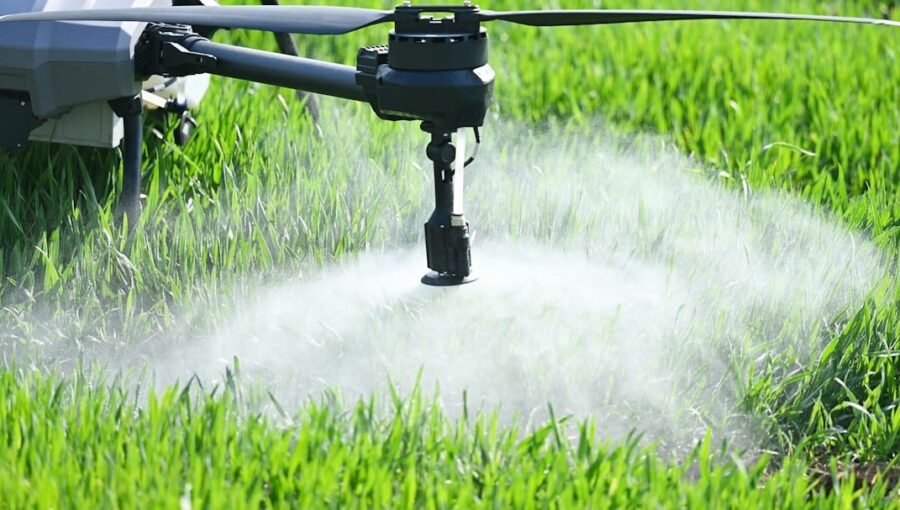
Wondering if those buzzing drones can really make a difference in how you spray your crops? The short answer is a resounding yes. Agricultural spraying drones are evolving rapidly, moving beyond novel gadgets to become essential tools for smarter, more efficient farming. A big part of this leap forward is how they handle what they carry – the payload – and how they make sure that payload lands precisely where it’s needed, not drifting off into unintended areas. This article dives into the nitty-gritty of optimizing payload distribution and controlling drift with these remarkable machines.
When we talk about payload in agricultural spraying drones, we’re primarily talking about the liquid you’re applying – be it fertilizer, pesticide, herbicide, or even beneficial microbes. But it’s not just about the volume. The type of liquid, its viscosity, its density, and even its temperature can all influence how a drone performs and how effectively the spray is delivered.
The Science of the Spray Liquid
The formulation of the spray solution is crucial. Some products are designed to be atomized into very fine droplets for maximum coverage, while others need larger droplets to penetrate canopy or reduce evaporation. Understanding the physical properties of your chosen spray agent directly impacts nozzle selection, pressure settings, and ultimately, the drone’s performance. For instance, high-viscosity liquids might require higher pressure or specialized nozzles to achieve the desired droplet size and flow rate. Conversely, very light, water-based solutions might be prone to evaporation and drift if not applied under optimal conditions.
Weight and Balance: The Drone’s Equilibrium
Every drone has a maximum payload capacity. Exceeding this isn’t just risky; it’s downright dangerous and will severely impact flight time and maneuverability. More importantly, how that payload is distributed is critical for flight stability. Most spraying drones are designed with the tank centrally located to maintain a balanced center of gravity. If the weight distribution is off, the drone will struggle to fly straight, potentially leading to uneven application and flight control issues. Manufacturers spend a lot of time engineering the tank placement and chassis to ensure optimal weight balance, even as the tank empties during operation.
Real-Time Monitoring of Payload
Modern spraying drones often come equipped with sensors that monitor the remaining liquid in the tank. This isn’t just a convenience; it’s vital for payload management. Knowing exactly how much liquid is left allows you to calculate remaining flight time, plan refill stops efficiently, and ensure you’re not over or under-applying. Some advanced systems can even provide real-time feedback on flow rates, allowing for immediate adjustments if something isn’t performing as expected. This proactive approach to payload monitoring is a key differentiator for optimized spraying.
In the realm of precision agriculture, the use of agricultural spraying drones has become increasingly significant, particularly in optimizing payload distribution and controlling drift.
A related article that delves into innovative software solutions for enhancing agricultural practices can be found at Ideas R Us: Software Free Studio3 to SVG Converter. This resource highlights the importance of technology in improving efficiency and effectiveness in various agricultural applications, including the use of drones for precise spraying techniques.
Key Takeaways
- The training data includes information and events up to October 2023.
- Insights and knowledge are based on a wide range of sources available until the cutoff date.
- No updates or developments occurring after October 2023 are included in the training.
- Users should verify current information from reliable sources for the latest updates.
- The model’s responses reflect the context and knowledge available up to the specified date.
Nozzle Technology: The Spray’s Origin Story
The nozzle is arguably the most critical component for achieving both precise payload distribution and effective drift control. It’s where the liquid transforms from a bulk volume into a targeted spray pattern. The type of nozzle, its size, and the pressure at which it operates all dictate the droplet size, spray angle, and uniformity of the application.
Droplet Size Matters (A Lot)
This is a fundamental concept. Smaller droplets offer better coverage over a given area but are much more susceptible to wind drift. Larger droplets are more resistant to drift but may not provide the same level of fine coverage. The ideal droplet size is a balance, depending on the target pest or disease, the crop, and environmental conditions.
- Fine Droplets (e.g., < 100 microns): Good for systemic pesticides that need to be absorbed by leaves, or for covering dense foliage. However, highly prone to drift.
- Medium Droplets (e.g., 100-300 microns): A common range for many general-purpose sprays, offering a decent balance of coverage and drift resistance.
- Coarse Droplets (e.g., > 300 microns): Useful for herbicides where drift is a major concern, or for applications where penetration into dense canopies is less critical. These are more resistant to wind.
Types of Agricultural Spray Nozzles
- Flat Fan Nozzles: These are perhaps the most common. They produce a fan-shaped spray pattern with a uniform distribution of liquid across the width of the fan. Different angles (e.g., 80°, 110°, 120°) are available, influencing the overlap needed between passes and the overall swath width. For drones, higher angle nozzles (like 110° or 120°) can be beneficial for wider coverage and better spray deposition.
- Cone Nozzles (Hollow Cone and Full Cone): Hollow cone nozzles produce a ring of spray with a hollow center, good for covering leaf surfaces. Full cone nozzles produce a solid cone of spray, offering more intense impact and penetration, often used for soil applications or when targeting pests within dense foliage.
- Air-Induction Nozzles: These are a significant advancement in drift control. They work by introducing air into the liquid stream, creating larger, coarser droplets with air pockets that resist atomization. This results in significantly reduced drift while still maintaining good efficacy. They are a popular choice for drone applications where drift is a primary concern.
- Twin-Fluid Nozzles: These nozzles use a secondary air stream to atomize the liquid, offering excellent control over droplet size and uniformity, often producing very fine droplets with precise control. They are more complex but can offer superior performance.
Nozzle Maintenance: The Unsung Hero
Nozzles wear out. Even slight wear can change the orifice size and shape, altering the spray pattern and droplet size. This leads to uneven application and increased drift. Regular inspection, cleaning, and replacement of worn nozzles are essential for maintaining optimal performance and ensuring you’re not wasting product or causing unintended environmental impact. This is a simple, low-cost maintenance task that has a huge payoff.
Precision Application: Spraying Smarter, Not Harder

The real magic of agricultural spraying drones lies in their ability to apply treatment precisely where it’s needed, when it’s needed. This is achieved through a combination of sophisticated software, GPS technology, and the physical capabilities of the drone itself.
GPS and RTK for Pinpoint Accuracy
Global Positioning System (GPS) is the foundation of precision agriculture. For spraying, standard GPS is good, but for true precision, Real-Time Kinematic (RTK) GPS is often employed.
RTK uses a base station on the ground to send correction data to the drone, achieving centimeter-level accuracy. This allows the drone to fly pre-programmed flight paths with incredible accuracy, ensuring no overlap where it’s not needed and complete coverage of target areas.
Variable Rate Application (VRA)
This is where drones truly shine. Instead of applying a uniform rate across an entire field, VRA allows for prescription maps to be loaded onto the drone’s system.
These maps, often generated from soil samples, satellite imagery, or scouting data, tell the drone to apply more product in certain areas and less in others, or even skip areas that don’t require treatment.
- Benefits of VRA:
- Reduced Chemical Use: Only apply what is needed, saving money and reducing environmental impact.
- Improved Crop Health: Tailor nutrient or pesticide application to the specific needs of different zones within the field.
- Increased Efficiency: Less product means fewer refills and potentially faster field coverage over time.
Obstacle Avoidance and Terrain Following
Modern spraying drones are increasingly equipped with sensors (like LiDAR or visual sensors) that allow them to detect and avoid obstacles such as trees, power lines, or other structures. Furthermore, terrain-following capabilities enable the drone to maintain a consistent height above the crop canopy, even when flying over uneven ground. This is crucial for uniform spray application, as flying too high or too low can significantly impact droplet deposition and coverage.
Real-time Data and Feedback Loops
Many drone systems provide real-time feedback on application rates, spray width, speed, and remaining battery life.
This allows the operator to make immediate adjustments if needed. If the drone encounters unexpected wind gusts, for example, the system might alert the operator or automatically adjust flight parameters to maintain consistent application.
Drift Control Strategies: Keeping the Spray in Place

Drift is the unintended movement of spray material through the air from its target site. It’s a significant concern for agriculture, impacting efficacy, causing crop damage, and potentially harming sensitive environments and non-target organisms. Drones, while offering precision, are still susceptible to drift, but their design and operational capabilities offer unique advantages in controlling it.
Understanding the Causes of Drift
- Wind: The most common culprit. Even light breezes can carry fine droplets significant distances. Wind speed, direction, and turbulence all play a role.
- Droplet Size: As discussed, smaller droplets are more easily carried by wind.
- Spray Height: The higher the spray, the longer droplets travel in the air, increasing drift potential.
- Temperature and Humidity: High temperatures and low humidity can lead to rapid evaporation of droplets, making them smaller and more prone to drift.
- Nozzle Performance: Worn or incorrectly set nozzles can produce undesirable droplet sizes.
- In-Tank Adjuvants: Certain tank-mix additives can affect droplet characteristics, sometimes increasing or decreasing drift potential.
Drone-Specific Drift Mitigation Techniques
- Low-Altitude Spraying: Drones can operate at much lower altitudes than traditional ground sprayers or even manned aircraft. This significantly reduces the travel time of droplets in the air, minimizing the opportunity for wind to carry them away. Consistent, low-altitude spraying is a major advantage.
- Optimized Swath Width and Overlap: Precise GPS guidance ensures that the drone flies a predictable path. Operators can choose an optimal swath width and overlap setting that balances coverage with minimizing the amount of spray carried downwind from the spray path.
- Downwash Effect: The powerful propellers of a drone create a downward air current (downwash). This downwash can help push the spray droplets directly into the crop canopy, reducing the likelihood of them being carried away by ambient wind. The intensity of the downwash can be influenced by the drone’s rotor design and speed.
- Boom Design and Nozzle Placement: The physical arrangement of the spray boom and nozzles on a drone is optimized for its flight characteristics. For example, booms are often designed to position nozzles directly beneath the rotors to maximize the benefit of the downwash.
- Choosing the Right Nozzles and Adjuvants: As mentioned, air-induction nozzles are excellent for reducing drift. Careful selection of tank-mix adjuvants that promote larger droplet formation is also crucial.
- Weather Monitoring and Application Timing: Drones empower operators to be more agile. They can monitor weather forecasts closely and choose optimal spraying windows – typically early mornings or late evenings when winds are calmer and temperatures are more moderate. If conditions change unexpectedly, a drone can often be quickly retrieved.
Beyond the Drone: Operational Best Practices
Even with the best drone technology, good stewardship is essential.
- Know Your Label: Always read and follow the product label instructions regarding application rates, methods, and buffer zones.
- Buffer Zones: Maintain appropriate buffer zones around sensitive areas like water bodies, residential areas, and organic fields. Drone software can often incorporate these buffer zones into flight planning.
- Record Keeping: Detailed records of application dates, times, products used, rates, weather conditions, and drone parameters are invaluable for accountability and future planning.
- Operator Training: A well-trained operator is the best defense against application errors and drift. They understand the equipment, the products, and the environmental factors at play.
In the realm of precision agriculture, the use of agricultural spraying drones has revolutionized the way farmers manage their crops, particularly in optimizing payload distribution and drift control. A related article discusses the importance of technology in enhancing agricultural practices, highlighting how advancements can lead to more efficient and sustainable farming methods. For those interested in exploring further, you can read about the best free software for translation that can aid in understanding agricultural innovations from different regions by visiting this link.
Future Innovations and Considerations
| Metric | Description | Typical Range / Value | Impact on Payload Distribution | Impact on Drift Control |
|---|---|---|---|---|
| Payload Capacity (kg) | Maximum weight of liquid chemicals the drone can carry | 5 – 20 | Determines total spray volume per flight | Higher payload may increase drift if not balanced |
| Spray Flow Rate (L/min) | Rate at which liquid is dispensed | 1 – 5 | Affects uniformity of chemical distribution | Higher flow rates can increase droplet size and drift |
| Droplet Size (microns) | Average diameter of sprayed droplets | 100 – 400 | Smaller droplets improve coverage but may evaporate | Smaller droplets are more prone to drift |
| Flight Altitude (m) | Height at which drone operates during spraying | 2 – 10 | Lower altitude improves payload targeting accuracy | Lower altitude reduces drift potential |
| Wind Speed (km/h) | Environmental wind conditions during spraying | 0 – 15 | High wind can cause uneven payload distribution | Higher wind speeds increase drift risk |
| Spray Nozzle Type | Design of nozzle affecting droplet formation | Flat fan, Air induction, Hollow cone | Influences droplet size and spray pattern | Air induction nozzles reduce drift by producing larger droplets |
| Flight Speed (m/s) | Velocity of drone during spraying operation | 2 – 8 | Faster speeds may reduce spray overlap | Higher speeds can increase drift due to turbulence |
| Spray Overlap (%) | Percentage of area covered multiple times by spray | 20 – 50 | Ensures uniform payload distribution | Excessive overlap may increase chemical usage and drift |
The field of agricultural spraying drones is constantly evolving. What seems cutting-edge today will likely be standard practice tomorrow.
Advanced Sensor Integration
Future drones will likely integrate even more sophisticated sensors. This could include multispectral or hyperspectral cameras that can identify nutrient deficiencies or pest infestations at a very early stage, allowing for highly targeted interventions. Imagine a drone that not only sprays but also diagnoses issues and adjusts its spraying strategy in real-time based on the crop’s actual needs.
Swarm Technology and Networked Drones
The idea of multiple drones working in concert, or “swarming,” is gaining traction. This could allow for much larger areas to be covered efficiently, with drones coordinating their flight paths and spraying tasks. Networked systems could also share data, providing a more comprehensive picture of field conditions and application efficacy.
Improved Battery Technology and Longer Flight Times
Battery life is a perennial challenge for drones. Continued advancements in battery technology, such as solid-state batteries or more efficient power management systems, will lead to longer flight times and the ability to cover more acreage per charge, reducing downtime for battery swaps.
Regulatory Landscape and Public Perception
As drone technology becomes more widespread, regulations surrounding their operation will continue to evolve. Keeping abreast of these changes and fostering positive public perception through responsible and transparent use will be crucial for the continued adoption of agricultural spraying drones. Ensuring that drones are seen as tools for sustainability and efficiency, rather than just noise or potential nuisances, is an ongoing effort.
Data Analytics and AI
The vast amounts of data generated by drone operations – from flight logs to sensor readings – will become increasingly valuable. Artificial intelligence and machine learning will be employed to analyze this data, identify patterns, predict potential issues, and optimize spraying strategies further. This will lead to even more refined applications and improved yields.
The Bottom Line: Drones as Precision Tools
Agricultural spraying drones have moved from being a novelty to a powerful, practical tool for modern farming. Their ability to precisely distribute payloads and control drift is not just about improving efficiency or saving money; it’s about fundamentally changing how we manage our fields. By understanding the nuances of payload, nozzle technology, precision application techniques, and dedicated drift control strategies, farmers can harness the full potential of these buzzing marvels. The future of agriculture is precise, data-driven, and increasingly, airborne.
FAQs
What are agricultural spraying drones?
Agricultural spraying drones are unmanned aerial vehicles equipped with spraying systems that are used to apply pesticides, fertilizers, or other agricultural inputs to crops.
How do agricultural spraying drones optimize payload distribution?
Agricultural spraying drones optimize payload distribution by using advanced technology such as GPS and sensors to precisely control the amount and distribution of the spray applied to crops. This helps ensure that the right amount of input is applied to each area of the field.
What is drift control in agricultural spraying drones?
Drift control in agricultural spraying drones refers to the ability of the drone to minimize the movement of sprayed particles away from the target area. This is important to prevent off-target damage to neighboring crops, water sources, or wildlife.
What are the benefits of using agricultural spraying drones?
Some benefits of using agricultural spraying drones include increased efficiency in applying inputs to crops, reduced labor costs, decreased exposure to chemicals for workers, and the ability to access hard-to-reach or uneven terrain.
Are there any regulations or restrictions on the use of agricultural spraying drones?
Yes, there are regulations and restrictions on the use of agricultural spraying drones, including obtaining proper licenses and permits, adhering to flight restrictions, and following guidelines for safe and responsible operation.
Enjoying our content? Make us a preferred source on Google:
Add us as a Preferred Source on Google