

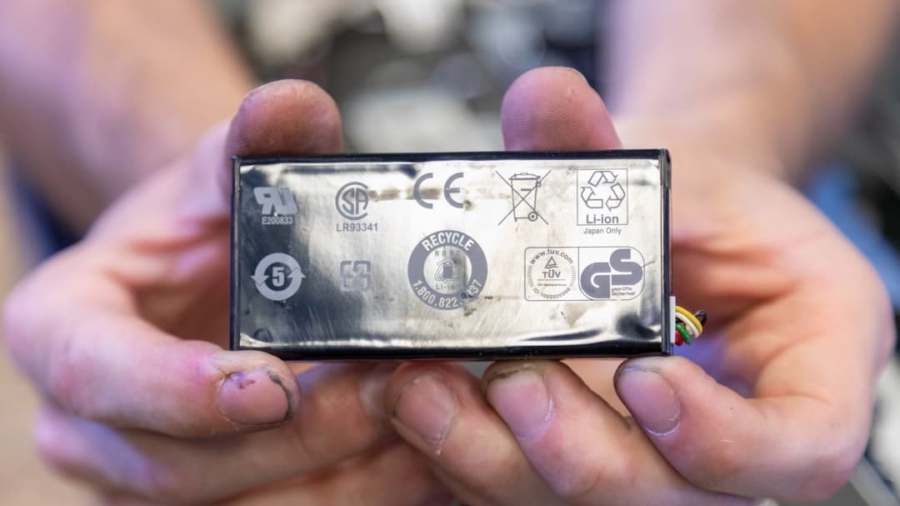
Solid-state batteries are making some serious waves, and for good reason: they represent a fundamental shift from the liquid electrolytes we’ve relied on for decades. Think of it like this: instead of a flammable, squishy liquid transferring ions, we’re using a solid material. This simple change unlocks a whole host of benefits, particularly when it comes to safety, energy density, and potentially faster charging. While they’re not in your everyday devices yet, the progress being made is significant, and we’re getting closer to these next-gen power sources becoming a reality.
Let’s break down why everyone’s so excited about this technology. It’s not just about a minor improvement; it’s about solving some fundamental problems with current battery tech.
Safety First
Anyone who’s heard about a smartphone battery exploding or a recall due to fire risk knows that lithium-ion batteries aren’t without their dangers. The core issue often lies with the liquid electrolyte.
No More Flammable Liquids
Current lithium-ion batteries use organic liquid electrolytes that are inherently flammable. If a battery is overcharged, short-circuited, or mechanically damaged, this liquid can overheat and ignite, leading to thermal runaway. Solid-state batteries replace this liquid with a solid material, which is non-flammable. This dramatically reduces the risk of fire and explosion, making them much safer for everything from electric vehicles to consumer electronics.
Enhanced Stability
Solid electrolytes are also more robust. They can withstand a wider range of temperatures and pressures without degrading in the same way liquid electrolytes do. This inherent stability contributes to a safer and potentially longer-lasting battery.
Packing More Punch: Energy Density
We all want our devices to last longer and our electric cars to go further. Energy density is the key here – how much energy can be stored in a given volume or weight.
Thinner, Lighter Power Sources
Because solid electrolytes are typically thinner and more structurally sound than their liquid counterparts, they allow for more active material (the stuff that actually stores the energy) to be packed into the same space. Imagine a battery cell where you don’t need all the bulky separators, casings, and cooling systems associated with managing a volatile liquid.
Higher Voltage Potential
Solid electrolytes generally have a wider electrochemical stability window than liquid electrolytes. This means they can safely operate at higher voltages. Higher voltage translates directly to more energy stored per cell, contributing to a higher overall energy density for the battery pack.
Recent advancements in solid-state battery technology are paving the way for safer and more efficient energy storage solutions, which could significantly impact various industries, including electric vehicles and portable electronics. For a deeper understanding of how technology is evolving in different sectors, you might find this article on the differences between graphic tablets and drawing tablets insightful. It highlights the nuances of digital art tools that are becoming increasingly popular among artists and designers. To read more, visit this article.
Key Takeaways
- Clear communication is essential for effective teamwork
- Active listening is crucial for understanding team members’ perspectives
- Setting clear goals and expectations helps to keep the team focused
- Regular feedback and open communication can help address any issues early on
- Celebrating achievements and milestones can boost team morale and motivation
The Materials Science Behind Solid State
It’s not just one type of solid electrolyte; researchers are exploring several promising avenues, each with its own advantages and challenges.
Inorganic Solid Electrolytes
These are often ceramics or glasses and have shown significant promise due to their stability and high ion conductivity.
Sulfide-Based Electrolytes
Think materials like Li10GeP2S12 (LGPS) or Li7La3Zr2O12 (LLZO). These ceramics offer high ionic conductivity, sometimes even comparable to liquid electrolytes. They’re also relatively strong, which helps prevent dendrite formation (more on that later). However, sulfide materials can be sensitive to moisture, producing toxic hydrogen sulfide gas, which adds complexity to manufacturing.
Oxide-Based Electrolytes
Materials like LLZO (Lithium Lanthanum Zirconium Oxide) are another popular choice. They are chemically stable and don’t react with moisture, making them safer to handle during production. Their main challenge often lies in achieving very high ionic conductivity at room temperature, although significant progress is being made. They also can be somewhat brittle, requiring careful engineering.
Halide-Based Electrolytes
More recent entrants like lithium scandium chloride (Li3ScCl6) have shown impressive performance. These materials often combine good ionic conductivity with high voltage stability and are less sensitive to moisture than sulfides. They offer a good balance of properties and are a hot area of research.
Polymer-Based Solid Electrolytes
These electrolytes offer flexibility and ease of processing, which could be beneficial for certain applications.
Flexible and Lightweight
Polymer electrolytes, often based on polyethylene oxide (PEO) or similar structures, can be made into very thin, flexible films. This makes them attractive for wearable electronics or applications where physical flexibility is desired. They are also generally easier to process and scale than ceramics.
Ionic Conductivity Hurdles
The primary challenge with polymer electrolytes has historically been their lower ionic conductivity, especially at room temperature. They often require heating to achieve performance comparable to liquid electrolytes. However, new polymer designs and composite polymer electrolytes (where ceramics are embedded in a polymer matrix) are addressing this, pushing conductivity closer to practical levels.
Tackling the Challenges

Despite the incredible potential, solid-state batteries aren’t a done deal yet. There are some significant hurdles to overcome before they become a mainstream product.
Interface Issues
This is arguably the biggest headache for solid-state battery developers. The interface between the solid electrolyte and the electrodes (anode and cathode) is crucial.
Poor Electrode-Electrolyte Contact
Unlike liquid electrolytes that naturally conform to the shape of the electrodes, solid electrolytes only make contact at discrete points.
This poor physical contact increases resistance and hinders ion flow, severely impacting performance. Researchers are working on techniques like pressure application, composite interfaces, and special coatings to improve this contact.
Mechanical Stress and Volume Changes
During charging and discharging, electrodes can expand and contract. For instance, a silicon anode can swell by a massive amount.
In a liquid electrolyte, this isn’t a huge deal. With a rigid solid electrolyte, this expansion and contraction can lead to cracking, delamination, and loss of contact, reducing battery lifespan and performance. Designing electrolytes and electrodes that can accommodate these volume changes is vital.
Dendrite Formation – Still a Problem
Even with solid electrolytes, lithium metal anodes (which offer the highest theoretical energy density) can still form dendrites.
What Are Dendrites?
Dendrites are needle-like structures of lithium metal that grow from the anode during charging.
In liquid electrolytes, these can pierce the separator, causing short circuits and fires. In solid electrolytes, while the solid material offers some resistance, strong enough dendrites can still penetrate, leading to internal shorts.
Strategies Against Dendrites
Developing solid electrolytes that are mechanically robust enough to suppress dendrite growth entirely is a key focus. This includes optimizing the electrolyte’s elastic modulus and critical current density.
Other approaches involve using interlayers or 3D architectures to guide lithium deposition more uniformly and prevent localized growth.
Manufacturing and Scalability
Moving from lab-scale prototypes to mass production is a monumental task, especially for a completely new battery chemistry.
Complex Fabrication Techniques
Many of the promising solid electrolyte materials require high-temperature synthesis or specialized deposition techniques. This can be costly and difficult to scale up compared to the established wet chemistry processes for liquid electrolytes. Techniques like cold sintering, tape casting, and atomic layer deposition are being explored to make manufacturing more feasible.
Cost Implications
Initially, solid-state batteries are expected to be more expensive to produce than traditional lithium-ion batteries.
While the cost is likely to come down with scale and technological maturity, it’s a significant barrier to widespread adoption, especially in cost-sensitive applications like electric vehicles. Simplifying manufacturing processes and finding cheaper raw materials are critical.
Current Progress and Key Players

It’s not all future talk; real progress is happening, and several companies and research institutions are making significant strides.
Automotive Industry at the Forefront
Electric vehicles are a huge driver for solid-state battery development, given the demand for longer range, faster charging, and improved safety.
Toyota’s Long-Standing Commitment
Toyota has been researching solid-state batteries for decades and holds a vast patent portfolio in the area. They’ve showcased prototype vehicles and aim for commercialization within the next few years, initially in hybrid electric vehicles where the duty cycle might be less demanding. Their approach often involves sulfide-based electrolytes.
Volkswagen’s Investment in QuantumScape
Volkswagen has made a substantial investment in QuantumScape, a startup focusing on a ceramic solid electrolyte with a lithium metal anode. QuantumScape has published data showing impressive performance, including fast charging and high cycle life, though their materials and manufacturing processes are proprietary.
Other Major Players
Companies like Solid Power (partnering with Ford and BMW), Factorial Energy, and Samsung SDI are also heavily invested. Each has its own distinct approach, whether it’s polymer-based electrolytes, different inorganic compositions, or unique cell designs. The race is definitely on.
Consumer Electronics and Specialized Applications
While EVs grab headlines, solid-state batteries could also revolutionize smaller devices.
Thinner Wearables
Imagine smartwatches or flexible phones with significantly longer battery life and no fire risk. The ability to create ultra-thin, flexible solid-state cells could open up new design possibilities. Companies like Imprint Energy are exploring printable solid-state batteries for this niche.
Medical Implants
For pacemakers and other implanted devices, safety and longevity are paramount. Solid-state batteries could offer a much safer, more stable, and potentially longer-lasting power source, reducing the need for replacement surgeries.
Recent developments in solid-state battery technology have the potential to revolutionize the energy storage landscape, offering higher energy densities and improved safety compared to traditional lithium-ion batteries. For those interested in exploring how these advancements can enhance various devices, including laptops and smartphones, a related article discusses the innovative features of the Samsung Galaxy Book Flex2 Alpha. You can read more about it here. This intersection of cutting-edge battery technology and portable computing devices highlights the exciting future of energy solutions.
What’s Next for Solid State Batteries?
| Metrics | Advancements in Solid State Battery Technology |
|---|---|
| Energy Density | 2x higher than traditional lithium-ion batteries |
| Safety | Reduced risk of fire and explosion |
| Cycle Life | Longer lifespan with over 1000 charge-discharge cycles |
| Charging Speed | Improved charging rates |
| Environmental Impact | Reduced reliance on rare earth metals |
It’s clear that solid-state batteries aren’t a distant dream, but they’re not quite ready for prime time either.
Gradual Rollout Expected
Don’t expect them to completely replace liquid lithium-ion batteries overnight. The most likely scenario is a gradual introduction into high-value applications first, such as premium electric vehicles or specialized electronics where the benefits outweigh the initial higher cost. As manufacturing matures and costs come down, they’ll become more widespread.
Continued Research and Development
The breakthroughs we’re seeing today are the result of intense R&D. We can expect continued advancements in material science (finding even better solid electrolytes), interface engineering, and manufacturing techniques. The goal is always to improve ionic conductivity, reduce interfacial resistance, enhance mechanical stability, and drive down production costs.
Hybrid Approaches
Some companies are also exploring “hybrid” solid-state batteries that might incorporate a small amount of liquid or gel electrolyte to improve interface contact or conductivity, acting as a stepping stone towards fully solid designs. These could offer some of the benefits of solid-state while easing manufacturing challenges.
In essence, solid-state batteries represent the next frontier in energy storage. They promise a future of safer, more energy-dense, and potentially faster-charging power sources. While significant challenges remain, the progress is undeniable, and it’s an exciting time to watch this technology evolve from the lab into the real world.
FAQs
What are solid state batteries?
Solid state batteries are a type of battery technology that uses solid electrodes and a solid electrolyte instead of the liquid or gel electrolytes found in traditional lithium-ion batteries.
What are the advantages of solid state batteries?
Solid state batteries offer several advantages over traditional lithium-ion batteries, including higher energy density, longer lifespan, faster charging times, and improved safety due to the elimination of flammable liquid electrolytes.
What are the recent advancements in solid state battery technology?
Recent advancements in solid state battery technology include the development of new solid electrolyte materials, improved manufacturing processes, and the integration of solid state batteries into electric vehicles and consumer electronics.
What are the potential applications of solid state batteries?
Solid state batteries have the potential to be used in a wide range of applications, including electric vehicles, portable electronics, grid energy storage, and medical devices.
What are the challenges facing the commercialization of solid state batteries?
Challenges facing the commercialization of solid state batteries include high production costs, limited scalability of manufacturing processes, and the need for further research and development to optimize performance and reliability.
Enjoying our content? Make us a preferred source on Google:
Add us as a Preferred Source on Google