

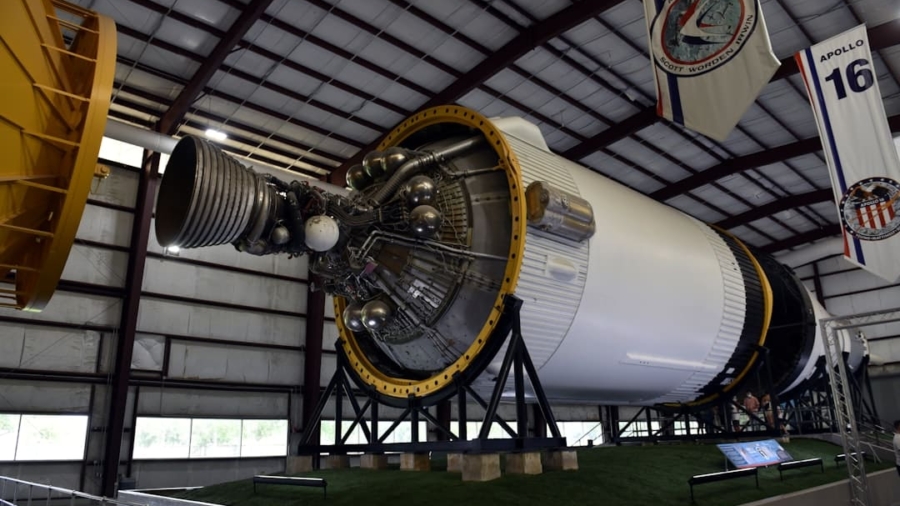
Reusable rocket engine tech has come a long way, and that’s precisely what this article will cover. The main gist is that what used to be a futuristic pipe dream is now becoming a practical, cost-saving reality.
We’re seeing engines that can handle multiple launches and landings, drastically cutting down on the expense and time involved in space travel.
Let’s face it, throwing away a rocket after one use is incredibly inefficient. Imagine if every time you flew somewhere, the airplane was scrapped afterward! That’s essentially been the traditional model for space launches. But the aerospace industry is evolving, and the push for reusability isn’t just about being eco-friendly; it’s fundamentally about economics and accessibility.
Lowering Launch Costs
The biggest driver behind reusable engines is the sheer reduction in cost. A significant portion of a rocket’s price tag comes from the engine itself. If you can use that engine multiple times, you’re spreading that cost over many missions. This opens up space to more players – smaller companies, research institutions, and even individuals with grander ambitions for space exploration. Think of it like this: if you can get to space cheaper, more people will go, or more stuff will get there.
Increased Launch Frequency
With reusable engines, the turnaround time between launches can be dramatically reduced. Instead of building a whole new rocket and engine assembly for each mission, you’re primarily focused on inspection, refurbishment, and refueling. This means more frequent access to space, which is crucial for things like deploying constellations of satellites, servicing orbital infrastructure, and even preparing for human missions further afield.
Enabling Future Exploration
Cheaper, more frequent access to space isn’t just good for business; it’s essential for enabling ambitious exploration goals. Whether it’s building a moon base, sending probes to distant planets, or even future space tourism, the ability to launch spacecraft repeatedly without breaking the bank is a foundational requirement.
Recent advancements in reusable rocket engine technology have revolutionized the aerospace industry, significantly reducing the cost of space travel and increasing the frequency of launches. For a deeper understanding of how innovative technologies are reshaping customer interactions in various sectors, including aerospace, you can explore this insightful article on smart chatbots: SmartSender: Your Chatbot Platform for Seamless Customer Interactions. This resource highlights the importance of integrating advanced technologies to enhance user experience and operational efficiency.
Key Takeaways
- Clear communication is essential for effective teamwork
- Active listening is crucial for understanding team members’ perspectives
- Setting clear goals and expectations helps to keep the team focused
- Regular feedback and open communication can help address any issues early on
- Celebrating achievements and milestones can boost team morale and motivation
Key Technologies Powering Reusability
So, how are engineers making these engines reusable? It’s not a simple flick of a switch. It involves a combination of clever design, advanced materials, and sophisticated control systems.
Robust Engine Design
Engines designed for reusability need to withstand a lot more stress and strain than their expendable counterparts. This means thicker walls, more resilient components, and materials that can handle repeated thermal cycles – going from incredibly hot during ignition to freezing cold in space, and then back to hot for re-entry and landing.
Materials Science Advancements
New alloys and composite materials are playing a huge role. These materials are lighter, stronger, and more resistant to extreme temperatures and corrosive environments. For instance, some companies are experimenting with 3D-printed alloys that allow for intricate cooling channels and optimized internal structures, improving both performance and durability. Think super-tough ceramics and metal matrix composites.
Additive Manufacturing for Complex Geometries
Speaking of 3D printing, or additive manufacturing, it’s a game-changer here. It allows for the creation of incredibly complex engine components with minimal waste. This isn’t just about printing a simple part; it’s about integrating multiple functions into a single printed piece, reducing assembly time and potential failure points. This also allows for rapid prototyping and iteration, accelerating the development cycle.
Advanced Throttle Control and Ignition Systems
For an engine to land safely, it needs to be able to precisely control its thrust – sometimes throttling down to less than 20% of its maximum power. This requires highly sophisticated valving, propellant management, and ignition systems that can reliably relight in various atmospheric and vacuum conditions.
Gimbaling and Thrust Vectoring
The ability to steer the rocket during descent and landing is absolutely critical. This is achieved through gimbaling the engines – physically tilting them to direct the thrust – and through precise thrust vectoring control. This allows for fine-tuning of the rocket’s trajectory as it descends, compensating for winds and other atmospheric disturbances.
Reliable Re-ignition
Getting an engine to fire up again in the vacuum of space, or during a rapid descent through the atmosphere, is a monumental engineering challenge. This requires robust igniters and propellant conditioning systems that can reliably deliver fuel and oxidizer to the combustion chamber for a second, third, or even tenth burn.
Integrated Health Monitoring and Diagnostics
Knowing the “health” of an engine in real-time is crucial for deciding if it’s safe to fly again. Modern reusable engines are packed with sensors that monitor everything from temperature and pressure to vibration and material fatigue.
Telemetry and Data Analysis
All that sensor data is continuously streamed back to ground control. Advanced algorithms analyze this telemetry to identify any anomalies, predict potential issues, and inform engineers about the engine’s remaining lifespan. This proactive approach helps in scheduling maintenance and ensuring safety.
Automated Inspection and Refurbishment
While human eyes are still essential, automated systems are assisting with post-flight inspections. Robots can scan engine components for microscopic cracks or wear, speeding up the refurbishment process and increasing accuracy. The goal is to minimize the “touch time” between flights.
Leading Players and Their Approaches

Several companies are leading the charge in reusable rocket engine technology, each with their own unique philosophies and designs.
SpaceX: The Trailblazers
Undoubtedly, SpaceX has been the most visible and successful proponent of reusable rockets. Their iterative approach, particularly with the Merlin engine on the Falcon 9, has revolutionized the industry.
Merlin Engine (Falcon 9/Heavy)
The Merlin engine, specifically designed for relight and deep throttling, is a workhorse. It powers both the Falcon 9 and Falcon Heavy rockets, which have successfully landed hundreds of first-stage boosters.
The Merlin 1D, in particular, has seen numerous upgrades to enhance its thrust, efficiency, and reusability, allowing for propulsive landings.
Raptor Engine (Starship)
The Raptor engine is a whole different beast. Designed for SpaceX’s Starship, it’s a full-flow staged-combustion engine, using methane and liquid oxygen. This design is incredibly complex but highly efficient, and crucial for Starship’s ambitious mission profile, which includes full reusability for both the booster and the upper stage, as well as operations on Mars.
Its ability to perform multiple relights and deep throttles is central to Starship’s planned operations.
Blue Origin: New Glenn’s BE-4
Blue Origin, founded by Jeff Bezos, is another major player with a strong focus on reusability. Their BE-3 and BE-4 engines are integral to their New Shepard and upcoming New Glenn rockets.
BE-4 Engine
The BE-4 is a liquid oxygen and liquefied natural gas (LNG) rocket engine, designed to power the New Glenn first stage. It’s a closed-cycle, oxygen-rich staged combustion engine, aiming for higher efficiency and performance.
Its reusability is a core design parameter, with the first stage of New Glenn intended to land vertically and be reused.
BE-3 Engine (New Shepard)
The BE-3 engine powers Blue Origin’s New Shepard suborbital vehicle. This engine is designed for deep throttling and multiple restarts, allowing the New Shepard vehicle to perform its iconic vertical landings. It uses liquid hydrogen and liquid oxygen, demonstrating Blue Origin’s proficiency with different propellant combinations for reusability.
Rocket Lab: Neutron and Archimedes
While perhaps not as widely known for large-scale reusable engines as SpaceX or Blue Origin, Rocket Lab is making significant strides, particularly with their upcoming Neutron rocket and its Archimedes engine.
Archimedes Engine
The Archimedes engine, designed for Rocket Lab’s Neutron rocket, is a key component in their push for reusability.
It’s a methalox (methane and liquid oxygen) engine designed to be highly reliable and reusable. Rocket Lab plans to implement a “Splashdown” and “Catch” method for their first stage, requiring the engines to survive reentry and potentially be reignited for terminal maneuvers.
The Challenges Ahead

While progress has been remarkable, there are still significant hurdles to overcome in making reusable engine technology even more commonplace and economical.
Refurbishment and Inspection Automation
Reducing the time and cost associated with inspecting and refurbishing engines between flights is critical. Currently, this can still be a labor-intensive process. The development of advanced automated inspection techniques, such as AI-powered vision systems and robotic manipulators, will be key to dramatically shortening turnaround times and further cutting costs.
Minimizing “Touch Time”
The goal is to get to a point where human intervention is minimized. Think of it like an airplane: after landing, it undergoes routine checks, and then it’s ready for its next flight. Space engines aren’t quite there yet, but automation in diagnostics, minor repairs, and even fueling will be crucial.
Extending Engine Lifespan
While engines like the Merlin 1D have flown dozens of times, the ultimate goal is to extend their operational lifespan even further, potentially to hundreds of flights. This requires continuous research into new materials, cooling techniques, and combustion chamber designs that can withstand extreme conditions over extended periods.
Understanding Wear and Tear
Better understanding of how different components wear down over time, under varied flight profiles, is essential. This involves advanced material analysis, simulation, and real-world data collection to predict and mitigate fatigue failure.
Cost-Effective Propellant Management
For methane-based engines, ensuring a consistent and cost-effective supply of propellant, along with efficient storage and transfer systems, is important. While methane is generally cheaper than other propellants, the infrastructure for using it on a large scale for space launches is still developing.
Propellant Reliquefaction
On long-duration missions or for frequent ground operations, the ability to reliquefy propellants that boil off can lead to significant cost savings and increased mission flexibility. This is especially relevant for deep-space applications.
Handling Unforeseen Anomalies
Despite extensive testing, space is an unforgiving environment. Engines need to be robust enough to handle unexpected events, such as minor debris impacts, unusual atmospheric conditions during re-entry, or sensor malfunctions, without catastrophic failure.
Fault Tolerance and Redundancy
Building in multiple layers of redundancy in control systems, sensors, and even engine components can help mitigate the impact of unforeseen anomalies. The ability for an engine to gracefully degrade rather than fail catastrophically is paramount.
Recent developments in reusable rocket engine technology have significantly transformed the aerospace industry, paving the way for more sustainable space exploration. For those interested in how advanced technology is shaping our everyday devices, an insightful article on the latest features of the Samsung Galaxy Tab S8 can be found here. This connection between cutting-edge technology in both space travel and consumer electronics highlights the ongoing innovation that drives progress across various fields.
The Future is Bright (and Reusable)
| Company | Reusable Rocket Engine | Thrust (kN) | Reusability |
|---|---|---|---|
| SpaceX | Raptor | 1,900 | Yes |
| Blue Origin | BE-4 | 2,400 | Yes |
| Rocket Lab | Rutherford | 24 | Yes |
The advancements in reusable rocket engine technology are not just incremental improvements; they represent a fundamental shift in how we access and utilize space. What started as ambitious visions are now tangible realities, thanks to relentless engineering and a willingness to challenge established norms. We’re on the cusp of an era where space travel becomes more routine, more affordable, and more accessible, paving the way for unprecedented exploration and innovation. The journey has been impressive, and the future promises even more exciting developments as these engines continue to evolve.
FAQs
What are the recent advancements in reusable rocket engine technology?
Recent advancements in reusable rocket engine technology include the development of more efficient and durable engine components, improved thermal protection systems, and advancements in engine reusability and refurbishment processes.
How do reusable rocket engines benefit space exploration?
Reusable rocket engines reduce the cost of space exploration by allowing for multiple uses of the same engine, thereby lowering the overall cost of launching payloads into space. This technology also enables more frequent and affordable access to space.
What are the challenges associated with developing reusable rocket engines?
Challenges in developing reusable rocket engines include designing components that can withstand the extreme conditions of space travel, developing efficient refurbishment processes, and ensuring the safety and reliability of reused engines.
Which companies are leading the advancements in reusable rocket engine technology?
Companies such as SpaceX, Blue Origin, and Rocket Lab are at the forefront of advancements in reusable rocket engine technology. These companies have made significant progress in developing and testing reusable rocket engines for their respective launch vehicles.
What are the potential future developments in reusable rocket engine technology?
Future developments in reusable rocket engine technology may include the use of advanced materials, such as carbon composites, to further improve engine durability and performance, as well as advancements in engine design to optimize reusability and reduce refurbishment requirements.
Enjoying our content? Make us a preferred source on Google:
Add us as a Preferred Source on Google