

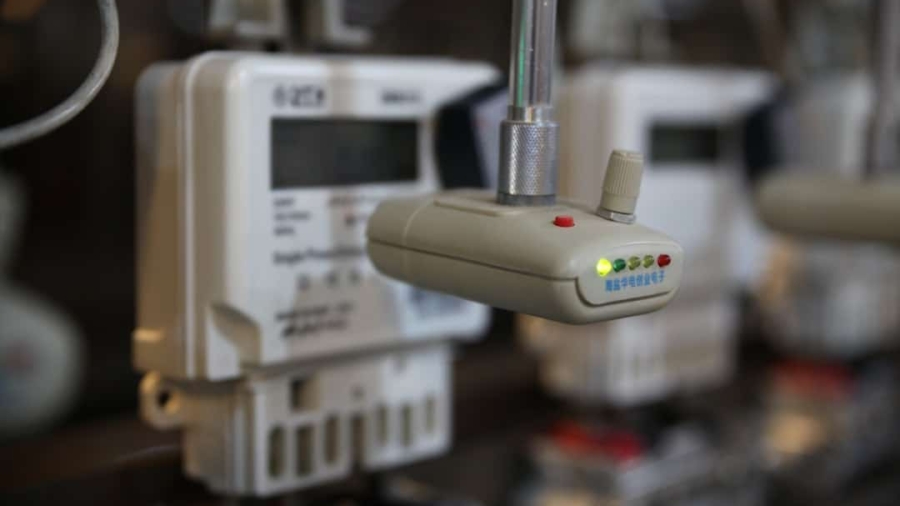
So, what exactly is 5G-enabled real-time industrial monitoring? In a nutshell, it’s about using the super-fast, low-latency capabilities of 5G networks to continuously gather and analyze data from industrial equipment and processes, allowing for immediate insights and actions. Think of it as giving your factory a super-powered nervous system, reacting instantly to what’s happening on the ground.
Traditionally, industrial monitoring has been a bit of a balancing act. You either had slow, unreliable Wi-Fi, or you were laying down miles of expensive cables. 5G swoops in and offers a genuinely transformative alternative. It’s not just about speed; it’s about a whole new level of connectivity that fundamentally alters how we can approach oversight in an industrial setting.
The Need for Speed and Responsiveness
In industries like manufacturing, energy, and logistics, seconds matter. A tiny anomaly in a machine’s temperature could herald a major breakdown. A slight deviation in a product’s composition could lead to an entire batch being scrapped. With older network technologies, data often had to travel longer paths, get processed in centralized locations, and then insights would slowly trickle back. This introduced delays, rendering “real-time” more of an aspiration than a reality. 5G, with its incredible bandwidth and minimal latency, eradicates these bottlenecks, bringing the data from the sensor to the decision-maker in the blink of an eye. This responsiveness is crucial for preventing issues before they escalate and for optimizing processes on the fly.
Untethering the Data Flow
Imagine a vast factory floor, filled with complex machinery, robots, and automated guided vehicles (AGVs). Laying cables for every single sensor and actuator is an infrastructural nightmare – expensive, inflexible, and prone to damage. Wi-Fi, while wireless, often struggles with interference in such environments and has limitations on the sheer volume of devices it can reliably support simultaneously. 5G offers a robust, highly reliable wireless backbone that can connect thousands of devices across a broad area, supporting massive machine-type communications (mMTC). This means sensors, cameras, and control systems can be deployed practically anywhere, without the constraints of physical wiring, opening up new possibilities for granular monitoring in previously inaccessible locations.
Reliability in Harsh Environments
Industrial environments are often not the most delicate places for technology. Dust, vibrations, extreme temperatures, and electromagnetic interference are common. Traditional wireless solutions can falter in these conditions. 5G, however, is designed with industrial use cases in mind. Its robust architecture and ability to operate across different frequency bands make it more resilient to interference and provide more consistent coverage. This reliability is paramount; a monitoring system that frequently drops out isn’t much use when critical operations are at stake.
A stable and dependable network is the foundation upon which effective real-time monitoring is built, and 5G delivers this consistently.
In the realm of advanced technologies, the integration of 5G networks has significantly enhanced real-time industrial monitoring capabilities, allowing for more efficient operations and improved data analysis. For further insights into the impact of cutting-edge technology on mobile devices, you can explore a related article on the Huawei Mate 50 Pro, which showcases how innovations in smartphone technology can complement industrial advancements. For more information, visit this article.
Key Takeaways
- Clear communication is essential for effective teamwork
- Active listening is crucial for understanding team members’ perspectives
- Setting clear goals and expectations helps to keep the team focused
- Regular feedback and open communication can help address any issues early on
- Celebrating achievements and milestones can boost team morale and motivation
Core Components of a 5G Monitoring System
Building a 5G-enabled monitoring system isn’t just about slapping a 5G modem onto a sensor. It involves a cohesive integration of several key elements working in concert. Each component plays a vital role in collecting, transmitting, processing, and acting upon the data.
Smart Sensors and Edge Devices
At the heart of any monitoring system are the sensors. These are the “eyes and ears” of your industrial operations. With 5G, we’re talking about increasingly intelligent sensors and compact edge devices. These aren’t just passive data collectors; many now incorporate significant processing power.
Types of Industrial Sensors
Think about the sheer variety: temperature sensors, vibration sensors, acoustic sensors, pressure sensors, current sensors, vision sensors (cameras), and chemical composition sensors. In a 5G context, these sensors are often highly integrated, sometimes even embedding a 5G module directly or connecting to a small, localized edge gateway. This allows them to preprocess data locally, deciding what’s critical enough to send immediately over the 5G network, and what can be batched.
On-Device Processing
Edge devices are mini-computers situated near the data source. Instead of sending all raw sensor data to the cloud for analysis, these devices can perform initial filtering, aggregation, and even basic AI/ML inference right there on the factory floor. This significantly reduces the amount of data that needs to traverse the network, freeing up bandwidth and, crucially, reducing latency for immediate actions. For example, a vibration sensor paired with an edge device might detect an abnormal pattern that suggests an imminent bearing failure and trigger an alert before the data even leaves the local network segment.
The 5G Network Infrastructure
This is the backbone that makes it all possible. It’s not just the public 5G network you use on your phone; for industrial monitoring, private 5G networks are often the preferred choice.
Private 5G Networks
Businesses can deploy their own dedicated 5G networks on-site. This gives them complete control over security, bandwidth allocation, and latency. A private 5G network acts like a closed ecosystem, ensuring that sensitive operational data never leaves the premises if not intended, and that mission-critical applications always get the priority they need. It offers guaranteed quality of service (QoS) and simplifies network management for specific industrial demands. This can be a game-changer for critical infrastructure that demands uncompromised security and performance.
Slicing for Dedicated Resources
Network slicing is a fascinating 5G capability. It allows operators (or private network owners) to create virtual, isolated networks within the same physical infrastructure, each tailored to specific requirements. For industrial monitoring, this means you can dedicate a “slice” of your 5G network with ultra-low latency and specific bandwidth guarantees purely for your critical real-time monitoring applications, ensuring it’s never impacted by other less critical traffic like office Wi-Fi or general internet browsing. This guarantees consistent performance for core monitoring functions.
Cloud and Edge Computing Platforms
Once the data is collected and transmitted, it needs to be processed and stored. This is where cloud and advanced edge computing platforms come into play.
Centralized Data Warehouses
For long-term analysis, historical trends, and broader operational insights, data eventually makes its way to centralized cloud platforms.
These platforms offer massive storage capabilities, powerful analytics tools, and the flexibility to scale compute resources as needed.
They are crucial for identifying long-term patterns, predicting future failures, and informing strategic decisions. While edge computing handles immediate reactions, cloud computing handles the big picture and continuous improvement.
AI and Machine Learning for Anomaly Detection
This is where the magic happens. AI and ML algorithms are fed the stream of real-time and historical data. They learn the “normal” operational patterns of machines and processes. When a deviation occurs that falls outside of these learned patterns – an anomaly – the system flags it. This could be a slight increase in vibration, a subtle change in a chemical process, or an unusual power draw. These algorithms can detect issues that humans might miss, sometimes even predicting failures hours or days in advance. Predictive maintenance, a key benefit, heavily relies on these AI/ML capabilities, driven by the real-time data flow from 5G.
Real-World Applications and Benefits

It’s not just theory; 5G-enabled real-time industrial monitoring is already bringing tangible benefits across various sectors. The impact is significant, moving beyond simple data collection to truly transformative operational improvements.
Predictive Maintenance for Enhanced Uptime
This is often one of the biggest drivers for adopting advanced monitoring. Instead of waiting for a machine to break down (reactive maintenance) or replacing parts on a fixed schedule regardless of their actual wear (preventive maintenance), predictive maintenance uses data to anticipate failures.
Avoiding Costly Downtime
Imagine a critical production line stops because a pump fails unexpectedly.
The cost isn’t just the replacement part; it’s lost production, missed deadlines, labor costs for repairs, and potential safety hazards. By constantly monitoring factors like vibration, temperature, and current draw on that pump via 5G-connected sensors, AI can predict when it’s likely to fail. This allows maintenance teams to schedule interventions during planned downtime or at a convenient moment, replacing the part before it breaks, thus maximizing operational uptime and significantly reducing unplanned outages.
This proactive approach saves businesses enormous amounts of money and improves overall efficiency.
Optimizing Asset Lifespans
When you maintain equipment based on its actual condition rather than arbitrary schedules, you extend its useful life. You replace components only when they’re truly nearing the end of their service, not prematurely. This means fewer spare parts inventory, less waste, and a better return on investment for your industrial assets.
Predictive maintenance, fueled by continuous 5G data streams, helps businesses get the absolute most out of every piece of machinery.
Enhanced Safety and Environmental Monitoring
Worker safety and environmental responsibility are paramount in any industrial setting. Real-time monitoring significantly boosts both.
Real-time Hazard Detection
In scenarios where hazardous gases might leak, or abnormal temperatures could lead to fires, 5G-connected gas detectors and thermal cameras can provide instant alerts. If a CO2 level rises unexpectedly in a confined space, or a hot spot develops near flammable materials, an immediate alert can be dispatched to safety personnel and potentially trigger automated shutdown procedures.
This drastically reduces response times and can prevent serious incidents. Wearable sensors on workers, connected via 5G, can also monitor vital signs or detect falls, providing immediate assistance in emergencies.
Proactive Environmental Compliance
Industrial operations often involve strict environmental regulations regarding emissions, waste discharge, and energy consumption. 5G allows for constant, granular monitoring of these parameters.
For instance, continuous emissions monitoring systems (CEMS) can transmit data in real-time to regulatory bodies, demonstrating compliance and flagging any deviations instantly. This not only helps avoid hefty fines but also fosters a more sustainable and responsible operational footprint.
Quality Control and Process Optimization
Maintaining consistent product quality and continually improving processes are key competitive advantages. 5G monitoring offers unprecedented capabilities here.
Inline Quality Inspections
Imagine a production line where products are visually inspected at multiple points by high-resolution cameras.
With 5G’s bandwidth and low latency, these cameras can transmit vast amounts of image data to edge devices or the cloud for AI-powered analysis in real-time. Defects can be identified the instant they occur, allowing for immediate adjustments to the manufacturing process or automatic rejection of faulty items. This drastically reduces waste and ensures a higher quality output.
Dynamic Process Adjustments
Many industrial processes involve a complex interplay of variables like temperature, pressure, flow rates, and chemical concentrations.
5G allows sensors monitoring all these parameters to feed data into a central control system with minimal delay. AI algorithms can then analyze this data and suggest or even automatically implement micro-adjustments to the process to maintain optimal output, efficiency, or quality. This moves from reactive adjustments to proactive, data-driven process optimization, leading to significant gains in yield and reduction in resource consumption.
Challenges and Considerations for Adoption

While the promise of 5G industrial monitoring is huge, it’s not a plug-and-play solution. There are practical hurdles and strategic decisions businesses need to navigate.
Initial Investment and ROI
Deploying a private 5G network, acquiring smart sensors, and implementing robust data analytics platforms represent a significant upfront investment. It’s not cheap. Businesses need to carefully assess the potential return on investment (ROI).
Justifying the Cost
Calculating the ROI involves not just factoring in the savings from reduced downtime and improved efficiency, but also the less tangible benefits like enhanced safety, better product quality, and increased competitiveness. A thorough business case is essential, outlining how the technology will address specific pain points and deliver clear value. Often, companies start with pilot projects in a contained area to demonstrate value before a full-scale rollout.
Phased Implementation Strategies
Instead of a “big bang” approach, many organizations find success by implementing 5G monitoring in phases. Start with critical assets that yield the highest immediate benefit, learn from the deployment, and then gradually expand to other areas. This allows for controlled spending and continuous refinement of the system.
Data Security and Privacy Concerns
Industrial data is gold. It often contains proprietary information about processes, product designs, and operational performance. Protecting this data is paramount.
Securing the Network Edge
With more processing happening at the edge, securing these devices becomes critical. Edge devices need robust authentication, encryption, and intrusion detection capabilities. Each endpoint is a potential entry point for malicious actors, so a strong security posture from sensor to cloud is non-negotiable.
Compliance and Regulatory Frameworks
Industries often operate under strict data privacy laws (e.g., GDPR, CCPA) and sector-specific regulations. Ensuring that the collection, storage, and processing of monitoring data comply with these frameworks is vital. This includes considerations about where data is stored (on-premise vs. cloud), who has access to it, and how it is protected against breaches. Private 5G networks often offer an advantage here by keeping sensitive traffic isolated.
Integration with Existing Legacy Systems
Most industrial facilities aren’t greenfield sites. They have years, if not decades, of legacy operational technology (OT) systems, PLCs, and SCADA systems. Integrating new 5G-enabled monitoring solutions with this existing infrastructure can be complex.
Bridging IT and OT Silos
Historically, Information Technology (IT) and Operational Technology (OT) have functioned in separate silos. 5G blurs these lines, requiring greater collaboration and understanding between the two departments. Data from OT systems (like machine performance) now needs to flow seamlessly into IT systems for analysis and decision-making, and vice-versa for control signals. This demands new skills and organizational structures.
Standardized Protocols and APIs
Ensuring interoperability often requires the use of standardized communication protocols (like MQTT, OPC UA, or Modbus over TCP/IP) and robust Application Programming Interfaces (APIs). These interfaces allow the new 5G-enabled monitoring systems to “talk” to older machines and control systems, extracting data and, in some cases, pushing control commands. Careful planning and often custom integration work are necessary to create a unified monitoring and control environment.
In the realm of advanced technologies, the implementation of 5G for real-time industrial monitoring is revolutionizing how industries operate, enhancing efficiency and responsiveness. A related article discusses the best VPS hosting providers for 2023, which can play a crucial role in supporting the infrastructure needed for such innovative applications. For more insights on optimizing your digital resources, you can explore this informative piece on VPS hosting providers. This connection highlights the importance of robust hosting solutions in facilitating the seamless integration of 5G technologies in industrial settings.
The Road Ahead: What’s Next for 5G Monitoring
| Metrics | Value |
|---|---|
| Latency | 1ms |
| Reliability | 99.999% |
| Bandwidth | 10 Gbps |
| Device Density | Up to 1 million devices per square kilometer |
The technology and its applications are still evolving rapidly. We’re seeing just the beginning of what 5G can enable in the industrial sphere.
Deeper Integration of AI and Machine Learning
Expect AI and ML to become even more sophisticated. Beyond anomaly detection, systems will be capable of more complex causal analysis, identifying not just what went wrong, but why it happened, and even suggesting precise, optimized solutions. Reinforcement learning could allow industrial processes to continuously self-optimize based on real-time feedback, moving towards fully autonomous operations in some areas.
Towards Autonomous Operations
The ultimate goal for many advanced industrial settings is increased levels of autonomy. Real-time data from 5G-enabled monitoring is a crucial enabler here. Autonomous guided vehicles (AGVs) and collaborative robots (cobots) already rely on high-speed, low-latency communication. As monitoring feeds into more sophisticated control systems, we’ll see machines making more independent decisions, from adjusting production parameters to initiating maintenance tasks, all without human intervention. This moves industries closer to the vision of “lights-out” manufacturing in certain segments.
The Role of Digital Twins
Digital twins – virtual replicas of physical assets, processes, or even entire facilities – are becoming increasingly powerful. 5G facilitates the real-time feeding of massive amounts of sensor data from the physical world into these digital models. This allows for incredibly accurate simulations, predictive modeling, and even testing of scenarios in the virtual world before implementing them physically. With 5G providing the umbilical cord of data, digital twins will become even more faithful, dynamic, and indispensable tools for optimization and decision-making in industrial settings. They will allow for “what-if” analyses with real-world accuracy, revolutionizing industrial planning and operations.
In essence, 5G isn’t just an upgrade; it’s a fundamental shift in how industries can operate. It’s about empowering smarter, safer, and more efficient factories and facilities through a relentless, insightful, and immediate flow of information. The journey is just beginning, and the implications are vast.
FAQs
What is 5G enabled real time industrial monitoring?
5G enabled real time industrial monitoring refers to the use of 5G technology to provide high-speed, low-latency connectivity for monitoring and controlling industrial processes in real time. This allows for more efficient and responsive operations in sectors such as manufacturing, energy, and transportation.
How does 5G enable real time industrial monitoring?
5G enables real time industrial monitoring by providing faster data transmission speeds and lower latency compared to previous generations of wireless technology. This allows for the seamless transfer of large amounts of data from industrial sensors and equipment, enabling real-time monitoring and control of industrial processes.
What are the benefits of 5G enabled real time industrial monitoring?
The benefits of 5G enabled real time industrial monitoring include improved operational efficiency, enhanced safety, reduced downtime, and the ability to implement advanced technologies such as artificial intelligence and machine learning for predictive maintenance and process optimization.
What are some applications of 5G enabled real time industrial monitoring?
Some applications of 5G enabled real time industrial monitoring include remote equipment monitoring, predictive maintenance, real-time quality control, autonomous vehicle control in industrial settings, and the integration of augmented reality for remote assistance and training.
What are the challenges of implementing 5G enabled real time industrial monitoring?
Challenges of implementing 5G enabled real time industrial monitoring include the need for significant infrastructure investment, ensuring network reliability and security, addressing potential interference issues in industrial environments, and managing the transition from legacy systems to 5G-enabled solutions.
Enjoying our content? Make us a preferred source on Google:
Add us as a Preferred Source on Google