


Securing AI model registries and pipeline endpoints with a Zero-Trust Architecture (ZTA) is about assuming compromise and verifying everything before granting access. Instead of traditional perimeter-based security, where trust is granted to anything inside the network, ZTA treats all access requests – whether from inside or outside the network – as potentially malicious. This means continuous verification of identity, device health, and authorization for every single interaction with your AI infrastructure.
Why Zero-Trust for AI?
The landscape of AI development and deployment brings a unique set of security challenges that traditional models often struggle with. Unlike static applications, AI models are constantly evolving, consuming vast amounts of data, and often operating in distributed, hybrid, or multi-cloud environments. This dynamic nature makes perimeter-based security increasingly ineffective.
The Evolving Threat Landscape
AI systems are prime targets. Data poisoning attacks can compromise model integrity, leading to biased or incorrect outputs. Model theft or extraction can reveal proprietary algorithms. Adversarial attacks can fool models into making incorrect predictions, with potentially severe consequences in critical applications like autonomous vehicles or medical diagnostics. Supply chain attacks, where malicious code is injected into dependencies or shared components, are also a growing concern. Protecting model registries, which store these valuable assets, and pipeline endpoints, which are the gateways for data and model interactions, becomes paramount.
Inherent AI Vulnerabilities
Beyond external threats, AI itself introduces vulnerabilities. The complexity of deep learning models can make them opaque, leading to issues like explainability and bias. If an attacker gains control over a pipeline endpoint, they could inject malicious data that subtly shifts model behavior over time, making detection difficult. Compromised credentials for accessing a model registry could lead to the exfiltration of your entire model library, including sensitive intellectual property. Traditional security models, focused on protecting the network edge, simply aren’t granular enough to address these specific AI-related risks. ZTA steps in by focusing on verifying every access attempt to every resource, regardless of its origin.
In the evolving landscape of cybersecurity, the implementation of Zero-Trust Architecture is becoming increasingly crucial for securing AI model registries and pipeline endpoints. A related article that explores the importance of selecting the right technology for children, which can also parallel the need for careful consideration in tech choices, is available at How to Choose Your Child’s First Tablet. This article emphasizes the significance of making informed decisions in technology, a principle that resonates with the meticulous approach required in establishing robust security measures for AI systems.
Key Takeaways
- The training data includes information and events up to October 2023.
- Insights and knowledge are based on a wide range of sources available until the cutoff date.
- No updates or developments occurring after October 2023 are included in the training.
- Users should verify current information from reliable sources for the latest updates.
- The model’s responses reflect the context and knowledge available up to the specified date.
Core Principles of Zero-Trust in AI

Zero-Trust isn’t a single product; it’s a strategic approach built on several fundamental principles. When applied to AI, these principles guide how we secure our model registries and pipeline endpoints, ensuring robust protection even in the face of sophisticated threats.
Never Trust, Always Verify
This is the cornerstone of Zero-Trust. For AI, it means that no user, device, or application is inherently trusted, even if it’s operating within your internal network or has been granted access before. Every request to access a model, retrieve training data, or push a new model version to the registry must be explicitly verified. This continuous verification process applies to both human users and automated systems, like CI/CD pipelines.
Least Privilege Access
Granting only the bare minimum permissions necessary for a task is crucial. In an AI context, a data scientist might need read access to certain datasets for training, but not write access to the production model registry. A CI/CD pipeline might need write access to a staging registry but only read access to production. This principle helps to limit the blast radius of a potential breach. If an attacker compromises an account with least privilege, their ability to move laterally and inflict damage is severely restricted.
Micro-Segmentation
Breaking down your network into smaller, isolated segments is key. Instead of a flat network, micro-segmentation ensures that even if one part of your AI environment is compromised, the attacker cannot easily pivot to other critical components. For instance, your model registry could be in one micro-segment, your training environment in another, and your inference endpoints in a third. Network policies then dictate exactly which segments can communicate with each other, and under what conditions. This drastically reduces the attack surface.
Device Trust
The health and compliance of devices accessing AI resources are continuously assessed. This includes checking for up-to-date patches, antivirus software, and adherence to security policies. If a device attempting to access a model registry is deemed unhealthy (e.g., it has known vulnerabilities or hasn’t updated its security definitions), access can be denied or quarantined until the issue is resolved. This prevents compromised workstations from becoming launchpads for attacks.
Multi-Factor Authentication (MFA) Everywhere
MFA adds an essential layer of security by requiring more than one form of verification before granting access. For AI model registries and pipeline endpoints, this should be mandatory for all human users and, where applicable, service accounts. This significantly mitigates the risk of credential theft, as an attacker would need not only the password but also the second factor (e.g., a token, biometric, or authenticator app) to gain access.
Continuous Monitoring and Threat Detection
Zero-Trust environments are dynamic. Continuous monitoring of all network traffic, user behavior, and system logs is essential to detect anomalies and potential threats in real-time. This includes monitoring access patterns to model registries, unusual data transfers from pipeline endpoints, and unauthorized attempts to modify model versions. Tools like Security Information and Event Management (SIEM) and Security Orchestration, Automation, and Response (SOAR) play a vital role here, enabling rapid response to detected incidents.
Implementing Zero-Trust for AI Model Registries
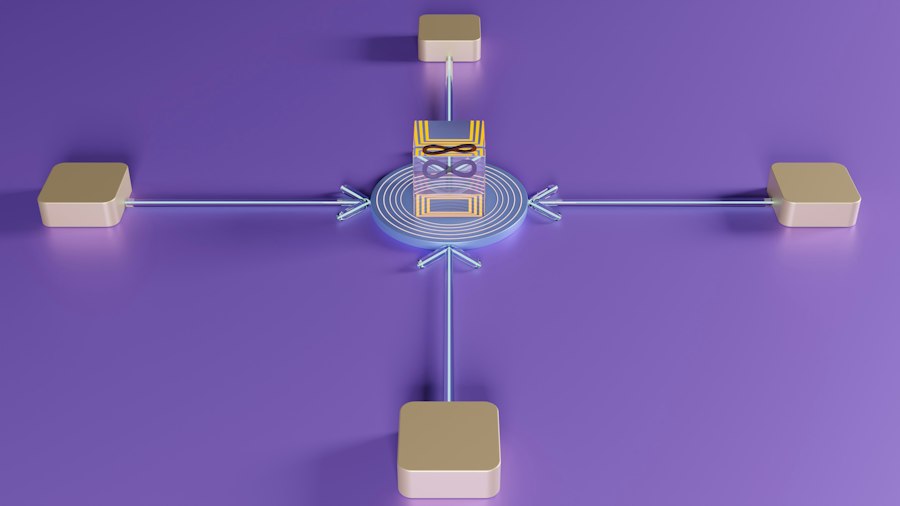
Securing your AI model registry is paramount, as it acts as the central repository for your most valuable AI assets. Implementing Zero-Trust here involves rigorous controls over who can access, modify, and retrieve models.
Strong Identity and Access Management (IAM)
At the heart of securing your model registry is a robust IAM strategy. This goes beyond simple username and password.
Granular Role-Based Access Control (RBAC)
Define precise roles for users and service accounts accessing the registry.
For example, a “model developer” might have permissions to push new model versions to a development registry and read existing models. A “model reviewer” might have read-only access to all registries and the ability to approve models for promotion. A “deployment engineer” might only have read access to the approved production models.
Avoid broad roles that grant excessive permissions.
Attribute-Based Access Control (ABAC)
Beyond roles, ABAC allows for more dynamic and context-aware access decisions. Access can be granted or denied based on various attributes, such as the user’s location, the time of day, the sensitivity of the model (e.g., PII-related models), or the health status of the device being used. For instance, a user might only be able to download a sensitive model from an approved, company-managed device within the corporate network during business hours.
Centralized Identity Provider
Integrate your model registry with a centralized identity provider (IdP) like Okta, Azure AD, or Google Identity.
This ensures consistent authentication policies, simplifies user management, and enables single sign-on (SSO), reducing credential sprawl. The IdP should enforce MFA for all users.
Network Segmentation and Isolation
Even within your cloud or on-premise environment, your model registry should be isolated from other resources.
Dedicated Network Segments
Place your model registry in its own dedicated network segment or subnet. This segment should have stringent network access controls (firewall rules) that only permit traffic from explicitly authorized sources (e.g., CI/CD pipelines, specific user networks).
Private Endpoints
Utilize private endpoints or private links if your model registry is hosted in the cloud (e.g., Azure Machine Learning Registry, AWS SageMaker Model Registry).
This ensures that traffic to and from the registry travels over your private network, bypassing the public internet and reducing exposure.
API Gateway Protection
If your registry exposes APIs, place them behind an API gateway.
The gateway can enforce authentication, authorization, rate limiting, and input validation before requests even reach the registry’s backend.
This acts as a crucial first line of defense.
Continuous Monitoring and Logging
Visibility into all activities within the model registry is non-negotiable.
Audit Trails and Immutable Logs
Every action performed on the model registry – model upload, download, deletion, metadata modification, access attempts (successful or failed) – must be logged with immutable audit trails. These logs should include who performed the action, when, from where, and on which model.
Anomaly Detection
Implement systems that continuously analyze these logs for anomalous behavior. This could include unusual download volumes, access attempts from new or suspicious IP addresses, attempts to delete production models, or unauthorized modifications to model metadata.
Automated alerts should be triggered for any detected anomalies.
Integration with SIEM
Feed all model registry logs into your central SIEM system. This allows for correlation with other security events across your infrastructure, providing a holistic view of your security posture and enabling faster incident response.
Securing AI Pipeline Endpoints with Zero-Trust
AI pipeline endpoints are the gateways where data flows in for training or inference, and where models output predictions. They are critical interaction points and thus prime targets for attacks.
Authenticating and Authorizing Every Interaction
Just like the model registry, every access to a pipeline endpoint needs explicit verification.
Strong Authentication for Data Sources
Ensure that all data sources feeding into your pipelines (e.g., data lakes, streaming services) are strongly authenticated. Service accounts used by pipelines to access these sources should use short-lived credentials, managed identities, or token-based authentication rather than static API keys.
Mutual TLS (mTLS) for Endpoint Communication
Implement mTLS for all communications between pipeline components and with external services. This ensures that both the client and the server verify each other’s identity using cryptographic certificates, preventing unauthorized components from interacting with your pipelines or endpoints.
Request Validation and Sanitization
All incoming requests to pipeline inference endpoints must undergo rigorous validation and sanitization. This prevents injection attacks, malformed data, or attempts to exploit vulnerabilities in the model’s input processing. Use schemas to define expected input formats and reject anything that deviates.
Enforcing Network Perimeter and Isolation
Minimizing the attack surface of pipeline endpoints through network controls is vital.
Micro-Segmentation of Pipelines
Each stage of your AI pipeline (data ingestion, preprocessing, training, validation, deployment, inference) should ideally reside in its own micro-segment. This limits lateral movement for attackers. For example, the training environment should not have direct outbound access to the internet if not strictly necessary, and its communication with the data ingestion segment should be tightly controlled.
Network Access Controls (NAC)
Implement strict NAC policies (firewall rules, security groups) that dictate exactly what traffic can reach pipeline endpoints. If an inference endpoint is meant to be accessed only by your web application’s backend, only allow traffic from that specific IP range or service. Deny all other inbound connections by default.
Private Link/Endpoint for Internal Access
If your pipeline components need to communicate with other internal services (e.g., a feature store, a database), use private links or private endpoints to keep this traffic off the public internet. This applies even if both services are within the same cloud provider.
Runtime Security and Behavior Monitoring
Once a pipeline is running, continuous monitoring for deviations from expected behavior is crucial.
Container Security and Image Scanning
If your pipelines run in containers (which is common for AI), ensure all container images are scanned for vulnerabilities before deployment. Enforce immutable images and regularly patch base images. Use container runtime security tools to detect and block suspicious activities within containers.
Workload Identity and Authorization
Each component within your pipeline (e.g., a training job, an inference service) should have its own unique, granular identity. This workload identity should be used for all access requests to other services (e.g., accessing data stores, pushing models to the registry). Implement fine-grained authorization policies based on these workload identities.
Real-time Threat Detection at Endpoints
Monitor inference endpoints for unusual request patterns, abnormally high error rates, or unexpected model behavior. Adversarial attacks might manifest as a sudden drop in model accuracy or an increase in specific prediction types. Implement tools that can detect these shifts and trigger alerts or even automated rollback to a previous model version.
Input/Output Data Integrity Checks
Integrate data integrity checks at various stages of the pipeline. Verify data schemas, ranges, and consistency. For inference, ensure that the output format aligns with expectations and flag any anomalies that could indicate model tampering or erroneous processing.
In the evolving landscape of cybersecurity, the implementation of Zero-Trust Architecture is becoming increasingly vital for securing AI model registries and pipeline endpoints. A comprehensive understanding of this approach can be further enhanced by exploring related topics, such as the selection of appropriate technology tools for educational purposes. For instance, a recent article discusses how to choose the right tablet for students, which highlights the importance of secure devices in educational environments. This connection underscores the necessity of robust security measures across all technology platforms. To read more about this, you can visit how to choose a tablet for students.
Operationalizing Zero-Trust for AI
| Metric | Description | Typical Value / Range | Importance in Zero-Trust Architecture |
|---|---|---|---|
| Authentication Success Rate | Percentage of successful authentications for accessing AI model registries and pipeline endpoints | 98% – 100% | Ensures only authorized users and services access sensitive AI assets |
| Multi-Factor Authentication (MFA) Adoption | Percentage of users or services using MFA for access | 90%+ | Reduces risk of credential compromise in zero-trust environments |
| Access Request Latency | Time taken to validate and grant access to model registries or pipeline endpoints | 50ms – 200ms | Critical for maintaining pipeline efficiency while enforcing strict access controls |
| Number of Micro-Segmented Zones | Count of isolated network or logical segments protecting AI assets | 5 – 20 zones | Limits lateral movement and exposure in case of breach |
| Encryption Coverage | Percentage of data encrypted at rest and in transit within AI pipelines | 100% | Protects sensitive model data and pipeline communications |
| Incident Detection Time | Average time to detect unauthorized access or anomalies | Less than 5 minutes | Enables rapid response to potential security breaches |
| Policy Enforcement Consistency | Percentage of access requests evaluated and enforced according to zero-trust policies | 99%+ | Ensures uniform application of security controls across all endpoints |
| Audit Log Completeness | Percentage of access and activity events logged for AI model registries and pipelines | 100% | Supports forensic analysis and compliance requirements |
Implementing Zero-Trust is an ongoing journey that requires continuous effort, automation, and a cultural shift within your AI and security teams.
Automation and Orchestration
Manual implementation of Zero-Trust controls across numerous AI assets is unsustainable.
Infrastructure as Code (IaC)
Define your network configurations, access policies, and security group rules using IaC tools like Terraform or CloudFormation. This ensures consistency, repeatability, and allows for version control and peer review of your security posture.
Policy as Code
Automate the enforcement of your security policies through “policy as code.” Tools like Open Policy Agent (OPA) can be used to define granular authorization policies that are automatically enforced across your AI infrastructure, including model registries and pipeline endpoints.
CI/CD Pipeline Integration
Integrate security checks directly into your CI/CD pipelines. This includes vulnerability scanning of container images, static application security testing (SAST) of code, and dynamic application security testing (DAST) of deployed endpoints. Ensure that security gates prevent insecure artifacts from reaching production.
Regular Audits and Compliance
Zero-Trust is not a “set it and forget it” solution.
Periodic Access Reviews
Regularly review user and service account permissions to ensure they still adhere to the principle of least privilege. Remove unnecessary access promptly.
Penetration Testing and Red Teaming
Conduct regular penetration tests and “red team” exercises specifically targeting your AI model registries and pipeline endpoints. These simulated attacks help identify weaknesses that automated tools might miss.
Compliance Frameworks
Align your Zero-Trust implementation with relevant industry compliance frameworks (e.g., NIST 800-207, ISO 27001, SOC 2). This not only helps meet regulatory requirements but also provides a structured approach to building and maintaining a secure AI environment.
Employee Training and Awareness
People are often the weakest link in any security chain.
Security Best Practices for AI Teams
Train your data scientists, MLOps engineers, and developers on AI-specific security best practices. This includes secure coding, understanding common AI attack vectors, and recognizing phishing attempts.
Incident Response Preparedness
Ensure that your teams are well-versed in incident response procedures specifically tailored for AI incidents. This includes understanding how to identify a compromised model, revert to a trusted version, or isolate a malicious pipeline endpoint.
Culture of Security
Foster a culture where security is seen as a shared responsibility, not just the domain of the security team. Encourage reporting of suspicious activities and continuous learning about evolving threats.
By adopting a Zero-Trust mindset and diligently applying its principles to your AI model registries and pipeline endpoints, you build a resilient and robust security posture. It’s a proactive approach that acknowledges the dynamic and complex nature of AI, moving beyond traditional perimeter defenses to safeguard your invaluable AI assets from an ever-evolving threat landscape.
FAQs
What is zero-trust architecture?
Zero-trust architecture is a security concept based on the principle of not trusting any entity inside or outside the organization’s network by default. It requires strict identity verification for every person and device trying to access resources on the network.
How does zero-trust architecture enhance security for AI model registries and pipeline endpoints?
Zero-trust architecture enhances security for AI model registries and pipeline endpoints by implementing strict access controls, continuous monitoring, and least privilege access. This approach ensures that only authorized users and devices can interact with sensitive AI models and data.
What are the key components of a zero-trust architecture for securing AI model registries and pipeline endpoints?
The key components of a zero-trust architecture for securing AI model registries and pipeline endpoints include identity and access management, network segmentation, encryption, continuous authentication, and monitoring and logging mechanisms.
How can organizations implement a zero-trust architecture for securing AI model registries and pipeline endpoints?
Organizations can implement a zero-trust architecture for securing AI model registries and pipeline endpoints by conducting a thorough risk assessment, defining access policies, implementing multi-factor authentication, encrypting data in transit and at rest, and regularly auditing and updating security measures.
What are the benefits of adopting a zero-trust architecture for securing AI model registries and pipeline endpoints?
The benefits of adopting a zero-trust architecture for securing AI model registries and pipeline endpoints include improved data security, reduced risk of unauthorized access or data breaches, enhanced compliance with data protection regulations, and increased trust in the organization’s AI systems.
Enjoying our content? Make us a preferred source on Google:
Add us as a Preferred Source on Google