

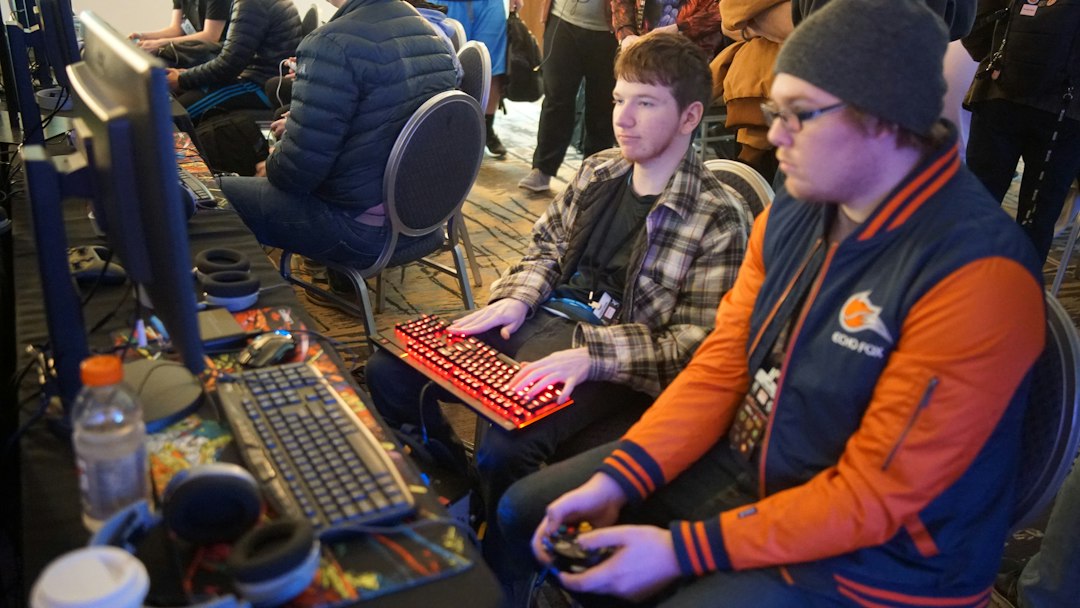
Zero-Knowledge Proofs (ZKPs) are a game-changer for decentralized identity in online gaming because they allow players to prove specific attributes about themselves without revealing the underlying sensitive information. Imagine proving you’re old enough to play a mature-rated game without showing your full date of birth, or demonstrating you own a rare in-game item without exposing your entire wallet contents. This technology is crucial for building privacy-preserving, verifiable identities that are owned by the players, not the platforms, fostering trust and enabling new forms of interaction in the digital realms we love.
The Core Concept: What Are Zero-Knowledge Proofs?
At its heart, a Zero-Knowledge Proof is a cryptographic method where one party (the prover) can convince another party (the verifier) that a statement is true, without revealing any information beyond the validity of the statement itself. Think of it like a magical puzzle. You can show someone that you know the solution to the puzzle without actually showing them the solution, or even giving them hints about how you found it. They just become convinced that you know it.
This isn’t just about hiding secrets; it’s about selective disclosure. Instead of handing over your entire digital passport, ZKPs let you selectively reveal just the specific pieces of information needed for a particular interaction. For gamers, this means more control over their data and a significant leap towards truly private interactions within online worlds. It’s a fundamental shift from “trust me, I know” to “I can cryptographically prove I know, without telling you what I know.”
Prover, Verifier, and the Statement
Every ZKP involves three key components. First, there’s the prover, the individual or entity trying to demonstrate something. In gaming, this would be the player. Second, there’s the verifier, the party that needs to be convinced. This could be a game server, another player, or even a smart contract governing an in-game event. Finally, there’s the statement, the piece of information being proven. This could be “I am over 18,” “I own this specific unique NFT skin,” or “I have completed quest X.”
The magic happens when the prover, using complex mathematical functions, generates a proof that the verifier can then check. This check confirms the statement’s truth without the verifier ever learning the actual secret data the statement is based on. The proof itself is usually a short string of characters, efficient to transmit and verify, making it practical for real-time online interactions.
Practical Examples Beyond Gaming
To grasp the power of ZKPs, consider scenarios outside gaming. Imagine proving your credit score is above a certain threshold to get a loan without revealing the exact score. Or proving you meet a specific income requirement for an apartment without sharing your payslip. In these cases, the verifier gets the assurance they need without being exposed to sensitive personal data they don’t actually require. This principle translates directly to the nuanced privacy needs of online gaming, where players are often asked for more information than is truly necessary.
In the rapidly evolving landscape of online gaming, the integration of Zero-Knowledge Proofs and Decentralized Identity is becoming increasingly important for enhancing user privacy and security. A related article that delves into these concepts and their implications for gaming platforms can be found at Enicomp. This resource explores how these technologies can empower players by allowing them to verify their identities without revealing sensitive information, ultimately fostering a more secure and trustworthy gaming environment.
Key Takeaways
- The training data includes information and events up to October 2023.
- Insights and knowledge are based on a wide range of sources available until the cutoff date.
- No updates or developments occurring after October 2023 are included in the training.
- Users should verify current information from reliable sources for the latest updates.
- The model’s responses reflect the context and knowledge available up to the specified date.
The Challenge of Identity in Current Online Gaming

Today’s online gaming landscape, while incredibly immersive and social, faces significant challenges when it comes to player identity. Most platforms rely on centralized systems where players create accounts tied to personal data, often managed by the game developer or a third-party service. This model, while convenient, has inherent vulnerabilities and places the player’s data at risk.
Your gaming identity today is fragmented and largely platform-dependent. You have an account on Steam, another on PlayStation Network, yet another for a specific MMORPG. Each holds pieces of your identity, your progress, your purchases. There’s no unified, player-controlled “gaming passport” that truly belongs to you across these disparate ecosystems. This fragmentation hinders interoperability and gives platforms immense power over your digital self.
Centralized Data and Security Risks
When game developers store vast amounts of player data – from email addresses and payment information to play history and social connections – they become attractive targets for cyberattacks. Data breaches are a constant threat, and when they occur, players’ personal information is exposed, leading to potential identity theft, phishing scams, and other forms of digital harm. The current model necessitates players trusting corporations with their sensitive data, a trust that is frequently tested.
Beyond security, centralized control means that if a platform decides to ban an account, or if the platform itself ceases to exist, a player’s entire digital history and investment can be lost.
This lack of true ownership over one’s identity and assets is a significant pain point for many dedicated gamers who invest thousands of hours and dollars into their virtual lives.
Lack of Player Control and Portability
Imagine building up a reputation as a formidable player in one game, only to have to start from scratch, reputation-wise, in another. Or accumulating a collection of rare skins and items tied to a single platform, with no easy way to prove ownership or transfer them elsewhere. This is the reality for most gamers. Player data, achievements, and assets are siloed. There’s no native mechanism to port aspects of your gaming identity – your verified age, your skill rating, your ownership of specific digital goods – from one game or platform to another in a trustless, permissionless way.
This lack of portability stifles innovation and limits the potential for truly cross-platform gaming experiences. It also means that players have very little say in how their data is used or shared. They are often forced to accept broad terms of service that grant platforms extensive rights over their digital footprint, leading to privacy concerns and a feeling of disempowerment.
Decentralized Identity: A New Paradigm for Gamers
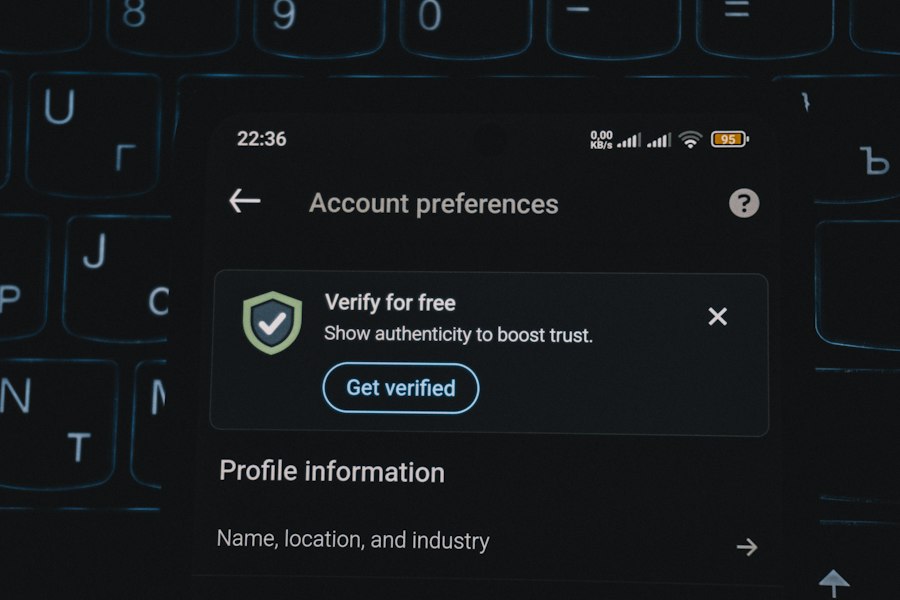
Decentralized Identity (DID) offers a revolutionary approach to how players manage their digital selves in online gaming. Instead of relying on a centralized authority like a game developer or social media giant to control and store your identity, DIDs put the power back into the hands of the individual. At its core, a DID is a unique, persistent identifier that is controlled by the user, not by an intermediary.
It’s typically anchored on a blockchain or another distributed ledger technology, making it resistant to censorship and single points of failure.
Think of it as owning your own digital passport, where you decide what information to put in it, and crucially, who gets to see which parts of it. This passport isn’t issued by any one government or company; it’s a verifiable credential that you control. For gamers, this means moving beyond fragmented accounts to a unified, self-sovereign digital persona that can traverse different gaming ecosystems.
Self-Sovereign Identity and Data Ownership
The concept of “self-sovereign identity” is central to DIDs.
It means that players have ultimate control over their identity attributes. They decide what information is associated with their DID, who can access it, and for how long. This contrasts sharply with current models where platforms often act as custodians of player data, sometimes monetizing it without explicit, granular consent.
With DIDs, players can own their reputation, their achievements, their age verification, and their ownership of digital assets (like NFTs).
This data is no longer locked into a specific game server; it’s linked to their DID, which they control. This fundamental shift empowers players, transforming them from mere users into true owners of their digital lives within and across gaming platforms.
Verifiable Credentials and Their Role
Verifiable Credentials (VCs) are the backbone of a practical DID system. They are essentially tamper-proof digital attestations of specific attributes about a player, issued by trusted entities.
For example, a game developer might issue a VC confirming a player has achieved a certain rank in their game. A regulatory body might issue a VC confirming a player’s age. Or a guild might issue a VC confirming a player’s membership and reputation within their community.
These VCs are cryptographically signed by the issuer, making them impossible to fake.
A player then stores these VCs in their digital wallet, which is entirely under their control. When a game or another player needs to verify an attribute (e.
g.
, “Is this player over 18?”), the player can present the relevant VC. Critically, this is where Zero-Knowledge Proofs come into play.
Instead of revealing the entire VC (which might contain more information than necessary, like an exact birthdate), ZKPs allow the player to prove only the specific statement (e.g., “I am over 18”) derived from the VC, without revealing any extraneous data.
Integrating Zero-Knowledge Proofs with Decentralized Identity in Gaming
This is where the magic truly happens: connecting Zero-Knowledge Proofs with Decentralized Identity. DIDs provide the framework for self-sovereign, player-controlled identities, and Verifiable Credentials populate those identities with trusted attestations. ZKPs then act as the privacy layer, allowing players to selectively and privately present information derived from their VCs without oversharing.
Imagine a game where instead of logging in with a username and password tied to an email, you connect with your DID. All your verifiable credentials – your age, your game ownership, your achieved ranks, your guild memberships – are stored in your personal digital wallet, controlled by you. When the game needs to know if you’re old enough for mature content, you use a ZKP to prove you’re over 18 without revealing your exact birthdate. When you join a ranked match, you use a ZKP to prove you have a certain skill rating without revealing your entire match history or specific K/D ratio.
Enhanced Privacy for Gamers
The most immediate and significant benefit is privacy. With ZKPs integrated into DIDs, players can participate in online gaming with a much greater degree of control over their personal information. They no longer need to broadcast sensitive data to every platform or interaction. This significantly reduces the attack surface for data breaches and protects players from unwanted data collection and profiling.
For instance, when signing up for a new game, instead of providing your email address, full name, and date of birth, you might present a ZKP that proves you have a verified email (without revealing the email itself) and that you are over the minimum age requirement. This is a paradigm shift from mandatory data submission to selective, privacy-preserving disclosure.
Preventing Cheating and Fraud with Verifiable Credentials
ZKPs can also play a crucial role in maintaining fair play and preventing fraud. Imagine a competitive gaming scenario where players need to prove they own a legitimate copy of the game, have not been banned in previous seasons, or haven’t used specific unauthorized modifications. Instead of game servers constantly scanning client-side data or relying on easily spoofed local files, players could present ZKPs based on Verifiable Credentials issued by the game developer itself.
For example, a game developer could issue a VC to each player’s DID confirming their unique game license and a “clean record” status. Before entering a match, players could submit a ZKP derived from this VC, proving they hold a valid license and haven’t been banned, without revealing their specific license key or entire history to other players or even the match server. This makes cheating much harder, as the proof is cryptographic and anchored to a player-controlled identity, rather than easily alterable local data.
Secure and Private Matchmaking
Matchmaking often requires certain criteria: skill level, geographical region, age bracket, or even specific in-game item ownership for exclusive events. Currently, this data is usually held by the game server, potentially revealing more about a player than they’d like.
With ZKPs and DIDs, players could provide proofs for specific matchmaking criteria without revealing the underlying data. “I can prove my skill rating is within X range,” “I can prove I’m in region Y,” or “I can prove I own the required NFT for this event.” This allows for highly customized and fair matchmaking while preserving player privacy, preventing situations where players feel their full profile is exposed just to find a game.
Enabling True Ownership and Interoperability of Digital Assets
NFTs have already introduced the concept of true ownership for in-game assets. However, proving ownership of an NFT in a privacy-preserving way, especially for conditional access or in-game actions, is where ZKPs shine. A player might need to prove they own a specific rare skin to enter an exclusive area or participate in a special tournament. Instead of revealing their entire wallet address and its contents, they could submit a ZKP proving ownership of that specific NFT.
This extends to interoperability. Imagine proving you completed a difficult achievement in Game A, and receiving a ZKP-enabled Verifiable Credential from Game A’s developer. You could then use this VC to unlock a cosmetic item or a special ability in Game B, without Game B needing direct access to Game A’s database or your entire gaming history. This fosters a truly interconnected gaming metaverse where your achievements and assets have value and utility across different experiences, all while respecting your privacy.
In the evolving landscape of online gaming, the integration of Zero-Knowledge Proofs and Decentralized Identity is becoming increasingly significant, particularly in enhancing user privacy and security. A recent article discusses how these technologies can transform player interactions and protect personal information while maintaining a seamless gaming experience. For those interested in exploring related topics, you can check out this insightful piece on