


Early detection of illness is a cornerstone of effective healthcare, significantly influencing treatment outcomes and patient survival rates. The ability to identify health issues at their nascent stages allows for timely interventions, which can prevent the progression of diseases and reduce the burden on healthcare systems. For instance, conditions such as cancer, diabetes, and cardiovascular diseases often present subtle symptoms in their early phases.
When these symptoms are overlooked or misattributed to less serious ailments, the opportunity for early intervention is lost, potentially leading to more severe health complications and increased treatment costs. Moreover, early illness detection is not only crucial for individual patients but also for public health at large. The rapid identification of infectious diseases can help contain outbreaks before they escalate into epidemics or pandemics.
For example, during the COVID-19 pandemic, early detection through various means, including temperature screening, played a vital role in controlling the spread of the virus. By leveraging technology that facilitates early diagnosis, healthcare providers can implement preventive measures more effectively, ultimately saving lives and resources.
Key Takeaways
- Early detection of illness through body temperature monitoring can improve health outcomes.
- Temperature-sensing wearables continuously track body temperature using advanced sensors.
- These devices offer advantages over traditional thermometers, such as real-time data and convenience.
- Widespread use of wearables could significantly enhance public health monitoring and response.
- Ethical, privacy, and technical challenges must be addressed for effective implementation.
How Temperature-Sensing Wearables Work
Temperature-sensing wearables are innovative devices designed to monitor body temperature continuously or at regular intervals. These devices typically utilize advanced sensors that can detect minute changes in skin temperature, which can be indicative of underlying health issues. The technology behind these wearables often includes thermistors or infrared sensors that convert temperature readings into digital signals, which are then processed by onboard software to provide real-time data to users.
The data collected by these wearables can be transmitted to smartphones or other devices via Bluetooth or Wi-Fi, allowing users to track their temperature trends over time. Some advanced models even incorporate machine learning algorithms that analyze historical data to predict potential health issues based on temperature fluctuations. For instance, a sudden spike in body temperature could trigger alerts for users, prompting them to seek medical advice.
This proactive approach to health monitoring empowers individuals to take charge of their well-being and facilitates timely medical consultations when necessary.
The Role of Body Temperature in Illness Detection
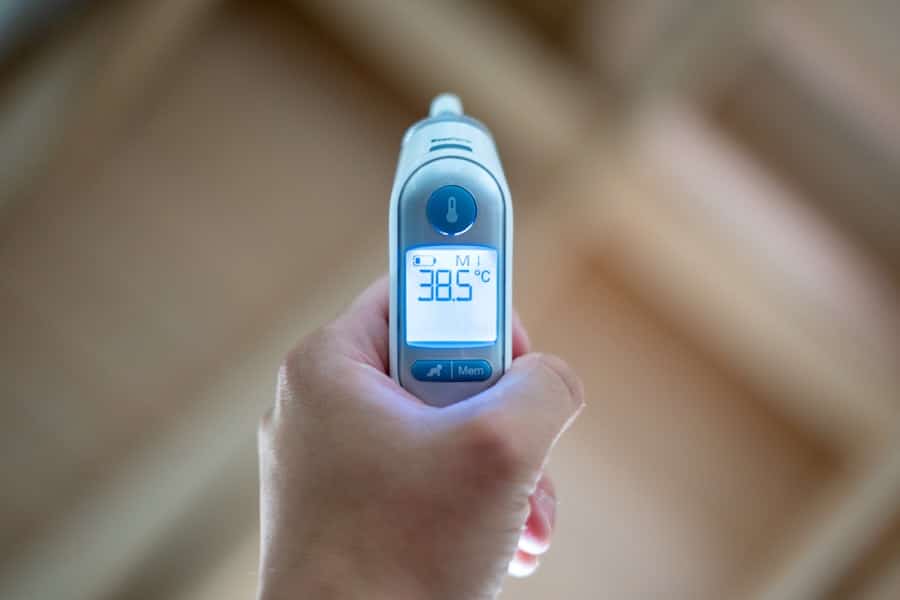
Body temperature serves as a critical biomarker in assessing an individual’s health status. The human body maintains a relatively stable core temperature, typically around 98.6°F (37°C), but this can vary based on factors such as time of day, activity level, and individual physiology. Deviations from this norm can signal the presence of an illness.
For example, a fever is often one of the first signs of infection, indicating that the body is responding to pathogens. Conversely, hypothermia can suggest exposure to extreme cold or underlying health issues. In addition to infections, changes in body temperature can also be associated with other medical conditions.
For instance, thyroid disorders can lead to abnormal temperature regulation, while certain cancers may cause unexplained fevers.
This capability is particularly beneficial for individuals with chronic conditions who require regular monitoring to manage their health effectively.
Advantages of Temperature-Sensing Wearables Over Traditional Thermometers
Temperature-sensing wearables offer several advantages over traditional thermometers that have long been the standard for measuring body temperature. One significant benefit is the convenience and ease of use associated with wearables. Unlike traditional thermometers that require manual operation and often involve waiting for a reading, wearables provide continuous monitoring without the need for user intervention.
This feature is particularly advantageous for individuals who may forget to take their temperature regularly or for those who require frequent monitoring due to medical conditions. Another advantage lies in the ability of wearables to track temperature trends over time. Traditional thermometers provide a single reading at a specific moment, which may not accurately reflect an individual’s overall health status.
In contrast, wearables can log temperature data continuously, allowing users and healthcare providers to analyze patterns and identify anomalies more effectively. This longitudinal data can be invaluable in clinical settings where understanding a patient’s temperature history is crucial for diagnosis and treatment planning.
The Potential Impact of Temperature-Sensing Wearables on Public Health
| Metric | Description | Relevance to Early Illness Detection | Example Data |
|---|---|---|---|
| Body Temperature Range | Normal human body temperature typically ranges from 36.1°C to 37.2°C (97°F to 99°F) | Deviations from this range can indicate fever or hypothermia, early signs of illness | 37.8°C detected by wearable indicates possible fever onset |
| Temperature Variability | Fluctuations in body temperature over time | Sudden spikes or drops can signal infection or other health issues | 2°C increase within 2 hours detected |
| Continuous Monitoring Frequency | Number of temperature readings per hour/day | Higher frequency allows for real-time detection of abnormal temperature changes | Readings every 5 minutes (288 per day) |
| Response Time | Time taken to detect abnormal temperature and alert user | Faster response enables earlier intervention and treatment | Alert sent within 10 minutes of fever detection |
| Accuracy of Temperature Sensors | Degree of precision in temperature measurement (±°C) | High accuracy reduces false positives/negatives in illness detection | ±0.1°C accuracy |
| Integration with Other Vital Signs | Combining temperature data with heart rate, oxygen levels, etc. | Improves reliability of early illness detection algorithms | Temperature + heart rate variability used for flu detection |
| User Compliance Rate | Percentage of time users wear the device as recommended | Higher compliance ensures continuous data collection for early detection | 85% daily wear time |
The integration of temperature-sensing wearables into public health strategies has the potential to revolutionize how we monitor and respond to health crises. By equipping individuals with these devices, public health officials can gain access to real-time data on population health trends. This information can be instrumental in identifying outbreaks of infectious diseases before they spread widely.
For example, if a significant number of wearables in a specific geographic area report elevated temperatures, public health authorities can investigate further and implement containment measures promptly. Furthermore, widespread adoption of temperature-sensing wearables could enhance individual awareness of personal health status. As people become more attuned to their body temperature fluctuations, they may be more likely to seek medical attention when necessary.
This proactive approach could lead to earlier diagnoses and better management of chronic conditions, ultimately reducing healthcare costs and improving quality of life for many individuals.
Challenges and Limitations of Temperature-Sensing Wearables

Despite their numerous advantages, temperature-sensing wearables are not without challenges and limitations. One significant concern is the accuracy and reliability of the data they provide. While many devices are designed with advanced sensors capable of delivering precise readings, factors such as skin contact quality, environmental conditions, and device calibration can affect accuracy.
Users may receive misleading information if the wearable is not properly fitted or if it is exposed to extreme temperatures. Additionally, there is the challenge of user compliance and engagement. For wearables to be effective tools for health monitoring, individuals must consistently wear them and engage with the data they provide.
However, many users may find it cumbersome or forgetful to wear these devices regularly. Moreover, some individuals may not fully understand how to interpret the data or may become desensitized to alerts over time, leading to missed opportunities for early intervention.
Ethical and Privacy Considerations in Using Temperature-Sensing Wearables
The use of temperature-sensing wearables raises important ethical and privacy considerations that must be addressed as these technologies become more prevalent. One primary concern revolves around data security and user privacy. Wearable devices collect sensitive health information that could be vulnerable to breaches or unauthorized access if not adequately protected.
Users must trust that their data will be handled responsibly and that their privacy will be maintained.
There is a risk that individuals could face discrimination based on their health data if it is shared without consent or used inappropriately.
Establishing clear guidelines and regulations surrounding data usage will be essential in ensuring that users feel safe and secure while utilizing these innovative technologies.
Future Developments and Applications of Temperature-Sensing Wearables
The future of temperature-sensing wearables holds exciting possibilities as technology continues to advance. One area of development is the integration of artificial intelligence (AI) and machine learning algorithms that can enhance the predictive capabilities of these devices. By analyzing vast amounts of data from diverse populations, AI could identify patterns that human analysts might overlook, leading to earlier detection of potential health issues.
Additionally, future applications may extend beyond individual health monitoring to include community health surveillance systems that aggregate data from multiple users in real-time. Such systems could provide public health officials with valuable insights into emerging health trends and facilitate rapid responses to outbreaks or other public health concerns. As research continues into the relationship between body temperature and various health conditions, we may see the emergence of more sophisticated wearables capable of detecting not just fever but also other physiological changes indicative of illness.
This evolution could transform how we approach personal health management and public health initiatives in the years to come.
Temperature-sensing wearables are becoming increasingly vital for early illness detection, as they can provide real-time data that helps users monitor their health more effectively. For those interested in exploring the broader implications of wearable technology, a related article comparing popular smartwatches can be found here: Apple Watch vs. Samsung Galaxy Watch. This comparison highlights the features of these devices, including their health monitoring capabilities, which are essential for proactive health management.
FAQs
What are temperature-sensing wearables?
Temperature-sensing wearables are electronic devices worn on the body that continuously monitor and record the wearer’s body temperature. They use sensors to detect temperature changes and often sync data with smartphones or other devices for real-time tracking.
How do temperature-sensing wearables help in early illness detection?
These wearables can detect subtle changes in body temperature that may indicate the onset of an illness, such as a fever. Early detection allows users to seek medical advice sooner, potentially preventing the spread of contagious diseases and enabling timely treatment.
What types of illnesses can temperature-sensing wearables help detect early?
They are particularly useful for detecting infections that cause fever, including viral illnesses like the flu, COVID-19, and other respiratory infections. They may also help monitor chronic conditions that affect body temperature regulation.
Are temperature-sensing wearables accurate?
Modern temperature-sensing wearables use advanced sensors and algorithms to provide accurate and continuous temperature readings. However, accuracy can vary depending on the device, placement on the body, and environmental factors.
Can temperature-sensing wearables replace traditional thermometers?
While they provide continuous monitoring and early alerts, temperature-sensing wearables are generally used as complementary tools rather than replacements for traditional thermometers, which provide precise spot measurements.
Who can benefit from using temperature-sensing wearables?
Individuals at higher risk of illness, such as the elderly, healthcare workers, and people with compromised immune systems, can benefit from early detection. Additionally, athletes and fitness enthusiasts may use them to monitor health and performance.
Do temperature-sensing wearables require special maintenance?
Most wearables require regular charging and occasional cleaning. Users should follow manufacturer guidelines to ensure sensor accuracy and device longevity.
Is the data from temperature-sensing wearables secure?
Reputable manufacturers implement data encryption and privacy measures to protect user information. Users should review privacy policies and use secure apps to manage their health data.
Can temperature-sensing wearables detect other health metrics?
Many temperature-sensing wearables also track additional health metrics such as heart rate, sleep patterns, and activity levels, providing a more comprehensive view of the user’s health.
Where can I purchase temperature-sensing wearables?
They are available through electronics retailers, online marketplaces, and directly from manufacturers. It is important to choose devices from reputable brands with verified accuracy and good customer support.