

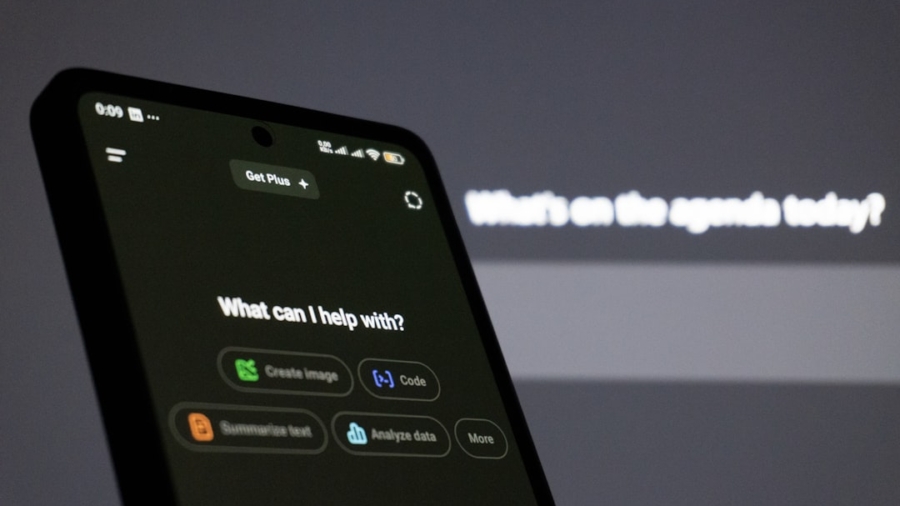
The shift to local-first voice assistants is gaining momentum, and for good reason: they offer a more private, reliable, and often faster alternative to the cloud-dependent smart speakers we’ve grown accustomed to. Instead of sending your voice commands all the way to a remote server for processing and then back again, local-first devices handle much, if not all, of that work right on the device itself. This fundamental difference addresses many of the frustrations and concerns people have with current smart speaker technology.
Before diving into the benefits of local-first, it’s helpful to understand how most smart speakers currently operate. When you say “Hey Google” or “Alexa,” your voice is recorded, compressed, and then shot across the internet to a vast data center. There, powerful servers process your request, interpret your intent, and generate a response. That response then travels back to your device, which plays it aloud. This entire process, while seemingly instantaneous, relies heavily on a stable internet connection and introduces several points of potential failure and concern.
The Inherent Latency of Cloud Processing
Even with high-speed internet, there’s an undeniable delay. Your voice has to travel to a server, get processed, and then the response has to travel back. For simple commands like turning on a light, this might be a fraction of a second, but it’s still there. For more complex requests or during peak internet usage, this latency can become quite noticeable and frustrating, leading to an unnatural, stop-and-go conversational flow.
The Single Point of Failure: Your Internet Connection
No internet? No smart speaker. It’s as simple as that. If your Wi-Fi goes down, or your internet service provider experiences an outage, your cloud-dependent smart speaker becomes little more than a paperweight. Even basic functions like setting a timer or playing local music become impossible because the “brain” of the device is unreachable. This dependency creates a brittle system that isn’t always available when you need it most.
The Cost of Continuous Cloud Computing
Operating massive data centers and constantly processing billions of voice commands is incredibly expensive. Companies like Amazon and Google invest heavily in infrastructure, power, and personnel to keep these services running 24/7. While they offer many features for “free,” the underlying cost is significant, and it’s often offset by data collection and, increasingly, by nudging users towards their various services and products.
In the context of the growing trend towards local-first technology, an insightful article titled “The Future of Smart Devices: Embracing Local Processing” explores how advancements in edge computing are enabling devices to operate more efficiently without relying on cloud services. This shift is particularly relevant as local-first voice assistants begin to replace traditional cloud-dependent smart speakers, offering enhanced privacy and faster response times. For more information on the implications of this technological evolution, you can read the article here: The Future of Smart Devices: Embracing Local Processing.
Key Takeaways
- Clear communication is essential for effective teamwork
- Active listening is crucial for understanding team members’ perspectives
- Setting clear goals and expectations helps to keep the team focused
- Regular feedback and open communication can help address any issues early on
- Celebrating achievements and milestones can boost team morale and motivation
Privacy Concerns: The Elephant in the Server Room
Perhaps the most significant driver behind the shift to local-first is privacy. The idea of your conversations being recorded, analyzed, and stored in the cloud raises legitimate concerns for many users. While companies state they only record after the wake word, incidents of accidental recordings or human review of snippets have eroded public trust.
The “Always Listening” Dilemma
Cloud-based smart speakers are designed to be “always listening” for their wake word. While they are supposed to only send recordings after the wake word is detected, the fact that a microphone is constantly active and processing audio locally to detect that word is unsettling for some. The worry is that more than just the wake word could be processed or transmitted, either intentionally or due to bugs.
Human Review and Data Retention Policies
Even if companies claim to anonymize data or delete it after a certain period, the reality is that voice recordings are often retained for varying lengths of time. Furthermore, it has been widely reported that human contractors sometimes review snippets of recordings to improve AI models. While companies generally state these snippets are anonymized, the very act of a human listening to what could be private conversations is a major red flag for privacy-conscious individuals.
Targeted Advertising and Data Monetization
The vast amounts of data collected by cloud-based smart speakers – not just voice commands but also usage patterns, preferences, and even conversations around the wake word – are incredibly valuable. This data can be used to build detailed profiles of users, which can then be leveraged for targeted advertising or sold to third parties. While companies often deny directly selling raw voice data, the insights derived from it are definitely a commodity.
The Power of Local Processing: How Local-First Works

Local-first voice assistants operate on a fundamentally different principle. They are designed to perform speech recognition, natural language understanding, and often even response generation directly on the device itself, minimizing or entirely eliminating the need to send data to the cloud.
On-Device Speech Recognition
Instead of sending your voice to a remote server, local-first devices have specialized chips and optimized algorithms that can convert your spoken words into text right there on the device. This requires more powerful local hardware than traditional smart speakers, but advancements in chip design and AI optimization are making this increasingly feasible and affordable.
Local Natural Language Understanding (NLU)
Once your speech is converted to text, the device then needs to understand what you mean. Local-first assistants can also perform NLU on-device, interpreting your intent (e.g., “turn on the lights” or “play jazz music”) without cloud intervention.
This means the device understands “turn on the lights” as a command to interact with smart home devices, rather than just a string of words.
Local Action Execution and Response Generation
For many common tasks, the local-first assistant can then execute the command directly. If you ask it to turn on a smart light bulb that’s connected to your local network, the command never leaves your home. For tasks requiring information retrieval (like “what’s the weather?”), some local-first solutions might still reach out to a trusted cloud service, but crucially, they do so without sending your voice data or personal identifiers.
The response can then be generated on-device or a generic response pulled from the cloud.
Key Advantages of a Local-First Approach

The benefits of moving voice processing to the edge are substantial, addressing the core limitations of cloud-dependent systems.
Enhanced Privacy by Design
This is arguably the biggest selling point. By keeping your voice data on your device, it never leaves your home. There are no recordings stored in the cloud, no human reviewers listening in, and significantly less risk of your personal data being used for profiling or advertising. You maintain much greater control over your own information.
Greater Reliability and Independence
No internet? No problem (for many tasks). Because the core functions are handled locally, your smart assistant can still set timers, control local smart home devices, play music from local storage, or even answer basic questions that have been pre-loaded onto the device.
This makes the system far more robust and less susceptible to external network failures.
Faster Response Times
Eliminating the round trip to the cloud drastically reduces latency. Commands are processed almost instantaneously, leading to a much snappier and more natural interaction. This feels less like talking to a remote server and more like interacting with a device that’s truly “listening” and responding right then and there.
Increased Security
Keeping sensitive voice data off remote servers reduces the attack surface for hackers. While no system is perfectly secure, local storage and processing mean there’s one less major vector for data breaches. If your device is compromised, the breach is contained to your home network, rather than potentially exposing a vast trove of user data on a central server.
Potential for Offline Functionality
Imagine being able to control your smart home, set reminders, or even get basic information when your internet is down during a storm. Local-first makes this a reality for an increasing number of functions, transforming your smart assistant from an internet-dependent gadget into a truly useful, always-available home utility.
As the trend of local-first voice assistants continues to rise, it is interesting to explore how this shift impacts various technology sectors. A related article discusses the best software for manga, highlighting how local storage solutions can enhance user experiences in creative applications. By prioritizing local processing, these tools not only improve performance but also ensure greater privacy for users. For more insights on this topic, you can read the article on However, as chip technology advances and becomes more efficient, these costs are expected to decrease. Cloud-based assistants benefit from vast, constantly updated knowledge bases and the ability to integrate with countless online services. Achieving full feature parity locally, especially for niche queries or real-time information, is a significant challenge. Local-first systems often need to strike a balance, performing core functions locally while selectively and securely querying the cloud for external data when necessary. A vibrant ecosystem of developers and open-source projects is crucial for the widespread adoption of local-first solutions. Projects like Home Assistant, Mycroft AI, and others are at the forefront, building the tools and platforms that enable local processing and foster community contributions. The growth of these communities will accelerate innovation and drive down costs. Many consumers are simply unaware of the privacy trade-offs inherent in current smart speakers or the benefits of local-first alternatives. Educating the public about these differences and highlighting the value proposition of privacy and reliability will be key to driving demand and encouraging manufacturers to invest further in local processing capabilities. In conclusion, the move towards local-first voice assistants isn’t just a niche trend; it’s a fundamental re-evaluation of how we interact with technology in our homes. Driven by growing privacy concerns, the desire for greater reliability, and the demand for faster, more natural interactions, local processing is poised to become the new standard for smart home control. While challenges remain, the benefits of owning your data and having a truly independent, responsive assistant are too compelling to ignore, signaling a clear shift away from the cloud-dependent models that currently dominate the market. Local-first voice assistants are devices that process and execute voice commands locally on the device itself, without relying on a cloud server for every interaction. This allows for faster response times and increased privacy. Cloud-dependent smart speakers rely on a constant connection to a cloud server to process voice commands and execute tasks. Local-first voice assistants, on the other hand, are designed to perform these tasks directly on the device, reducing the need for constant internet connectivity. Local-first voice assistants offer faster response times, increased privacy, and the ability to function even when internet connectivity is limited or unavailable. They also reduce the reliance on external servers, which can lead to more reliable performance. Local-first voice assistants are gaining popularity as consumers become more concerned about privacy and data security. This shift is leading to an increase in demand for devices that prioritize local processing of voice commands over cloud-dependent solutions. Examples of local-first voice assistants include Mycroft, Snips, and Project Alias. These devices are designed to prioritize privacy and local processing of voice commands, offering an alternative to cloud-dependent smart speakers.
Enjoying our content? Make us a preferred source on Google: Feature Parity with Cloud Giants
The Development Ecosystem and Open Source Movement
User Education and Awareness
FAQs
What are local-first voice assistants?
How do local-first voice assistants differ from cloud-dependent smart speakers?
What are the advantages of local-first voice assistants over cloud-dependent smart speakers?
How are local-first voice assistants impacting the smart speaker market?
What are some examples of local-first voice assistants on the market?