

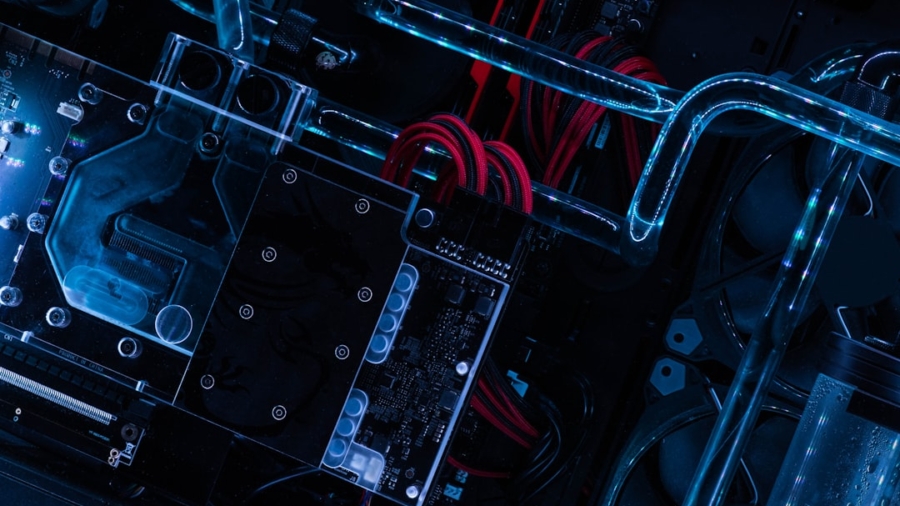
Achieving net-zero in data centers isn’t just a lofty goal anymore; it’s becoming a necessity. And to get there, liquid cooling isn’t just an option—it’s quickly turning into a mandatory piece of the puzzle. The short answer is that traditional air cooling, while familiar, just can’t keep up with the demands of high-density computing while simultaneously trying to shrink our carbon footprint. Liquid cooling offers a far more efficient way to manage heat, which is a huge energy sink in any data center.
The Problem with Heat in Data Centers
Data centers are essentially giant heat generators. Every server, every chip, every bit of processing power creates heat. Managing this heat is a significant challenge, and historically, air conditioning units have been the go-to solution.
Air Cooling’s Limitations are Showing
Air cooling works by pushing cold air over hot components and then expelling the heated air. This seems straightforward, but it’s remarkably inefficient for a couple of key reasons.
Energy Intensive
Moving large volumes of air requires powerful fans, and chilling that air takes even more energy. Think about your home air conditioner – it’s a significant portion of your electricity bill, right?
Scale that up to a data center with thousands of servers, and you’ve got an astronomical energy demand just for cooling.
Inefficient Heat Transfer
Air isn’t a great conductor of heat. It takes a lot of air to dissipate a relatively small amount of heat from a concentrated source like a CPU. As computing power increases, so does the heat density within racks, pushing air-cooling systems to their absolute limit.
Hot Spots and Uneven Cooling
Even with sophisticated airflow management, air cooling often struggles with “hot spots” within server racks. Some servers get more airflow than others, leading to uneven temperatures and potentially shortening the lifespan of components in those hotter zones. This also means you have to overcool the entire data center to ensure the hottest spots are adequately cooled, further wasting energy.
As the demand for energy-efficient solutions in data centers continues to rise, the article “Why Liquid Cooling is Becoming Mandatory for Net-Zero Data Centers” highlights the critical role that advanced cooling technologies play in achieving sustainability goals. For further insights into the evolving landscape of technology and its implications for energy consumption, you can explore a related article on Hacker Noon that covers a range of topics across the tech sector. Check it out here: Hacker Noon Article.
How Liquid Cooling Changes the Game for Efficiency
Liquid cooling, in its various forms, offers a fundamentally more efficient way to remove heat. Water, or other dielectric fluids, are far better at absorbing and transferring heat than air. This fundamental difference is what makes it so critical for net-zero goals.
Superior Heat Transfer Capabilities
Imagine trying to cool a hot pan with a fan versus dunking it in water. The water wins every time. That’s the basic principle here.
Direct Contact for Maximum Effect
Many liquid cooling methods involve direct contact with the heat-generating components. This means the heat is transferred immediately and effectively, without having to first heat up the surrounding air. This direct transfer is significantly more efficient than indirect air-based methods.
Higher Specific Heat Capacity
Water has a much higher specific heat capacity than air. This means it can absorb a lot more heat before its own temperature rises significantly. Consequently, you need far less liquid to remove the same amount of heat that would require a massive volume of air.
Reduced Energy Consumption
This superior heat transfer directly translates to a significant drop in energy use.
Less Fan Power Needed
With liquid cooling, you’re moving a fluid, not massive volumes of air. This often means smaller pumps instead of huge air handlers and rows of fans, leading to substantial energy savings on the mechanical side.
Higher Permissible Operating Temperatures
Because liquid cooling is so efficient at removing heat, the overall ambient temperature in the data center can often be higher. This means your chillers (if you’re using them) don’t have to work as hard to cool the liquid, further reducing energy consumption. In some cases, the liquid can even be cooled passively using outside air or ground temperatures, eliminating the need for mechanical refrigeration altogether for significant portions of the year.
Driving Towards Net-Zero: The Environmental Imperative
The push for net-zero isn’t just about saving money on the electricity bill; it’s about drastically reducing the environmental impact of data centers. Liquid cooling plays a crucial role here.
Lowering Power Usage Effectiveness (PUE)
PUE is a key metric for data center energy efficiency. A PUE of 1.0 means all energy goes directly to computing, with no overhead for cooling, lighting, etc. Most traditional air-cooled data centers have PUEs well above 1.5, some even higher.
Impact on PUE Scores
Liquid cooling technologies have been shown to dramatically lower PUEs, often bringing them down to 1.2 or even below 1.1. This is because such a large portion of a data center’s energy consumption is typically dedicated to cooling. By making cooling far more efficient, PUE drops significantly, directly reducing the overall energy footprint.
Contributing to Renewable Energy Integration
When a data center uses less energy, it makes it easier for that energy to be sourced from renewables like solar or wind. A lower baseline demand means that a smaller renewable energy installation can cover the data center’s needs, or a larger portion of its existing energy mix can be converted to green sources.
Waste Heat Recovery and Reuse
This is where liquid cooling really shines in the net-zero narrative. The heat collected by the liquid isn’t just waste; it’s a valuable energy source.
Opportunities for District Heating
The water or fluid warmed by the servers can be at temperatures high enough (e.g., 50-60°C) to be directly used in district heating systems for nearby buildings, homes, or even agricultural purposes. Instead of just expelling this heat into the atmosphere, it can be put to good use, displacing the need for fossil fuels elsewhere.
Industrial Processes and Desalination
Beyond district heating, warm liquid can be used in various industrial processes that require heat. There’s also exciting potential for using this waste heat in desalination plants, turning a former waste product into a resource that addresses water scarcity. This transforms the data center from a pure energy consumer into an energy provider or co-generator.
Different Flavors of Liquid Cooling
Liquid cooling isn’t a single technology; it encompasses several approaches, each with its own advantages. Understanding these helps in choosing the right solution for specific needs.
Direct-to-Chip Cooling
This is arguably the most common and rapidly adopted form of liquid cooling for high-performance servers.
Cold Plates for Precision Cooling
In direct-to-chip cooling, cold plates are attached directly to the hottest components, like CPUs, GPUs, and memory modules. A coolant (often water or a dielectric fluid) circulates through these cold plates, absorbing heat directly from the chips. This method is incredibly effective for targeting the highest heat densities.
Single-Phase vs. Two-Phase
Single-phase direct-to-chip uses a fluid that remains in a liquid state throughout the cooling process. Two-phase systems involve a fluid that boils and condenses as it absorbs and releases heat, offering even greater heat transfer capabilities due to the latent heat of vaporization.
Immersion Cooling
This method involves submerging entire servers or even full racks into a non-conductive dielectric fluid.
Single-Phase Immersion
In single-phase immersion, servers are fully submerged in a fluid that remains liquid. The fluid gets heated by the components, then flows to a heat exchanger where it is cooled before returning to the tanks. This provides extremely efficient and uniform cooling across all components.
Two-Phase Immersion
Similar to two-phase direct-to-chip, this involves a dielectric fluid that boils at a low temperature. The vapor rises, condenses on a cold coil, and drips back down, creating a continuous cooling cycle. This method is exceptionally good at handling extremely high heat densities.
Rear Door Heat Exchangers (RDHx)
While not “liquid cooling” in the same way as direct-to-chip or immersion, RDHx systems are an important stepping stone and often used in hybrid approaches.
Augmenting Air Cooling
RDHx units are essentially server cabinet doors that contain a liquid-to-air heat exchanger. Hot air exhausted from the servers passes through the RDHx, where it’s cooled by circulating liquid, before re-entering the data center as cooler air. This significantly reduces the heat load on traditional CRAC/CRAH units and can raise the permissible ambient temperature.
Hybrid Approaches
Many data centers are starting with RDHx systems to gain some of the benefits of liquid cooling without a full overhaul, often alongside or in preparation for more direct liquid cooling implementations. It’s a good way to manage rising heat densities in existing infrastructure.
As the demand for energy-efficient solutions in technology continues to rise, the importance of advanced cooling methods in data centers cannot be overstated. A related article discusses how to choose the right laptop for graphic design, emphasizing the need for efficient thermal management in high-performance devices. This connection highlights the broader trend of optimizing cooling systems across various tech sectors, including data centers. For more insights on this topic, you can read the article here.
The Challenges and Practicalities of Adoption
While the benefits are clear, transitioning to liquid cooling isn’t without its hurdles. It requires careful planning and a new way of thinking about data center design and operations.
Infrastructure Changes
Implementing liquid cooling often means significant changes to the data center’s physical infrastructure.
Plumbing and Distribution
You’re moving from an air-based system to a liquid-based one, which means installing pipes, pumps, manifolds, and heat exchangers. This requires a different kind of expertise during the design and build phases compared to traditional HVAC.
Rack and Server Compatibility
Not all existing servers are designed for liquid cooling. While cold plates can be retrofitted to some, new servers are often purpose-built for direct-to-chip or immersion cooling. This means a gradual transition or a complete refresh cycle for hardware.
Cost Considerations
The upfront investment for liquid cooling can be higher than traditional air cooling.
Initial Investment
The specialized hardware, installation, and engineering required for liquid cooling systems can lead to a higher initial capital expenditure. However, it’s crucial to look at the total cost of ownership (TCO).
Long-Term Savings and ROI
The reduced energy consumption, lower PUE, and potential for waste heat recovery often lead to substantial operational cost savings over the lifespan of the data center. This can result in a compelling return on investment (ROI), especially as energy prices continue to rise.
Operational and Maintenance Shifts
Running a liquid-cooled data center requires different skill sets and maintenance protocols.
Leak Detection and Management
While modern liquid cooling systems are designed with robust leak prevention and detection, the potential for leaks, however small, is a natural concern when introducing liquids near electronics. Staff need to be trained in specialized monitoring and response protocols.
Fluid Management
Whether it’s water, glycol, or a dielectric fluid, monitoring fluid quality, pressure, and flow rates becomes a routine operational task. This is different from simply monitoring air temperature and humidity. However, many systems are designed for minimal intervention once set up.
The Future is Fluid
The data center industry is at a pivotal moment. The increasing demands for AI, machine learning, and high-performance computing are driving chip densities and heat loads to unprecedented levels. Simultaneously, the global push for sustainability and net-zero emissions means data centers can no longer afford to be energy guzzlers.
Liquid cooling isn’t just an evolutionary step; it’s a revolutionary one. It’s the technical solution that allows data centers to efficiently manage the heat of tomorrow’s compute while simultaneously becoming a more responsible, sustainable, and even beneficial part of the energy ecosystem. As net-zero targets become legally binding and customer expectations shift, liquid cooling will undoubtedly move from a cutting-edge option to a fundamental requirement for any truly future-proof data center.
FAQs
1. What is liquid cooling in data centers?
Liquid cooling in data centers involves using a liquid, such as water or a specialized coolant, to remove heat from IT equipment. This method is more efficient than traditional air cooling and can help reduce energy consumption.
2. Why is liquid cooling becoming mandatory for net-zero data centers?
Liquid cooling is becoming mandatory for net-zero data centers because it offers greater energy efficiency and can help reduce the carbon footprint of data centers. As data centers strive to achieve net-zero carbon emissions, liquid cooling is seen as a crucial technology to achieve this goal.
3. What are the benefits of liquid cooling in data centers?
Liquid cooling offers several benefits, including higher energy efficiency, reduced power consumption, improved performance and reliability of IT equipment, and the ability to support higher density computing.
4. Are there any challenges associated with implementing liquid cooling in data centers?
While liquid cooling offers many benefits, there are also challenges associated with its implementation, such as the need for specialized infrastructure, potential for leaks, and the requirement for additional maintenance and monitoring.
5. How does liquid cooling contribute to the sustainability of data centers?
Liquid cooling contributes to the sustainability of data centers by reducing energy consumption, lowering carbon emissions, and enabling data centers to operate more efficiently, ultimately helping them achieve net-zero carbon emissions.
Enjoying our content? Make us a preferred source on Google:
Add us as a Preferred Source on Google