


Edge computing specialists are quickly becoming a non-negotiable part of the robust enterprise network strategy, primarily because they bridge the critical gap between centralized cloud power and the immediate, on-site data processing needs of modern businesses. As enterprises generate ever-increasing volumes of data at the periphery – think IoT sensors in manufacturing, real-time customer interactions in retail, or autonomous vehicle data – the traditional model of sending everything back to a distant data center or cloud simply isn’t efficient or effective anymore. These specialists possess the unique blend of skills required to design, deploy, and manage distributed computing architectures that bring processing closer to the data source, directly impacting performance, security, and operational costs. Without them, enterprises risk falling behind in a world where speed, reliability, and data privacy are paramount.
The Shifting Landscape: Why Traditional Architectures Are Falling Short
For years, the gold standard for enterprise data processing involved either on-premise data centers or, more recently, hyperscale cloud providers. These centralized models offered immense power and scalability. However, the sheer volume, velocity, and variety of data generated at the “edge” – where the physical world meets the digital – are now exposing significant limitations in these traditional approaches. We’re talking about billions of interconnected devices, sensors, and machines, all spewing out data that often needs immediate attention.
Latency and Bandwidth Bottlenecks
Imagine a smart factory with hundreds of robots and sensors monitoring production lines. If every data point from these sensors has to travel hundreds or thousands of miles to a cloud server, be processed, and then send a command back, even a millisecond of delay can mean the difference between preventing a machinery breakdown and significant downtime. This ’round trip’ journey, or latency, is a critical issue for applications requiring real-time responses. Similarly, transmitting petabytes of raw data over wide area networks (WANs) to a central cloud is incredibly bandwidth-intensive and expensive. It’s like trying to drink from a fire hose through a tiny straw. Edge specialists understand these constraints and design solutions that minimize data travel, keeping time-sensitive processing local.
Data Gravity and Regulatory Hurdles
The sheer volume of data being generated isn’t just a bandwidth issue; it creates “data gravity.” The more data you accumulate in one place, the harder it is to move, copy, or even process efficiently elsewhere. Sending massive datasets to the cloud often involves significant egress fees and can complicate data governance. Furthermore, various industries and geographies have strict regulatory requirements regarding data residency and privacy. Think about healthcare records or financial transactions; these often cannot legally leave a specific geographic boundary. Edge computing, when implemented correctly by specialists, allows organizations to keep sensitive data within defined local perimeters, ensuring compliance without sacrificing analytical capabilities.
Cost Implications of Centralized Processing
While cloud computing offers a fantastic utility model, the costs can escalate quickly, especially when dealing with high volumes of data ingress, egress, and continuous processing. Storing vast amounts of raw, unfiltered data in the cloud, only to filter and analyze a small fraction of it later, can be economically wasteful. Edge specialists help enterprises identify what data truly needs to go to the cloud for long-term storage or complex AI training, and what can be processed, aggregated, or even discarded at the source, leading to substantial savings on cloud storage, compute, and networking costs. They optimize the data pipeline, ensuring resources are allocated intelligently.
As enterprises increasingly adopt edge computing to enhance their network efficiency and reduce latency, understanding the broader technological landscape becomes crucial. A related article that explores the latest trends in digital engagement, including the rise of edge computing, is available at Top Trends on YouTube 2023. This piece highlights how emerging technologies are influencing consumer behavior and shaping the future of enterprise networks, making it essential reading for those looking to stay ahead in the rapidly evolving digital environment.
Key Takeaways
- The training data includes information and events up to October 2023.
- Insights and knowledge are based on a wide range of sources available until the cutoff date.
- No updates or developments occurring after October 2023 are included in the training.
- Users should verify current information from reliable sources for the latest updates.
- The model’s responses reflect the context and knowledge available up to the specified date.
What an Edge Computing Specialist Actually Does
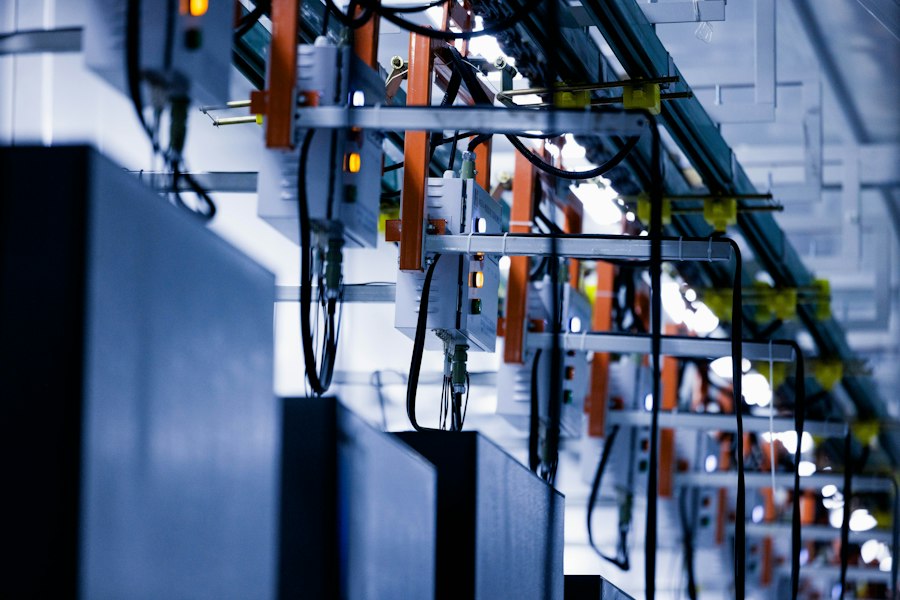
It’s easy to talk about “edge computing,” but what does an actual specialist in this field bring to the table? They are not just network administrators or cloud architects; they occupy a unique intersection of skills, deeply understanding both the physical constraints of remote environments and the logical complexities of distributed systems. Their role spans from initial consultation and design to deployment, ongoing management, and optimization.
Architecture Design and Solution Definition
One of the primary responsibilities of an edge computing specialist is to design the overarching architecture. This isn’t a one-size-fits-all job. They start by understanding the specific business problem: Is it reducing latency for industrial control? Enhancing customer experience in retail? Enabling autonomous operations?
Based on these needs, they define the compute, storage, and networking requirements at the edge.
This involves selecting appropriate hardware (small form factor servers, specialized IoT gateways, ruggedized devices), choosing the right software stack (containerization, orchestration platforms like Kubernetes, edge-optimized operating systems), and determining the ideal connectivity solutions (5G, Wi-Fi 6, satellite, wired Ethernet). They map out the data flow: what gets processed locally, what gets aggregated, and what eventually gets sent to the cloud.
Deployment and Integration Expertise
Designing is one thing; making it work in the real world is another. Edge environments are often challenging. They might be in factories with harsh conditions, remote oil rigs, busy retail stores with limited IT staff, or even vehicles. An edge specialist is proficient in deploying these solutions, often dealing with limited space, power, and cooling. They integrate edge devices with existing operational technology (OT) systems and information technology (IT) infrastructure, ensuring seamless communication. This involves configuring network protocols, setting up security policies, and orchestrating the deployment of applications and services to numerous distributed edge locations, often remotely.
Security and Data Governance at the Edge
Security at the edge presents unique challenges. Unlike a centralized data center with physical security and tightly controlled network perimeters, edge devices are often physically exposed, potentially in unsecured locations, and connect via various network types. An edge specialist develops and implements robust security frameworks tailored for distributed environments. This includes securing the devices themselves (hardware-level security, secure boot, tamper detection), encrypting data in transit and at rest, implementing strict access controls, and deploying threat detection and response mechanisms specific to edge nodes. They also ensure that data processed and stored at the edge adheres to all relevant privacy regulations and corporate governance policies.
Performance Optimization and Management
Once deployed, an edge solution isn’t static. Specialists continuously monitor performance, identify bottlenecks, and optimize resource utilization. This involves managing the lifecycle of edge applications, updating software, patching vulnerabilities, and scaling resources up or down as needed. They implement strategies for data synchronization between the edge and the cloud, ensuring data consistency and availability. Proactive maintenance, predictive analytics for hardware failures, and ensuring high availability for critical edge applications are all part of their ongoing management responsibilities. They are constantly looking for ways to extract more value from the edge infrastructure while keeping operational costs in check.
Core Skill Sets of a Modern Edge Specialist

The multi-faceted nature of edge computing demands a broad and deep skill set. It’s a convergence of traditional IT disciplines with new, specialized knowledge, making these individuals particularly valuable and, frankly, hard to find. They need to understand the big picture of cloud architectures as well as the nitty-gritty details of embedded systems.
Cloud and Distributed Systems Knowledge
At the heart of edge computing is its symbiotic relationship with the cloud.
An edge specialist must possess a strong understanding of cloud computing principles, including public cloud platforms (AWS, Azure, GCP), hybrid cloud strategies, and serverless computing. They need to know how to design applications that can seamlessly span across cloud and edge environments, leveraging containerization (Docker, Kubernetes) for consistent deployment. Knowledge of API management, microservices architectures, and data synchronization patterns between distributed nodes is critical for building resilient and scalable edge solutions.
They effectively extend the cloud’s capabilities to the network’s periphery.
Networking and Connectivity Prowess
Edge computing is fundamentally about moving data efficiently and reliably. This requires deep expertise in networking. Specialists must be proficient in various network protocols (TCP/IP, MQTT, CoAP), wireless technologies (5G, LTE, Wi-Fi 6/7, LoRaWAN), and wired networks (Ethernet, fiber optics).
They need to understand network topology design, VPNs, software-defined networking (SDN), and network security principles. Furthermore, they often work with highly constrained network environments, requiring skills in optimizing bandwidth usage, managing intermittent connectivity, and designing for offline capabilities at the edge.
IoT and Operational Technology (OT) Integration
Many edge computing use cases originate from the Internet of Things (IoT) and industrial control systems (OT). Therefore, a specialist must have a solid grasp of IoT device management, sensor data ingestion, and common IoT communication protocols.
They need to understand how to integrate edge gateways and compute resources with existing OT systems, such as Programmable Logic Controllers (PLCs), Supervisory Control and Data Acquisition (SCADA) systems, and Manufacturing Execution Systems (MES). This often involves navigating proprietary protocols and understanding the unique requirements for uptime and safety in operational environments.
Data Science and AI/ML at the Edge
The primary driver for many edge deployments is the ability to process data closer to its source, often involving real-time analytics or machine learning inferences. Edge specialists frequently work with data scientists and machine learning engineers to deploy AI models (e.g., for predictive maintenance, quality control, facial recognition) directly onto edge devices.
This requires an understanding of model optimization for resource-constrained environments, data preprocessing at the edge, and the lifecycle management of AI models in distributed settings. They ensure that the edge infrastructure can support the computational demands of these intelligent applications.
Security and Compliance Expertise
Given the distributed and often exposed nature of edge deployments, security is paramount. Specialists must be adept at implementing robust security measures across the entire edge stack – from hardware roots of trust and secure boot to network segmentation, encryption, identity and access management (IAM), and continuous threat monitoring.
They must also be well-versed in industry-specific compliance standards (e.g., GDPR, HIPAA, PCI DSS) and data residency requirements, designing solutions that meet these stringent regulatory demands. Their expertise helps mitigate the unique attack surface that edge environments present.
The Business Impact: Why Enterprises Cannot Afford to Wait
The talk about technology is important, but ultimately, enterprises adopt new paradigms because they deliver tangible business value. Edge computing isn’t just a technical curiosity; it’s a strategic imperative that directly impacts an organization’s bottom line, competitive advantage, and ability to innovate. Without edge specialists guiding these initiatives, companies risk missteps that could lead to significant financial and operational setbacks.
Enabling Real-Time Decision Making
In today’s fast-paced environment, the ability to make decisions in real-time can be a significant differentiator. From optimizing logistics routes based on live traffic data to adjusting manufacturing parameters to prevent defects, edge computing empowers immediate action. Edge specialists design systems that minimize latency, ensuring that data is processed and insights are generated precisely when and where they are needed most. This translates into increased operational efficiency, reduced waste, and improved responsiveness to market changes or emerging threats. The agility provided by edge processing allows businesses to react faster than competitors reliant on slower, centralized models.
Driving Operational Efficiency and Cost Reduction
While there’s an initial investment, edge computing, when properly implemented, leads to substantial long-term operational efficiencies and cost savings. By processing and filtering data at the source, enterprises significantly reduce the amount of data that needs to be transmitted to and stored in the cloud, thereby lowering bandwidth and cloud storage costs. Predictive maintenance, enabled by edge analytics, can anticipate equipment failures, reducing costly downtime and extending asset lifespans. Optimized resource utilization at the edge, designed by specialists, further contributes to a lean and efficient operational model.
Enhancing Security and Compliance Posture
For many industries, stringent regulatory requirements around data privacy and residency are non-negotiable. Edge computing provides a powerful mechanism to meet these compliance obligations by keeping sensitive data localized. Edge specialists design secure perimeters at the edge, implementing robust encryption, access controls, and data governance policies. This not only helps avoid hefty fines and reputational damage associated with data breaches but also builds trust with customers and partners. By distributing compute and data, the overall attack surface can be better managed and contained, improving the enterprise’s security posture.
Fueling Innovation and New Business Models
Perhaps one of the most exciting impacts of edge computing is its potential to unlock entirely new possibilities and business models. Autonomous vehicles, augmented reality experiences, smart city infrastructure, and highly personalized retail experiences all rely heavily on low-latency, real-time data processing at the edge. Edge specialists are the architects of these future-forward initiatives, enabling companies to experiment with and deploy cutting-edge technologies that were previously infeasible. They empower innovation by providing the underlying infrastructure for next-generation applications, giving enterprises a significant competitive edge in rapidly evolving markets.
As enterprises increasingly adopt edge computing to enhance their network efficiency and reduce latency, the role of edge computing specialists is becoming vital. These experts not only streamline data processing but also ensure security and compliance across distributed networks. For those interested in understanding the broader implications of technology on business operations, a related article discusses the importance of expert reviews in navigating the latest technological advancements. You can read more about it in this insightful piece on trusted reviews.
Challenges and the Future Role of Edge Specialists
| Metric | Value | Relevance to Edge Computing Specialists |
|---|---|---|
| Percentage of Data Processed at the Edge | 75% | Highlights the shift towards edge data processing requiring specialized skills |
| Average Latency Reduction | 30-50% | Edge specialists optimize network latency critical for real-time applications |
| Growth Rate of Edge Devices | 20% annually | Increasing edge devices demand expert management and integration |
| Percentage of Enterprises Adopting Edge Computing | 60% | Shows widespread adoption necessitating edge computing expertise |
| Reduction in Bandwidth Usage | 40% | Edge specialists help optimize bandwidth by processing data locally |
| Security Incidents Reduced by Edge Solutions | 25% | Edge specialists implement localized security measures to reduce risks |
| Average Cost Savings from Edge Deployment | 15% | Specialists enable cost-effective network architectures |
While the benefits are clear, the journey to a fully realized edge computing strategy isn’t without its hurdles. These challenges further underscore the absolute necessity of skilled edge computing specialists who can navigate complex environments and anticipate future needs. The landscape is continually evolving, demanding ongoing learning and adaptation.
Management Complexity at Scale
One of the biggest challenges with edge computing is managing hundreds, thousands, or even tens of thousands of distributed edge nodes. Each node represents a mini data center, requiring provisioning, configuration, monitoring, updates, and troubleshooting. Without robust automation and centralized management tools, this quickly becomes an unmanageable logistical nightmare. Edge specialists are crucial in selecting and implementing management platforms that can orchestrate deployments, push updates, and monitor the health of the entire edge ecosystem from a single pane of glass, ensuring operational efficiency and consistency across all locations.
Interoperability and Standardization Issues
The edge computing market is still relatively nascent and fragmented, leading to a lack of universal standards for hardware, software, and communication protocols. This can create significant interoperability challenges, making it difficult to integrate different vendors’ solutions or scale deployments efficiently. Edge specialists play a vital role in identifying compatible technologies, developing integration strategies, and, where necessary, advocating for or contributing to open standards. Their ability to work with diverse ecosystems and create cohesive solutions is paramount for successful long-term edge adoption.
Evolving Security Threats and Regulatory Landscape
As edge deployments proliferate, they become new targets for cyberattacks. The distributed nature of edge devices, often located in less secure environments, creates a unique attack surface. Furthermore, the regulatory landscape around data privacy and security is constantly evolving, requiring continuous vigilance. Edge specialists must stay abreast of the latest security threats, vulnerabilities, and best practices. They are responsible for implementing adaptive security architectures, performing regular audits, and ensuring ongoing compliance in a dynamic threat environment. This requires a proactive and continuous security posture, rather than a one-time fix.
The Growing Demand for Specialized Talent
The demand for skilled edge computing specialists is rapidly outstripping supply.
The unique blend of networking, cloud, IoT, OT, and security expertise required is not easily found in traditional IT roles.
This talent gap poses a significant challenge for enterprises looking to leverage edge computing effectively. Companies are realizing they need to invest in training existing staff, recruiting specialized talent, or partnering with experts to fill this critical void. The future role of edge specialists will continue to expand, encompassing more advanced areas like AI model lifecycle management at the edge, sophisticated data orchestration, and integrating new connectivity options as they emerge. Their strategic importance will only grow as businesses become even more data-driven and reliant on real-time insights at the periphery of their networks.
FAQs
What is edge computing?
Edge computing refers to the practice of processing data closer to the source of data generation rather than relying solely on centralized data centers. This approach reduces latency, improves response times, and decreases bandwidth usage by handling data locally.
Why are edge computing specialists important for enterprise networks?
Edge computing specialists are crucial for enterprise networks because they possess the expertise to design, implement, and manage edge computing solutions. Their skills help organizations optimize data processing, enhance security, and improve overall network performance, which is essential for meeting the demands of modern applications.
How does edge computing enhance data security?
Edge computing enhances data security by minimizing the amount of sensitive data transmitted over the network. By processing data locally, organizations can reduce exposure to potential cyber threats and implement more robust security measures tailored to specific edge devices and environments.
What industries benefit the most from edge computing?
Industries such as manufacturing, healthcare, transportation, and retail benefit significantly from edge computing. These sectors often require real-time data processing and analysis to improve operational efficiency, enhance customer experiences, and support critical applications like IoT devices and autonomous systems.
What challenges do enterprises face when adopting edge computing?
Enterprises face several challenges when adopting edge computing, including the complexity of integrating edge solutions with existing infrastructure, ensuring data security and compliance, managing distributed resources, and addressing the need for skilled personnel to maintain and optimize edge environments.
Enjoying our content? Make us a preferred source on Google:
Add us as a Preferred Source on Google