

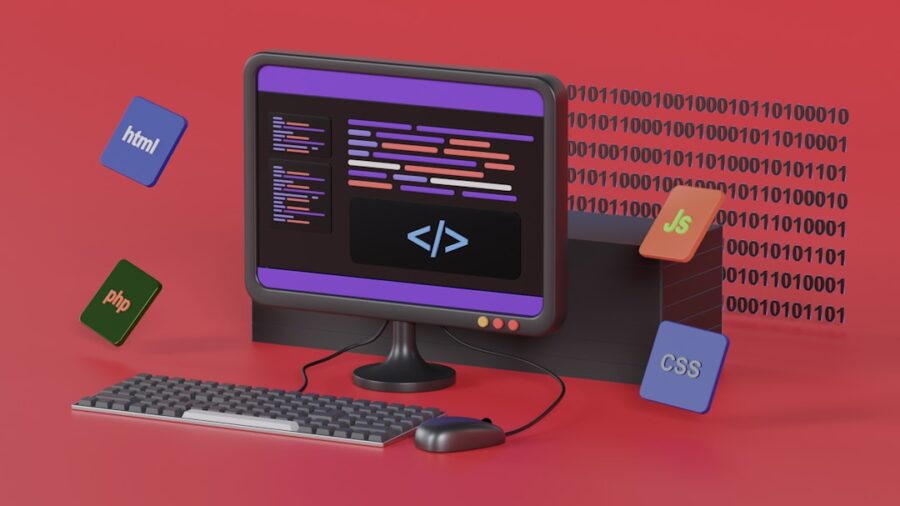
Thinking about hopping from building websites to crafting decentralized applications (dApps)? It’s a big leap, but definitely a doable one, especially if you’ve got a solid web dev background. The core skills you’ve honed – like understanding user interfaces, handling data, and writing logic – are still super relevant. The main difference is where that logic lives and how data is managed. Instead of relying on a single server you control, dApps spread that responsibility across a network of computers, making them more transparent, resilient, and often, more secure.
Before we dive into the “how,” let’s quickly touch on the “what.” Think of a dApp as a traditional web application, but with a key difference: its backend logic runs on a decentralized network, like a blockchain, instead of a centralized server. This means no single entity has complete control over the application, its data, or its rules. This fundamentally changes how you approach building and deploying.
The Blockchain Backbone: More Than Just Crypto
When people hear “decentralized,” they often immediately think “blockchain.” And while blockchain is a common foundation for dApps, it’s important to understand its role.
Smart Contracts: The Heartbeat of dApps
These are essentially self-executing contracts with the terms of the agreement directly written into code. They live on the blockchain and automate actions based on predefined conditions. For a web developer, think of them as the server-side logic, but immutable and verifiable by anyone.
Distributed Ledger Technology (DLT): The Shared Truth
Blockchain is a type of DLT where transactions are recorded in blocks that are cryptographically linked together. This creates a transparent and tamper-proof record of activity that all participants in the network can see.
User Interfaces: Still Your Domain
Don’t worry, you’re not leaving your UI/UX skills behind. The front-end of a dApp often looks and feels very much like a traditional web app. Users will still interact with buttons, forms, and visual elements. The magic happens when these front-end actions trigger smart contracts on the blockchain.
Connecting the Front-end to the Blockchain
This is where you’ll introduce new tools and libraries. You’ll learn how to interact with blockchain networks from your browser, typically using JavaScript libraries that bridge the gap between your web app and the smart contracts.
Transitioning from traditional web development to decentralized application engineering presents unique challenges and opportunities for developers. For those interested in understanding the implications of this shift, a related article can be found at You’ll need to understand how gas is calculated and how users will pay for it to ensure your dApp is cost-effective. While your smart contracts live on the blockchain, your front-end code still needs to be hosted. You can host your dApp’s front-end on traditional web hosting platforms like Netlify, Vercel, or AWS S3. This is the fastest way to get your UI online. For a truly decentralized experience, you can explore hosting your front-end on IPFS. This makes your front-end as resilient and censorship-resistant as your smart contracts. As developers increasingly explore the world of decentralized applications, understanding the tools available for effective communication becomes essential. A related article discusses the best free software for translation, which can be invaluable for teams working on decentralized projects that require collaboration across different languages. You can read more about it in this insightful piece on translation software. Embracing these tools can enhance productivity and ensure that all team members are on the same page, regardless of their linguistic background.Front-end Hosting: Traditional and Decentralized Options
Traditional Hosting: A Quick Start
Decentralized Front-end Hosting: Embracing the Ethos
The Mindset Shift: Thinking Decentralized
 and a private key (like a password, never share) is fundamental to understanding how users control their assets and identities in the decentralized world.</p>
<h3>Programming Languages for Smart Contracts</h3>
<p>This is often the biggest hurdle. While JavaScript is king for front-end development, smart contracts are typically written in languages specific to the blockchain platform you’re using.<b></p>
<h4>Solidity: The Dominant Force on Ethereum</h4>
<p>If you’re looking at the most popular blockchain for dApps, Ethereum, you’ll be learning Solidity.</b> It’s a statically-typed, high-level language that’s syntactically similar to JavaScript and C++, making it somewhat familiar.</p>
<h4>Other Blockchain Languages: A Growing Ecosystem</h4>
<p>Other blockchains have their own languages. For instance, Polkadot uses ink! (Rust-based), and Solana uses Rust. While Solidity is a good place to start, being aware of the broader landscape is beneficial.</p>
<h3>Decentralized Storage and Data Management</h3>
<p>Traditional web apps rely on centralized databases. In the dApp world, you’ll explore decentralized alternatives for storing data that needs to be persistent and accessible across the network.</p>
<h4>IPFS (InterPlanetary File System): Decentralized File Storage</h4>
<p>IPFS is a distributed system for storing and sharing hypermedia in a decentralized manner. Think of it as a peer-to-peer file system where content is addressed by its hash, rather than its location.</p>
<h4>Decentralized Databases: The Next Frontier</h4>
<p>While still evolving, there are also efforts to create decentralized databases that mimic the functionality of traditional SQL or NoSQL databases but operate on a distributed network.</p>
<h2>The Development Workflow: A New Paradigm</h2>
<p><picture decoding="async" id="3" style="max-width:100%;display:block;margin-left:auto;margin-right:auto;width:90%;" title="Transitioning from Traditional Web Development to Decentralized Application Engineering 1">
<source type="image/webp" srcset="https://enicomp.com/wp-content/uploads/2026/08/abcdhe-404.jpg.webp"/>
<img decoding="async" src="https://enicomp.com/wp-content/uploads/2026/08/abcdhe-404.jpg" alt="Decentralized Application Engineering"/>
</picture>
</p>
<p>The way you build, test, and deploy dApps is quite different from traditional web development. It involves a shift from a single server to a distributed network, which impacts every stage of the process.</p>
<h3>Setting Up Your Development Environment</h3>
<p>You’ll need to install specific tools and frameworks to interact with blockchain networks and develop smart contracts.</p>
<h4>Local Blockchain Development Environments</h4>
<p>Tools like <a href="https://trufflesuite.com/ganache/" target="_blank" rel="noopener">Ganache</a> or Hardhat allow you to run a local blockchain on your machine for rapid testing and debugging of your smart contracts without incurring actual network fees.</p>
<h4>Blockchain Explorers: Transparency in Action</h4>
<p>Tools like <a href="https://etherscan.io/" target="_blank" rel="noopener">Etherscan</a> (for Ethereum) are invaluable. They let you inspect transactions, view smart contract code, and understand the state of the blockchain, providing a level of transparency you wouldn’t find in traditional web development.</p>
<h3>Smart Contract Development and Testing</h3>
<p>Writing and thoroughly testing your <a href="https://ethereum.org/en/developers/docs/smart-contracts/" target="_blank" rel="noopener">smart contracts</a> is paramount. </p>
<p>Bugs in smart contracts can have significant, irreversible consequences.</p>
<h4>Unit Testing and Integration Testing for Smart Contracts</h4>
<p>Just like in web development, robust testing is crucial. You’ll learn to write comprehensive unit tests to verify individual functions and integration tests to ensure different parts of your smart contract interact correctly.</p>
<h4>Auditing: A Necessary Step for Production</h4>
<p>For any dApp that handles valuable assets or sensitive data, professional security audits of your smart contracts are highly recommended. This is where experienced auditors scrutinize your code for vulnerabilities.</p>
<h3>Front-end Development with Web3 Libraries</h3>
<p>Connecting your user interface to the blockchain requires specialized libraries that abstract away much of the complexity.</p>
<h4>Web3.js and Ethers.js: Your Blockchain Connectors</h4>
<p>These <a href="https://developer.mozilla.org/en-US/docs/Web/JavaScript" target="_blank" rel="noopener">JavaScript</a> libraries are the go-to for interacting with Ethereum-compatible blockchains. </p>
<p>They allow your front-end to read data from the blockchain, send transactions, and listen for events.</p>
<h4>Frameworks for dApp Front-ends</h4>
<p>Frameworks like React, Vue, or Angular can still be used for your front-end. The key is integrating them with Web3 libraries to enable blockchain interactions.</p>
<h2>Deployment and Beyond: Going Live with Your dApp</h2>
<p><picture decoding="async" id="2" style="max-width:100%;display:block;margin-left:auto;margin-right:auto;width:90%;" title="Transitioning from Traditional Web Development to Decentralized Application Engineering 2">
<source type="image/webp" srcset="https://enicomp.com/wp-content/uploads/2026/08/image-875.jpg.webp"/>
<img decoding="async" src="https://enicomp.com/wp-content/uploads/2026/08/image-875.jpg" alt="Photo Decentralized Application Engineering"/>
</picture>
</p>
<p>Deploying a dApp involves more than just pushing code to a server. It means interacting with a live blockchain network and ensuring your application is accessible and functional for users.</p>
<h3>Deploying Smart Contracts: On-Chain and On-Time</h3>
<p>Once your smart contracts are tested and audited, you’ll deploy them to the blockchain network of your choice. This usually involves paying transaction fees (gas).</p>
<h4>Mainnet vs. Testnets: Practice Makes Perfect</h4>
<p>You’ll want to deploy to testnets (like Ropsten, Rinkeby, or Goerli for Ethereum) extensively before committing to the mainnet, which is the live, public blockchain where real value is exchanged.</p>
<h4>Understanding Gas Fees: The Cost of Doing Business</h4>
<p>Every transaction on a blockchain requires a fee, known as gas.</p>
<blockquote style=)
| Topic | Traditional Web Development | Decentralized Application Engineering |
|---|---|---|
| Technology Stack | LAMP/WAMP stack | Ethereum, IPFS, Solidity |
| Data Storage | Relational databases | Decentralized storage networks |
| Security | Server-side security measures | Smart contract security audits |
| Development Tools | IDEs, version control systems | Truffle, Remix, Ganache |
| Deployment | Web hosting services | Blockchain networks, IPFS |
Perhaps the most significant part of transitioning is adopting a new way of thinking. Your assumptions about data ownership, user trust, and application control will be challenged.
Immutability and Its Implications
Once a smart contract is deployed, it’s extremely difficult, if not impossible, to change. This means every line of code matters, and thorough testing is non-negotiable.
Handling Updates and Upgrades: A Complex Puzzle
While smart contracts are generally immutable, there are patterns and techniques for upgrading them. This often involves deploying new versions and migrating data, which requires careful planning.
User Experience in a Decentralized World
Designing for a decentralized ecosystem comes with unique challenges and opportunities.
Onboarding New Users: The Wallet Conundrum
Getting users to set up a crypto wallet can be a barrier. Simplifying this process or providing clear guidance is crucial for adoption.
Transaction Confirmation Times and Fees: Managing Expectations
Users are accustomed to near-instantaneous updates in traditional web apps. They’ll need to understand that blockchain transactions can take time and incur fees.
Security Considerations: A Different Landscape
Security in dApps extends beyond traditional web vulnerabilities. You need to think about smart contract exploits, private key management, and network attacks.
Common Smart Contract Vulnerabilities: Reentrancy, Overflow, etc.
You’ll learn about specific types of vulnerabilities that are unique to smart contracts and how to mitigate them.
Protecting User Keys: The User’s Responsibility and Your Design
While you can’t directly manage user private keys, you can design your dApp to encourage best practices and provide clear warnings about security risks.
The transition from traditional web development to decentralized application engineering is a journey. It requires learning new languages, tools, and paradigms. However, your existing skills provide a powerful foundation. By focusing on understanding the core principles of decentralization, embracing new technologies, and adopting a cautious and meticulous approach to development, you’ll be well-equipped to build the next generation of internet applications. It’s an exciting field with immense potential, and your web dev experience is a valuable asset in navigating this new frontier.
FAQs
What is traditional web development?
Traditional web development refers to the process of creating websites or web applications that are hosted on centralized servers and accessed through a web browser. This typically involves using technologies such as HTML, CSS, and JavaScript, and often involves a client-server architecture.
What is decentralized application engineering?
Decentralized application engineering involves creating applications that run on a decentralized network, such as a blockchain. These applications often use smart contracts and distributed ledger technology to enable peer-to-peer interactions without the need for a central authority.
What are the key differences between traditional web development and decentralized application engineering?
The key differences between traditional web development and decentralized application engineering include the underlying technology stack, the architecture of the applications, and the way data is stored and accessed. Traditional web development typically relies on centralized servers and databases, while decentralized application engineering leverages decentralized networks and distributed ledgers.
What are some common technologies used in traditional web development?
Common technologies used in traditional web development include HTML, CSS, JavaScript, and various web development frameworks and libraries such as React, Angular, and Vue.js. Server-side technologies such as PHP, Ruby on Rails, and Node.js are also commonly used.
What are some common technologies used in decentralized application engineering?
Common technologies used in decentralized application engineering include blockchain platforms such as Ethereum, smart contract languages such as Solidity, and decentralized storage solutions such as IPFS. Additionally, developers may use frameworks and tools specifically designed for building decentralized applications, such as Truffle and Embark.
Enjoying our content? Make us a preferred source on Google:
Add us as a Preferred Source on Google