

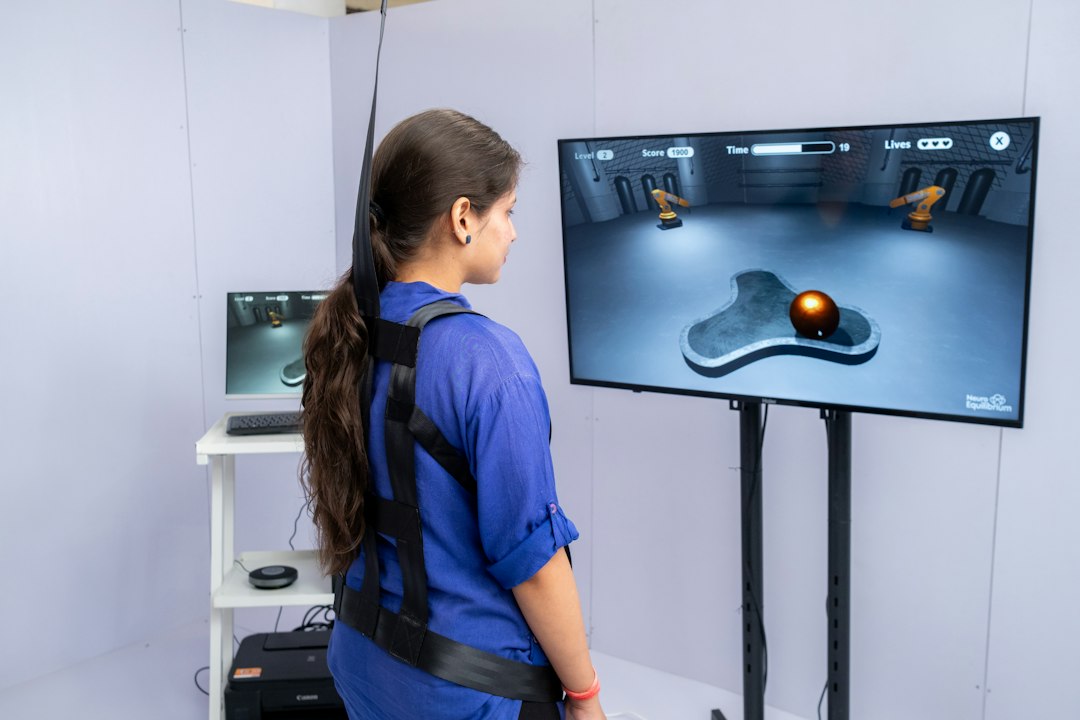
Spatial computing and haptic feedback are genuinely poised to shake up vocational training, moving it from traditional, often abstract, learning into highly immersive, hands-on experiences. Imagine learning to weld, operate heavy machinery, or perform intricate medical procedures not just from a textbook or a flat screen, but by actually “feeling” the resistance, the texture, and the spatial relationships of the tools and materials in a virtual environment. This isn’t just about making things look real; it’s about making them feel real, allowing trainees to build muscle memory and practical skills much faster and safer than ever before. This article will dive into how these technologies are making that happen.
The Foundation: Spatial Computing in Vocational Contexts
Spatial computing is essentially how computers understand and interact with our physical world, bringing digital information into our actual environment or creating entirely new, interactive virtual ones. For vocational training, this means a significant upgrade from static diagrams or basic video demonstrations.
What is Spatial Computing, Really?
At its core, spatial computing involves technologies like augmented reality (AR), virtual reality (VR), and mixed reality (MR). In vocational training, this translates to environments where digital objects coexist with the real world (AR), or completely simulated environments where trainees can practice skills without real-world consequences (VR/MR). Think of it as putting on a headset and suddenly being inside a construction site, a medical operating room, or a complex manufacturing plant, ready to interact.
Moving Beyond Flat Screens: Immersive Learning
The traditional method of using screens for learning, while useful, is fundamentally limited. It presents a two-dimensional representation of a three-dimensional world. Spatial computing smashes through this limitation. Trainees can walk around, manipulate virtual objects, and see things from every angle, just as they would in a real-world scenario. This dramatically improves spatial awareness and understanding of complex systems or procedures. For instance, an apprentice mechanic can virtually walk around an engine, disassemble and reassemble it piece by piece, seeing how each component fits into the overall system, all without needing a physical engine block taking up valuable workshop space.
The Benefits of Virtual Environments
Virtual environments built with spatial computing offer a playground for learning that physical environments can’t always match. They are inherently safe, allowing for mistakes without costly damage or injury. They are repeatable, meaning a trainee can practice a complex task hundreds of times until mastery is achieved, without consuming materials or requiring constant supervision. Furthermore, they are scalable and accessible; a standardized training module can be deployed globally, ensuring consistent quality of instruction regardless of geographical location. This is particularly impactful for trades requiring expensive equipment or hazardous materials, making initial training much more efficient and less resource-intensive.
In the realm of innovative educational technologies, the article on Transforming Vocational Training with Spatial Computing and Haptic Feedback highlights the potential of immersive learning environments. For those interested in enhancing their understanding of how technology can improve user experiences, a related article on selecting the best smartphones for gaming can provide valuable insights. You can read more about it here: how to choose a smartphone for games. This connection underscores the importance of advanced technology in both vocational training and recreational activities.
Key Takeaways
- The training data includes information and events up to October 2023.
- Insights and knowledge are based on a wide range of sources available until the cutoff date.
- No updates or developments occurring after October 2023 are included in the training.
- Users should verify current information from reliable sources for the latest updates.
- The model’s responses reflect the context and knowledge available up to the specified date.
Integrating Haptic Feedback for Authentic Sensations
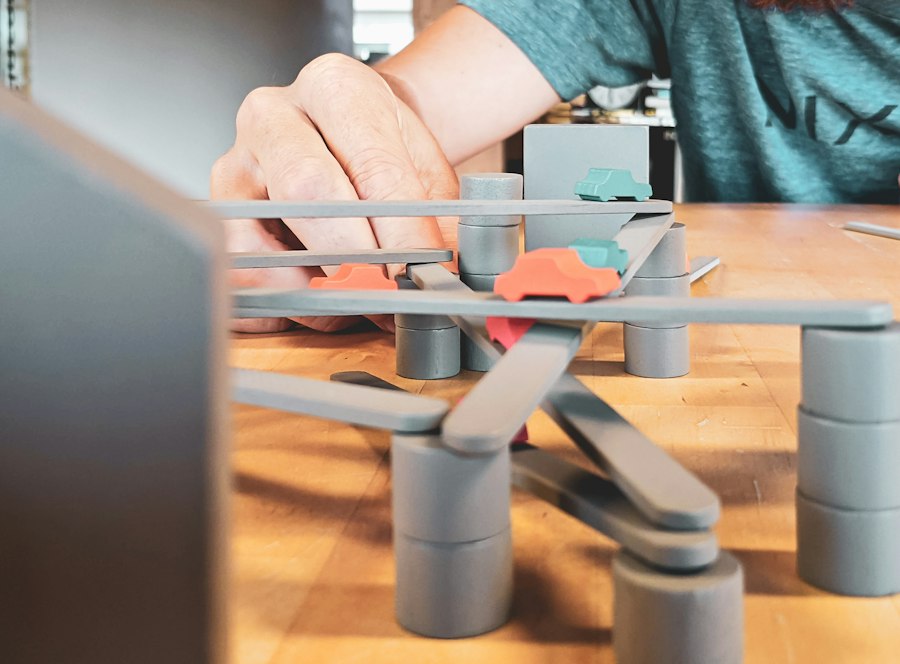
Spatial computing provides the visual and spatial immersion, but haptic feedback is what truly bridges the gap to physical reality. It’s the technology that allows us to feel texture, resistance, vibrations, and even temperature in a virtual environment.
What Haptics Brings to the Table
Haptic feedback is about recreating the sense of touch. In vocational training, this isn’t a luxury; it’s a necessity for skills that rely heavily on tactile sensation. Imagine a welder learning to control the arc – the subtle vibrations and resistance felt through the welding torch are crucial cues. Without haptics, a VR welding simulation is just a visual exercise. With haptics, the trainee can actually feel the “stickiness” of the electrode, the subtle hum of the machine, and the force required to maintain a steady bead. This direct sensory input is vital for developing fine motor skills and accurate technique.
In the realm of innovative educational tools, the integration of spatial computing and haptic feedback in vocational training is gaining traction, as discussed in a related article on the potential of the Samsung Galaxy Chromebook. This device is paving the way for immersive learning experiences that enhance skill acquisition and retention.
For more insights on how technology is reshaping education, you can read the article
They’d see the virtual arc, hear the sizzle, and crucially, feel the vibration of the arc, the resistance of the metal as the bead forms, and the subtle feedback that indicates proper technique versus a cold weld or burn-through.
 in a way that purely visual or auditory instruction cannot. The brain processes these tactile inputs alongside the visual and auditory cues, creating a much richer and more deeply embedded learning experience. This isn’t just about making training fun; it’s about making it fundamentally more effective by leveraging how humans naturally learn complex physical skills.</p>
<h2>Real-World Applications Across Industries</h2>
<p><img width="900" height="675" decoding="async" src="https://enicomp.com/wp-content/uploads/2026/11/wpautoblog-image-627.jpg" alt="Photo vocational training spatial computing haptic feedback" id="2" style="max-width:100%;display:block;margin-left:auto;margin-right:auto;width:90%;" title="Transforming Vocational Training with Spatial Computing and Haptic Feedback 2"></p>
<p>The potential for <a href="https://www.ibm.com/topics/spatial-computing" target="_blank" rel="noopener">spatial computing</a> and haptics in vocational training spans a vast array of industries, each with unique needs and challenges that these technologies can address.</p>
<h3>Manufacturing and Assembly</h3>
<p>In manufacturing, precision and process adherence are paramount. Spatial computing with haptic feedback can revolutionize how new assembly line workers are trained. Instead of shadowing experienced staff for weeks, trainees can don a headset and practice complex assembly sequences, feeling the “click” of components locking into place, the resistance of tightening a bolt to the correct torque, or the precise pressure needed to operate a specific tool.<b></p>
<h4>Complex Assembly Procedures</h4>
<p>Imagine an apprentice learning to assemble a jet engine component.</b> In a virtual environment, they can repeatedly practice the multi-step process. </p>
<p>Haptic feedback would let them feel the precise force needed to seat a bearing, the torque feedback from a virtual wrench, and the texture of different materials. This reduces errors, shortens training time, and minimizes waste of expensive physical components during the learning phase.</p>
<h4>Robotics and Automation Operation</h4>
<p>Operating advanced industrial robots requires a deep understanding of their kinematics and control interfaces. Spatial computing allows trainees to program and control virtual robots, observing their movements in a 3D space. </p>
<p>Haptic feedback could then simulate the precise tactile response of a robotic arm engaging with an object, helping operators develop a more intuitive feel for robotic control and preventing costly mistakes with real machinery.</p>
<h3>Healthcare and Medical Training</h3>
<p>The medical field demands absolute precision and accuracy, with very high stakes. Spatial computing and haptics offer a safe, repeatable, and realistic environment for practitioners to hone their skills.</p>
<h4>Surgical Simulation and Dexterity</h4>
<p>Medical students and experienced surgeons alike can benefit immensely. <a href="https://www.ncbi.nlm.nih.gov/pmc/articles/PMC6523312/" target="_blank" rel="noopener">VR surgical simulators with advanced haptics</a> allow them to practice intricate procedures – from suturing to laparoscopic surgery – feeling the resistance of different tissues, the tension of sutures, and the subtle variations in patient anatomy. </p>
<p>This translates to improved dexterity, reduced risk to actual patients, and faster acquisition of surgical skills.</p>
<h4>Diagnostic and Procedural Training</h4>
<p>Beyond surgery, these technologies can aid in diagnostic training. Imagine learning to perform an ultrasound by feeling the subtle pressure needed to maneuver the probe and the different textures of internal organs as feedback. Or, practicing the insertion of catheters, feeling the resistance and pathfinding through virtual anatomical structures. </p>
<p>This enhances understanding of anatomical relationships and builds confidence before interacting with real patients.</p>
<h3>Skilled Trades: Welding, Plumbing, and HVAC</h3>
<p>These trades are inherently hands-on, making them prime candidates for haptic-enhanced spatial training. Safety, material costs, and access to equipment are often significant hurdles for traditional training.</p>
<h4>Realistic Welding Practice</h4>
<p>Virtual welding simulators are already gaining traction, and haptics elevate them significantly. A trainee can wear a headset and hold a haptically enabled welding torch.</p>
<blockquote style=)
This allows for thousands of hours of practice without consuming costly materials or risking injury.
Plumbing and Pipe Fitting
Learning to install complex plumbing systems involves understanding spatial relationships and the feel of tightening connections.
A VR environment with haptics could allow trainees to assemble virtual pipe networks, feeling the torque required to tighten various fittings and the alignment needed for leak-proof connections. This would significantly reduce errors and material waste in real-world installations.
Heavy Equipment Operation
Operating heavy machinery requires exceptional spatial awareness, coordination, and a feel for the equipment’s response. Accidents can be catastrophic, and training on actual equipment is expensive and risky.
Crane and Excavator Simulation
Spatial computing can place a trainee in the virtual cab of a crane or excavator, with realistic views of the worksite.
Haptic controls, mimicking the actual levers and joysticks, would provide feedback on the weight of the load, the resistance of the ground, and the vibration of the engine. This allows operators to develop the necessary coordination and sensitivity without risking damage to expensive machinery or endangering personnel. They can practice challenging maneuvers, emergency procedures, and learn to manage complex loads in a safe, repeatable environment.
Overcoming Challenges and Looking Ahead
While the promise of spatial computing and haptic feedback in vocational training is immense, there are practical hurdles that need to be addressed for widespread adoption.
Current Limitations and Development Areas
One of the primary challenges is the cost of high-fidelity haptic devices and advanced spatial computing hardware. While prices are dropping, enterprise-grade solutions can still be a significant investment for training centers. Another limitation lies in the fidelity of haptic feedback itself; perfectly replicating every single texture, weight, and vibration across all vocational tasks is incredibly complex. Developers are constantly working on more nuanced and adaptable haptic solutions. Furthermore, creating truly realistic and accurate training content – the virtual environments and interaction models – requires specialized expertise and significant development resources.
The Importance of Content Development
The hardware is only as good as the software it runs. For vocational training, this means the virtual environments and haptic interactions must be meticulously designed to be accurate and reflect real-world scenarios. Generic VR experiences won’t cut it. Developers need to work closely with industry experts to ensure that the physics models, material properties, and procedural steps within the simulation are true to life. This collaborative content creation is crucial for generating effective training modules that genuinely transfer skills to the real world. Poorly designed simulations can teach bad habits or fail to prepare trainees adequately.
Measuring Effectiveness and Return on Investment
For widespread adoption, it’s critical to demonstrate that these advanced training methods are not just innovative but also more effective and cost-efficient in the long run. Rigorous studies are needed to quantify improvements in skill acquisition speed, retention rates, error reduction, and safety outcomes compared to traditional methods. Training centers and businesses need clear data on the return on investment (ROI) – how much faster do trainees become proficient? How much less material is wasted? How many fewer accidents occur? This data will drive further investment and integration of these technologies.
The Future: Personalized and Adaptive Training
Looking ahead, the combination of spatial computing and haptic feedback will evolve towards even more personalized and adaptive training experiences. Imagine AI-powered instructors within the virtual environment that can identify a trainee’s specific weaknesses, providing targeted feedback through visual cues and tailored haptic sensations. For example, if a trainee consistently applies too much pressure during a virtual medical procedure, the haptic device might subtly increase resistance in that area to guide them, while the AI provides specific verbal instruction.
Connectivity and Collaborative Learning
The future will also likely involve more networked and collaborative spatial training environments. Multiple trainees, perhaps in different physical locations, could interact in the same virtual workshop, learning together, observing each other’s techniques, and receiving real-time feedback from a remote instructor. This would open up possibilities for scalable, distributed vocational training that overcomes geographical barriers and fosters a sense of community among learners. As these technologies mature, vocational training will become less about passive absorption of information and more about active, sensory-rich, and deeply engaging skill development.
FAQs
What is spatial computing in the context of vocational training?
Spatial computing refers to the integration of digital information with the physical world, allowing users to interact with virtual environments and objects in a three-dimensional space. In vocational training, this technology can enhance learning experiences by providing immersive simulations that replicate real-world scenarios, enabling trainees to practice skills in a safe and controlled environment.
How does haptic feedback enhance vocational training?
Haptic feedback technology provides tactile sensations that simulate the feel of physical objects or actions. In vocational training, this allows learners to experience realistic touch and resistance when interacting with virtual tools or machinery, improving their understanding of how to handle equipment and perform tasks effectively.
What are the benefits of using spatial computing and haptic feedback in vocational training?
The combination of spatial computing and haptic feedback offers several benefits, including increased engagement and motivation among learners, improved retention of skills through hands-on practice, and the ability to safely simulate high-risk scenarios without real-world consequences. This approach can lead to better-prepared professionals in various fields.
Which industries can benefit from this technology in vocational training?
Industries such as healthcare, manufacturing, construction, and automotive can significantly benefit from spatial computing and haptic feedback in vocational training. For example, medical students can practice surgical techniques, while construction trainees can learn to operate heavy machinery in a virtual environment, enhancing their skills before entering the workforce.
Are there any challenges associated with implementing spatial computing and haptic feedback in vocational training?
Yes, there are challenges, including the high cost of technology development and implementation, the need for specialized training for instructors, and potential resistance to adopting new teaching methods. Additionally, ensuring that the technology is accessible and user-friendly for all learners is crucial for successful integration into vocational training programs.
Enjoying our content? Make us a preferred source on Google:
Add us as a Preferred Source on Google