

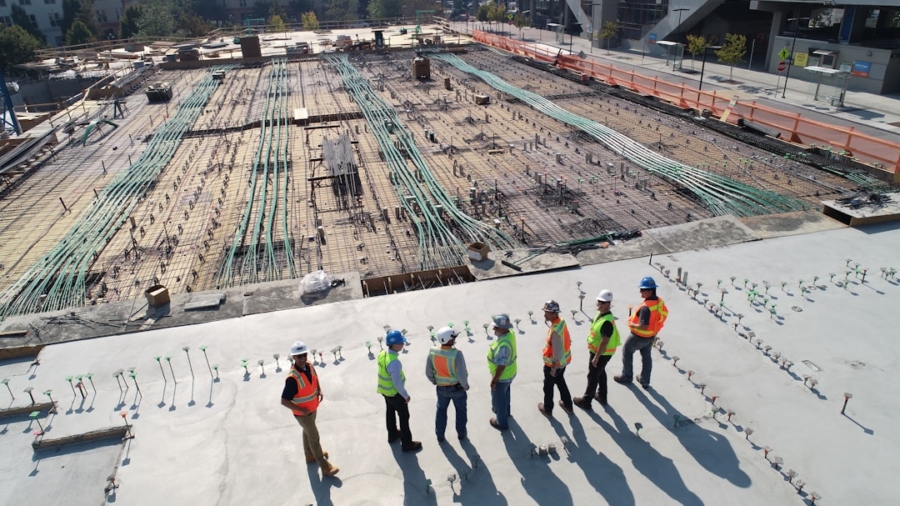
Construction sites are changing, and a big part of that change is autonomous heavy machinery. Simply put, these are machines that can operate themselves, or with very minimal human intervention, for tasks like digging, hauling, and paving. They’re not just a futuristic dream anymore; they’re becoming a real, practical solution for many of the challenges our industry faces. Think of it as an extra pair of hands, but those hands are incredibly strong, precise, and never get tired. This technology is already being deployed on a growing number of sites, offering significant benefits in efficiency, safety, and ultimately, the bottom line.
Let’s face it, construction has traditionally been a tough, sometimes dangerous, and often slow business. Autonomous machinery directly addresses some of these core issues, offering a tangible path toward improvement.
Boosting Site Efficiency
One of the most immediate benefits you’ll see is a noticeable jump in how quickly and smoothly things get done.
Consistent Operation, Around the Clock
Unlike human operators, autonomous machines don’t need breaks, don’t get fatigued, and can work 24/7 as long as they have power and materials. This means project timelines can be significantly compressed. Imagine a fleet of bulldozers precisely grading a site overnight, or haul trucks moving material continuously, without a single coffee break. This continuous operation minimizes idle time and maximizes productivity.
Optimized Resource Management
These machines are often equipped with advanced sensors and software that allow them to optimize their movements, fuel consumption, and material usage. They can follow precise digital models, ensuring every scoop of dirt is exactly where it needs to be, reducing waste and rework. This isn’t guesswork; it’s data-driven precision. For example, a driverless excavator can, with real-time mapping, dig to an exact depth and angle, minimizing over-excavation or under-excavation, which in turn saves on backfill material or additional digging time.
Reduced Human Error
Let’s be honest, we all make mistakes. On a construction site, a small miscalculation can lead to costly delays or safety hazards. Autonomous systems are programmed for precision, virtually eliminating many common human errors associated with operating heavy machinery. This leads to higher quality work and less need for corrections down the line. Think of a paver laying asphalt perfectly consistently, or a grader achieving a grade that’s millimetre-perfect, reducing subsequent finishing work.
The integration of autonomous heavy machinery is revolutionizing the construction industry, enhancing efficiency and safety on job sites. A related article that delves into the broader implications of innovation in engineering processes can be found at this link. It discusses how reimagining traditional engineering methods can lead to significant improvements in project management and execution, paralleling the advancements seen with autonomous technologies in construction.
Key Takeaways
- Clear communication is essential for effective teamwork
- Active listening is crucial for understanding team members’ perspectives
- Conflict resolution skills are necessary for managing disagreements
- Trust and respect are the foundation of a successful team
- Collaboration and cooperation are key for achieving common goals
Enhancing Safety on the Job Site
Safety is always a top priority, and bringing autonomous machinery into the mix can drastically improve the safety record of a project.
Removing Workers from Harm’s Way
Construction is consistently ranked as one of the most dangerous professions. A significant portion of accidents involves heavy machinery.
Eliminating High-Risk Tasks
By automating tasks like trenching, demolition, or working in unstable ground conditions, we can remove human operators from the immediate vicinity of potential hazards. This means fewer people exposed to falling objects, excavation collapses, or collisions. For instance, a robotic demolition excavator can work on unstable structures from a safe distance, controlled remotely, preventing operators from being exposed to the dust, noise, and collapse risks.
Fewer On-Site Personnel
If machines can handle more tasks independently, fewer people are needed on the ground in high-traffic or high-risk zones. This naturally reduces the potential for accidents involving personnel and equipment. This doesn’t necessarily mean fewer jobs overall, but rather a shift in roles, with more emphasis on monitoring, maintenance, and programming from a safer environment.
Advanced Obstacle Detection and Avoidance
Modern autonomous machines are packed with sensors – lidar, radar, cameras – that give them a comprehensive understanding of their surroundings.
Proactive Hazard Identification
They can detect other vehicles, workers, and unforeseen obstacles in real-time, often faster and more consistently than a human operator. This allows them to react and avoid collisions or dangerous situations before they happen. For example, a smart haul truck can detect a worker walking into its blind spot and automatically slow down or stop before any contact.
Environmental Awareness
These systems can even monitor ground conditions, slopes, and weather, adjusting their operations to maintain stability and prevent tip-overs or stuck machinery. A driverless bulldozer can detect a sudden soft patch of ground and adjust its blade angle or speed to prevent getting bogged down.
Addressing Workforce Challenges

The construction industry is facing a significant labor shortage globally. Autonomous machinery can help bridge this gap.
Mitigating Labor Shortages
Finding skilled operators for heavy equipment is becoming increasingly difficult. Autonomy offers a partial solution.
Supplementing the Workforce
Autonomous machines can fill roles where human operators are scarce, allowing projects to proceed even when the ideal number of skilled workers isn’t available.
They’re not necessarily replacing everyone, but rather acting as valuable force multipliers. This is particularly relevant in remote areas or for projects that require extended working hours where finding human operators can be challenging due to regulations or availability.
Attracting a New Generation
The high-tech nature of autonomous equipment can appeal to a younger generation, drawing new talent into the industry who might be more interested in programming and monitoring advanced robotics than traditional machine operation. This shift redefines what a “construction job” entails, adding more technically oriented roles.
Shifting Roles and Responsibilities
While some tasks become automated, new and critical roles emerge.
Remote Operation and Tele-operation
Instead of being in the cab, operators can control multiple machines from a centralized, safe location, sometimes even off-site.
This improves working conditions and allows for more strategic oversight. A single operator in an air-conditioned control room could be overseeing several excavators digging simultaneously miles away.
Maintenance and Monitoring Specialists
The need for highly skilled technicians to maintain, troubleshoot, and program these complex machines will increase. These are higher-skilled, often better-paying jobs.
The focus shifts from repetitive operation to ensuring the advanced systems are running optimally.
Overcoming Implementation Hurdles

Adopting new technology always comes with its challenges. Autonomous machinery is no different, but these hurdles are not insurmountable.
High Initial Investment
The cost of autonomous heavy machinery is generally higher than traditional equipment.
Long-Term ROI
While the upfront cost is significant, the long-term return on investment often outweighs it. Factors like increased efficiency, reduced fuel consumption, lower labor costs, and fewer accidents can lead to substantial savings over the lifespan of the equipment. It’s an investment in future productivity and safety. For instance, reduced fuel consumption from optimized routes and consistent operating speeds can add up to significant savings on a large project over months or years.
Phased Adoption Strategies
Companies don’t need to replace their entire fleet overnight. A phased approach, starting with autonomous systems for specific, repetitive tasks, can allow businesses to gradually integrate the technology and realize benefits without a massive initial outlay. This could involve automating a single haul route or a specific earthmoving operation before expanding.
Integration with Existing Workflows
Introducing autonomous elements into a traditional construction site requires careful planning.
Data Exchange and Interoperability
Ensuring autonomous machines can seamlessly communicate with other equipment, site management software, and human workers is crucial. This requires robust data platforms and open standards. The goal is to avoid isolated “islands of automation” and instead create a connected, intelligent job site.
Training and Skill Development
As mentioned, new skills are needed.
Comprehensive training programs for both new hires and existing staff on operating, monitoring, and maintaining autonomous equipment are essential for a smooth transition.
This isn’t just about technical skills, but also understanding how to work alongside these new technologies.
The integration of autonomous heavy machinery is revolutionizing the way construction sites operate, enhancing efficiency and safety. A related article discusses the importance of selecting the right tools for project management, which can significantly impact the successful implementation of such advanced technologies. For more insights on optimizing project workflows, you can read about the best software for project management here. This connection between technology and effective management is crucial for the future of the construction industry.
The Future is Autonomous
| Metrics | Data |
|---|---|
| Time Saved | 30% reduction in project duration |
| Cost Savings | 20% decrease in construction costs |
| Accident Reduction | 50% decrease in on-site accidents |
| Productivity Increase | 40% improvement in overall productivity |
Looking ahead, the integration of autonomous heavy machinery is only going to grow. It’s not just about individual machines, but about creating fully connected, intelligent construction ecosystems.
Connected Job Sites and Digital Twins
Imagine a construction site where every piece of equipment, every material delivery, and every worker is digitally connected to a central “digital twin” – a virtual replica of the project.
Real-time Project Management
Autonomous machines will feed real-time data into this digital twin, providing an unprecedented level of insight into project progress, potential bottlenecks, and resource allocation. Project managers can make data-driven decisions on the fly, leading to more flexible and responsive planning. This allows for predictive maintenance and dynamic resource reallocation.
Predictive Maintenance and Optimization
With constant monitoring, machinery can predict when maintenance is needed before a breakdown occurs, minimizing downtime and extending equipment lifespan. Furthermore, the data collected can be used to continuously optimize operational efficiency. This proactive approach significantly reduces unexpected repair costs and project delays.
Advanced Robotics and AI Integration
The journey doesn’t stop at heavy machinery. Smaller, more agile robots and advanced AI will further revolutionize the industry.
Specialized Robotic Tasks
Smaller robots are already being developed for tasks like bricklaying, rebar tying, and inspections, freeing human workers from repetitive or dangerous jobs. These robots can work in tighter spaces and perform tasks with extreme precision. Think of a robotic arm precisely placing bricks according to a 3D model, or a drone conducting daily inspections of the site for progress and safety concerns.
AI-Powered Decision Making
Artificial intelligence will play an increasing role in optimizing every aspect of a construction project, from initial design and scheduling to real-time risk assessment and resource deployment. AI can analyze vast amounts of data to provide insights that are impossible for humans to process, leading to smarter, more efficient project execution. For example, AI can analyze weather patterns, material delivery schedules, and equipment availability to dynamically adjust a project’s timeline to mitigate risks and capitalize on opportunities.
In short, autonomous heavy machinery isn’t just a technological marvel; it’s a practical and necessary evolution for the construction industry.
It promises safer sites, faster projects, and a more sustainable way to build, and it’s here to stay.
FAQs
What is autonomous heavy machinery in construction?
Autonomous heavy machinery in construction refers to the use of self-driving or remotely operated equipment such as excavators, bulldozers, and dump trucks to perform various tasks on construction sites without the need for direct human intervention.
How does autonomous heavy machinery benefit construction sites?
Autonomous heavy machinery can improve construction site safety by reducing the risk of accidents and injuries. It can also increase productivity and efficiency by working around the clock without the need for breaks, and it can help reduce operating costs by optimizing fuel consumption and maintenance schedules.
What are the challenges of implementing autonomous heavy machinery in construction?
Challenges of implementing autonomous heavy machinery in construction include the high initial investment cost, the need for specialized training for operators and maintenance personnel, and potential regulatory and legal hurdles related to safety and liability.
What types of tasks can autonomous heavy machinery perform on construction sites?
Autonomous heavy machinery can perform a wide range of tasks on construction sites, including excavation, grading, material handling, and site preparation. They can also be used for repetitive tasks such as earthmoving and hauling.
What is the future outlook for autonomous heavy machinery in construction?
The future outlook for autonomous heavy machinery in construction is promising, with ongoing advancements in technology and increasing adoption by construction companies. As the technology continues to mature, it is expected to become more widespread and integrated into construction operations.
Enjoying our content? Make us a preferred source on Google:
Add us as a Preferred Source on Google