

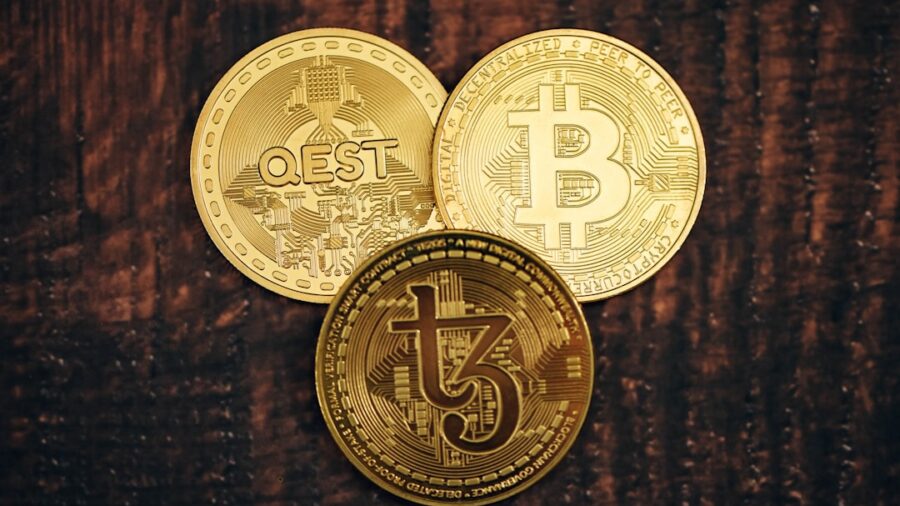
The world of finance is always evolving, and right now, a big shift is happening: institutional investors are starting to put their money into digital tokens that represent real-world stuff – things like property, art, or even company shares. This isn’t just a niche experiment anymore. By 2025, we’re looking at this “tokenization” of real-world assets becoming a much more significant part of institutional finance. Think of it as bringing the tangible world onto the digital rails of blockchain technology, making it easier, faster, and more accessible to invest in.
There’s a convergence of factors making 2025 a key year for this trend. It’s not just a sudden fad; it’s built on years of development and a growing appetite for new investment avenues.
Maturing Blockchain Infrastructure
The technology powering all of this, blockchain, has come a long way. Early on, it was clunky and not always reliable. Now, we’re seeing more robust, scalable, and secure blockchain networks. These are the highways that tokenized assets will travel on, and they’re finally built to handle the kind of volume and complexity institutional finance demands. Think of it like building a superhighway system for assets that was once only accessible by dirt roads.
Regulatory Clarity (Mostly)
One of the biggest hurdles for institutions has always been uncertainty around rules and regulations. While it’s not perfect everywhere, we’re seeing a clearer path emerge in many major financial jurisdictions. Governments and regulatory bodies are starting to catch up, providing frameworks that allow for the compliant tokenization and trading of assets. This predictability is crucial for institutions that operate under strict compliance guidelines. They need to know the rules of the road before they start investing heavily.
The Search for Yield and Efficiency
In a world where traditional investments can offer low returns, institutions are actively seeking new ways to generate income and improve their operational efficiency. Tokenization promises both.
By digitizing assets, you can unlock liquidity for assets that were once hard to sell, potentially leading to better returns.
Plus, the automation and streamlining of processes through blockchain can significantly cut down on costs and settlement times.
A Growing Digital Native Workforce
The financial industry is seeing more professionals who grew up with digital technologies. This younger, more digitally-inclined workforce is often more open to adopting new technologies like blockchain, which makes it easier to integrate tokenized assets into their strategies. They understand the potential and are less bound by traditional, analog ways of doing things.
In the rapidly evolving landscape of blockchain technology, the article titled “Tokenized Real-World Assets: How Institutional Finance Is Moving On-Chain in 2025” explores the transformative impact of tokenization on traditional financial systems. For those interested in the intersection of technology and finance, a related article that delves into the best tools for enhancing productivity in the digital age is available at Best Laptops for Coding and Programming. This resource provides valuable insights into the essential hardware that can support the burgeoning field of blockchain development and programming.
Key Takeaways
- Clear communication is essential for effective teamwork
- Active listening is crucial for understanding team members’ perspectives
- Setting clear goals and expectations helps to keep the team focused
- Regular feedback and open communication can help address any issues early on
- Celebrating achievements and milestones can boost team morale and motivation
What Exactly Are Tokenized Real-World Assets?
Let’s break down what we’re actually talking about when we say “tokenized real-world assets.” It’s essentially taking a claim to ownership of something physical or a traditional financial instrument and representing it as a digital token on a blockchain.
The Concept of Digitizing Ownership
Imagine owning a piece of a skyscraper. Traditionally, that ownership is recorded in physical deeds and legal documents, which can be cumbersome to transfer and verify. Tokenization means that your ownership stake is represented by a digital token. This token, stored on a secure blockchain, acts as irrefutable proof of your ownership. It’s like having a digital key to your tangible asset.
Different Types of Assets Being Tokenized
The scope of what can be tokenized is quite broad. It’s not just about digital art anymore.
- Real Estate: Fractional ownership of commercial properties, residential buildings, or even individual units. This opens up real estate investment to a wider range of investors and makes it easier to trade.
- Private Equity and Venture Capital: Tokens can represent shares in private companies, allowing for more liquidity in these often illiquid markets.
- Art and Collectibles: High-value artwork, rare wines, or vintage cars can be tokenized, enabling fractional ownership and easier global trading.
- Commodities: Think gold, silver, or even agricultural products. Tokenizing these can streamline supply chains and make trading more efficient.
- Debt Instruments: Bonds and other forms of debt can be tokenized, potentially leading to faster settlement and increased transparency in their lifecycle.
The Role of Smart Contracts
The magic behind much of this lies in smart contracts. These are self-executing contracts with the terms of the agreement directly written into code. When an asset is tokenized, smart contracts can automate many processes.
- Automated Dividend Payouts: For tokenized equity, smart contracts can automatically distribute dividends to token holders.
- Compliance Enforcement: They can be programmed to ensure only accredited investors can hold certain tokens, for example, adhering to regulatory requirements.
- Voting Rights: For tokenized company shares, smart contracts can manage voting processes.
How Institutions Are Using Tokenized Assets in 2025

The applications for institutional finance are diverse and growing. It’s about more than just buying and holding; it’s about integrating these new digital assets into existing financial workflows and creating new opportunities.
Enhanced Liquidity and Fractional Ownership
This is a major driver. Many valuable assets are illiquid, meaning they are hard to buy or sell quickly without a significant price impact.
Tokenization breaks down these barriers.
- Unlocking Real Estate Value: A large commercial building might be difficult for a single investor to purchase. By tokenizing it into, say, 10,000 tokens, many investors can buy small fractions, making it accessible and providing liquidity for the original owner.
- Access to Private Markets: Venture capital funds and private equity are notoriously hard to invest in for many institutions due to high minimums and lock-up periods. Tokenized stakes can allow for smaller investments and potentially secondary market trading before a company goes public.
Streamlined Issuance and Management
The traditional process of issuing and managing securities or ownership documents is often slow, expensive, and paper-intensive.
Tokenization offers a more efficient alternative.
- Faster Security Token Offerings (STOs): Issuing new tokens representing securities can be significantly quicker and cheaper than traditional IPOs or bond issuances.
- Reduced Administrative Overhead: Smart contracts can automate tasks like cap table management (keeping track of shareholders), dividend distribution, and compliance checks, reducing the need for manual intervention.
Decentralized Finance (DeFi) Integration
While DeFi is often associated with purely digital assets, it’s increasingly becoming a platform for real-world assets.
- Collateralization in DeFi Protocols: Tokenized real-world assets can be used as collateral to borrow or lend in decentralized finance protocols.
This bridges the gap between traditional finance and the burgeoning DeFi ecosystem.
- New Yield-Generating Strategies: Institutions can use tokenized assets within DeFi to earn yields, explore arbitrage opportunities, or hedge other positions. This opens up a new frontier for sophisticated investment strategies.
Improved Transparency and Auditability
Blockchain’s inherent transparency provides significant advantages for institutional investors who rely on accurate and verifiable data.
- Immutable Record of Ownership: Every transaction involving a tokenized asset is recorded on the blockchain, creating an unalterable history of ownership and transfers. This makes audits much simpler and more reliable.
- Real-time Asset Tracking: Institutions can have near real-time visibility into the status and ownership of their tokenized assets.
The Technology Stack Powering Tokenization

Understanding the underlying technology is key to grasping the implications of this trend. It’s not just about the tokens themselves, but the infrastructure that supports them.
Blockchain Platforms for Institutional Use
Not all blockchains are created equal, especially when it comes to institutional needs. Certain platforms are being favored due to their focus on security, scalability, and enterprise-grade features.
- Permissioned Blockchains: These blockchains, like Hyperledger Fabric or R3 Corda, restrict who can participate in the network. This is crucial for institutions that need to control access and maintain privacy.
- Public Blockchains with Enterprise Solutions: While public blockchains like Ethereum are becoming more scalable, institutions often utilize their enterprise-grade solutions or layer-2 scaling technologies to manage security and performance for tokenized assets.
Token Standards and Interoperability
For tokenized assets to function seamlessly across different platforms and applications, standardized protocols are essential.
- ERC-20 and Beyond: While ERC-20 is famous for fungible tokens, standards like ERC-721 (for NFTs, but adaptable for unique assets) and newer, more specialized standards are emerging for security tokens and real-world asset representation.
- Interoperability Solutions: As more blockchains emerge, the ability for tokens to move between them (interoperability) becomes critical. Technologies like cross-chain bridges are vital for creating a connected ecosystem.
Custody and Security Solutions
Institutions handle vast amounts of value, and safeguarding digital assets is paramount. Specialized custody solutions are being developed.
- Digital Asset Custodians: These firms provide secure storage for digital tokens, employing sophisticated security measures, including multi-signature wallets and cold storage.
- Hardware Security Modules (HSMs): These are physical devices used to protect cryptographic keys, ensuring that even in the event of a system breach, the keys remain secure.
As the landscape of institutional finance continues to evolve, the integration of tokenized real-world assets is becoming increasingly significant. A recent article discusses the best tablets for everyday use, which highlights how technology plays a crucial role in facilitating these financial innovations. For those interested in the intersection of finance and technology, this resource offers valuable insights into the tools that can enhance productivity in this rapidly changing environment. To explore more about the best devices for your needs, you can read the article here.
Challenges and What to Watch for in 2025
| Metrics | 2021 | 2025 |
|---|---|---|
| Total Value Locked (TVL) | 10 billion | 500 billion |
| Number of Tokenized Assets | 100 | 1000 |
| Number of Institutional Investors | 10 | 100 |
| Market Cap of Tokenized Real-World Assets | 1 billion | 50 billion |
While the trend is strong, it’s not without its hurdles. Institutions will be closely watching how these challenges are addressed.
Regulatory Evolution and Harmonization
As mentioned earlier, regulatory clarity is improving, but it’s still a moving target.
- Global Regulatory Divergence: Different countries will continue to have varying approaches to tokenized assets, creating complexity for international institutions.
- Evolving Frameworks: Regulators are still learning, and rules could change. Institutions need to stay agile and adapt to new requirements.
Scalability and Performance Bottlenecks
Even with advancements, handling the sheer volume of transactions that a global financial system requires is a significant challenge.
- Transaction Throughput: As more assets move on-chain, the ability of blockchains to process a high volume of transactions quickly and cheaply will be tested.
- Network Congestion: In periods of high demand, transaction fees on public blockchains can spike, making operations prohibitively expensive.
Interoperability Between Traditional and Blockchain Systems
Integrating new blockchain-based systems with established, legacy financial infrastructure is a complex undertaking.
- Bridging the Gap: Creating smooth connections between traditional trading platforms, settlement systems, and the blockchain is a technical and operational challenge.
- Data Standardization: Ensuring that data from both traditional and blockchain sources can be understood and processed uniformly is crucial.
Education and Talent Gap
There’s still a significant need to educate financial professionals about blockchain technology and tokenization.
- Skill Development: The industry needs more professionals who understand both finance and blockchain technology.
- Overcoming Skepticism: Some traditional finance professionals may remain skeptical, requiring ongoing education and demonstration of value.
Data Privacy and Confidentiality
While blockchains are transparent, institutions often require a higher degree of privacy for their trading activities and asset holdings.
- Zero-Knowledge Proofs (ZKPs): These cryptographic techniques can allow for verification of information without revealing the information itself, addressing privacy concerns.
- Confidential Computing: Technologies that enable data to be processed in an encrypted state, even while in use, are being explored.
By 2025, the landscape of institutional finance will undoubtedly be more digitally integrated. Tokenized real-world assets are no longer a futuristic concept; they are a tangible evolution. Institutions that embrace this shift will likely find themselves at the forefront of financial innovation, unlocking new opportunities for efficiency, liquidity, and investment returns. The journey has begun, and the next few years will be pivotal in shaping how we invest and manage assets in the digital age.
FAQs
What are tokenized real-world assets?
Tokenized real-world assets are traditional assets, such as real estate, stocks, or commodities, that have been converted into digital tokens on a blockchain. This allows for easier and more efficient trading and ownership of these assets.
How is institutional finance utilizing tokenized real-world assets?
Institutional finance is increasingly utilizing tokenized real-world assets as a way to streamline processes, reduce costs, and increase liquidity. This allows for easier access to a wider range of assets and investment opportunities.
What are the benefits of tokenizing real-world assets?
Tokenizing real-world assets offers several benefits, including increased liquidity, fractional ownership, reduced transaction costs, and improved transparency and security through the use of blockchain technology.
What challenges are associated with tokenizing real-world assets?
Challenges associated with tokenizing real-world assets include regulatory compliance, interoperability between different blockchain platforms, and the need for standardization and industry-wide adoption of tokenization practices.
How is the landscape of tokenized real-world assets expected to evolve in 2025?
In 2025, it is expected that the tokenization of real-world assets will become more widespread, with increased adoption by institutional investors and the development of more sophisticated tokenization platforms and infrastructure. This is likely to further transform the way traditional assets are bought, sold, and traded.
Enjoying our content? Make us a preferred source on Google:
Add us as a Preferred Source on Google