

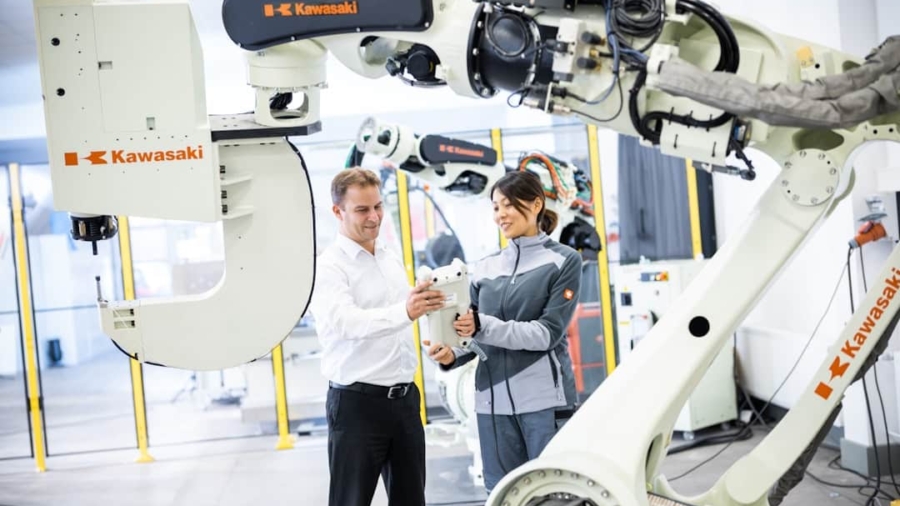
When you’re looking at how labs are getting smarter and faster, robotics are a pretty big deal. These aren’t the clunky robots you might imagine; think more like sophisticated tools helping scientists do their jobs more efficiently and accurately. Basically, robotics in advanced lab automation are about taking repetitive, time-consuming, or physically challenging tasks and handing them over to machines. This frees up scientists to focus on the truly analytical and creative parts of their work.
Precision and Throughput: The Core Benefits
One of the main reasons robotics have become so important is their ability to perform tasks with incredible precision, far beyond what a human hand can consistently achieve. Think about pipetting minute volumes of liquid – a robotic arm can do it over and over again with microscopic accuracy. This leads to more reliable experimental results.
Beyond just accuracy, robots dramatically increase the speed at which experiments can be run. They don’t get tired, they don’t need breaks, and they can work 24/7. This boost in throughput is crucial for fields like drug discovery, where testing thousands of compounds quickly can mean the difference between finding a breakthrough or not.
Miniaturization and Microfluidics
A key area where robotics shine is in handling smaller samples and volumes. Many advanced lab techniques involve working with microfluidic devices, essentially tiny channels that manipulate incredibly small amounts of liquids. Loading these devices, dispensing reagents, and collecting data from them require a level of precision that robots are perfectly suited for. This miniaturization not only saves on expensive reagents but also allows for higher-density screening.
High-Throughput Screening (HTS)
This is perhaps the most classic application of robotics in labs. HTS involves testing a vast number of samples (like potential drug candidates) against a biological target. Robots handle the dispensing of compounds, cells, and detection reagents into microplates, then move these plates to various analytical instruments. Without robotics, HTS would be an almost impossibly slow and labor-intensive process.
In exploring the advancements in laboratory automation, it’s interesting to consider the intersection of technology and creativity, as highlighted in a related article on digital tools for artists. This article discusses various software options that can enhance artistic expression, much like how robotics can streamline and enhance laboratory processes. For more insights on this topic, you can read the article here: Best Free Drawing Software for Digital Artists in 2023.
Handling Hazardous Materials and Improving Safety
Let’s be honest, some lab work involves dealing with things that aren’t exactly pleasant or safe for humans. Robotics offer a fantastic solution here. By automating tasks that involve hazardous chemicals, infectious agents, or radioactive materials, labs can significantly reduce the risk of exposure for their staff.
Containment and Isolation
Robotic systems can operate within biosafety cabinets or isolators, keeping potentially dangerous substances contained and preventing any exposure to the outside environment. This is vital for research involving pathogens or potent toxins. The robot’s arm can manipulate samples and reagents inside the contained space, minimizing human interaction.
Minimizing Human Error in Risky Procedures
Even with the best safety protocols, human error can occur, especially when performing repetitive or delicate tasks under stressful conditions. Robots, programmed to execute procedures flawlessly, can take over these risky steps, thereby reducing the likelihood of accidents or contamination. This is particularly important in areas like molecular diagnostics where preventing cross-contamination is paramount.
Automating Sample Preparation: A Bottleneck Solved
Sample preparation can often be the most time-consuming and error-prone step in any laboratory workflow. This is where robotics have made a particularly significant impact, tackling tasks that used to take up a huge chunk of a scientist’s day.
DNA/RNA Extraction and Purification
Extracting and purifying genetic material is a fundamental step in many molecular biology workflows. Robotic platforms can automate the entire process, from lysing cells to washing and eluting the nucleic acids.
This frees up scientists to focus on downstream applications like sequencing or PCR.
The consistency offered by automated extraction also leads to higher quality DNA/RNA, which is critical for sensitive assays.
Cell Culture and Plating
Working with cell cultures requires careful handling and precise plating. Robots can automate the seeding of cells into multi-well plates, passaging cultures, and adding media or treatment solutions. This ensures consistent cell densities and reduces the risk of contamination from repeated manual handling. For large-scale studies, robotic cell culture systems are essential.
Reagent Dispensing and Mixing
Precise dispensing of reagents is crucial for most laboratory assays. Robotic liquid handlers can accurately transfer tiny volumes of liquids from multiple source vessels to destination plates or tubes. They can also be programmed for specific mixing protocols, ensuring reagents are thoroughly combined for optimal reaction kinetics. This eliminates the variability inherent in manual pipetting.
Integration with Analytical Instruments: The “Lab of the Future”
Robots don’t just operate in isolation; their real power comes when they’re integrated with other lab equipment. This creates automated workflows where samples are prepared, analyzed, and data is collected with minimal human intervention.
Sample Handling and Transport
Robotic arms or conveyor systems can move samples between different stations in a lab. This might involve taking a plate from a liquid handler to a plate reader, or moving vials from a storage system to an analyzer. This seamless transfer of samples is key to creating truly automated workflows.
Data Acquisition and Analysis
Once a sample has been analyzed by an instrument, the data needs to be processed. While not always directly handled by a “robot” in the traditional sense, the integration of robotic sample handling with automated data acquisition software creates a closed-loop system. This means results can be generated and interpreted faster, and alerts can be triggered for out-of-spec results.
Workflow Orchestration and Intelligent Scheduling
Advanced lab automation systems use sophisticated software to orchestrate complex workflows. This software tells the robots what to do, when to do it, and in what order. It can also intelligently schedule tasks to optimize instrument usage and minimize turnaround times. This orchestration is what allows for the “lights out” operation of some labs.
In exploring the transformative impact of technology on laboratory processes, one can find valuable insights in the article about the Samsung Galaxy Chromebook, which highlights how advanced devices can enhance productivity and efficiency in various fields. The integration of robotics in lab automation is a crucial aspect of this evolution, as it allows for more precise and faster experimentation. For a deeper understanding of how innovative tools can reshape workflows, you can read more in this related article.
The Evolving Role of the Scientist
With all this automation, you might wonder what’s left for the human scientist. The answer is, quite a lot, but their role shifts. Instead of being bench chemists meticulously repeating procedures, scientists become system managers, experiment designers, and data interpreters.
Experiment Design and Optimization
Humans are still essential for designing the experiments themselves. They define the research questions, hypothesize potential answers, and then use robotics to test those hypotheses efficiently. Scientists also play a vital role in optimizing robotic protocols to ensure they’re achieving the best possible results.
Data Interpretation and Critical Thinking
Robots generate data, but it’s the scientist’s brain that interprets it. They look for trends, anomalies, and the deeper meaning within the results. This is where human intelligence, creativity, and critical thinking are irreplaceable. The ability to connect disparate pieces of information and draw meaningful conclusions remains a human strength.
Troubleshooting and System Maintenance
Even the most advanced robotic systems aren’t infallible. Scientists will be involved in troubleshooting when something goes wrong, and in the maintenance and calibration of the robotic equipment to ensure its continued accuracy and reliability. This requires a blend of scientific understanding and technical aptitude.
Considerations for Implementing Robotics
Bringing robotics into a lab isn’t just a matter of buying a machine; it requires careful planning and consideration. It’s a significant investment, and the benefits need to outweigh the costs.
Cost and ROI
The initial investment in robotic systems can be substantial. It’s crucial to conduct a thorough cost-benefit analysis to determine the return on investment (ROI). This should include not just the purchase price but also installation, training, maintenance, and potential savings in terms of labor and reagent waste.
Workflow Analysis and Customization
Before selecting a robotic solution, a detailed analysis of your current lab workflows is essential. You need to identify the specific tasks that are candidates for automation and understand how they fit into the overall process. Many robotic systems can be customized, but it’s important to choose a solution that aligns with your unique needs.
Training and Skill Development
Introducing robotics means your staff will need new skills. Training is crucial for both operating the systems and understanding how to integrate them into existing workflows. Investing in ongoing training will ensure your team can leverage the full potential of your automated lab.
This shift can also be an opportunity for professional development within the lab.
By thoughtfully integrating robotics, labs can move beyond manual limitations, achieving new levels of efficiency, accuracy, and discovery. It’s about augmenting human capability, not replacing it, and paving the way for faster, more insightful scientific progress.
FAQs
What is lab automation?
Lab automation refers to the use of technology to perform repetitive tasks and processes in a laboratory setting, such as sample preparation, analysis, and data management. This can include the use of robotics, software, and other advanced technologies to streamline and improve efficiency in laboratory workflows.
What is the role of robotics in advanced lab automation?
Robotics play a crucial role in advanced lab automation by performing tasks that are repetitive, time-consuming, and require precision. This can include tasks such as sample handling, pipetting, and plate manipulation. Robotics can significantly increase the throughput and accuracy of laboratory processes, allowing researchers to focus on more complex and critical tasks.
What are the benefits of using robotics in lab automation?
The use of robotics in lab automation offers several benefits, including increased efficiency, improved accuracy, reduced human error, and the ability to handle a high volume of samples and data. Robotics also enable 24/7 operation, allowing for continuous processing and analysis without the need for human intervention.
What are some examples of robotics used in advanced lab automation?
Examples of robotics used in advanced lab automation include robotic arms for sample handling, automated liquid handling systems for precise and consistent pipetting, and robotic platforms for high-throughput screening and analysis. These robotics are often integrated with software and other technologies to create fully automated laboratory workflows.
What are the future prospects of robotics in advanced lab automation?
The future prospects of robotics in advanced lab automation are promising, with ongoing advancements in technology leading to more sophisticated and versatile robotics. This includes the development of collaborative robots (cobots) that can work alongside human researchers, as well as the integration of artificial intelligence and machine learning to further enhance the capabilities of robotics in laboratory settings.
Enjoying our content? Make us a preferred source on Google:
Add us as a Preferred Source on Google