

Alright, let’s dive into how edge computing is making a real difference in getting super-high-resolution 8K VR experiences onto those light, comfy headsets we all want. The short answer? Edge compute is doing the heavy lifting, processing much of the demanding 8K VR data before it even reaches your headset, so the headset itself doesn’t have to be a bulky, expensive supercomputer.
Those sleek VR headsets we’re seeing now are fantastic for comfort and portability. You don’t want to strap a brick to your face, right? But that pursuit of lightness comes with a trade-off: limited processing power, battery life, and cooling capabilities.
The Demands of 8K VR
Think about it: 8K resolution means an insane number of pixels – four times that of 4K. For VR, you’re not just rendering one 8K image, but essentially two slightly different ones (one for each eye), at a high refresh rate (think 90-120 frames per second) to prevent motion sickness. This isn’t just about showing a picture; it’s about rendering a dynamic, interactive 3D world.
Headset Limitations
- Processing Power: Miniaturizing powerful GPUs and CPUs that can handle 8K VR rendering in real-time within a small, head-mounted form factor is incredibly challenging and expensive.
- Battery Life: High-end processing eats battery life like crazy. A headset trying to render 8K locally would barely last an hour, if that.
- Heat Dissipation: Powerful processors generate a lot of heat. Keeping that heat away from your face without making the headset bulky or requiring noisy fans is a significant design hurdle.
- Cost: Packing all that high-end tech into a small device drives up the price, making it less accessible for most consumers.
The Bandwidth Bottleneck (Even with Local Processing)
Even if a headset could process 8K, getting the massive amount of raw data (textures, models, audio, etc.) into its local memory quickly enough is another challenge. While not the primary focus of edge compute, it highlights the overall data-heavy nature of 8K VR.
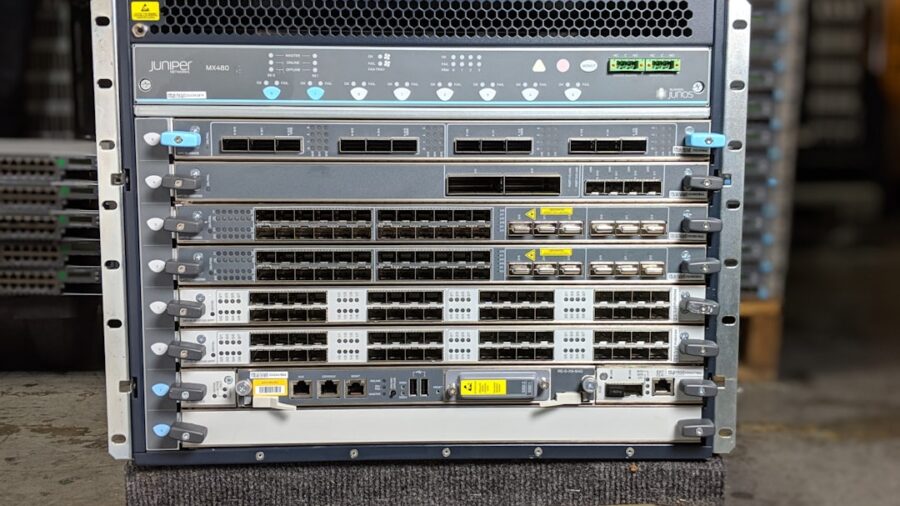
In exploring the advancements in streaming 8K VR workloads to lightweight headsets, it is essential to consider the devices that can effectively support such high-performance demands. A related article that delves into the best tablets for optimal performance is available at This is an edge server. It’s not the vast, distant cloud, but it’s not on your device either. It’s somewhere in between, offering low-latency processing closer to where the data is generated and consumed. When you’re experiencing 8K VR via edge compute, here’s a simplified flow: For this whole edge-powered 8K VR experience to feel seamless and not induce motion sickness, two things are paramount: incredibly low latency and sufficient bandwidth. Latency in VR refers to the delay between your head movement and the corresponding update in the virtual world. Anything above 20ms or so can cause discomfort, leading to simulator sickness. For edge-rendered VR, we’re talking about round-trip latency – from headset to edge server and back.The Mechanics of Offloading
Key Benefits of This Offload Strategy
The Critical Role of Low Latency and Bandwidth

Latency: The Silent Killer of VR Immersion
5G and Wi-Fi 6/6E are crucial here, designed for very low latency (often single-digit milliseconds). Fiber optic connections to the edge server are also vital.
Efficient codecs (like H.265 or even AV1) and hardware accelerators in the headset are key.
Bandwidth: Pushing 8K Pixels
An uncompressed 8K video stream at 90fps is an astronomical amount of data – far too much for any current wireless network. This means compression is absolutely vital.
- Compression Techniques: Advanced video compression algorithms are used to shrink the 8K stream down to a manageable size without noticeable quality loss. The goal is “perceptually lossless” compression.
- Dynamic Resolution/Foveated Rendering: These techniques help reduce the amount of data needing to be streamed.
- Dynamic Resolution: Adjusting the resolution on the fly based on network conditions or computational load.
- Foveated Rendering: Rendering the central part of your gaze (where your eyes are focused) at full 8K resolution, while rendering the peripheral vision at a lower resolution.
This significantly reduces the data to be transmitted and processed, as humans only see high detail in a small central area of their vision. Eye-tracking in the headset is essential for this.
- Adaptive Bitrate Streaming: Similar to how Netflix adjusts video quality based on your internet connection, 8K VR streams can adapt to ensure a consistent, if not always maximal, experience.
The Interplay: Low Latency and High Bandwidth
You need both. High bandwidth without low latency means your high-quality video arrives late.
Low latency without high bandwidth means a quick but low-quality or jerky experience. The combination of 5G/Wi-Fi 6, powerful edge servers, and smart compression/rendering techniques is what makes 8K VR streaming viable.
Use Cases and Applications of Edge-Powered 8K VR

This isn’t just a tech demo; edge-powered 8K VR opens doors to truly transformative experiences across various sectors.
Immersive Entertainment and Gaming
Imagine VR games with graphics rivaling blockbuster PC titles, running on a headset no heavier than a pair of ski goggles.
- Cloud Gaming for VR: Similar to services like GeForce Now or Google Stadia (though Stadia shut down, the tech principle remains), but optimized for VR. This allows developers to create incredibly detailed worlds without worrying about the end-user’s hardware.
- Live Events: Experiencing a concert, sports match, or theatrical performance in 8K VR, feeling like you’re actually there, with multiple camera angles and interactive elements.
- Virtual Tourism: Exploring ancient ruins or exotic locales with photorealistic detail, as if you’re truly standing there.
Professional Training and Simulation
The fidelity of 8K combined with the immersive nature of VR creates unparalleled training environments.
- Medical Training: Surgeons practicing complex procedures on realistic 8K virtual patients.
- Industrial Training: Engineers and technicians learning to operate complex machinery in a risk-free, highly detailed virtual environment.
- Military and Aviation Simulation: Pilots and soldiers training in scenarios that are indistinguishable from reality, improving decision-making and muscle memory. The ability to render every bolt and gauge in high fidelity is crucial.
Design, Engineering, and Architecture
Collaborating and visualizing designs in 8K VR can revolutionize workflows.
- Product Design: Engineers reviewing and manipulating 3D models of new products with incredible detail, identifying flaws or improvements before physical prototypes are built.
- Architectural Walkthroughs: Clients experiencing a building design in 8K VR, walking through rooms, changing materials, and understanding spatial relationships as if the building already exists. This is far more impactful than 2D renders or even lower-res VR.
- Urban Planning: City planners visualizing large-scale urban development projects with intricate detail, understanding traffic flow, light, and public spaces in a truly immersive way.
Education and Research
Transforming how we learn and explore complex subjects.
- Virtual Field Trips: Students exploring historical sites, biological ecosystems, or even outer space in stunning 8K detail, offering experiences impossible in a traditional classroom.
- Scientific Visualization: Researchers manipulating and analyzing complex data sets (e.g., molecular structures, climate models) in a 3D, immersive, and highly detailed environment.
As the demand for immersive experiences continues to grow, understanding the technological advancements that support these innovations is crucial. A related article discusses the importance of cybersecurity in the digital landscape, which is particularly relevant for users engaging with high-bandwidth applications like streaming 8K VR workloads. For those interested in ensuring their devices are protected while enjoying cutting-edge technology, exploring the best antivirus software options can be beneficial. You can read more about this topic in the article on the best antivirus software in 2023.
Challenges and Future Outlook
“`html
| Metrics | 8K VR Workloads | Edge Compute | Lightweight Headsets |
|---|---|---|---|
| Latency | Low | Reduced | Low |
| Bandwidth | High | Optimized | Low |
| Processing Power | High | Offloaded | Low |
| Quality | High | Enhanced | High |
“`
While edge computing holds immense promise for 8K VR, there are still hurdles to overcome before it becomes mainstream.
Technical Roadblocks
- Network Infrastructure: While 5G and Wi-Fi 6 are rolling out, ubiquitous, high-speed, low-latency coverage everywhere an 8K VR user might want to go is still some way off. Rural areas or even dense urban environments can still have patchy performance.
- Edge Server Deployment: Deploying enough edge servers to be truly “close” to a vast number of users requires significant investment and strategic placement. Who owns and operates these servers? Telecoms, cloud providers, or dedicated VR companies?
- Standardization: Interoperability between different headsets, edge platforms, and content creators needs to evolve.
- Security: Streaming sensitive 8K content and user data over the network requires robust security protocols.
- Codec Efficiency: Continuously improving video compression algorithms to deliver maximum quality at minimum bandwidth and latency. AV1 and future codecs will be crucial.
- Eye Tracking Reliability: Foveated rendering relies heavily on accurate and low-latency eye tracking. Any jitter or delay will be very noticeable.
Economic and Business Models
- Cost of Edge Infrastructure: Setting up and maintaining powerful edge data centers is expensive.
- Subscription Models: Will consumers be willing to pay a subscription for edge-powered VR experiences, similar to cloud gaming?
- Content Creation: Creating 8K VR content is incredibly resource-intensive. Tools and workflows need to become more efficient.
The Road Ahead
Despite the challenges, the trajectory is clear. The demand for lightweight, comfortable VR headsets is strong, and the desire for stunningly realistic graphics is insatiable.
- Continued 5G and Wi-Fi 6/6E Rollout: As these networks mature and become more widespread, the foundation for edge VR strengthens.
- Advancements in Chip Design: Dedicated hardware accelerators within headsets for video decoding and foveated rendering will become standard, reducing the headset’s processing burden further.
- More Sophisticated AI/ML at the Edge: AI can be used for intelligent content delivery, dynamic quality adjustment, and even generating parts of the VR environment on the fly.
- Increased Collaboration: Telecoms, cloud providers, hardware manufacturers, and content creators will need to work closely to build a robust ecosystem.
Ultimately, edge computing isn’t just an optional extra for 8K VR; it’s rapidly becoming a fundamental enabler. It allows us to decouple the demanding computational workload from the user’s head, paving the way for truly immersive, photorealistic virtual experiences that are accessible, comfortable, and sustainable in the long run. The future of VR might not be a supercomputer on your face, but a supercomputer just around the corner.
FAQs
What is edge compute?
Edge compute refers to the practice of processing data closer to the source of the data, rather than relying on a centralized cloud server. This allows for faster processing and reduced latency.
How does edge compute benefit streaming 8K VR workloads to lightweight headsets?
Edge compute can benefit streaming 8K VR workloads to lightweight headsets by reducing latency and improving the overall streaming experience. By processing data closer to the user, edge compute can help deliver high-quality VR content to lightweight headsets without the need for powerful local hardware.
What are the challenges of streaming 8K VR content to lightweight headsets?
Streaming 8K VR content to lightweight headsets presents challenges such as high bandwidth requirements, latency issues, and the need for powerful processing capabilities. These challenges can impact the overall user experience and require innovative solutions.
How does edge compute address the challenges of streaming 8K VR content to lightweight headsets?
Edge compute addresses the challenges of streaming 8K VR content to lightweight headsets by reducing latency, optimizing bandwidth usage, and enabling efficient processing of data closer to the user. This can result in a smoother and more immersive VR streaming experience.
What are some potential applications of edge compute in the context of streaming 8K VR content?
Potential applications of edge compute in streaming 8K VR content include real-time rendering, spatial audio processing, and personalized content delivery. Edge compute can also enable interactive experiences and multiplayer VR gaming on lightweight headsets.
Enjoying our content? Make us a preferred source on Google:
Add us as a Preferred Source on Google