

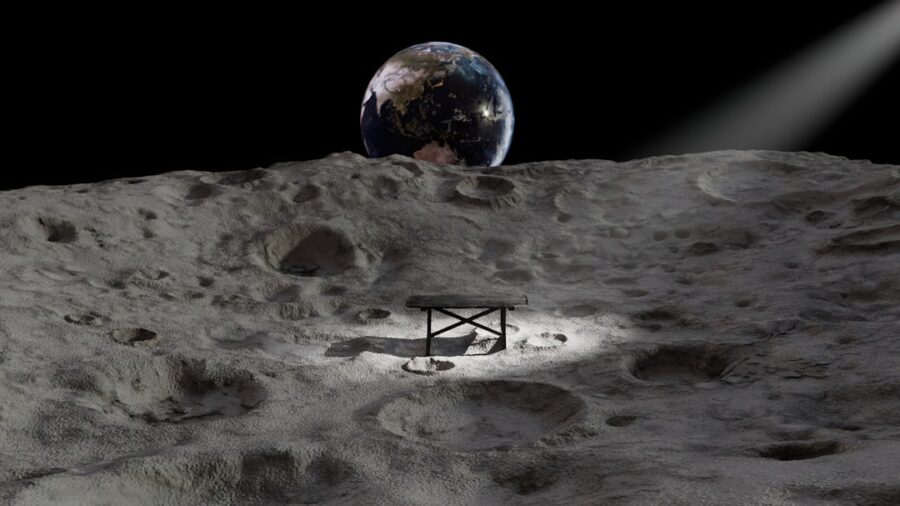
So, you’re curious about how we’d actually stick to an asteroid for mining, huh? Good question! The short answer is: it’s not as straightforward as just drilling a hole and dropping in an anchor. Asteroid anchoring is a complex dance involving understanding a body with minimal gravity, often strange compositions, and then designing systems that can grip without causing more problems than they solve. We’re talking about everything from harpoons and drills to fancy electrostatics and even just good old-fashioned magnetic attraction.
It’s a fascinating challenge that blends physics, engineering, and a healthy dose of innovation.
The Low-Gravity Challenge: Why Earth Anchors Won’t Cut It
When we think about anchors on Earth, we picture heavy chains and flukes digging into the seabed. That works because gravity is doing a lot of the heavy lifting, pulling the anchor down and helping it bite. On an asteroid, gravity is often so minuscule you could literally jump off the entire body with a little push. This changes everything about how you secure something.
The Microgravity Environment
Imagine a world where a dropped wrench doesn’t fall, it just drifts. That’s the reality on many asteroids. The gravitational pull can be millions of times weaker than Earth’s. This means that a standard anchor designed to use weight or leverage against gravity simply wouldn’t work. Any force you apply, like drilling or excavating, needs to be carefully counteracted, or you’ll push yourself away from the asteroid.
Regolith Dynamics in Low-G
Many asteroids are covered in regolith – a layer of loose, broken-up rock and dust. On Earth, we understand how soil behaves under pressure. On a low-gravity asteroid, this regolith can behave more like a fluid or powder than a solid. It might not compact in the same way, and pushing into it could just cause it to flow around your anchor rather than providing resistance. Understanding this behavior is crucial for designing anchors that can actually “grip” the surface.
In exploring innovative technologies for asteroid mining, one might find it beneficial to read a related article that discusses advancements in portable computing, which can play a crucial role in managing mining operations in space. The article titled “New World of Possibilities with the Samsung Galaxy Chromebook 4” highlights how powerful and versatile devices can enhance data analysis and communication in challenging environments. For more insights, you can check out the article here: They involve a projectile or mechanism that physically penetrates the asteroid’s surface. Think of a harpoon, but instead of hunting whales, you’re trying to snag a space rock. A kinetic harpoon is essentially a projectile fired into the asteroid at high velocity. The idea is that it penetrates deep enough to create a strong mechanical interlock with the subsurface material. Instead of just firing a harpoon, an impact drill combines penetration with a degree of material removal. It’s like a jackhammer designed for space. Coring anchors take this a step further, extracting a core sample as they burrow, leaving a void for the anchor to secure itself. Sometimes, you don’t want to penetrate the asteroid, or the surface material is too loose for a harpoon to get a good bite. In these cases, mechanical grippers or clamping systems might be the way to go. These rely on creating a direct, physical hold on existing features. Imagine a giant robotic hand reaching out and grabbing a prominent boulder or a natural crevice on the asteroid’s surface. This is the concept behind articulated grapples. They offer flexibility and adaptability to uneven terrains.Kinetic Harpoons
Harpoon Design Considerations
Impact Drills and Coring Anchors
Drilling Mechanisms
Mechanical Grippers and Clamping Systems: When Surface Contact is Enough
Articulated Grapples and Robotic Arms
Force Application and Stability
Suction and Adhesion Technologies
This is where it gets a bit more speculative but potentially very effective for certain types of surfaces. Suction cups or adhesive materials could provide a temporary or even long-term anchor.
Vacuum Suction Cups (for porous materials)
For asteroids with a relatively smooth, non-porous surface, a vacuum suction cup could work. By evacuating the air (or rather, the vacuum of space already there) from a chamber pressed against the surface, you create a pressure differential that holds the cup in place.
- Surface Preparation: The biggest challenge here is that most asteroid surfaces aren’t perfectly smooth. Dust, irregularities, and porous materials would break the seal. Some form of surface preparation (brushing, localized heating) might be needed.
- Durability: Suction cups would need to withstand extreme temperature swings and radiation without degrading.
Chemical Adhesives and Glues
While seemingly futuristic, applying a strong, space-compatible adhesive could provide an anchoring point. Imagine a two-part epoxy that cures quickly in the vacuum of space.
- Curing in Vacuum: Adhesives need to cure properly in the cold, vacuum environment. UV-cured or self-curing formulations would be ideal.
- Surface Compatibility: The adhesive needs to bond effectively with a wide range of asteroid materials, which can vary wildly.
- Removal/Release: If the anchor is temporary, how do you release it without leaving residue or damaging the asteroid?
Electromagnetic Anchors: For Metallic Asteroids
Not all asteroids are made of rock and dust. Some are primarily metallic, rich in iron and nickel. For these, electromagnetic forces could provide an elegant and non-invasive anchoring solution.
Electromagnets for Ferrous Materials
Just like a scrapyard magnet lifts cars, large electromagnets could be used to attach to metallic asteroids. The strength of the magnetic field dictates the holding force.
Magnetic Field Generation
- Power Requirements: Generating a strong enough magnetic field requires significant electrical power, which would need to be supplied by the mining platform.
- Core Material: The core of the electromagnet would need to be made of a material that can be easily magnetized and demagnetized to allow for attachment and release.
- Surface Contact: Good surface contact is important for efficient magnetic coupling. An uneven or dusty surface could reduce the effective gripping force.
Eddy Current Braking/Anchoring
Even for non-magnetic conductive materials, or for precise control, eddy current phenomena could be used. By moving a strong magnet over a conductive surface, eddy currents are induced, creating a drag force (or, if controlled, an anchoring force).
Control and Precision
- Dynamic Anchoring: This method offers a dynamic form of anchoring, allowing for fine control over the applied force. It could be used for precise positioning during mining operations.
- Heat Dissipation: Generating eddy currents creates heat, which would need to be managed in the vacuum of space.
In exploring the innovative technologies that support asteroid mining operations, one might find it beneficial to read about the various health management systems available for astronauts, which can significantly impact their performance in space. A related article discusses the best Android health management watches, highlighting how these devices can monitor vital signs and enhance the well-being of individuals working in extreme environments. For more information, you can check out the article here. Understanding the interplay between health monitoring and the physical demands of asteroid anchoring systems can provide valuable insights into the future of space mining.
Mass Anchors and Ballast Systems: Leveraging What You Have
Sometimes the best anchor is simply more mass. While not traditional “anchoring” in the sense of gripping the surface, using the asteroid’s own material or brought-along ballast can provide stability.
Mass Excavation and Counterweights
If you’re already mining, you’re excavating material. This excavated material can be strategically moved or used as a counterweight to stabilize your platform.
Internal Ballast
- Strategic Repositioning: By moving excavated material within the mining platform or connecting it via tethers, you can shift the center of mass and increase stability.
- Gravity Well Creation (Small Scale): While not truly creating a “gravity well,” accumulating a significant amount of material near your platform could create a localized, albeit tiny, gravitational pull that aids in stability.
Tethers and Distributed Anchors
Instead of one single strong anchor point, a system of multiple, less robust anchors spread across the asteroid could provide overall stability.
Networked Anchors
- Redundancy: If one anchor fails, the others can pick up the slack, increasing overall system resilience.
- Load Distribution: Spreading the load across a larger area reduces the stress on any single point, which is important for asteroids with weaker surface materials.
- Dynamic Tensioning: Tethers might incorporate mechanisms to dynamically adjust their tension, adapting to movements or changes in the asteroid’s shape due to mining.
The Future of Asteroid Anchoring: Combining Technologies
It’s highly unlikely that any single anchoring system will be the magic bullet for all asteroid mining scenarios. The most robust and versatile solutions will likely combine several of these approaches, creating a hybrid system tailored to the specific asteroid’s characteristics. Imagine a mission that first uses a kinetic harpoon for initial securement, then deploys robotic arms to create additional clamping points, and perhaps even uses localized electromagnets on a metallic vein for precise drilling. The engineering challenge is immense, but the potential rewards of unlocking extraterrestrial resources make it a truly compelling frontier.
FAQs
What are asteroid anchoring systems for mining operations?
Asteroid anchoring systems are mechanisms designed to secure mining equipment and infrastructure to the surface of an asteroid, allowing for the extraction of valuable resources.
What are the physics and mechanics involved in asteroid anchoring systems?
The physics and mechanics behind asteroid anchoring systems involve understanding the low gravity environment of asteroids, as well as the need to counteract the forces of microgravity and potential surface irregularities.
How do asteroid anchoring systems differ from traditional mining operations on Earth?
Asteroid anchoring systems differ from traditional mining operations on Earth due to the unique challenges posed by the low gravity environment, lack of atmosphere, and the need for specialized equipment to secure mining operations to the asteroid’s surface.
What are the potential benefits of using asteroid anchoring systems for mining operations?
The potential benefits of using asteroid anchoring systems for mining operations include access to valuable resources such as rare metals and water, which can be used for space exploration and colonization efforts.
What are the current developments and future prospects for asteroid anchoring systems in mining operations?
Current developments in asteroid anchoring systems include research and testing of various anchoring technologies, with future prospects focusing on the potential for commercial asteroid mining and its impact on space exploration and resource utilization.
Enjoying our content? Make us a preferred source on Google:
Add us as a Preferred Source on Google