

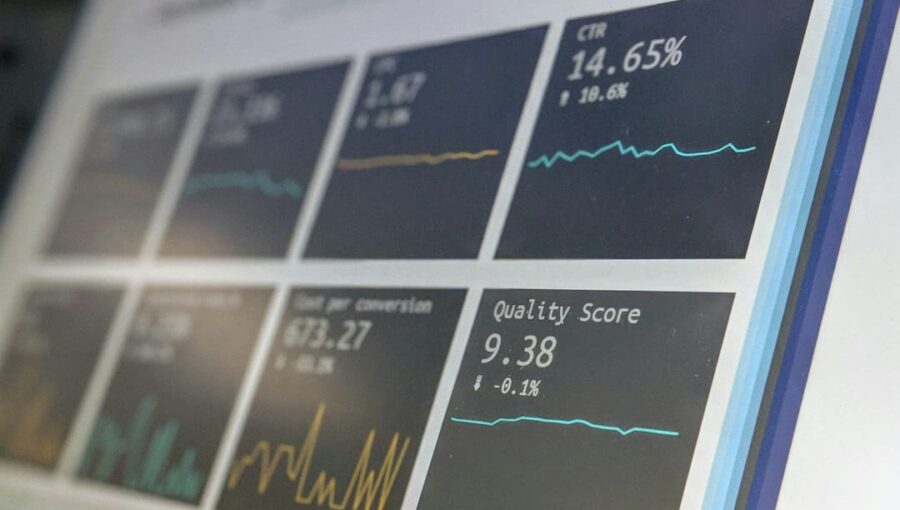
When you’re dealing with a sprawling enterprise web application, keeping it running smoothly can feel like juggling chainsaws. You’ve got a lot of moving parts, and a hiccup in one area can cause a cascade of problems. That’s where synthetic monitoring comes in, and it’s not just about seeing if your website loads. It’s about proactively testing critical user journeys and backend services before your actual users even notice something’s off. Think of it as having a tireless digital employee constantly pretending to be your customers, checking if everything works as it should, from login to checkout and everything in between.
Understanding the “Why” Behind Synthetic Monitoring for Enterprises
Let’s be honest, in the enterprise world, things get complicated. Your web application isn’t just a single page; it’s a constellation of interconnected services, APIs, databases, and third-party integrations. A user clicking “add to cart” might trigger requests to inventory management, payment gateways, shipping services, and personalized recommendations engines. If any one of those breaks, your customer’s experience is ruined, and that translates directly to lost revenue and damaged reputation.
Synthetic monitoring offers a way to simulate these complex user flows consistently and repeatedly. It’s proactive, meaning it finds problems before users do. Unlike real user monitoring (RUM), which tells you what happened to actual users, synthetic monitoring tells you what could happen or is happening to your application’s critical functions, even if no one is currently using them. This allows your teams to identify and fix issues in a controlled environment, minimizing the impact on your business.
In exploring effective Synthetic Monitoring Strategies for Complex Enterprise Web Applications, it is also beneficial to consider the impact of language translation on user experience.
A related article that delves into this topic is available at Discover the Best Free Software for Translation Today. This resource highlights various translation tools that can enhance accessibility and usability, ultimately contributing to the overall performance and reliability of web applications in diverse markets.
Key Scenarios for Synthetic Monitoring in Enterprise Apps
For enterprise-level applications, the complexity dictates a strategic approach to synthetic monitoring. It’s not a one-size-fits-all situation. We need to be smart about where and how we deploy our synthetic tests to get the most bang for our buck and the most crucial insights.
Testing Core Business Transactions
The heart of your enterprise application lies in its core business transactions. These are the actions that directly drive revenue or facilitate critical business processes. Failing to monitor these is like leaving your most valuable assets unguarded.
E-commerce Checkout Flows
For any company with an online storefront, the checkout process is paramount. A broken payment gateway, a faulty shipping calculation, or an issue with the order confirmation email can halt sales dead in their tracks. Synthetic tests can mimic the entire journey from adding an item to the cart, proceeding to checkout, entering payment details, and receiving a confirmation.
User Authentication and Authorization
Secure and seamless login is fundamental. If users can’t log in, they can’t do anything else. Synthetic tests should verify not only the login page itself but also the underlying authentication services and the ability to access different user roles and permissions. This includes testing password resets and account creation flows, which are often overlooked but critical for user onboarding and recovery.
Critical Data Submission and Retrieval
Many enterprise applications involve users submitting or retrieving sensitive data. Think of a customer support portal where users submit tickets, or a client portal where they download reports. Synthetic tests can ensure these forms submit correctly and that data retrieval processes are functioning, returning the expected information without errors.
Monitoring API and Backend Service Availability
Modern enterprise applications are heavily reliant on APIs and microservices.
These backend components often power multiple front-end applications and integrations.
If an API is down, it’s not just one user experience that’s affected; it can be dozens or even hundreds.
API Endpoint Health Checks
Simple, regular checks to ensure your critical APIs are responding with the correct status codes (like 200 OK) are essential. These tests can be as basic as a GET request to an endpoint, verifying its availability and quick response time.
API Transaction Simulation
Beyond just checking if an API is up, you need to ensure it’s performing its intended function. This involves simulating a sequence of API calls that represent a real user interaction or a business process. For example, for an order fulfillment API, you might test creating an order, updating its status, and then retrieving order details.
Microservice Interdependencies
In a microservices architecture, services depend on each other. Synthetic monitoring can test these interdependencies. For instance, if a recommendation service calls an inventory service, you can set up a synthetic test that simulates this call and verifies that both services are responding correctly and passing data as expected.
Ensuring Third-Party Integration Reliability
Few enterprise applications operate in isolation. They often rely on third-party services for payments, shipping, analytics, CRM, and more. The failure of one of these external dependencies can have a significant impact.
Payment Gateway Integration
Your payment gateway is a direct revenue channel. Synthetic tests should go beyond simply checking if the gateway’s login page is up. They should simulate a real transaction, from initiating the payment to receiving a successful or failed response. This ensures your integration with Stripe, PayPal, or your chosen provider is functioning correctly.
Shipping and Logistics APIs
If your business involves shipping physical goods, the integration with shipping carriers (FedEx, UPS, etc.) is vital. Synthetic tests can verify that shipping rate calculations are accurate, tracking information can be retrieved, and shipping labels can be generated.
Marketing and Analytics Platforms
While less directly revenue-impacting, issues with marketing automation tools or analytics platforms can disrupt customer engagement and business insights. Synthetic tests can ensure that data is being sent to these platforms correctly and that the platforms themselves are accessible when needed.
Designing Effective Synthetic Monitoring Strategies
Creating synthetic tests that actually provide value requires thoughtful planning. Simply throwing up a bunch of tests without a strategy can lead to alert fatigue and a false sense of security.
Defining Critical User Journeys
Not all user actions are created equal. For an enterprise application, some journeys are more critical to the business than others. Identify these high-value pathways that, if broken, would have the most significant impact.
Identifying Business-Critical Paths
Engage with business stakeholders to understand what user actions are absolutely essential for revenue generation, customer satisfaction, and operational efficiency. This might include booking an appointment, submitting a claim, completing a purchase, or accessing key financial data.
Prioritizing Monitoring Efforts
Once identified, prioritize these critical journeys for synthetic monitoring. Focus your resources on ensuring these paths are robust and consistently available. Less critical features can still be monitored, but with a lower frequency or less detailed checks.
Choosing the Right Tools and Technologies
The landscape of synthetic monitoring tools is vast. Selecting the right ones for your enterprise needs is crucial for effectiveness and scalability.
Browser-Based vs. API-Based Monitoring
Browser-based tests (emulating a real user interacting with a browser) are excellent for verifying the user interface and complex client-side interactions. API-based tests are lighter, faster, and ideal for checking backend services and integrations directly. A good strategy often involves a mix of both.
Choosing a Monitoring Platform
Consider platforms that offer features like customizable scripts, distributed testing locations, detailed reporting, integration with CI/CD pipelines, and robust alerting mechanisms. Solutions range from open-source options to commercial SaaS products, each with its own strengths and weaknesses.
Implementing Realistic Test Scenarios
Your synthetic tests need to reflect how your users actually interact with your application. Vague or overly simplified tests will miss real-world problems.
Scripting Complex Workflows
Go beyond single page loads. Script multi-step transactions that mimic typical user behavior. This includes handling dynamic content, form submissions, and interactions with elements that might change based on user input or data.
Incorporating Data Variations
Users interact with your application using diverse data. Synthetic tests should account for this by using different sets of test data for things like usernames, product IDs, or search queries. This helps uncover issues that might only appear with specific data configurations.
Simulating Network Conditions
Real users experience a range of network conditions. Consider simulating different bandwidths, latency, and even occasional packet loss to understand how your application performs under less-than-ideal circumstances.
Proactive Issue Detection and Alerting
The ultimate goal of synthetic monitoring is to catch issues early. This means setting up effective detection mechanisms and ensuring that the right people are alerted promptly.
Setting Meaningful Thresholds and Triggers
Vague thresholds lead to either missed incidents or excessive noise. Define clear metrics and acceptable ranges for your synthetic tests.
Performance Thresholds
Beyond just availability, monitor response times. Set thresholds for how quickly pages should load, APIs should respond, and transactions should complete. For example, a checkout process that takes longer than 10 seconds might trigger an alert.
Error Rate Thresholds
Define acceptable error rates for specific actions. A single failed API call might be an anomaly, but a sustained error rate above a certain percentage indicates a problem that needs immediate attention.
Configuring Intelligent Alerting
Getting an alert is only half the battle. The alert needs to be actionable and reach the right team.
Role-Based Alerting
Ensure alerts are routed to the teams responsible for the specific components being monitored. For example, an issue with the payment gateway should go directly to the finance or integrations team.
Alert Prioritization
Not all alerts are created equal. Implement a system that prioritizes alerts based on the severity of the issue and the criticality of the affected component. Critical alerts should demand immediate attention, while lower-priority alerts might be handled during business hours.
Integration with Incident Management Systems
Connect your synthetic monitoring tool with your existing incident management platform (like PagerDuty, Opsgenie, or ServiceNow). This automates incident creation and ensures a structured response process.
In the realm of Synthetic Monitoring Strategies for Complex Enterprise Web Applications, understanding the performance of the underlying hardware can significantly impact overall efficiency. For instance, exploring the best laptops for running demanding applications can provide insights into optimizing your monitoring setup. A related article that delves into this topic is available at the best Lenovo laptops, which highlights various models that can enhance your enterprise’s performance and reliability. By selecting the right hardware, organizations can ensure that their synthetic monitoring tools operate at peak performance, ultimately leading to better user experiences.
Continuous Improvement and Optimization
Synthetic monitoring isn’t a set-it-and-forget-it practice. It requires ongoing attention to remain effective as your enterprise application evolves.
Regularly Reviewing Test Performance
The metrics generated by your synthetic tests are a goldmine of information. Regularly analyze this data to identify trends, bottlenecks, and areas for improvement.
Analyzing Historical Data
Look at your test results over time. Are response times consistently increasing? Are there recurring errors on specific endpoints? This historical perspective can reveal gradual degradation before it becomes a critical outage.
Identifying Performance Bottlenecks
If specific tests are consistently failing or taking too long, it’s a strong indicator of a performance bottleneck in that part of your application. Use this information to guide performance tuning efforts.
Adapting Tests to Application Changes
As your enterprise application undergoes updates and new feature rollouts, your synthetic tests need to keep pace.
Integrating with CI/CD Pipelines
Embed synthetic tests into your CI/CD pipeline. This allows you to automatically run tests on new code deployments, catching regressions before they reach production.
Updating Scripts for New Functionality
When new features are released, ensure that corresponding synthetic test scenarios are created or updated to cover these new functionalities, especially if they involve critical business processes.
Expanding Coverage Strategically
As your application grows and its dependencies evolve, you’ll need to expand your synthetic monitoring coverage.
Monitoring New Integrations
Whenever a new third-party service or internal API is integrated, immediately implement synthetic monitoring for it.
Discovering and Monitoring Shadow IT
In large organizations, unmanaged services (shadow IT) can pose risks. Proactively look for and monitor any critical external dependencies that might be flying under the radar.
By adopting a strategic, comprehensive, and iterative approach to synthetic monitoring, enterprise organizations can move from a reactive firefighting mode to a proactive posture, ensuring the stability, performance, and reliability of their complex web applications. It’s about building confidence that when your users need your application, it will be there, working exactly as expected.
FAQs
What is synthetic monitoring?
Synthetic monitoring is a type of monitoring that uses scripted recordings of real user interactions with a web application to simulate user behavior and test the performance and functionality of the application.
Why is synthetic monitoring important for complex enterprise web applications?
Synthetic monitoring is important for complex enterprise web applications because it allows organizations to proactively identify performance issues, errors, and downtime before they impact real users. It helps ensure that the application meets performance and availability requirements.
What are some common synthetic monitoring strategies for complex enterprise web applications?
Common synthetic monitoring strategies for complex enterprise web applications include setting up scripted transactions to simulate user interactions, monitoring from multiple geographic locations to test global performance, and integrating with third-party services to monitor dependencies.
How can synthetic monitoring help improve user experience for complex enterprise web applications?
Synthetic monitoring can help improve user experience for complex enterprise web applications by identifying performance bottlenecks, errors, and downtime that may impact users. By proactively addressing these issues, organizations can ensure a seamless user experience.
What are the benefits of using synthetic monitoring for complex enterprise web applications?
Some benefits of using synthetic monitoring for complex enterprise web applications include early detection of performance issues, improved uptime and reliability, better understanding of user experience, and the ability to benchmark performance over time.
Enjoying our content? Make us a preferred source on Google:
Add us as a Preferred Source on Google