

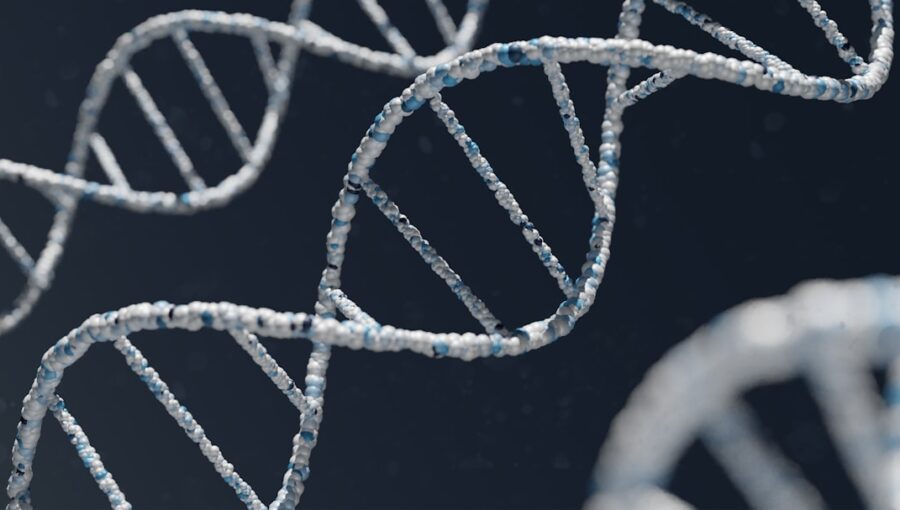
Alright, let’s dive into how synthetic biology and nanotechnology are teaming up to build some seriously cool stuff – programmable biomaterials for industrial computing. Essentially, we’re talking about using biological components and incredibly tiny engineering to create materials that can compute, store data, and even adapt, all within industrial settings. Think beyond silicon chips; think living, breathing (or at least bio-inspired) computers that could revolutionize manufacturing, diagnostics, and more. It’s about making computing more robust, more efficient, and often, more environmentally friendly, by leveraging the power of biology at a scale we’re just beginning to understand.
This isn’t just a fancy phrase; it’s a practical approach to problem-solving. Synthetic biology gives us the tools to design and engineer biological systems, while nanotechnology provides the precision to work with materials at the atomic and molecular level. When you put them together, you get materials that aren’t just strong or conductive, but also smart – they can sense, respond, and even process information.
What is Synthetic Biology Bringing to the Table?
Imagine being able to “program” a cell like you program a computer.
That’s the essence of synthetic biology.
We’re talking about designing new biological components, or re-engineering existing ones, to perform specific functions. For industrial computing, this means creating cells or biomolecules that can act as logic gates, memory units, or sensors.
- Custom DNA Sequences: The blueprint for everything. We can design DNA sequences that encode for specific proteins or RNA molecules that carry out computational tasks.
- Engineered Proteins: Proteins are the workhorses of the cell. By engineering their structure and function, we can create enzymes that perform specific chemical reactions, or proteins that change conformation in response to a signal, acting like switches.
- Designer Metabolic Pathways: Cells are factories. Synthetic biology allows us to redesign these factories to produce specific outputs – be it a chemical signal, an energy burst, or even a self-assembling structure.
Nanotechnology: The Precision Toolset
Nanotechnology is all about control at the nanoscale – working with materials that are typically 1 to 100 nanometers in size. At this scale, materials often exhibit unique properties not seen in their larger counterparts. For programmable biomaterials, nanotechnology provides the scaffolding, the sensors, and the interfaces.
- Nanoparticle Scaffolds: Imagine a tiny framework that holds biological components in just the right orientation for them to interact effectively. Nanoparticles can provide this structural support, guiding self-assembly and ensuring optimal performance.
- Nanosensors: These tiny sensors can detect minute changes in their environment – pH, temperature, the presence of specific molecules – and translate those into signals that our biomaterials can understand and process.
- Nano-interfaces: Connecting the biological world to the electronic world is crucial. Nanotechnology provides the means to create seamless interfaces between biological components and conventional electronic readouts or actuators.
In exploring the intersection of synthetic biology and nanotechnology, a fascinating article titled “Which Smartwatches Allow You to View Pictures on Them?” provides insights into the advancements in wearable technology that could benefit from programmable biomaterials. As the field of industrial computing evolves, the integration of such innovative materials could enhance the functionality of smart devices, including smartwatches. For more information on this topic, you can read the article here: Which Smartwatches Allow You to View Pictures on Them?.
Key Takeaways
- Clear communication is essential for effective teamwork
- Active listening is crucial for understanding team members’ perspectives
- Setting clear goals and expectations helps to keep the team focused
- Regular feedback and open communication can help address any issues early on
- Celebrating achievements and milestones can boost team morale and motivation
Beyond Silicon: Why Biological Computing?
You might be thinking, “Why bother when we have powerful silicon chips?” The answer lies in the unique advantages that biological systems offer, especially for industrial applications where harsh environments, self-repair, and adaptability are crucial.
Self-Assembly and Self-Repair
One of the most compelling aspects of biological systems is their ability to self-assemble and self-repair. Imagine a computer component that can literally grow itself into the correct configuration or fix minor damage without human intervention. This has huge implications for maintenance and longevity in industrial settings.
- Hierarchical Self-Assembly: Nature builds complex structures from simple building blocks. We can harness this principle to create biomaterials that assemble themselves into functional computing architectures, reducing manufacturing complexity.
- Intrinsic Repair Mechanisms: Cells are constantly repairing themselves. By incorporating these mechanisms into our programmable biomaterials, we can create systems that are far more robust and resilient to wear and tear or environmental damage.
Adaptability and Environmental Responsiveness
Biological systems are inherently adaptive. They can sense changes in their environment and respond accordingly. This “intelligence” is a game-changer for industrial computing, where conditions can fluctuate wildly.
- Biomolecular Sensors: Imagine a material that can detect a specific toxin in a manufacturing plant and, in response, trigger a computational cascade that shuts down the affected process, all without external power.
- Dynamic Response: Unlike static silicon, biomaterials can change their properties – their conductivity, their stiffness, their optical characteristics – in real-time based on environmental cues, leading to more responsive and intelligent industrial controls.
Energy Efficiency and Biocompatibility
Biological processes are often incredibly energy-efficient, operating at ambient temperatures and using readily available resources. Furthermore, their inherent biocompatibility opens doors for applications where silicon simply isn’t an option.
- Low Power Consumption: Many biological reactions occur with minimal energy input, translating to energy-efficient computing platforms, a significant advantage for large-scale industrial operations.
- Biodegradable Components: As these systems are bio-derived, they can often be designed to be biodegradable, offering a more sustainable alternative to electronic waste.
- Integration with Biological Systems: For applications like biomanufacturing or medical diagnostics, integrating computing directly with biological systems becomes much easier and more seamless.
Building Blocks of Biomaterial Computing

So, how do we actually make these things? It involves designing specific biological components that act as the fundamental units of computation, much like transistors in traditional electronics.
DNA-Based Logic Gates and Memory
DNA isn’t just for genetics; it’s a fantastic information storage and processing molecule. Its predictable base pairing rules make it ideal for building logic gates and even rudimentary memory units.
- DNA Strand Displacement: This is a clever technique where one DNA strand is displaced by another, triggering a specific output.
By designing cascades of these reactions, we can create AND, OR, and NOT gates.
- DNA Origami Structures: By folding DNA into precise 2D or 3D shapes, we can create scaffolds that hold other biological components in specific orientations, enabling complex molecular interactions for computation.
- Molecular Data Storage: DNA’s incredible information density makes it a prime candidate for extremely high-capacity data storage. We’re talking about storing vast amounts of industrial data in a compact, stable, and potentially self-replicating format.
Protein-Based Switches and Sensors
Proteins are the active components, carrying out specific functions. By engineering proteins, we can create molecular switches that respond to stimuli and convert those responses into computational signals.
- Allosteric Proteins: These proteins change shape when a specific molecule binds to them, effectively acting as on/off switches.
We can design these to respond to specific industrial analytes.
- Enzyme Cascades: Enzymes are biological catalysts. By designing sequences of enzymatic reactions, where the product of one reaction is the substrate for the next, we can create complex computational pathways.
- Fluorescent Reporter Proteins: These proteins emit light when activated, providing a visual or measurable readout of a computational event within the biomaterial.
Living Cells as Programmable Micro-Factories
Taking it a step further, we can use entire living cells as programmable units. By engineering their genetic circuits, we can turn them into tiny factories that perform complex computations or produce specific outputs based on environmental inputs.
- CRISPR-Based Logic: Using CRISPR-Cas systems, we can create genetic circuits within cells that perform advanced logic operations, responding to multiple inputs and producing precise outputs.
- Synthetic Microbial Consortia: Imagine a community of different engineered bacteria, each performing a specific computational task, collectively working to solve a complex industrial problem or monitor a process.
- Bio-Actuators: Cells can be engineered to move, contract, or release substances.
These could be integrated into biomaterials to create responsive and adaptable industrial systems.
Real-World Applications and Future Prospects

This isn’t just lab-bench science; it’s got serious potential to change how industries operate. From smart factories to advanced environmental monitoring, programmable biomaterials are set to make a significant impact.
Smart Manufacturing and Quality Control
Imagine a manufacturing line where the materials themselves are constantly monitoring their own production quality, detecting defects, and even self-correcting.
- Self-Healing Materials: Biomaterials embedded with synthetic biology components could detect microscopic cracks or damage in a product and initiate a localized repair process, extending product lifespan and reducing waste.
- On-Demand Material Properties: Instead of a static material, imagine a composite that can dynamically adjust its stiffness, conductivity, or other properties based on real-time operational demands, leading to more versatile manufacturing.
- Distributed Sensing Networks: Tiny, biodegradable biosensors embedded within industrial equipment could monitor crucial parameters like stress, temperature, or chemical concentrations, providing highly localized and continuous data for predictive maintenance.
Environmental Monitoring and Remediation
Programmable biomaterials offer powerful tools for detecting pollutants, cleaning up contamination, and managing environmental resources more effectively.
- Biosensing for Contaminants: Materials that can rapidly detect and quantify specific pollutants (heavy metals, organic toxins) in water, soil, or air, providing immediate feedback for environmental management.
- Bio-Remediation Systems: Engineered microbes or biomaterials that can break down or sequester hazardous substances, offering sustainable and targeted cleanup solutions for industrial waste sites.
- Resource Optimization: Biomaterial-based sensors that monitor nutrient levels or microbial activity in bioreactors or agricultural systems, optimizing resource use and improving efficiency.
Advanced Diagnostics and Medical Devices
While industrial computing is the focus here, it’s worth noting the parallel advancements in diagnostics, where programmable biomaterials can lead to more sensitive, rapid, and localized detection.
- Point-of-Care Industrial Diagnostics: Imagine quick, on-site tests for contaminants in a factory, or for specific biological markers in biopharmaceutical production, providing immediate actionable insights.
- Smart Packaging: Packaging materials that can detect spoilage in food products or contamination in sterile medical supplies, changing color or emitting a signal to alert users.
In exploring the intersection of synthetic biology and nanotechnology, the article on programmable biomaterials highlights innovative approaches that could revolutionize industrial computing. For those interested in further advancements in digital design tools, a related article discusses the benefits of using software-free converters for SVG files, which can enhance the efficiency of design processes. You can read more about this topic in the article on SVG converters.
Challenges and the Road Ahead
| Metrics | Data |
|---|---|
| Publication Title | Synthetic Biology Meets Nanotechnology: Programmable Biomaterials for Industrial Computing |
| Authors | Multiple authors |
| Publication Date | Not specified |
| Keywords | Synthetic biology, Nanotechnology, Programmable biomaterials, Industrial computing |
| Abstract | Not specified |
While the potential is enormous, there are definitely hurdles to overcome. It’s not a walk in the park, but the progress is exciting.
Stability and Scalability
Biological components, especially living cells, can be delicate.
Ensuring their long-term stability in industrial environments and scaling up production are major engineering challenges.
- Robust Encapsulation: Developing protective coatings or matrices that shield biological components from harsh temperatures, pH extremes, or toxins while still allowing for desired interactions.
- Standardization of Components: Just like electronic components, establishing standardized biological “parts” and assembly protocols will be crucial for scalable and reliable systems.
- Manufacturing Techniques: Developing cost-effective and efficient methods for manufacturing these complex biomaterials at industrial scales, moving beyond laboratory prototypes.
Integration with Existing Infrastructure
Factories and industrial processes are designed around traditional electronics and materials. Seamlessly integrating these novel biomaterial computing systems will require thoughtful design and potentially significant infrastructure adaptation.
- Hybrid Systems: It’s unlikely we’ll replace everything overnight. Developing hybrid systems that seamlessly combine biological and electronic components will be an important first step.
- Signal Transduction: Creating reliable and robust ways to translate biological signals into electronic signals (and vice versa) for communication with existing industrial control systems.
Ethical Considerations and Safety
As with any powerful new technology, especially one involving engineered biology, ethical considerations and safety are paramount.
- Environmental Release: Ensuring that engineered biological components or biomaterials don’t pose unforeseen risks to the environment if they escape industrial containment.
- Biosecurity: Guarding against the misuse of these technologies and ensuring responsible development and deployment.
- Public Acceptance: Open communication and transparency will be crucial for building public trust and understanding of these advanced biological technologies.
The convergence of synthetic biology and nanotechnology is truly opening up a new frontier in industrial computing. It’s about creating systems that are not just smarter, but also more resilient, adaptable, and sustainable. While there are significant challenges to navigate, the promise of self-healing materials, adaptive factories, and highly sensitive environmental monitors makes this a field well worth watching. It’s a journey into uncharted territory, and it’s going to be fascinating to see where it leads.
FAQs
What is synthetic biology?
Synthetic biology is a field of science that involves the design and construction of new biological parts, devices, and systems, as well as the re-design of existing, natural biological systems for useful purposes.
What is nanotechnology?
Nanotechnology is the manipulation of matter on an atomic and molecular scale. It involves the design, characterization, production, and application of structures, devices, and systems by controlling shape and size at the nanometer scale.
How do synthetic biology and nanotechnology intersect?
Synthetic biology and nanotechnology intersect in the development of programmable biomaterials, which are materials that are designed to have specific functions and properties at the molecular level. These materials can be used for industrial computing applications.
What are programmable biomaterials?
Programmable biomaterials are materials that are designed to have specific functions and properties at the molecular level. They are created using synthetic biology and nanotechnology techniques to enable precise control over their behavior and interactions.
What are the potential industrial computing applications of programmable biomaterials?
Programmable biomaterials have the potential to be used in industrial computing applications such as data storage, sensing, and computation. These materials could enable the development of more efficient and sustainable computing technologies.
Enjoying our content? Make us a preferred source on Google:
Add us as a Preferred Source on Google