

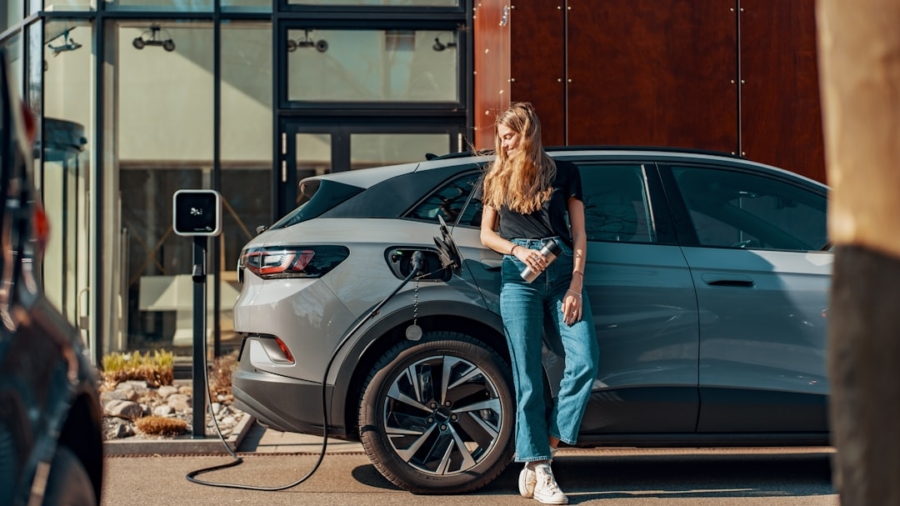
Let’s talk about how to make your electric vehicle (EV) charging even more sensible by lining it up with when the smart grid is at its peak, and what that really means for you.
Essentially, synchronizing EV charging with peak smart grid hours means plugging in your car when the electricity network is least strained and when renewable energy sources are often abundant. This isn’t just about being a good global citizen; it can actually save you money and contribute to a more stable power system. We’re moving beyond just “plug it in and forget it” and getting smarter about how we power our vehicles.
Why Bother Synchronizing Your EV Charging?
You might be wondering if this is just another complicated thing to think about on top of everything else. Honestly, it can seem that way at first. But the benefits are pretty straightforward and can make a real difference. Think of it like planning your grocery shopping for when the store isn’t packed – you get what you need faster and more peacefully. For your EV, it means a smoother charging experience and a healthier impact on the power grid.
The Big Picture: Grid Strain and Renewable Energy
Our electricity grid isn’t always built to handle everyone needing power at the exact same time. The “peak hours” are usually during the late afternoon and early evening when people get home from work, turn on lights, cook dinner, and, yes, start charging their EVs. This massive demand can put a significant strain on the grid, sometimes requiring the use of less efficient and more polluting “peaker plants” to bridge the gap.
On the flip side, during the middle of the day, solar panels (both big utility-scale farms and your own rooftop system) are producing a lot of electricity. However, demand might not be as high then. Similarly, wind power generation can fluctuate. Smart grid technology aims to balance this by incentivizing us to use power when it’s plentiful and clean.
Your Wallet: Savings on Charging Costs
Many electricity providers offer “time-of-use” (TOU) rates or “demand response” programs. These are designed specifically to encourage off-peak charging. By charging your EV during these cheaper periods, you can see a noticeable reduction in your electricity bills. It’s not just a little bit either; over the course of a year, these savings can add up to a significant amount, especially if you have a longer commute or use your EV frequently. Think of it as getting your energy “on sale.”
The Planet: Reducing Carbon Footprint
When the grid is under pressure during peak times, it often relies on fossil fuel “peaker plants” to meet the demand. These plants are generally less efficient and have higher emissions. By shifting your charging to when renewables are abundant (often off-peak or during specific times of high solar or wind generation), you’re directly supporting a cleaner energy mix. You’re essentially choosing to power your car with sunshine and wind, rather than burning fossil fuels.
In the context of enhancing electric vehicle (EV) charging efficiency, a related article discusses the innovative features of the Samsung Galaxy Z Fold4, which can play a significant role in managing smart grid interactions. The device’s multitasking capabilities allow users to monitor and control their EV charging schedules seamlessly, ensuring that they align with peak smart grid hours for optimal energy use. For more insights on how technology can transform everyday tasks, you can read the article here: Unlock a New World of Possibilities with Samsung Galaxy Z Fold4.
Understanding Smart Grid Peak Hours
When we talk about “peak smart grid hours,” we’re generally referring to the times of day when electricity demand is highest. This is usually a predictable pattern, but it can vary slightly depending on your location and the specific electricity provider’s rate plans.
Typical Peak Demand Times
The most common peak hours for residential electricity consumption are typically between 4 PM and 9 PM on weekdays. This is when most people are home, using appliances, and charging their vehicles. Think about it: coming home, turning on lights, starting dinner, and maybe plugging in the car all around the same time. That’s a significant surge in demand for the grid.
Off-Peak vs. Mid-Peak vs. Peak Pricing
Electricity providers often structure their pricing to reflect these demand fluctuations. You’ll commonly see three tiers:
- Off-Peak: This is when demand is lowest, usually overnight (e.g., 10 PM to 6 AM). Electricity is cheapest during these times.
- Mid-Peak: As demand starts to rise, but before the absolute highest points, you enter mid-peak hours. Prices are somewhere in the middle.
- Peak: This is the most expensive time, corresponding to the highest demand (e.g., 4 PM to 9 PM).
Your specific rates will depend entirely on your utility company. It’s essential to check their website or your bill for the exact times and prices in your area.
Seasonal and Weekend Variations
It’s worth noting that these peak hours aren’t always static. Demand can shift slightly with the seasons. For example, in hotter months, air conditioning use can significantly increase demand during daytime hours as well as evenings. Weekends might have slightly different peak patterns than weekdays, often with later peaks as people enjoy their leisure time.
How to Actually Synchronize Your EV Charging
This is where the practical steps come in. It’s not as daunting as it might sound, and technology is making it increasingly automated.
Utilizing Your EV’s Built-in Charging Scheduler
Most modern EVs come equipped with sophisticated charging scheduling software. This allows you to set specific times when you want your car to start and stop charging.
- Setting a Departure Time: The easiest way to use this is to tell your car when you usually leave in the morning. Your EV will then calculate backwards from that departure time, ensuring it’s fully charged by then, but only during your desired off-peak hours.
- Customizing Charging Windows: You can often create custom charging windows, for example, setting it to only charge between 11 PM and 7 AM. This gives you granular control.
This feature is built into the car’s infotainment system or accessible through a smartphone app. It’s your first and simplest line of defense for smart charging.
Smart Home Charging Stations (EVSEs)
Beyond the car itself, smart EV charging stations (often called EVSEs – Electric Vehicle Supply Equipment) offer even more advanced capabilities. These wall-mounted units connect to your home Wi-Fi and can be controlled via an app.
- Remote Monitoring and Control: You can start, stop, and schedule charging sessions remotely. Forgot to plug in your car? No problem.
- Integration with TOU Rates: Many smart EVSEs can directly integrate with your electricity provider’s TOU rates. You simply input your rate plan, and the EVSE will automatically optimize charging to take advantage of the cheapest electricity.
- Demand Response Program Participation: Some smart EVSEs can also participate in utility-led demand response programs. This means your utility can subtly adjust your charging speed during critical peak events to help stabilize the grid, often in exchange for financial incentives.
- Load Balancing: If you have an EV and other high-power appliances that draw a lot of electricity, some smart EVSEs can help manage your home’s overall electrical load to prevent overloading your circuit breaker or incurring higher demand charges.
Utility-Specific Apps and Programs
Increasingly, electricity providers are developing their own apps and programs to help customers manage their energy usage, including EV charging.
- Dedicated EV Charging Programs: Many utilities offer specific EV charging plans with favorable off-peak rates. They might also have programs that offer rebates or discounts if you install a smart charger or agree to participate in demand response.
- Real-Time Pricing Information: Some utility apps provide real-time electricity pricing information, allowing you to make informed decisions about when to charge based on current grid conditions.
- Notifications and Alerts: You might receive notifications when off-peak hours are about to begin or end, or if there are special events on the grid that might impact charging costs.
Leveraging Your EV’s “Smart Grid Ready” Features
The term “smart grid ready” for EVs refers to vehicles designed with the technology to communicate with the grid and respond to its signals. This is becoming more common and is crucial for advanced grid integration.
V2G (Vehicle-to-Grid) and V2H (Vehicle-to-Home) Capabilities
While still emerging for widespread consumer use, V2G and V2H technologies represent the next frontier in EV integration.
- V2H (Vehicle-to-Home): This technology allows your EV battery to power your home during outages or peak demand periods when grid electricity is expensive. Imagine your EV acting as a backup generator and a cost-saving energy source.
- V2G (Vehicle-to-Grid): This is even more ambitious, allowing your EV to send power back to the grid not just to your home. This can help stabilize the grid, smooth out renewable energy fluctuations, and provide ancillary services. Power companies are exploring models to compensate EV owners for providing this service.
These technologies require specific hardware in the EV and the charging infrastructure, and are being rolled out gradually. However, the underlying “smart grid ready” designation means the vehicle is designed to be compatible with future grid interactions and smart charging protocols.
Communication Protocols: OCPP and ISO 15118
The ability of your EV and smart charger to communicate effectively relies on standardized protocols.
- OCPP (Open Charge Point Protocol): This is a widely used open standard that allows charging stations (EVSEs) to communicate with a central management system. This is crucial for commercial operators but also enables your smart charger to communicate with your utility or smart grid services.
- ISO 15118: This is a newer international standard that focuses on the communication between EVs and charging infrastructure. It’s designed to enable more advanced features like Plug and Charge (where your car automatically authenticates and starts charging upon plugging in) and, importantly, smart charging based on grid signals. EVs and chargers that are “ISO 15118 compliant” are built for sophisticated grid interaction.
In the context of optimizing electric vehicle charging, understanding the dynamics of smart grid hours is crucial for maximizing efficiency and reducing costs. A related article discusses the importance of enhancing content strategies through advanced tools, which can be beneficial for businesses looking to improve their online presence while also addressing energy consumption patterns. For more insights on this topic, you can read about it here. This connection highlights how technology and strategic planning can work hand in hand to create a more sustainable future.
Practical Tips for Setting Up Smart Charging
Getting started with synchronizing your EV charging is quite achievable. It involves a few simple steps and a little bit of information gathering.
1. Know Your Electricity Plan
This is the absolute first step. You need to understand your electricity provider’s pricing structure.
- Check Your Bill: Look for details about peak, off-peak, and mid-peak hours and their corresponding rates.
- Visit Your Utility’s Website: Most utilities have comprehensive information about their residential plans online. Search for “Time-of-Use rates,” “EV charging plans,” or “residential electricity pricing.”
- Call Customer Service: If you’re having trouble deciphering your plan, don’t hesitate to call your utility’s customer service line. They can explain it to you directly.
2. Explore Your EV’s Charging Features
Dive into your car’s settings. You’ll likely find a treasure trove of charging management options.
- User Manual: Your EV’s owner’s manual is your best friend here. It will detail how to access and use the charging scheduler.
- In-Car Display: Navigate through the infotainment system. Look for menus related to “Charging,” “Settings,” or “Schedule.”
- Smartphone App: Many EVs have a dedicated mobile app that gives you remote access to charging controls, including scheduling.
3. Consider a Smart EV Charger
If your built-in EV features feel limited, or you want more advanced control and integration, a smart EV charger is a worthwhile investment.
- Research Smart Charger Brands: Look at reviews and compare features of different smart charging stations. Consider compatibility with your EV and your utility’s programs.
- Installation: You might need to have a smart charger professionally installed, especially if it requires a higher amperage circuit.
- App-Based Management: Once installed, you’ll typically manage your smart charger through its dedicated smartphone app.
4. Integrate with Your Utility’s Programs (If Applicable)
Some utilities offer incentives or specific programs for EV owners who adopt smart charging.
- Check Utility Rebates: See if your utility offers any rebates for purchasing a smart charger or for participating in their EV charging programs.
- Enroll in Demand Response: If your utility has a demand response program that your smart charger can access, consider enrolling. It’s a great way to contribute to grid stability and potentially earn some money.
Overcoming Common Hurdles
While the benefits are clear, there can be a few bumps in the road. Addressing them beforehand can make the transition smoother.
“What if I forget to plug in?”
This is a valid concern. If you’re relying solely on scheduling, forgetting can mean your car isn’t charged when you need it.
- Set Reminders: Use your phone’s calendar or reminder app to ping you when it’s time to plug in.
- Use Smart Charger Apps: Many smart charger apps will send you notifications if your car is plugged in but not charging, or if a scheduled charge didn’t complete.
- Flexibility: Don’t be afraid to manually override schedules if you have an unexpected need for a full charge. Smart charging is about optimization, not rigid adherence.
“My electricity rates are too complex.”
This can definitely be a barrier. The variety of TOU plans and utility programs can be bewildering.
- Focus on the Basics First: Start with the simplest approach – just ensuring your car charges overnight when rates are almost always lowest.
- Use Automated Tools: Smart chargers and some EV apps can automatically calculate and apply your TOU rates, taking the complexity out of your hands.
- Phased Approach: You don’t have to master every nuance of your utility’s pricing overnight. Start with the most obvious savings and gradually refine your setup as you gain understanding.
“Is my home’s electrical system ready?”
Charging an EV is a significant electrical load. Ensuring your home can handle it safely is paramount.
- Consult an Electrician: If you’re unsure about your home’s wiring, amperage capacity, or if you plan to install a Level 2 charger, have a qualified electrician assess your system.
- Load Management: Smart chargers can sometimes help with load management, ensuring other appliances can run without tripping breakers while your EV charges.
- Dedicated Circuit: For Level 2 charging, a dedicated circuit is almost always required. This is typically a 240-volt circuit, similar to what powers a clothes dryer.
By taking these practical steps and understanding the underlying principles, you can effectively synchronize your EV charging with smart grid hours, leading to cost savings, environmental benefits, and a more robust energy future for everyone.
FAQs
What is peak smart grid hours?
Peak smart grid hours refer to the times of day when electricity demand is at its highest. This typically occurs during the early evening when people return home from work and begin using appliances and electronics.
How can electric vehicle charging be synchronized with peak smart grid hours?
Electric vehicle charging can be synchronized with peak smart grid hours by using smart charging technology. This technology allows electric vehicles to be charged during off-peak hours when electricity demand is lower, helping to reduce strain on the grid during peak hours.
What are the benefits of synchronizing electric vehicle charging with peak smart grid hours?
Synchronizing electric vehicle charging with peak smart grid hours can help to reduce overall electricity demand during peak hours, leading to a more stable and efficient grid. It can also help to lower electricity costs for both electric vehicle owners and utility companies.
Are there any challenges associated with synchronizing electric vehicle charging with peak smart grid hours?
One challenge is ensuring that there is enough charging infrastructure to support the increased demand for off-peak charging. Additionally, there may be technical challenges in coordinating charging schedules with the smart grid.
What role does smart grid technology play in synchronizing electric vehicle charging with peak smart grid hours?
Smart grid technology plays a crucial role in synchronizing electric vehicle charging with peak smart grid hours by providing real-time data on electricity demand and pricing. This allows for more efficient scheduling of electric vehicle charging to align with off-peak hours.
Enjoying our content? Make us a preferred source on Google:
Add us as a Preferred Source on Google