

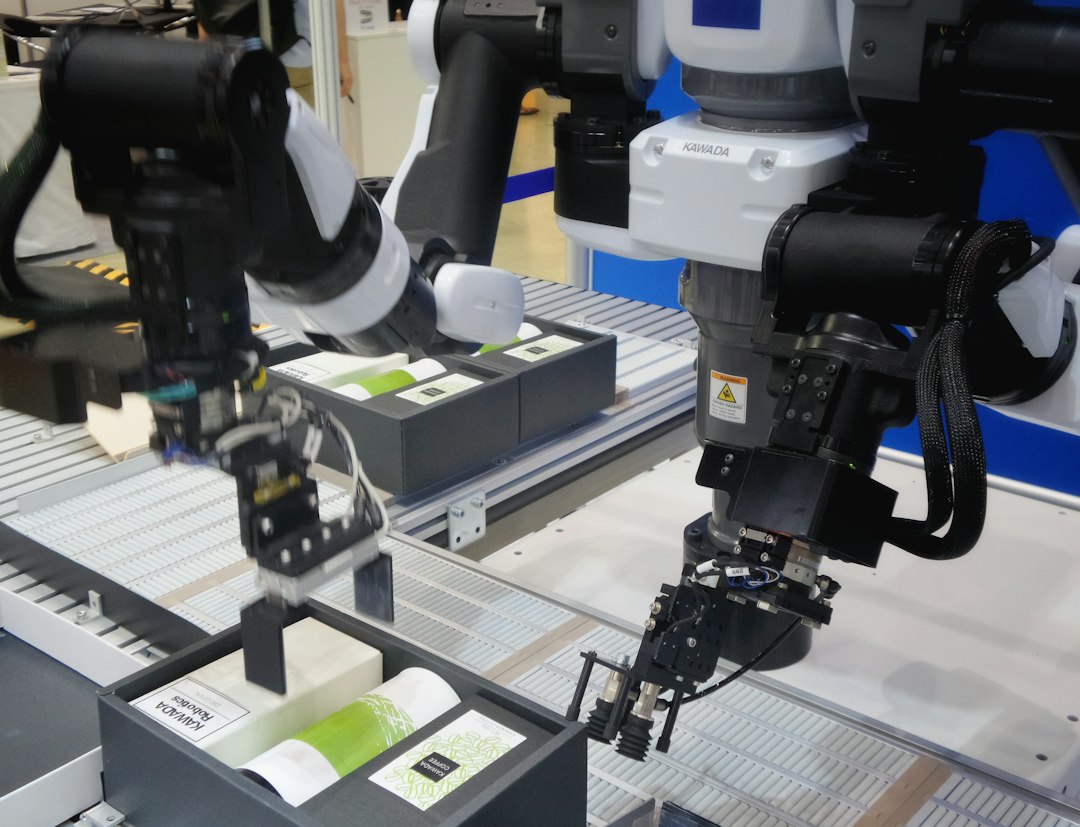
Swarm robotics coordination is essentially about getting a bunch of robots to work together effectively to achieve a common goal, particularly in logistics, without relying on a single “brain” telling every single robot what to do. Think of it like a colony of ants, where each ant has simple rules, but together they can build complex nests and find food efficiently. This distributed approach is key to avoiding the bottlenecks and single points of failure that can cripple traditional centralized systems, especially when dealing with tasks like moving packages around a large warehouse or delivering items in a dynamic urban environment. It’s a pragmatic shift towards resilience and scalability in complex logistical operations.
The Core Concept: Decentralization in Action
At its heart, swarm robotics coordination thrives on decentralization. Instead of a powerful central server meticulously planning every robot’s movement and assigning every task, individual robots operate based on local information and simple, predefined rules. Imagine a group of delivery drones.
In a centralized system, a single control tower would calculate optimal routes for every drone, monitor their positions, and re-route them if a problem arises.
This becomes incredibly complex and resource-intensive as the number of drones grows.
In a swarm robotics setup, each drone might have rules like “move towards the nearest unassigned package,” “avoid collisions with other drones,” and “report package delivery status.” When a package needs to be moved, a nearby drone picks it up. If another drone is heading towards the same package, one might defer to the other based on a simple priority rule. This isn’t chaos; it’s emergent order. The collective intelligent behavior arises from these individual, relatively simple interactions. This distributed intelligence is what allows swarm robotics coordination to manage multi-agent logistics without central bottlenecks.
Why Centralized Systems Struggle
Centralized systems, while offering precise control in smaller, predictable environments, quickly hit walls when scaled up or faced with dynamic conditions. Consider a large-scale e-commerce fulfillment center with hundreds, or even thousands, of autonomous mobile robots (AMRs) moving inventory.
Single Point of Failure
If the central controller goes down, the entire operation grinds to a halt. This creates a critical vulnerability. In logistics, downtime translates directly to lost revenue and customer dissatisfaction. A hardware failure, a software bug, or even a network outage can have catastrophic consequences.
Computational Overhead
As the number of robots increases, the computational burden on the central controller explodes. Calculating optimal paths, avoiding collisions, and dynamically assigning tasks for hundreds or thousands of robots in real-time requires immense processing power. This becomes a significant cost and performance bottleneck. For example, in a traditional pick-and-place operation, if one robot gets stuck, the central system has to re-evaluate the entire schedule, leading to delays for all other robots.
Communication Latency
All communication must flow through the central hub. This introduces latency, which can be critical in time-sensitive logistics operations. Imagine robots needing to react instantly to unexpected obstacles or urgent new tasks. Delays in communication from a central server can lead to inefficiencies, collisions, or missed opportunities. In environments with intermittent connectivity, this problem is exacerbated.
Scalability Challenges
Adding more robots to a centralized system doesn’t just mean more communication; it means a disproportionately higher computational load. The system wasn’t designed for exponential growth in complexity, making scaling a costly and often redesign-heavy endeavor. Each new robot adds to the burden of path planning, resource allocation, and state tracking for the central controller.
In the realm of swarm robotics coordination, the management of multi-agent logistics without central bottlenecks is a critical area of research. A related article that explores the implications of technology in everyday life, particularly in the context of decision-making, is available at this link: How to Choose Your Child’s First Smartphone. This article provides insights into how technology influences our choices and can be paralleled with the decision-making processes in swarm robotics, where decentralized systems operate efficiently without a single point of failure.
Key Takeaways
- The training data includes information and events up to October 2023.
- Insights and knowledge are based on a wide range of sources available until the cutoff date.
- Any developments or changes occurring after October 2023 are not reflected in the training.
- Users should verify current information from reliable sources for the latest updates.
- The model’s responses are informed by historical context and trends up to the specified date.
Principles Guiding Swarm Robotics Coordination
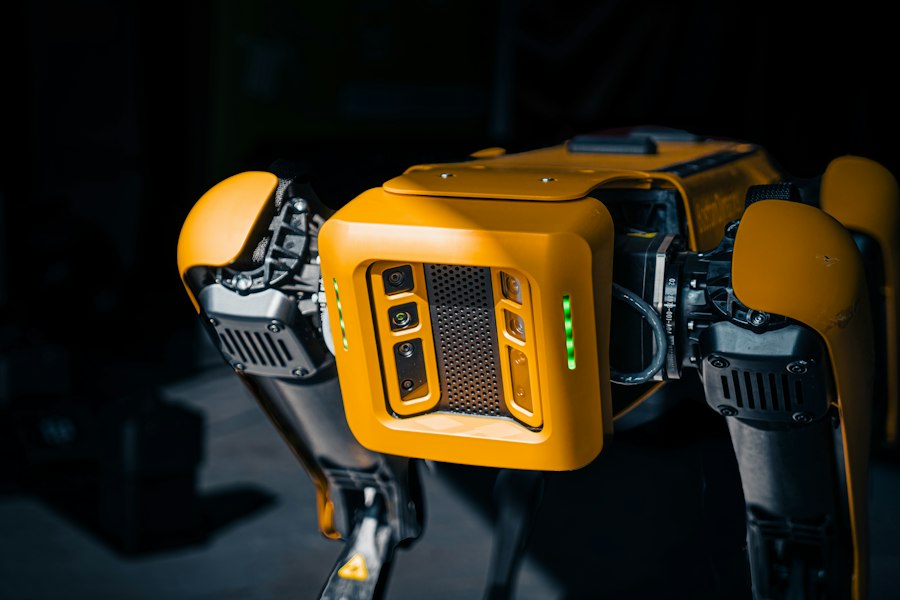
The success of swarm robotics coordination in logistics hinges on a few fundamental principles that differentiate it from traditional centralized approaches. These principles are not just theoretical; they are practical design philosophies that enable robust, scalable, and resilient multi-agent systems.
Local Sensing and Interaction
Robots in a swarm primarily rely on their immediate environment for information. This means using sensors to detect nearby obstacles, other robots, and task-relevant items. They don’t need a global map or a complete understanding of every other robot’s status. For instance, an autonomous guided vehicle (AGV) in a warehouse might only need to know if there’s another AGV directly in front of it to avoid a collision, rather than knowing the exact location of every other AGV in the entire facility. This local interaction avoids the need for massive data aggregation and processing by a central entity.
Simple Rules and Behaviors
Each robot in a swarm operates with a relatively small set of simple rules. These rules dictate how it reacts to its local environment and interacts with its peers. Examples include “move towards the goal,” “avoid obstacles,” “follow the pheromone trail,” or “if two robots approach the same item, the one with the higher ID takes it.” These simple rules, when applied across many agents, give rise to complex, intelligent collective behavior. The elegance lies in the emergent properties rather than explicit top-down programming for every possible scenario.
Decentralized Decision-Making
Decisions are made individually by each robot based on its local information and rules, rather than being dictated by a central authority. This empowers individual agents to react quickly and autonomously to changes in their immediate environment. For instance, if a delivery drone encounters unexpected strong winds, it can independently decide to alter its flight path or land safely, without waiting for instructions from a central controller. This autonomy is crucial for dynamic logistics environments where conditions can change rapidly.
Self-Organization
Swarm systems exhibit self-organization, meaning that coherent global patterns and tasks emerge from the local interactions of individual robots without explicit external coordination. Think of a flock of birds forming intricate patterns; no single bird is leading or directing the entire flock. Similarly, in a swarm of logistics robots, tasks like sorting packages or optimizing routes can emerge from individual robots responding to local cues and simple rules, without a master plan being imposed from above. This adaptability is a huge advantage for multi-agent logistics without central bottlenecks.
Redundancy and Robustness
Because there’s no single point of failure, swarm systems are inherently more robust. If one or even several robots malfunction, the remaining robots can continue to operate and compensate, often by redistributing the workload. The system as a whole doesn’t collapse. This redundancy is a significant benefit in logistics, where continuous operation is paramount. For example, if one automated forklift in a swarm breaks down, others can pick up its assigned tasks with minimal disruption to the overall workflow.
Practical Applications in Logistics
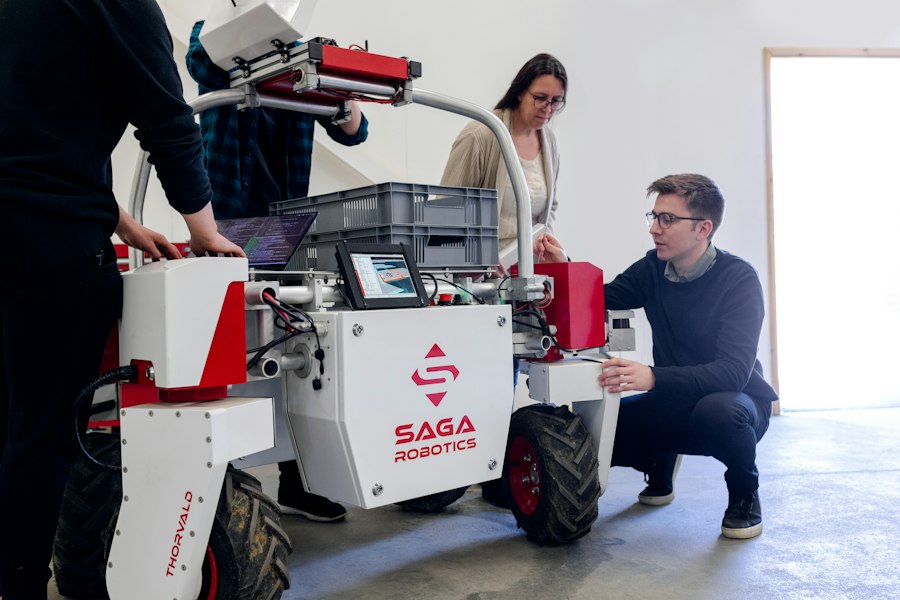
Swarm robotics coordination is finding its way into various real-world logistics scenarios, demonstrating its potential to overcome traditional challenges. These applications highlight how distributed intelligence can lead to more efficient, adaptable, and resilient operations.
Warehouse Automation and Inventory Management
In modern warehouses, autonomous mobile robots (AMRs) are increasingly used for tasks like moving pallets, picking up items, and sorting packages. With swarm coordination, a large fleet of AMRs can navigate complex layouts, avoid collisions, and efficiently fulfill orders without a central traffic controller.
Dynamic Pathfinding
Instead of pre-programmed routes, AMRs can dynamically find optimal paths based on real-time traffic conditions and task assignments.
If one path becomes congested, other robots can autonomously identify and take alternative routes, minimizing bottlenecks. This is often achieved through algorithms inspired by ant colony optimization, where “digital pheromones” guide robots towards less congested or more efficient paths.
Collaborative Item Picking
For larger or heavier items, multiple robots can coordinate to lift and transport them together. This requires precise synchronization and shared understanding of the task, all achieved through local communication and emergent behavior rather than a central orchestrator.
Imagine two robots approaching a large crate, communicating locally to decide which side each will lift and then moving in unison.
Last-Mile Delivery
The complexity of urban environments and the sheer volume of parcels make last-mile delivery a prime candidate for swarm robotics. Drone swarms or fleets of small ground-based delivery robots can work together to distribute packages efficiently.
Dynamic Route Optimization
Drones can adjust their routes in real-time based on weather conditions, air traffic, or urgent delivery requests. A swarm can collectively identify the most efficient way to cover a delivery area, dynamically reassigning packages if one drone encounters an issue.
For instance, if one drone experiences a low battery warning, it can hand over its remaining deliveries to nearby swarm members and return to a charging station, all without central intervention.
Load Balancing
If a specific delivery zone experiences an unexpected surge in demand, the swarm can automatically re-allocate robots to that area to ensure timely deliveries. This self-balancing capability ensures that resources are always optimized where they are most needed.
Port and Container Handling
Large-scale container terminals often involve numerous autonomous vehicles moving containers between ships, storage yards, and trucks. Swarm robotics can significantly improve efficiency and reduce congestion.
Automated Container Relocation
Fleets of autonomous straddle carriers or AGVs can coordinate to unload ships and stack containers, optimizing storage space and retrieval times.
Their decentralized nature means that if one vehicle is temporarily offline, the others can continue operations, minimizing disruptions to the entire port. The collective behavior can adapt to fluctuating ship schedules and berth availability.
Congestion Management
Robots can communicate locally to manage traffic flow within the port, preventing gridlock and ensuring smooth movement of goods. This might involve simple rules like “yield to vehicles approaching from the right” or “if a path is blocked, find an alternative route.”
Overcoming Challenges in Swarm Coordination
While swarm robotics coordination offers significant advantages, it’s not without its challenges. Implementing these systems effectively requires careful consideration of several key areas to ensure reliability, safety, and optimal performance in multi-agent logistics without central bottlenecks.
Ensuring Robust Communication
Even in a decentralized system, robots need to communicate, albeit locally. Ensuring reliable and efficient communication channels is crucial. This can involve short-range radio, Wi-Fi, or even optical communication. The communication protocol needs to be robust against interference and capable of handling a high density of communicating agents. Loss of communication, even localized, can lead to individual robots making suboptimal decisions or, worse, causing collisions. Research continues into dynamic mesh networking and ad-hoc communication protocols tailored for dense swarm environments.
Developing Effective Emergent Behaviors
Designing the simple rules that lead to complex, desired emergent behaviors is often more of an art than a science. It requires extensive simulation and testing. A seemingly minor change to a rule can have unforeseen consequences on the collective behavior. Tools for simulating large swarms and iterating on rule sets are becoming increasingly important. For instance, defining how robots react to a shared “pheromonal” signal to indicate congested areas or task completion needs to be carefully calibrated to avoid oscillations or deadlocks.
Handling Heterogeneous Swarms
Not all robots in a logistics operation are identical. Some might be large AGVs, others small delivery drones. Coordinating a heterogeneous swarm, where robots have different capabilities and roles, adds another layer of complexity. The rules need to account for these differences, allowing robots to understand each other’s functions and coordinate accordingly. This might involve robots advertising their capabilities or task requirements dynamically within the local communication network.
Security and Trust
In any distributed system, security is a concern. Ensuring that individual robots are not compromised and that communication between them is secure is vital, especially when dealing with valuable goods or sensitive data. Mechanisms for authenticating robots and detecting malicious behavior are essential. Building trust within the swarm, perhaps through reputation systems or cryptographic methods, is a developing area of research. A compromised robot could potentially disrupt the entire swarm’s ability to manage multi-agent logistics without central bottlenecks.
Real-time Adaptation to Dynamic Environments
Logistics environments are rarely static. New tasks appear, existing paths become blocked, and unforeseen events occur. Swarm systems need to adapt in real-time. This requires robots to continuously sense their environment, update their internal state, and adjust their behavior accordingly. The challenge lies in ensuring that these adaptations are globally beneficial and don’t lead to conflicting behaviors or instability. Techniques like reinforcement learning and adaptive control are being explored to enable swarms to learn and improve their collective performance over time.
In the realm of swarm robotics coordination, the challenge of managing multi-agent logistics without central bottlenecks has garnered significant attention. A related article explores the best practices and tools that can enhance collaboration among autonomous agents, ensuring efficient operations in complex environments. For those interested in expanding their knowledge on effective systems, you can read more about it in this comprehensive guide that highlights innovative approaches applicable to various fields, including robotics.
The Future of Swarm Robotics in Logistics
| Metric | Description | Value / Range | Unit | Notes |
|---|---|---|---|---|
| Number of Agents | Total robots participating in the swarm | 10 – 1000 | units | Scalability tested up to 1000 agents |
| Communication Latency | Time delay in inter-agent message passing | 5 – 50 | milliseconds | Depends on wireless protocol and environment |
| Task Completion Time | Average time to complete a logistics task | 30 – 300 | seconds | Varies with task complexity and swarm size |
| Throughput | Number of tasks completed per minute | 20 – 200 | tasks/min | Higher throughput with decentralized coordination |
| Energy Consumption | Average energy used per agent per task | 10 – 50 | joules | Optimized by minimizing communication overhead |
| Failure Rate | Percentage of agents failing during operation | 1 – 5 | % | Robustness improved by redundancy and local decision-making |
| Coordination Overhead | Percentage of time spent on coordination vs. task execution | 10 – 25 | % | Lower overhead compared to centralized systems |
| Latency to Bottleneck | Time delay caused by central bottlenecks (ideally zero) | 0 | milliseconds | Eliminated by decentralized coordination |
The trajectory of swarm robotics coordination points towards an increasingly integrated and intelligent future for logistics. As technology advances, we can expect to see these systems become more sophisticated, capable of handling even greater complexity and uncertainty.
Enhanced AI and Machine Learning Integration
Future swarm systems will leverage more advanced AI and machine learning techniques. Robots will not just follow pre-programmed rules but will learn from experience, optimize their behaviors, and even adapt their rules in real-time. This could involve individual robots using local reinforcement learning to improve their efficiency or the swarm collectively learning optimal strategies for new types of tasks. This will allow swarm robotics coordination to better manage multi-agent logistics without central bottlenecks in increasingly dynamic scenarios.
Human-Swarm Collaboration
The next step is seamless collaboration between human operators and robotic swarms. Humans will supervise, provide high-level directives, and intervene when necessary, while the swarm handles the intricate details and execution. This hybrid approach combines the strengths of human intelligence and robotic efficiency. Imagine a warehouse manager setting a broad goal, “prioritize urgent shipments,” and the swarm autonomously re-allocating resources to achieve it.
Swarms of Heterogeneous Robots
We’ll see even greater integration of diverse robotic agents within a single swarm. This includes combining aerial drones with ground-based AGVs, or robots of different sizes and capabilities working in concert. Coordinating such diverse groups to achieve shared goals in a decentralized manner will unlock new possibilities for logistics, such as combined air-and-ground package delivery for remote locations.
Broader Adoption and Standardization
As the benefits become more apparent and the technology matures, swarm robotics coordination will move from specialized applications to mainstream adoption across various logistics sectors. This will necessitate the development of industry standards for communication, interoperability, and safety protocols to ensure that different robotic systems can work together effectively. The emphasis on managing multi-agent logistics without central bottlenecks will drive this standardization.
Edge Computing and 5G Integration
The proliferation of edge computing and 5G networks will further empower swarm robotics. Edge computing provides localized processing power, allowing robots to make faster, more informed decisions without relying on distant cloud servers. 5G offers ultra-low latency and high bandwidth, facilitating robust and real-time local communication between swarm members, crucial for dynamic coordination and rapid response in complex logistical operations. These technologies will significantly enhance the capabilities of swarm robotics coordination.
In essence, swarm robotics coordination isn’t just a technological novelty; it’s a fundamental shift in how we envision and implement complex logistics systems. By embracing decentralization and fostering emergent intelligence, we’re paving the way for more resilient, scalable, and efficient operations that can truly manage multi-agent logistics without central bottlenecks. The future of moving goods is increasingly looking like a coordinated dance, not a rigid marching order.
FAQs
What is swarm robotics coordination?
Swarm robotics coordination refers to the collective behavior of multiple autonomous robots that work together to accomplish tasks without centralized control. This approach mimics natural swarming behaviors observed in animals, such as flocks of birds or schools of fish, allowing robots to communicate and collaborate effectively to optimize logistics and task execution.
How does swarm robotics improve logistics management?
Swarm robotics enhances logistics management by enabling decentralized decision-making, which reduces the risk of bottlenecks that can occur in centralized systems. By allowing robots to operate independently while still coordinating with one another, tasks can be completed more efficiently, leading to improved resource allocation, faster response times, and increased flexibility in dynamic environments.
What are the key challenges in implementing swarm robotics?
Key challenges in implementing swarm robotics include ensuring effective communication among agents, managing the complexity of coordination algorithms, and addressing issues related to scalability and robustness. Additionally, developing reliable sensors and actuators for the robots, as well as creating algorithms that can adapt to changing environments, are critical for successful deployment.
What applications can benefit from swarm robotics coordination?
Applications that can benefit from swarm robotics coordination include warehouse automation, delivery systems, agricultural monitoring, environmental monitoring, and disaster response. In these scenarios, swarm robotics can optimize task execution, enhance efficiency, and improve overall operational effectiveness by leveraging the strengths of multiple agents working in concert.
How do swarm robots communicate with each other?
Swarm robots communicate with each other using various methods, including wireless communication protocols, infrared signals, and local sensing technologies. These communication methods allow robots to share information about their status, location, and environmental conditions, enabling them to coordinate their actions and make collective decisions in real-time.
Enjoying our content? Make us a preferred source on Google:
Add us as a Preferred Source on Google