

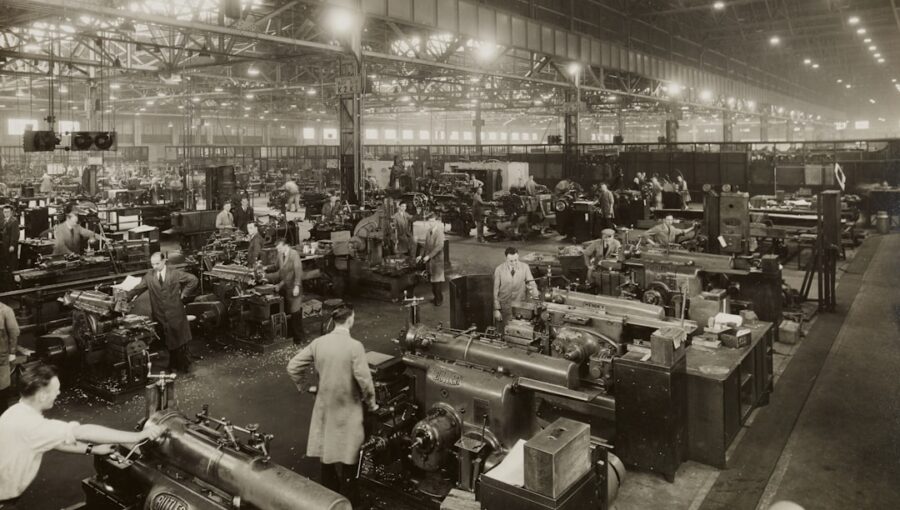
Alright, let’s talk about making complex manufacturing assembly lines smoother using Augmented Reality (AR). The short answer to “how does AR help?” is this: AR overlays digital information onto the real world, giving technicians step-by-step guidance right where they need it. This means fewer errors, faster training, and overall more efficient operations for intricate assembly tasks.
It’s like having an expert looking over your shoulder, but virtually.
The Challenge of Complexity in Modern Manufacturing
Today’s products are often incredibly intricate. Think about aerospace components, specialized medical devices, or high-end electronics. As products get more sophisticated, so do their assembly processes. This complexity brings a host of headaches for manufacturers.
Manual Assembly Headaches
When you’re dealing with hundreds or thousands of unique parts and precise sequences, relying solely on paper manuals or even static digital instructions becomes a major bottleneck.
- Error Proneness: Humans make mistakes, especially when tired, stressed, or dealing with highly repetitive yet critical tasks. A misplaced screw or an incorrectly wired component can lead to costly rework, quality issues, or even product failure down the line.
- Cognitive Load: Technicians have to constantly switch their attention between the physical workpiece and a separate instruction screen or manual. This mental juggling act slows them down and increases the chance of error.
- Skill Gaps and Training Time: New hires take a long time to become proficient in complex assembly tasks. Even experienced technicians need refreshers or training for new product variations. This learning curve impacts productivity and can be a significant cost.
- Information Overload: Traditional instructions, whether on paper or a tablet, can be dense and difficult to parse quickly. Finding the exact piece of information you need at a specific moment can be cumbersome.
- Traceability Issues: Documenting every step of a complex manual assembly for quality control or regulatory compliance can be a paper-heavy nightmare.
The Cost of Inefficiency
These challenges aren’t just minor inconveniences; they directly hit the bottom line.
Rework, scrap, extended training periods, and product recalls due to assembly errors are expensive.
They can damage brand reputation and delay time-to-market for new products, making manufacturers less competitive. So, anything that can genuinely reduce these inefficiencies is worth looking into.
In the pursuit of enhancing efficiency in manufacturing processes, the article on Streamlining Complex Manufacturing Assembly Lines via Augmented Reality Guided Instructions highlights innovative approaches to integrating technology into traditional workflows. For those interested in exploring further advancements in technology that can aid in communication and collaboration within manufacturing environments, a related article discussing the best free software for translation can be found here: Discover the Best Free Software for Translation Today. This resource offers insights into tools that can help bridge language barriers, facilitating smoother operations in diverse manufacturing settings.
How Augmented Reality Steps In
Augmented Reality isn’t just a gimmick; it’s a practical tool that addresses the core issues of complex manual assembly. It bridges the gap between digital instructions and the physical world in a very intuitive way.
Visual, Contextual Instructions
Imagine looking at a complex piece of machinery you need to assemble. Instead of flipping through a thick manual, you’re wearing an AR headset or using a tablet, and digital overlays appear directly on the physical object.
- Step-by-Step Guidance: Arrows point to the exact bolt hole, animations show the correct torque sequence, and text prompts explain which tool to use. This eliminates ambiguity.
- Part Identification: AR can highlight the correct part from a bin, reducing errors in selecting similar-looking components. It can even display part numbers or specifications right next to the physical part.
- 3D Overlays: For intricate routing of cables or placement of internal components, a 3D ghost model can be overlaid onto the workpiece, showing exactly where and how things should go. This is a game-changer compared to 2D diagrams.
- Error Prevention: If a technician attempts to use the wrong part or misses a step, the AR system can flag it immediately, preventing errors before they become costly. For example, if a vision system detects the wrong component being picked up, the AR overlay can display a “WRONG PART” warning.
Reduced Cognitive Load and Enhanced Focus
By integrating instructions directly into the technician’s field of view, AR dramatically reduces the mental effort required.
- Hands-Free Operation: With an AR headset, technicians can keep both hands on the task, improving efficiency and safety. They’re not constantly looking away at a screen.
- Focused Attention: The relevant information is presented exactly where and when it’s needed, keeping the technician’s attention on the workpiece itself rather than splitting it between multiple sources.
- Intuitive Learning: Because the instructions are visual and contextual, learning new tasks or variations becomes much more intuitive and less reliant on rote memorization. It’s “learning by doing” with an expert guide.
Key Benefits of Implementing AR in Assembly
The theoretical advantages of AR translate into tangible, measurable benefits on the factory floor, impacting everything from training to product quality.
Error Reduction and Quality Improvement
This is often one of the first and most significant benefits companies see. Fewer mistakes mean higher quality products and less waste.
- Fewer Reworks: Catching errors in real-time, often before they’ve even occurred, drastically cuts down on the need for post-assembly correction.
- Consistent Quality: Ensures that every technician performs the task the same way, adhering to established best practices and quality standards. This is crucial for regulatory compliance in industries like medical devices or aerospace.
- Reduced Scrap: By preventing incorrect assembly or accidental damage, AR minimizes the amount of material that ends up as waste.
Faster Training and Skill Transfer
Training new employees or upskilling existing ones is typically a time-consuming and expensive process. AR can significantly accelerate this.
- Guided Onboarding: New technicians can follow AR instructions from day one, performing complex tasks with a much shorter ramp-up time. They don’t need a dedicated human supervisor for every step.
- Self-Paced Learning: Operators can learn at their own speed, reviewing steps as needed without feeling pressured.
- Knowledge Retention: The visual and interactive nature of AR instructions often leads to better knowledge retention compared to traditional classroom training or manuals.
- Expert Knowledge Capture: The creation of AR instructions effectively digitizes the knowledge of experienced technicians, making it accessible to everyone. When an expert retires, their assembly know-how doesn’t leave with them.
Increased Efficiency and Throughput
Time is money in manufacturing. AR can directly contribute to completing assembly tasks faster and more smoothly.
- Reduced Cycle Times: By eliminating searching for information, reducing errors, and providing clear, immediate guidance, AR helps technicians complete tasks more quickly.
- Optimized Workflows: Analyzing data from AR-guided assemblies can help identify bottlenecks and refine the assembly process itself.
- Adaptability to Product Changes: When product designs or assembly sequences change, updating AR instructions is typically faster and easier than reprinting manuals or retraining an entire workforce. This makes lines more agile.
Improved Worker Safety and Ergonomics
While not always the primary driver, safety benefits from clearer, more consistent instructions and hands-free operation.
- Correct Tool Usage: AR can prompt technicians to use the correct tool for specific operations, reducing the risk of injury from improper tool use.
- Safe Handling Procedures: Instructions can include warnings about hazardous materials or proper lifting techniques.
- Reduced Strain: By eliminating the need to constantly look away from the workpiece, AR can reduce neck and eye strain associated with traditional instruction methods.
Implementing AR: Practical Considerations
Deploying AR isn’t just about buying some headsets; it requires careful planning and a strategic approach.
Choosing the Right Technology
There’s a range of AR hardware and software solutions, and the best fit depends on your specific needs.
- Head-Mounted Displays (HMDs): Devices like the Microsoft HoloLens, Magic Leap, or Vuzix glasses offer a true hands-free and immersive experience. They’re excellent for complex, multi-step tasks where full immersion is beneficial. However, they can be more expensive and require robust network connectivity.
- Tablets/Smartphones: Mobile devices offer a more accessible and often lower-cost entry point into AR. They’re good for less intensive tasks or situations where technicians might need to consult instructions for brief periods. The downside is that they tie up one hand.
- Projected AR: This involves projecting instructions directly onto the workpiece. It’s often used in scenarios where multiple operators work on a shared jig or assembly and doesn’t require individual wearables.
- Software Platforms: Beyond the hardware, you’ll need software to create, manage, and deliver the AR content. Look for platforms that are intuitive for content creation, integrate with existing systems (like CAD or MES), and provide analytics.
Content Creation and Management
This is often the most significant effort in an AR implementation – creating the digital overlays and instructions.
- Leveraging Existing CAD Data: The good news is that many manufacturers already have detailed 3D CAD models of their products. These can often be directly imported into AR content creation tools.
- Authoring Tools: Modern AR authoring tools are becoming more user-friendly, allowing engineers or experienced technicians (not just developers) to create step-by-step guides using drag-and-drop interfaces and visual editors.
- Standardization: Developing a consistent style and format for your AR instructions is crucial for clarity and ease of use.
- Version Control: Just like product designs, assembly instructions evolve. A robust system for version control and updating AR content is essential.
- Integration with PLM/MES: For truly seamless operations, AR instructions should ideally be linked to your Product Lifecycle Management (PLM) or Manufacturing Execution System (MES), ensuring technicians always have the latest, correct instructions for the specific product variant they are working on.
Data Collection and Analytics
One of the often-overlooked benefits of digital AR systems is the ability to collect valuable data about the assembly process.
- Performance Metrics: Track metrics like task completion times, error rates, and time spent on specific steps. This data can pinpoint bottlenecks or areas where instructions might need improvement.
- Compliance and Traceability: Automatically record when steps are completed, who completed them, and any deviations. This provides an invaluable audit trail for quality control and regulatory purposes.
- Continuous Improvement: Use the collected data to continuously refine assembly processes, optimize AR instructions, and identify opportunities for further efficiency gains. For example, if data shows a particular step consistently takes longer than expected, it might indicate a design flaw or an instruction that needs clarification.
In the pursuit of enhancing efficiency in manufacturing processes, the integration of augmented reality (AR) has emerged as a transformative solution, particularly in streamlining complex assembly lines through guided instructions. A related article discusses the importance of effective tools in optimizing workflows, which can be further explored in the context of AR applications. For those interested in improving their operational strategies, this article on the best software for social media management in 2023 provides insights that can be applied to various industries, including manufacturing.
Overcoming Potential Roadblocks
While AR offers compelling advantages, it’s not a magic bullet. There are hurdles to navigate for a successful deployment.
User Acceptance and Training
Any new technology introduced to the factory floor needs to be embraced by the people actually using it.
- Pilot Programs: Start small. Implement AR in a controlled pilot project with a willing team. This allows for feedback and refinement before a wider rollout.
- Involve Technicians Early: Get buy-in from the operators who will be using the AR system. Their input during the design and testing phases is invaluable. They understand the practical realities of the assembly line better than anyone.
- Clear Value Proposition: Communicate clearly how AR will benefit them, not just the company. Focus on how it simplifies their job, reduces stress, and helps them perform better.
- Adequate Training: Don’t just hand them a headset. Provide comprehensive training on how to use the AR system effectively, troubleshoot minor issues, and provide feedback.
Infrastructure and Connectivity
AR systems, especially those using cloud-based content, require a robust IT infrastructure.
- Wi-Fi Coverage: Ensure strong and reliable Wi-Fi coverage across the entire assembly line. Dropped connections are frustrating and disrupt workflows.
- Network Security: Implement appropriate security measures to protect proprietary instruction data and operational data.
- Integration with Existing Systems: Connecting AR platforms with CAD, PLM, MES, and ERP systems can be complex but is crucial for pulling product data and pushing completion data. Plan for this integration effort.
- Scalability: Choose systems that can scale with your operations as you expand AR use to more lines or facilities.
Cost-Benefit Analysis
AR implementation represents an investment, so a clear understanding of the return on investment (ROI) is essential.
- Quantify Benefits: Work to put numbers on the expected savings from error reduction, faster training, reduced rework, and increased throughput.
- Estimate Costs: Account for hardware, software licenses, content creation, training, IT infrastructure upgrades, and ongoing maintenance.
- Phased Rollout: Consider a phased approach to implementation. Start with a high-impact area to demonstrate initial ROI before investing in a broader deployment. This helps build the business case internally.
The Future of Assembly with AR
Augmented Reality is still evolving, but its trajectory in manufacturing is clear. We’re moving towards even more integrated and intelligent systems.
Advanced Integration
We’ll see tighter connections between AR systems and other Industry 4.0 technologies.
- AI and Machine Learning: AI could analyze technician performance through AR, identifying patterns, recommending process improvements, or personalizing instructions based on individual learning styles.
- IoT Integration: AR instructions could dynamically change based on real-time sensor data from components or tools. For example, if a component is overheating, AR could alert the technician.
- Digital Twin Synchronization: AR systems will likely become more seamlessly integrated with digital twins of production lines and products, allowing real-time monitoring and simulation.
Remote Assistance and Collaboration
AR already facilitates remote expert assistance, allowing an off-site expert to guide an on-site technician as if they were in the room. This will become even more common.
- Global Collaboration: Experts from different locations can collaborate on complex assembly issues, reducing travel and speeding up problem resolution.
- Reduced Downtime: Quick access to remote expertise means less time waiting for specialists to arrive, leading to faster repairs and reduced line downtime.
Ultimately, AR for complex assembly lines isn’t just about putting digital information on a screen. It’s about empowering people, reducing waste, improving quality, and making manufacturing operations genuinely smarter and more resilient in an increasingly complex world. It’s a practical step towards a more efficient and error-free future on the factory floor.
FAQs
What is augmented reality (AR) guided instructions in manufacturing assembly lines?
Augmented reality (AR) guided instructions in manufacturing assembly lines involve the use of AR technology to provide real-time visual guidance and instructions to assembly line workers. This technology overlays digital information, such as step-by-step instructions, diagrams, and animations, onto the physical environment, helping workers to streamline complex assembly processes.
How does augmented reality (AR) guided instructions benefit manufacturing assembly lines?
AR guided instructions benefit manufacturing assembly lines by improving efficiency, reducing errors, and enhancing worker training. By providing visual guidance and real-time feedback, AR technology helps workers to complete tasks more accurately and efficiently, leading to increased productivity and quality in the manufacturing process.
What are the key challenges in implementing augmented reality (AR) guided instructions in manufacturing assembly lines?
Key challenges in implementing AR guided instructions in manufacturing assembly lines include the initial cost of implementing the technology, integrating AR systems with existing manufacturing processes, ensuring compatibility with different assembly line setups, and providing adequate training for workers to use the AR technology effectively.
What are some examples of companies using augmented reality (AR) guided instructions in manufacturing assembly lines?
Several companies in various industries, such as automotive, aerospace, and electronics, have adopted AR guided instructions in their manufacturing assembly lines. For example, Boeing has implemented AR technology to assist in the assembly of aircraft components, while Volkswagen has used AR guided instructions to streamline the production of vehicles.
What are the future prospects of augmented reality (AR) guided instructions in manufacturing assembly lines?
The future prospects of AR guided instructions in manufacturing assembly lines are promising, with continued advancements in AR technology and its integration with other digital manufacturing tools. As the technology becomes more affordable and accessible, it is expected to become a standard tool for improving efficiency and quality in complex manufacturing processes.
Enjoying our content? Make us a preferred source on Google:
Add us as a Preferred Source on Google