

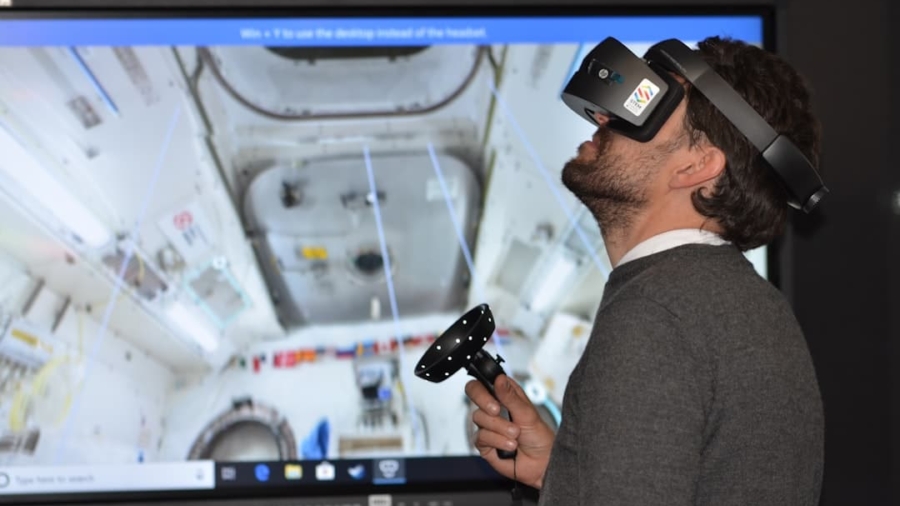
Spatial computing in the enterprise is about more than just flashy headsets. It’s about using technology to blend our digital and physical worlds in ways that actually make our work easier, faster, and more effective. Think of it as making computers more intuitive by allowing us to interact with digital information as if it were part of the real world around us. This isn’t some far-off sci-fi dream; it’s already starting to have a real impact on how businesses operate, from training employees to designing products and managing complex facilities. Let’s dive into what this actually looks like in practice.
At its heart, spatial computing is about creating a more natural interface between humans and computers. Instead of staring at a flat screen, you’re interacting with 3D digital content overlaid onto or embedded within your physical environment.
This could involve anything from seeing a virtual blueprint hovering over a construction site to having an interactive digital overlay showing you how to repair a piece of machinery.
The key is that the digital information is contextualized by its location and relationship to real-world objects and spaces.
Beyond the “Gadget” Factor: Practical Applications
While the hardware – the headsets, the smart glasses – often gets the most attention, the real value of spatial computing lies in its ability to solve tangible business problems. It’s not about adopting a new gadget for the sake of it, but about finding ways to improve existing workflows, reduce errors, and enhance human capabilities. The focus shifts from the technology itself to the outcomes it enables.
Enhancing Visualizations and Simulations
One of the most immediate benefits of spatial computing is its ability to create immersive and interactive visualizations. Architects can walk through virtual buildings before they’re built, and engineers can manipulate 3D models of complex machinery in real-time. This not only aids in design and planning but also helps in identifying potential issues early on, saving significant time and resources down the line.
Collaborative Design and Review
Imagine a team of designers and engineers scattered across the globe. With spatial computing, they can all gather in a shared virtual space, manipulating the same 3D model simultaneously. This fosters a more dynamic and effective collaborative process, allowing for immediate feedback and iterative design improvements that are far more efficient than traditional methods. It breaks down geographical barriers and enables a truly unified approach to product development.
Prototyping and Testing
Creating physical prototypes can be expensive and time-consuming. Spatial computing allows for rapid virtual prototyping, where digital models can be tested and refined in simulated environments. This accelerates the innovation cycle and reduces the cost associated with physical iteration. It’s like having an infinite workshop where you can try out countless variations without any material waste.
In exploring the potential of spatial computing in enterprise settings, it’s essential to consider how the right technology can enhance user experiences and productivity. A related article that delves into the importance of selecting the appropriate devices for optimal performance is available at