

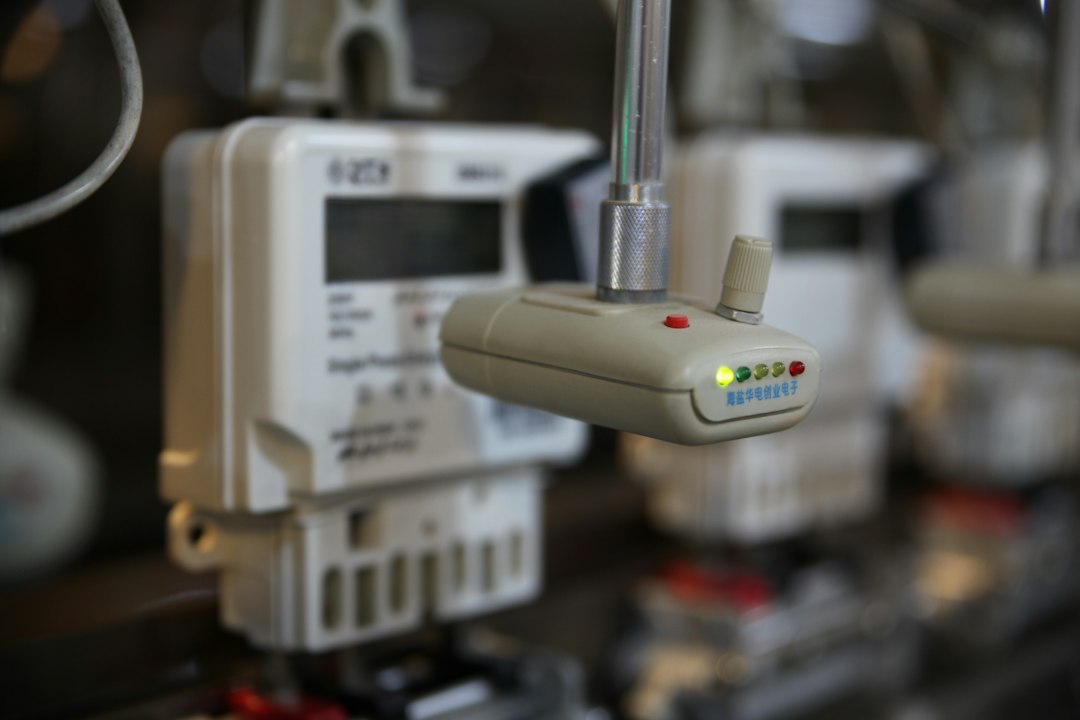
Solid-state quantum magnetometers are essentially super sensitive magnetic field sensors that don’t need extreme cold to work. This makes them incredibly useful for industrial applications where traditional, cryogenically-cooled magnetometers just aren’t practical. Think of them as compact, robust detectors that can pick up tiny magnetic signals in a regular factory or field environment, opening up a whole new world of possibilities for precision measurement and inspection.
The Problem with Traditional Quantum Magnetometers
For a long time, the highest performing quantum magnetometers relied on superconducting quantum interference devices (SQUIDs). These are incredibly sensitive devices, capable of detecting incredibly weak magnetic fields, down to femtotesla levels. However, their major drawback is the absolute requirement for cryogenic cooling. This usually means liquid helium, which is expensive, requires specialized infrastructure, and is a finite resource.
The Cryogenic Hurdle
Operating at temperatures below 4 Kelvin presents a significant challenge for industrial adoption. The bulky dewars, the need for continuous coolant replenishment, and the delicate nature of the cold-chain infrastructure make SQUIDs unsuitable for many on-site or portable applications. Imagine trying to use a liquid helium-cooled device on a factory floor, or out in the field inspecting pipelines – it’s simply not practical. This limitation has historically confined the highest precision magnetic sensing to specialized laboratories and research facilities, leaving a significant gap for applications that require high sensitivity but also ruggedness and ease of use.
The Search for Warm Alternatives
The quest for ‘warm’ quantum magnetometers has been a long-standing goal in the field. Researchers have explored various avenues to achieve quantum-level sensitivity without the burden of cryogenics. This effort has been driven by the clear market demand for robust, deployable sensors that can bring the benefits of quantum metrology to a broader range of industrial problems. The development of solid-state systems has been a major breakthrough in this regard, offering a pathway to overcome the limitations of their cryogenic predecessors.
Solid-state quantum magnetometers have garnered significant attention for their potential industrial applications, particularly in environments that extend beyond traditional cryogenic limits. A related article that explores the latest advancements in technology and product innovations is available at The Best Tech Products of 2023. This article highlights cutting-edge technologies that could complement the capabilities of quantum magnetometers, showcasing how these innovations are shaping various industries and enhancing operational efficiency.
Key Takeaways
- The training data includes information and events up to October 2023.
- Insights and knowledge are based on a wide range of sources available until the cutoff date.
- No updates or developments occurring after October 2023 are included in the training.
- Users should verify current information from reliable sources for the latest updates.
- The model’s responses reflect the context and knowledge available up to the specified date.
How Solid-State Quantum Magnetometers Work
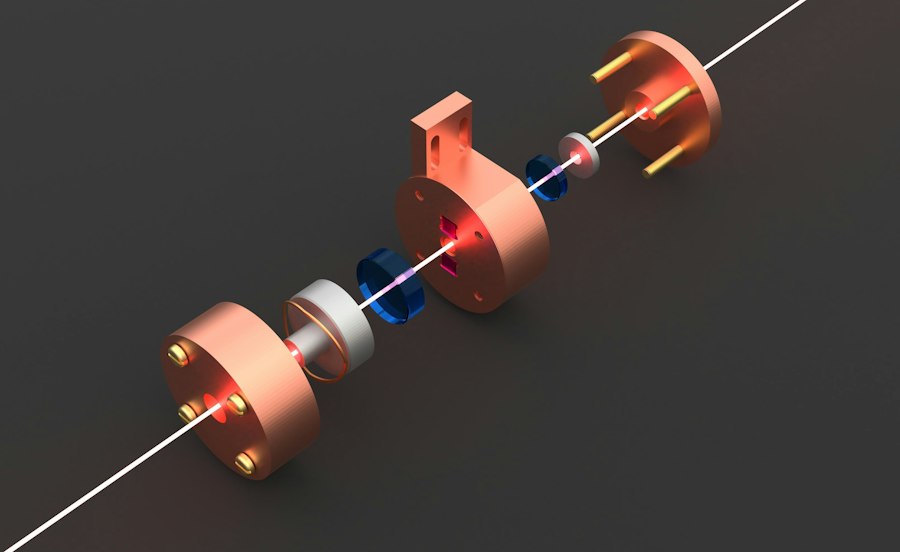
At their core, solid-state quantum magnetometers leverage the quantum properties of defects within a solid material to detect magnetic fields. Unlike atomic vapor cells or SQUIDs, these systems embed the sensing element directly into a crystal lattice, offering enhanced stability and a more compact form factor.
Nitrogen-Vacancy Centers in Diamond
One of the most prominent examples, and a leading technology in this space, involves nitrogen-vacancy (NV) centers in diamond. Imagine a tiny defect in the otherwise perfect diamond lattice: a nitrogen atom sits next to a vacant site where a carbon atom should be. This NV center has unique quantum properties, specifically, its electron spin state is highly sensitive to external magnetic fields.
The Quantum Sensing Mechanism
Here’s a simplified breakdown: We use a green laser to excite the NV center. Depending on the magnetic field it’s experiencing, the NV center will fluoresce at different rates when stimulated by microwaves. By carefully measuring this fluorescence, we can precisely determine the strength and even the orientation of the magnetic field. The beauty of this is that the diamond lattice protects the fragile quantum state of the NV center, allowing it to maintain its sensitivity at room temperature and even higher.
Other Solid-State Approaches
While NV centers in diamond are currently the most developed and widely discussed, research is ongoing into other solid-state platforms. These include defects in silicon carbide (SiC), rare-earth ions in various host crystals, and even topological insulators. Each of these materials offers different advantages in terms of sensitivity, operating temperature range, and fabrication scalability. The ongoing exploration of these diverse materials is aimed at finding the optimal balance of performance characteristics for specific industrial needs.
Industrial Applications Revolutionized
The ability to deploy high-sensitivity magnetometers outside of cryogenic labs opens up a vast array of industrial applications. These range from crucial quality control to groundbreaking medical diagnostics, all benefiting from precise magnetic field measurements in challenging environments.
Non-Destructive Testing (NDT) and Material Characterization
One of the most immediate and impactful applications is in advanced non-destructive testing (NDT). Detecting subtle flaws or stress points in materials without causing damage is invaluable across numerous industries.
Detecting Material Defects and Stress
Solid-state magnetometers can detect tiny magnetic anomalies caused by defects like cracks, corrosion, or material fatigue in ferromagnetic materials. For instance, in pipelines, bridges, or aircraft components, these sensors can pick up the minute magnetic leakage fields generated around areas of stress concentration or incipient cracks.
This provides a more sensitive and often faster alternative to traditional eddy current or ultrasonic testing, especially for subsurface defects.
Residual Stress Measurement
Beyond just defects, these magnetometers can measure residual stress in materials. Manufacturing processes often leave behind internal stresses, which can weaken a component over time. By correlating magnetic field variations with stress levels, manufacturers can ensure product integrity and predict component lifespan more accurately.
This is particularly relevant in industries like automotive, aerospace, and energy infrastructure, where component failure can have catastrophic consequences.
Geophysical Exploration and Surveying
The ability to operate in the field without bulky cryogenic equipment transforms geophysical surveying, making it more efficient and accessible.
Mineral and Oil Exploration
For decades, magnetic surveys have been a cornerstone of mineral and oil exploration, helping to map subsurface geological structures. Solid-state magnetometers, especially when deployed in airborne or drone-based platforms, can provide higher resolution and more efficient data collection. They can detect subtle magnetic signatures associated with different rock types or mineral deposits, guiding exploration efforts and reducing the need for costly and environmentally impactful drilling.
Unexploded Ordnance (UXO) Detection
Detecting unexploded ordnance (UXO) is another critical application.
Old battlefields, construction sites, and military ranges often hide dangerous remnants of past conflicts. Solid-state magnetometers can quickly and accurately pinpoint buried ferrous objects, aiding in safer land clearance and mitigating risks to personnel and civilians. Their compact size makes them ideal for integration into robotic platforms or man-portable detectors, enabling rapid and thorough surveys of contaminated areas.
Medical and Biomedical Sensing
While not strictly ‘industrial’ in the traditional sense, medical applications share many of the same practical constraints regarding size, cost, and environmental robustness.
Biomagnetic Imaging (Non-Cryogenic MEG/MCG)
Traditional magnetoencephalography (MEG) and magnetocardiography (MCG) require SQUID arrays housed in heavily shielded, cryogenically cooled rooms.
Solid-state magnetometers offer the tantalizing possibility of ‘wearable’ or ‘bedside’ biomagnetic imaging. Imagine a helmet-like device with NV diamond sensors capable of mapping brain activity (MEG) or heart function (MCG) with high precision, but without the need for a specialized shielded room or liquid helium. This would make these powerful diagnostic tools far more accessible for routine clinical use, especially for pediatric patients or those who cannot tolerate the confines of a traditional MEG system.
Magnetic Marker Tracking
In diagnostics and targeted drug delivery, tiny magnetic nanoparticles can be used as tracers or carriers.
Solid-state magnetometers can precisely track the movement and concentration of these magnetic markers within the body, providing real-time information for biopsies, tumor localization, or assessing drug distribution.
This non-invasive approach offers significant advantages over radiation-based imaging techniques.
Industrial Metrology and Quality Control
Precision manufacturing requires extremely tight tolerances and continuous monitoring. Solid-state magnetometers can offer new ways to achieve this.
Real-Time Position and Motion Sensing
In advanced robotics and automation, precise knowledge of position and motion is paramount. These magnetometers can be integrated into robotic arms or machine tools to provide highly accurate, drift-free position feedback, even in the presence of electrical noise that might affect other sensing modalities.
Their immunity to certain environmental factors like temperature fluctuations (within their operating range) makes them robust choices for industrial environments.
Current Sensing in Power Electronics
Measuring electrical currents with high precision and isolation is crucial in power electronics, smart grids, and electric vehicle battery management systems. While Hall-effect sensors are common, solid-state quantum magnetometers can offer significantly higher sensitivity and bandwidth, enabling more accurate monitoring of current flows without direct electrical contact. This can lead to improved efficiency, early fault detection, and enhanced safety in high-power systems.
Key Advantages and Practical Considerations
Understanding the benefits and limitations helps in appreciating why these magnetometers are a game-changer for industrial settings.
Beyond Cryogenics: The Freedom of Ambient Operation
The most obvious and significant advantage is the elimination of cryogenic cooling. This translates into:
- Reduced Cost: No need for expensive liquid helium or sophisticated cooling infrastructure.
- Increased Portability: Smaller, lighter devices that can be easily moved, hand-held, or integrated into mobile platforms like drones or robots.
- Enhanced Reliability: Fewer complex moving parts (like cryocoolers) means greater uptime and lower maintenance requirements.
- Faster Deployment: No waiting for cool-down periods; sensors are ready to operate almost immediately.
This freedom from cryogenic constraints is what truly unlocks the potential for wide-scale industrial adoption, moving quantum-level precision out of the lab and into the field.
Robustness and Environmental Tolerance
Unlike some delicate quantum systems, solid-state devices, particularly those based on diamond, are inherently robust. Diamond is one of the hardest known materials, making it highly resistant to physical damage, temperature fluctuations, and chemical environments. This inherent toughness is critical for industrial applications where sensors might be exposed to vibrations, dust, or varying ambient temperatures. The ability to maintain high sensitivity under these conditions is a major differentiator.
Sensitivity and Spatial Resolution
While not always matching the absolute sensitivity of SQUIDs for certain applications, solid-state magnetometers offer impressive sensitivity, often in the picotesla to nanotesla range, which is perfectly adequate for a vast majority of industrial needs. Furthermore, their small sensor size allows for excellent spatial resolution. This means they can pinpoint the location of magnetic anomalies with great precision, which is crucial for applications like defect detection or biomagnetic imaging.
Practical Deployment Challenges
While the benefits are clear, there are still practical considerations for widespread adoption:
Initial Cost and Scalability
The manufacturing process for high-quality diamond materials with a high density of NV centers can still be expensive, impacting the initial cost of devices. However, ongoing research and development in diamond synthesis and defect engineering are steadily bringing down these costs. As manufacturing scales, prices are expected to become more competitive, making these devices more accessible for a broader range of industrial users.
Shielding Requirements
Despite operating at room temperature, solid-state quantum magnetometers are incredibly sensitive to magnetic fields. This means that in many industrial environments, where there’s a lot of electromagnetic noise from machinery, motors, or power lines, some form of magnetic shielding might still be necessary to achieve their full performance potential. While not as stringent as SQUID shielding, this can add complexity and cost to deployment.
Data Interpretation and Signal Processing
The raw data from these magnetometers can be complex, requiring sophisticated signal processing algorithms and expertise to extract meaningful information. Developing user-friendly software interfaces and robust analytical tools will be crucial for accelerating their adoption by non-specialist industrial personnel. Integrating these sensors into existing industrial data analysis pipelines is an ongoing area of development.
Solid-state quantum magnetometers are revolutionizing various industrial applications, pushing the boundaries beyond traditional cryogenic limits. For those interested in exploring the potential of advanced technology in enhancing productivity, a related article discusses the innovative features of the Samsung Galaxy Book2 Pro, which can significantly aid professionals in their work. You can read more about it here. This convergence of cutting-edge tools and techniques highlights the exciting future of industrial advancements.
The Future Landscape: Integration and Miniaturization
| Metric | Value | Unit | Notes |
|---|---|---|---|
| Magnetic Field Sensitivity | 1 | pT/√Hz | At room temperature operation |
| Operating Temperature Range | 200 – 350 | K | Beyond traditional cryogenic limits |
| Response Time | 10 | ms | Fast detection suitable for industrial monitoring |
| Size | 5 x 5 x 2 | cm³ | Compact solid-state device |
| Power Consumption | 500 | mW | Low power for continuous operation |
| Measurement Range | 0 – 100 | μT | Suitable for industrial magnetic field strengths |
| Typical Industrial Applications | Non-destructive testing, Geophysical surveying, Biomedical diagnostics | Examples of use cases | |
The trajectory for solid-state quantum magnetometers is one of continuous improvement, driven by advancements in materials science, quantum engineering, and miniaturization techniques.
On-Chip Integration
A significant trend is the move towards on-chip integration. Imagine entire magnetometer systems, including the laser, microwave components, and photodetectors, fabricated on a single silicon chip alongside the diamond or other solid-state sensing element. This level of integration would dramatically reduce size, weight, power consumption, and manufacturing costs, opening up possibilities for mass production and deployment in extremely space-constrained applications.
Multi-Sensor Arrays and Imaging
For many applications, a single point measurement isn’t enough. The future will see the development of large-scale arrays of solid-state quantum magnetometers. These arrays, capable of simultaneous measurements across a surface or volume, will enable real-time magnetic imaging, much like a camera captures light. This would be transformative for NDT, medical diagnostics (e.g., full-head MEG), and geophysical surveys, providing comprehensive data quickly and efficiently.
AI and Machine Learning for Data Analysis
As the complexity and volume of data generated by these advanced magnetometers increase, artificial intelligence (AI) and machine learning (ML) will become indispensable. AI algorithms can be trained to recognize subtle patterns in magnetic signatures, differentiate between various types of defects, or even predict material failure. This will enable faster, more accurate, and more automated data interpretation, making these powerful tools accessible to a broader range of industrial users without requiring deep quantum physics expertise.
Solid-state quantum magnetometers are rapidly moving from the lab to the factory floor and the field. Their unique combination of high sensitivity and ambient temperature operation addresses a long-standing gap in industrial metrology. While challenges remain in terms of cost and full integration, the rapid pace of innovation suggests that these robust quantum sensors will soon become indispensable tools across a wide spectrum of industries, fundamentally changing how we inspect materials, explore our planet, and diagnose health conditions.
FAQs
What are solid-state quantum magnetometers?
Solid-state quantum magnetometers are devices that use quantum properties of solid-state systems to measure magnetic fields with high sensitivity and precision.
How do solid-state quantum magnetometers differ from traditional magnetometers?
Solid-state quantum magnetometers offer advantages over traditional magnetometers by operating at room temperature, eliminating the need for cryogenic cooling, and providing higher sensitivity and resolution.
What are some industrial applications of solid-state quantum magnetometers?
Industrial applications of solid-state quantum magnetometers include mineral exploration, non-destructive testing, medical imaging, and navigation systems.
How do solid-state quantum magnetometers contribute to mineral exploration?
Solid-state quantum magnetometers can detect subtle variations in the magnetic field caused by underground mineral deposits, helping geologists and mining companies locate valuable resources more efficiently.
What are the potential future developments in solid-state quantum magnetometer technology?
Future developments in solid-state quantum magnetometer technology may focus on improving sensitivity, reducing size and cost, and expanding applications in fields such as defense, aerospace, and environmental monitoring.
Enjoying our content? Make us a preferred source on Google:
Add us as a Preferred Source on Google