

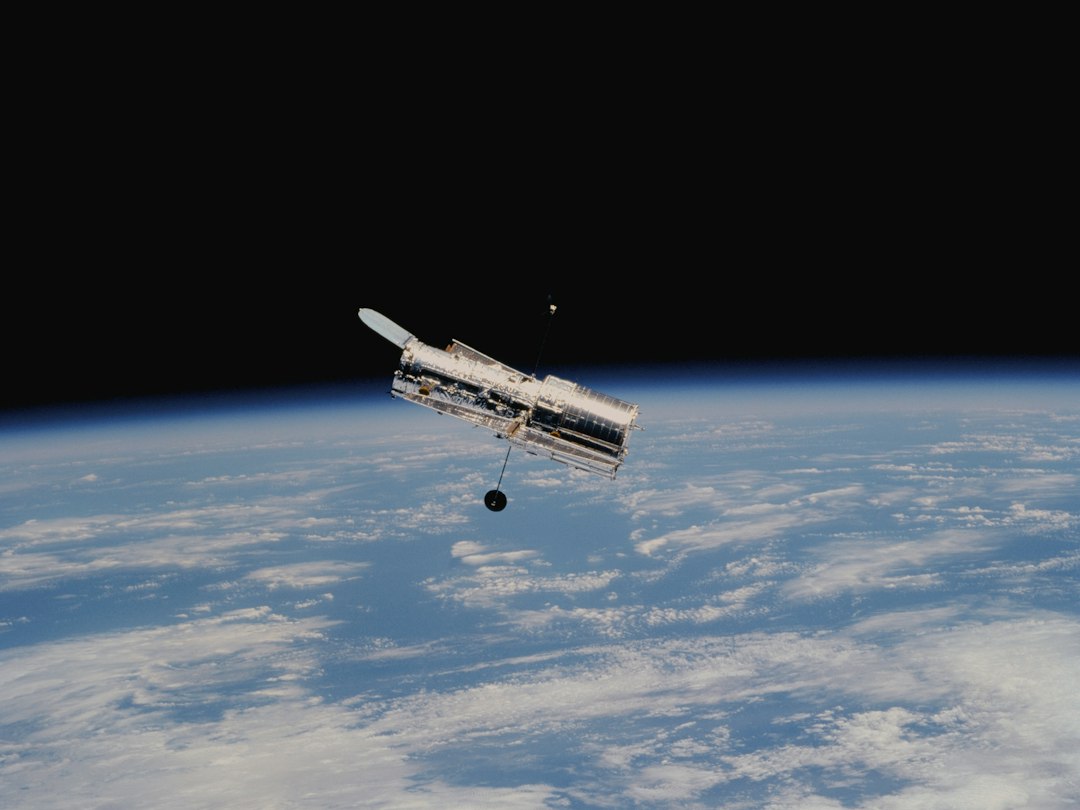
So, what exactly are software-defined satellites? Simply put, they’re spacecraft where a significant portion of their onboard functionality, especially related to their mission payload, isn’t hardwired but instead controlled and updated through software. This means that after launch, operators can completely change or optimize what the satellite does, how it processes data, or even the services it provides – all while it’s orbiting Earth. It’s like having a smartphone that can download new apps and completely change its core function, but in space. This dynamic reconfigurability is a game-changer for flexibility and longevity in satellite missions.
The Core Concept of Software-Defined Satellites
At its heart, a software-defined satellite (SDS) is an evolution from traditional, fixed-function spacecraft. Historically, once a satellite was designed, built, and launched, its capabilities were largely set in stone. Any changes or adaptations usually involved launching an entirely new satellite. This model is incredibly expensive and time-consuming. SDS aims to break free from these constraints by shifting critical functions from dedicated hardware components to adaptable software modules running on general-purpose processing units.
Hardware vs. Software in Orbit
Think about the difference between an old-fashioned calculator and a modern smartphone. The calculator has dedicated buttons and circuits for addition, subtraction, etc. Its function is fixed. A smartphone, however, has a general-purpose processor and can run countless applications, from calculators to navigation systems, simply by installing different software.
In the satellite world, traditional satellites are more like the calculator. Their transponders, processors, and communication protocols are often custom-designed hardware for specific tasks. If you wanted to change the type of signal it could process or the data compression algorithm it used, you’d typically need a hardware replacement, which is impossible post-launch.
Software-defined satellites, conversely, adopt the smartphone paradigm. They incorporate reconfigurable hardware components, such as Field-Programmable Gate Arrays (FPGAs) or high-performance System-on-Chips (SoCs), alongside powerful general-purpose processors. These hardware platforms are designed to be programmed and reprogrammed remotely, allowing software to dictate their behavior and functionality. This fundamentally changes how we interact with and utilize orbiting assets.
Why Dynamic Reconfiguration Matters
The ability to dynamically reconfigure a satellite’s payload in-flight offers a host of significant advantages. Firstly, it drastically extends the operational lifespan and relevance of a satellite. Markets and technological requirements evolve rapidly. A satellite launched today might be operating in a very different landscape in five or ten years. SDS allows operators to adapt to these changes without a costly and time-consuming replacement launch.
Secondly, it enhances mission flexibility and responsiveness. Imagine a sudden surge in demand for a specific type of communication service over a particular region, or an unforeseen environmental disaster requiring urgent data collection. A software-defined satellite can be re-tasked and optimized to meet these new requirements almost immediately, by pushing a software update. Traditional satellites would struggle to respond with such agility.
Lastly, it enables a “future-proof” approach to space infrastructure. Instead of trying to predict every possible future need during the design phase (an impossible task), operators can launch a versatile platform and then iteratively upgrade its capabilities over time. This reduces the upfront design complexity and risk, while maximizing the long-term return on investment.
In the realm of advanced satellite technology, the concept of Software-Defined Satellites (SDS) has gained significant attention, particularly for its ability to enable dynamic in-flight payload reconfiguration. This innovative approach allows satellites to adapt their functions and services in real-time, responding to changing mission requirements and enhancing operational efficiency. For those interested in exploring more about emerging technologies and their applications, a related article discussing various niches for affiliate marketing can be found at this link.
Key Takeaways
- The training data includes information and events up to October 2023.
- Insights and knowledge are based on a wide range of sources available until the cutoff date.
- No updates or developments occurring after October 2023 are included in the training.
- Users should verify current information from reliable sources for the latest updates.
- The model’s responses reflect the context and knowledge available up to the specified date.
Technical Foundations of In-Flight Payload Reconfiguration

Achieving dynamic reconfiguration in the harsh environment of space requires sophisticated technical solutions across multiple domains. It’s not just about running software; it’s about robust, fault-tolerant systems that can withstand radiation, extreme temperatures, and communication latencies.
Reconfigurable Hardware Architectures
The backbone of any software-defined satellite is its reconfigurable hardware. Without it, the software would have nothing flexible to run on.
Field-Programmable Gate Arrays (FPGAs)
FPGAs are critical components. Unlike traditional ASICs (Application-Specific Integrated Circuits) which are hardwired for a single function, FPGAs are integrated circuits that can be configured by a customer or designer after manufacturing. They consist of an array of programmable logic blocks and reconfigurable interconnects. This means that their internal connections and logic gates can be redefined via a bitstream file uploaded from the ground.
In a satellite, an FPGA can be programmed to perform various tasks, such as digital signal processing for communication payloads, image processing for Earth observation sensors, or even controlling propulsion systems. If the mission needs to change, a new bitstream can be uploaded to reconfigure the FPGA, effectively changing the hardware’s function without physically replacing it. This is a powerful capability for adapting to new communication standards or sensor requirements.
Software-Defined Radios (SDRs)
Software-Defined Radios are a prime example of where FPGAs shine in satellite applications. An SDR is a radio communication system where components that have been traditionally implemented in hardware (e.g., mixers, filters, modulators/demodulators, detectors) are instead implemented by means of software on a personal computer or embedded system.
On a satellite, an SDR can be reconfigured to transmit or receive different frequency bands, utilize various modulation schemes (e.g., QPSK, QAM), or even implement new communication protocols. This is invaluable for adapting to evolving spectral allocations, different user terminal types, or even military applications requiring secure and adaptable waveforms. A single SDR payload could potentially support multiple missions over its lifetime by simply downloading new software.
High-Performance Processors and On-Board Computers (OBCs)
Beyond FPGAs, SDS relies on robust and powerful On-Board Computers (OBCs) equipped with high-performance, radiation-hardened processors. These processors run the operating system, manage the payload software, handle telemetry and command (T&C) functions, and orchestrate the configuration of FPGAs and other reconfigurable components.
The choice of processor architecture (e.g., ARM, PowerPC) and its associated operating system (often a real-time operating system like RTEMS or VxWorks) is crucial for ensuring reliable and efficient execution of complex software tasks in space. These OBCs are essentially the “brains” that control all the dynamic aspects of the satellite’s mission.
Software Architecture and Management
The ability to reconfigure hardware is useless without the corresponding software to drive it. The software architecture for SDS needs to be modular, robust, and designed for remote updates.
Modular Software Design
Payload software in SDS is typically designed using a modular approach. This means that different functions (e.g., a specific communication protocol, an image processing algorithm, or a navigation routine) are encapsulated into separate software modules. These modules can then be developed, tested, and deployed independently.
This modularity is crucial for dynamic updates. Instead of having to re-upload an entire monolithic software package, operators can simply upload new or updated individual modules. This reduces the size of the update, minimizes the risk of introducing errors, and makes the update process faster and more efficient, which is especially important given the bandwidth constraints of satellite communications.
Operating Systems and Virtualization
Modern SDS often leverages robust operating systems, sometimes incorporating virtualization technologies. A hypervisor or a robust real-time operating system (RTOS) can manage multiple “virtual machines” or isolated environments on the satellite’s OBC. This allows different applications or mission payloads to run concurrently without interfering with each other.
For example, an Earth observation mission might run an image processing application in one virtual environment, while a communication relay service runs in another. This isolation enhances security and reliability, as a fault in one application is less likely to bring down the entire satellite system. It also facilitates the deployment of new services without disrupting existing ones.
Secure Over-the-Air Updates (OTA)
One of the most critical aspects of SDS is the ability to securely upload and deploy new software or configuration files while the satellite is in orbit. This process, often referred to as Over-the-Air (OTA) updates, needs to be extremely robust against errors and malicious attacks.
Security mechanisms include strong encryption for uploaded code, digital signatures to verify the authenticity of the software source, and secure boot processes to ensure that only trusted software can execute. Error detection and correction codes are used during transmission to prevent data corruption. Furthermore, a rollback mechanism is usually implemented, allowing the satellite to revert to a previous, known-good software configuration in case an update causes unforeseen issues. This “safe mode” capability is essential for mission integrity.
Dynamic In-Flight Reconfiguration Scenarios
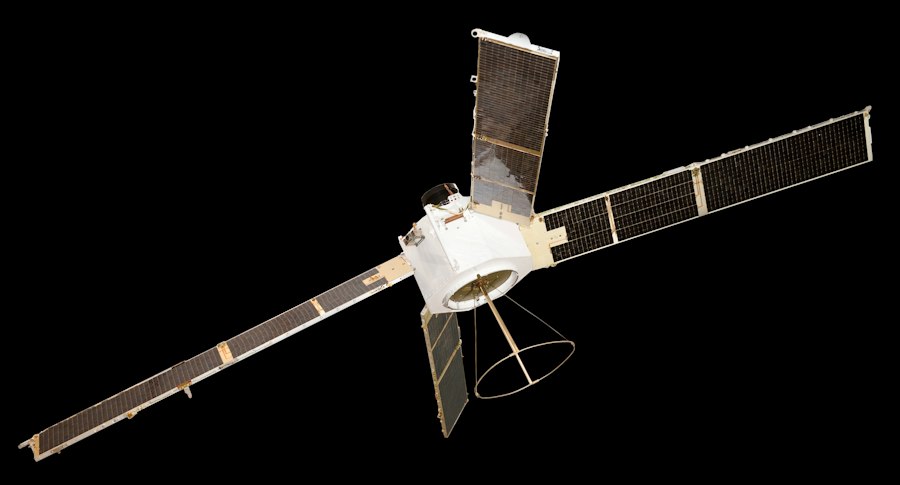
The practical applications of dynamic in-flight payload reconfiguration are vast and revolutionary, touching nearly every aspect of satellite operations.
Adaptable Communication Payloads
This is one of the most prominent areas benefiting from SDS. Communication satellites can be updated to handle new standards or adapt to changing traffic patterns.
Evolving Communication Standards
The telecommunications industry is constantly evolving, with new generations of cellular technology (e.g., 5G, 6G) and satellite communication protocols emerging regularly. A traditional communication satellite might become obsolete if its hardware can’t support these new standards. An SDS, however, can download new software to its SDRs to support these evolving standards. This could mean updating modulation schemes, coding rates, or even entire protocol stacks to be compatible with the latest ground terminals.
This greatly extends the commercial viability of the satellite.
Traffic Management and Bandwidth Optimization
During peak demand periods or in response to specific events (like a major sporting event or a natural disaster), communication traffic patterns can shift dramatically. A software-defined satellite can dynamically reallocate its resources – like bandwidth and power – to different beams or regions to meet these changing demands. It could reconfigure its transponders to prioritize certain types of data, shift frequency bands to avoid interference, or even change the shape and power of its communication beams to focus coverage where it’s most needed.
This real-time optimization maximizes the utilization of the satellite’s capacity.
Multi-Mission and Multi-Service Capabilities
Instead of launching separate satellites for different communication services (e.g., broadband internet, IoT connectivity, direct-to-home television), an SDS can offer multiple services from a single platform. The payload can be reconfigured to switch between these services based on demand. For instance, during the day, it might primarily provide broadband internet, and by night, it could switch to IoT data collection or broadcast services, leveraging the same underlying hardware platform.
This dramatically improves efficiency and reduces launch costs.
Reconfigurable Earth Observation and Remote Sensing
SDS also brings unprecedented flexibility to how we observe and monitor our planet.
Adapting Sensor Modes and Processing
Earth observation satellites carry various types of sensors, such as optical cameras, synthetic aperture radar (SAR), and hyperspectral imagers. With software-defined capabilities, the operating modes of these sensors can be reconfigured in-flight. For example, an optical sensor might switch from a wide-field-of-view, low-resolution mode to a narrow-field-of-view, high-resolution mode, or change its spectral bands to focus on specific phenomena (e.g., detecting chlorophyll for agriculture, or specific gas emissions).
Furthermore, the onboard processing of sensor data can be updated.
This means new algorithms for image enhancement, cloud removal, or feature extraction can be uploaded, reducing the amount of raw data that needs to be downlinked to Earth, saving valuable bandwidth and processing time on the ground.
Responding to Urgent Events
In the event of natural disasters (e.g., floods, wildfires, earthquakes), geopolitical crises, or environmental emergencies (e.g., oil spills), there’s an urgent need for specific types of observational data over affected areas. A software-defined Earth observation satellite can be rapidly re-tasked. Its payload configuration can be optimized to focus on the affected region, capture specific types of imagery, or prioritize data collection for emergency responders.
This responsiveness can significantly improve disaster management and humanitarian aid efforts.
Long-Term Environmental Monitoring Adaptations
Environmental monitoring needs can change over decades. For instance, new pollutants might emerge, or scientists might develop better methods for detecting existing ones. A software-defined satellite can adapt its sensing capabilities to target these new priorities without requiring a new satellite launch.
This ensures that long-term environmental datasets remain relevant and useful as scientific understanding evolves.
Challenges and Considerations
While the benefits of software-defined satellites are clear, their implementation also brings a unique set of technical and operational challenges that must be carefully addressed.
Security Vulnerabilities
The ability to update software in orbit introduces potential security risks that are not as prevalent in fixed-function satellites. If an unauthorized entity gains control of the update mechanism, they could potentially upload malicious software. This could lead to a denial of service, data corruption, or even complete control of the satellite, turning it into a weapon or a tool for espionage. Robust encryption, multi-factor authentication for ground operators, intrusion detection systems, and secure boot processes are paramount to mitigate these risks. Constant monitoring for unusual behavior is also crucial.
Testing and Validation Complexities
Traditional satellites undergo extensive ground testing. With SDS, the number of potential software configurations and interaction modes is practically infinite. Thoroughly testing every possible scenario before launch becomes incredibly difficult, if not impossible. This necessitates advanced simulation environments, rigorous software verification and validation processes, and a highly modular and fault-tolerant software architecture that isolates components. The ability to test and validate updates in a “shadow” or virtual environment on the satellite before full deployment is also a valuable capability.
Radiation Effects and Reliability
Space is a harsh environment. Radiation can cause Single Event Upsets (SEUs) – temporary flips in memory bits – or even Single Event Latch-ups (SELs) – destructive short circuits – in electronic components. While radiation-hardened hardware mitigates some risks, software running on these components must also be designed with fault tolerance in mind. This includes error-correcting codes, watchdog timers, redundant processing units, and robust error handling routines to detect and recover from radiation-induced errors. Ensuring that software updates don’t inadvertently introduce vulnerabilities to these effects is a continuous challenge.
Bandwidth and Latency Constraints
Uploading large software updates to a satellite over long distances can be a slow process due to limited communication bandwidth and inherent signal propagation delays. This requires efficient update mechanisms, such as differential updates (only sending changed parts of the code) and robust protocols that can handle intermittent connections and retransmissions. The size and complexity of updates must be carefully managed to ensure they can be delivered within practical operational windows.
Regulatory and Licensing Hurdles
The dynamic nature of SDS can pose challenges for existing regulatory frameworks. Satellite licenses are often tied to specific frequencies, power levels, and service definitions. If a software-defined satellite can change its operating parameters or even its mission type in-flight, regulators might need new approaches to ensure compliance and avoid interference with other systems. Adapting these frameworks to the flexibility of SDS is an ongoing effort for space agencies and international bodies.
In the realm of advanced satellite technology, the concept of Software-Defined Satellites (SDS) has gained significant attention, particularly for its ability to enable dynamic in-flight payload reconfiguration. This innovative approach allows satellites to adapt their functions and services in real-time, enhancing their operational efficiency and responsiveness to changing mission requirements. For those interested in exploring how technology can be tailored for specific needs, a related article on selecting the right PC for students can provide valuable insights into making informed choices in tech. You can read more about it here.
The Future Trajectory of Software-Defined Satellites
| Metric | Description | Typical Value / Range | Impact on Satellite Operations |
|---|---|---|---|
| Payload Reconfiguration Time | Time required to switch or update payload functions in-flight | Seconds to minutes | Enables rapid adaptation to mission needs or changing conditions |
| Software Update Frequency | How often the satellite payload software can be updated remotely | Multiple times per mission | Allows continuous improvement and bug fixes without physical intervention |
| Data Throughput | Maximum data rate supported by the reconfigurable payload | Up to several Gbps | Supports high-bandwidth applications and flexible data handling |
| Power Consumption | Energy used by the software-defined payload during operation | Varies; typically optimized for efficiency | Impacts satellite power budget and operational lifespan |
| Payload Flexibility | Number of different payload modes or functions supported | 3 to 10+ modes | Enhances mission versatility and multi-purpose use |
| Onboard Processing Capability | Computational power available for payload reconfiguration and data processing | Multi-core processors, FPGA accelerators | Enables complex algorithms and real-time adjustments |
| Latency | Delay between command uplink and payload reconfiguration execution | Milliseconds to seconds | Critical for time-sensitive mission adjustments |
Software-defined satellites are not just a current trend; they represent a fundamental shift in how we design, deploy, and operate space assets. Their trajectory points towards even greater autonomy, interconnectedness, and responsiveness.
Towards Greater Autonomy and AI Integration
The next generation of SDS will likely incorporate significantly more onboard autonomy and artificial intelligence (AI). Instead of relying solely on ground commands for reconfiguration, satellites could learn to adapt their payloads based on observed environmental conditions, traffic demands, or mission priorities.
AI algorithms could optimize resource allocation, detect anomalies, and even propose or initiate payload reconfigurations without constant human intervention.
This would lead to more responsive and efficient operations, especially in scenarios with communication delays or limited ground station contact.
Satellite Constellations and Network Orchestration
The rise of large satellite constellations (e.g., Starlink, OneWeb) provides a perfect ecosystem for software-defined capabilities. Within such constellations, individual satellites can be dynamically reconfigured as part of a larger, orchestrated network. This means optimizing data routing, switching communication links between satellites, or adapting the collective sensing capabilities of the constellation to cover vast areas or respond to localized events. Software-defined networking (SDN) principles, commonly used in terrestrial networks, are being extended to space, allowing for flexible and scalable management of these complex orbital networks.
In-Orbit Servicing and Maintenance Integration
As SDS become more prevalent, the concept of in-orbit servicing and maintenance will become increasingly valuable. While software updates can address functional changes, physical degradation or failures might still occur. Future SDS could be designed to interface with robotic servicing spacecraft that can perform physical upgrades, refuel, or repair components. This combination of software flexibility and physical maintainability would truly revolutionize satellite longevity and capability, creating a more sustainable and adaptable space infrastructure.
Earth-Space-Cloud Continuum
The vision for future space infrastructure involves a seamless integration between Earth-based cloud computing, ground stations, and orbiting software-defined assets. This “Earth-Space-Cloud” continuum would allow for the distributed processing of data, where complex computations can be performed where it makes most sense – either on the satellite, at the ground station, or in a terrestrial cloud data center. SDS would act as intelligent nodes in this continuum, capable of preprocessing data, executing AI models, and dynamically reconfiguring to serve as extensions of terrestrial networks. This paradigm would unlock new levels of data accessibility, real-time insights, and truly global connectivity.
The move to software-defined satellites is more than just a technological upgrade; it’s a paradigm shift towards an agile, resilient, and adaptive space infrastructure.
It promises to unlock unprecedented capabilities for communication, Earth observation, and scientific discovery, ultimately making space assets more versatile and valuable for a rapidly changing world.
Enjoying our content? Make us a preferred source on Google:
Add us as a Preferred Source on Google