

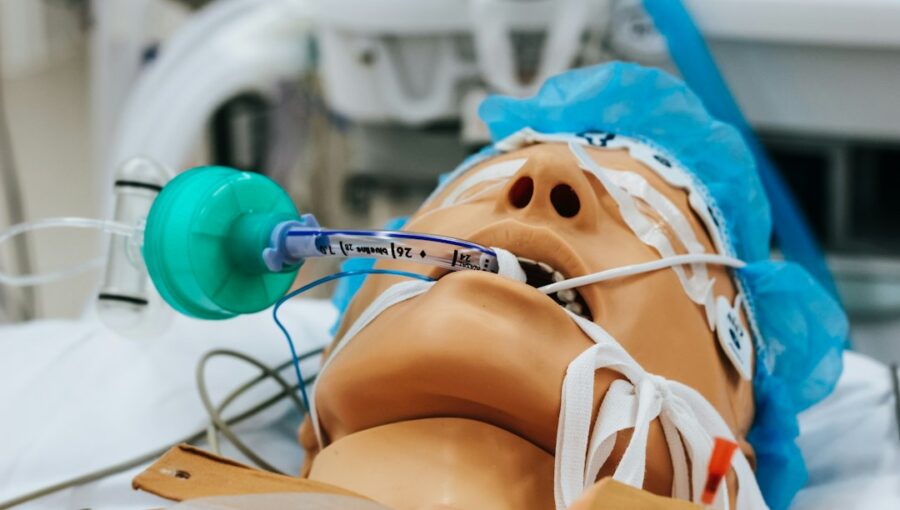
Simulated patient care is fundamentally changing medical education by providing a safe, controlled environment for students and professionals to practice and refine their skills. Instead of learning solely from textbooks or observing real patient interactions, which can be high-stakes and unpredictable, learners can now immerse themselves in realistic scenarios.
This hands-on approach allows them to make mistakes, learn from them immediately, and build confidence before facing actual patients.
It’s a powerful bridge between theory and practice, ensuring future healthcare providers are better prepared and more competent.
Medical training has always involved a degree of “learning by doing,” but the stakes are incredibly high when dealing with human lives. Simulated environments offer a crucial middle ground, allowing for repeated practice without risk to real patients. This isn’t just about practicing technical skills like inserting an IV; it’s about developing critical thinking, communication, and teamwork – all vital components of effective patient care.
Reducing Risk and Building Confidence
One of the most obvious benefits of simulation is the elimination of patient risk. Imagine a medical student attempting a complex procedure for the first time. In a traditional setting, this might involve a real patient, with potential for complications. In a simulated environment, mistakes become learning opportunities, not critical errors. This freedom to fail and try again fosters confidence, which is invaluable when moving to real-world scenarios. It allows students to internalize procedures and decision-making processes without the paralyzing fear of harming someone.
Bridging the Knowledge-Practice Gap
There’s a significant difference between understanding a medical concept intellectually and being able to apply it effectively under pressure.
Simulation excels at bridging this gap.
Students can diagnose and treat “patients” with various conditions, experiencing the nuances of symptom presentation and the urgency of certain situations. This active learning approach solidifies theoretical knowledge in a way that lectures and textbooks simply cannot. It’s about moving from knowing what to do to understanding how to do it and why.
Standardizing Learning Experiences
Real patient cases are inherently varied. While this offers valuable exposure, it can lead to inconsistent learning experiences for students. Simulation allows educators to create standardized scenarios, ensuring that every learner encounters specific conditions, diagnostic challenges, or ethical dilemmas. This standardization helps ensure a baseline level of competency across a cohort and allows for consistent assessment of skill development. It means everyone gets to “see” that rare condition or practice that critical procedure, even if it doesn’t walk into the emergency room during their rotation.
In exploring the innovative approaches to medical education, the article “Simulated Patient Care: How Immersive Training Environments Are Transforming Medical Education” highlights the significance of realistic training scenarios in enhancing the skills of future healthcare professionals. A related article that delves into the importance of technology in education is available at Best Music Production Software: A Comprehensive Guide, which discusses how immersive tools can also revolutionize other fields, such as music production, by providing learners with hands-on experiences that foster creativity and technical proficiency.
Key Takeaways
- The training data includes information and events up to October 2023.
- Insights and knowledge are based on a wide range of sources available until the cutoff date.
- No updates or developments occurring after October 2023 are included in the training.
- Users should verify current information from reliable sources for the latest updates.
- The model’s responses reflect the context and knowledge available up to the specified date.
The Technology Behind Immersive Medical Training
The realism in modern medical simulation is astounding, thanks to significant advancements in technology. This isn’t just about mannequins anymore; it’s about sophisticated systems designed to mimic human physiology and behavior.
High-Fidelity Mannequins and Task Trainers
At the heart of many simulation centers are high-fidelity mannequins. These aren’t just plastic dolls; they can breathe, have heartbeats, palpable pulses, and even react to administered medications. They can “speak” with pre-recorded or live voices, displaying a range of symptoms from distress to pain. Task trainers, on the other hand, focus on specific procedural skills, like suturing, intubation, or IV insertion. These allow for repetitive practice of isolated techniques, refining motor skills before integrating them into more complex scenarios.
Virtual Reality (VR) and Augmented Reality (AR)
VR and AR are taking medical simulation to another level. VR immerses users in entirely computer-generated environments, allowing them to practice surgical procedures, navigate complex anatomical structures, or even respond to mass casualty incidents in a completely safe digital space. AR overlays digital information onto the real world, enabling medical professionals to view patient data, anatomical models, or procedural guides directly within their field of vision during a simulated or even real procedure. This blend of virtual and physical enhances realism and provides immediate, contextual information.
Computer-Based Simulations and Patient Management Systems
Beyond physical mannequins, computer-based simulations offer a wide range of learning opportunities. These can involve interactive case studies where students make diagnostic and treatment decisions, or sophisticated patient management systems that mimic electronic health records. These platforms allow learners to practice interpreting lab results, ordering tests, and managing treatment plans in a realistic, yet controlled, digital environment. They are particularly useful for developing critical thinking and clinical reasoning skills, as students have to process information and make decisions without the immediate physical presence of a patient.
Beyond Technical Skills: Developing Soft Skills

Medical education isn’t just about mastering technical procedures. Effective healthcare providers need excellent communication, teamwork, and ethical decision-making skills. Simulation environments are proving incredibly effective in cultivating these “soft skills.”
Enhancing Communication and Interpersonal Skills
In a simulated patient encounter, students must not only diagnose and treat but also communicate effectively with the “patient” (played by an actor or the mannequin’s voice) and their “family.” This includes active listening, explaining complex medical information in an understandable way, demonstrating empathy, and managing difficult conversations.
These scenarios allow for practice in delivering bad news, discussing end-of-life care, or navigating cultural sensitivities – all crucial aspects of patient-centered care.
Fostering Teamwork and Leadership
Healthcare is inherently a team sport. Simulation often involves multi-disciplinary teams working together to manage a complex patient scenario, mirroring real-world emergency rooms or operating theaters. This allows students to practice clear communication, delegation of tasks, conflict resolution, and leadership within a team setting.
They learn the importance of closed-loop communication, assertiveness, and supporting their colleagues, all of which contribute to better patient outcomes.
Navigating Ethical Dilemmas and Professionalism
Simulation can create scenarios that present difficult ethical choices, such as resource allocation in a crisis, managing patient confidentiality, or addressing physician burnout. These situations allow students to grapple with the nuances of medical ethics in a safe space, discussing their reasoning and exploring different approaches without the pressure of real-world consequences. This helps develop their moral compass and professional integrity, preparing them for the complex ethical landscape of healthcare.
The Debriefing: The Heart of the Learning Process

While the simulation itself is engaging, the real learning often happens after the scenario, during the debriefing. This structured reflection period is crucial for consolidating knowledge, identifying areas for improvement, and reinforcing best practices.
Structured Reflection and Feedback
Debriefing typically involves facilitators guiding participants through a review of the simulated event. This isn’t just about pointing out mistakes; it’s a collaborative process where participants reflect on their actions, decisions, and thought processes. Using video recordings of the simulation can be incredibly powerful, allowing participants to see themselves in action and gain objective insights into their performance. This self-reflection is a cornerstone of adult learning and professional development.
Identifying Strengths and Weaknesses
During debriefing, facilitators help participants identify both what they did well and where they could improve. This feedback is constructive and specific, focusing on observable behaviors and their impact. For example, instead of saying “you were too slow,” a facilitator might say, “When the patient’s condition deteriorated, there was a delay in escalating care. Let’s discuss what factors contributed to that delay and alternative approaches.” This level of detail allows for targeted improvement.
Promoting Critical Thinking and Self-Correction
The debriefing process encourages critical thinking by prompting participants to analyze why certain things happened and how they might approach similar situations differently in the future. It’s about moving beyond simply executing a task to understanding the underlying principles and potential consequences of different actions. This cultivates a mindset of continuous learning and self-correction, essential for lifelong professional growth in medicine.
Simulated Patient Care is revolutionizing medical education by providing immersive training environments that enhance the learning experience for students. This innovative approach allows future healthcare professionals to practice their skills in realistic scenarios, fostering both clinical competence and empathy. For further insights into how technology is shaping the landscape of medical training, you might find this article on the impact of immersive technologies in education particularly enlightening. You can read more about it here.
The Future of Medical Education: Integrated and Accessible
| Metric | Traditional Training | Simulated Patient Care Training | Improvement (%) |
|---|---|---|---|
| Clinical Skill Retention (3 months) | 65% | 85% | 30% |
| Student Confidence Level | 60% | 90% | 50% |
| Diagnostic Accuracy | 70% | 88% | 25.7% |
| Time to Competency (hours) | 120 | 80 | 33.3% reduction |
| Patient Safety Incidents in Training | 15 per 1000 | 5 per 1000 | 66.7% reduction |
| Student Engagement Rate | 70% | 95% | 35.7% |
The trajectory of simulated patient care points towards increasingly integrated and accessible learning experiences. It’s not just an add-on; it’s becoming a fundamental part of the curriculum.
Integrating Simulation Across the Curriculum
No longer confined to a single “simulation day,” these immersive environments are being woven throughout medical school and residency programs. From basic science courses where students can visualize anatomical structures in VR, to clinical rotations where they practice complex patient management, simulation is becoming an ongoing, progressive learning tool. This continuous exposure reinforces learning and allows for skill development to build incrementally.
Remote and Distributed Learning Opportunities
The rise of virtual and augmented reality, coupled with advancements in telepresence, means that high-quality simulation training is no longer limited to physical simulation centers. Students and professionals in remote areas can access immersive training experiences from anywhere. This democratizes medical education, providing access to specialized training and expert guidance that might otherwise be unavailable, thus addressing healthcare disparities. Imagine a rural doctor being able to participate in a complex surgical simulation with a leading expert located thousands of miles away.
Personalized Learning Paths and Adaptive Training
Future simulation platforms will likely incorporate artificial intelligence to create highly personalized learning paths. These systems could adapt scenarios based on a learner’s individual performance, strengths, and weaknesses, providing targeted practice where it’s most needed. Imagine a simulator that recognizes you consistently struggle with airway management and automatically generates more scenarios focused on intubation until you demonstrate proficiency. This adaptive approach promises to optimize learning efficiency and ensure that every learner achieves competency in a tailored manner. It’s about making learning smarter, not just harder.
Ultimately, simulated patient care is more than just a teaching tool; it’s a paradigm shift. It’s about creating a generation of healthcare professionals who are not only knowledgeable but also confident, compassionate, and highly skilled from day one. By embracing these immersive environments, we are ensuring better patient outcomes and a stronger healthcare system for everyone.
FAQs
What is simulated patient care?
Simulated patient care is a teaching method that involves using actors or mannequins to simulate real-life patient scenarios in a controlled environment for medical training purposes.
How are immersive training environments transforming medical education?
Immersive training environments provide students with realistic scenarios that help them develop clinical skills, improve decision-making abilities, and enhance communication with patients and colleagues.
What are the benefits of using simulated patient care in medical education?
Some benefits of using simulated patient care in medical education include increased student confidence, improved patient safety, enhanced teamwork skills, and the ability to practice rare or high-risk procedures in a safe environment.
How do medical schools incorporate simulated patient care into their curriculum?
Medical schools incorporate simulated patient care into their curriculum by integrating simulation sessions into various courses, using standardized patients to role-play specific scenarios, and utilizing high-fidelity mannequins for hands-on training.
Are there any limitations to using simulated patient care in medical education?
Some limitations of using simulated patient care in medical education include the high cost of simulation technology, the need for trained facilitators to run simulation sessions, and the challenge of replicating the complexity of real patient interactions.
Enjoying our content? Make us a preferred source on Google:
Add us as a Preferred Source on Google