


The short answer is yes, we absolutely need robust over-the-air (OTA) patch verification and strong firmware security for software-defined satellites. As these incredible orbital platforms become more like flying data centers, their reliance on software means they’re also inheriting many of the same vulnerabilities found in terrestrial computing. Just like your phone or computer, satellites need regular updates to fix bugs, enhance features, and, most critically, patch security vulnerabilities. Without proper verification, a malicious update could brick a satellite or, worse, turn it into a tool for an adversary. Ensuring firmware integrity is the bedrock upon which all other security measures are built, making it paramount for mission success and orbital safety.
The Evolving Threat Landscape for Software-Defined Satellites
Let’s be frank: satellites aren’t just big, dumb pieces of metal orbiting silently anymore. They’re increasingly sophisticated, highly capable computing platforms, often referred to as “software-defined satellites” (SDS). This shift brings incredible flexibility and reconfigurability, allowing for mission changes, new capabilities, and even recovery from certain failures – all through software updates. However, this flexibility is a double-edged sword. Every line of code, every software module, every configurable parameter introduces a potential attack surface.
The threat landscape for these orbital assets is rapidly evolving, moving beyond traditional jamming or physical destruction. We’re now talking about sophisticated cyberattacks that target the software stack, the command and control links, and even the supply chain that puts that software on board. State-sponsored actors, well-funded criminal organizations, and even sophisticated hacktivist groups are increasingly eyeing space assets as high-value targets. Why? Because disrupting satellite communications or positioning, navigation, and timing (PNT) services can have cascading effects on critical infrastructure, military operations, and global economies.
Think about it: a compromised satellite isn’t just a loss for its operator; it could potentially be weaponized. It could spread malware to ground stations, provide inaccurate data that causes terrestrial accidents, or be commanded to collide with other orbital assets, creating dangerous debris. The stakes are astronomically high (pun intended), making a proactive and robust security posture not just good practice, but an absolute necessity. Relying on old paradigms of “security through obscurity” or physical isolation simply won’t cut it in this interconnected, software-centric space era.
Software Vulnerabilities in Orbit
Just like any complex software system on Earth, satellite software is prone to bugs and vulnerabilities. These can range from simple coding errors that lead to instability, to critical flaws that allow for remote code execution or privilege escalation. The difference, of course, is that fixing these issues on a satellite isn’t as simple as plugging in a USB drive. Everything has to go over-the-air (OTA), often through relatively low-bandwidth, high-latency links.
The challenges are compounded by the often bespoke and proprietary nature of satellite software.
While this can offer some initial resistance to common attack tools, it also means that vulnerabilities might go undiscovered for longer, and patches might take more time and resources to develop and deploy. Furthermore, the extensive use of commercial off-the-shelf (COTS) hardware and software components, while beneficial for cost and speed, can introduce known vulnerabilities if not properly secured and updated. This includes operating systems, hypervisors, communication protocols, and even application-level software running on general-purpose processors within the satellite. Each component, from the lowest-level bootloader to the highest-level application, presents a potential entry point for an adversary.
The Attack Surface: From Ground to Orbit
The attack surface of a software-defined satellite extends far beyond the satellite itself. It encompasses the entire ecosystem:
- Ground Segment: This includes mission control centers, ground stations, data processing facilities, and the networks connecting them. These are often prime targets for initial compromise, as they typically have more direct access to the satellite.
- Command and Control (C2) Links: The communication pathways used to send commands and receive telemetry are critical. Interception, injection, or modification of these signals can lead to unauthorized control or data exfiltration.
- Supply Chain: The entire chain, from chip design and manufacturing to software development and integration, presents opportunities for “backdoors” or malicious code insertion before the satellite even leaves the ground.
- On-Board Software: The operating systems, firmware, applications, and configuration files running on the satellite itself are direct targets for exploitation.
A successful attack often involves a multi-stage approach, perhaps starting with a compromise of a ground station, then using that access to inject malicious updates or commands into the satellite. Understanding this interconnected attack surface is crucial for designing a comprehensive security strategy that includes robust patch verification and firmware integrity at its core.
In the realm of securing software-defined satellites, the importance of robust firmware security and over-the-air patch verification cannot be overstated. As technology evolves, so do the threats that target these advanced systems. For those interested in understanding the broader implications of technology security, a related article on selecting the right hardware for demanding tasks can provide valuable insights. You can read more about this in the article on choosing a laptop for graphic design, which discusses the critical specifications and features necessary for high-performance computing. For further details, visit this link.
Key Takeaways
- The training data includes information and events up to October 2023.
- Insights and knowledge are based on a wide range of sources available until the cutoff date.
- No updates or developments occurring after October 2023 are included in the training.
- Users should verify current information from reliable sources for the latest updates.
- The model’s responses reflect the context and knowledge available up to the specified date.
The Imperative of Over-The-Air Patch Verification
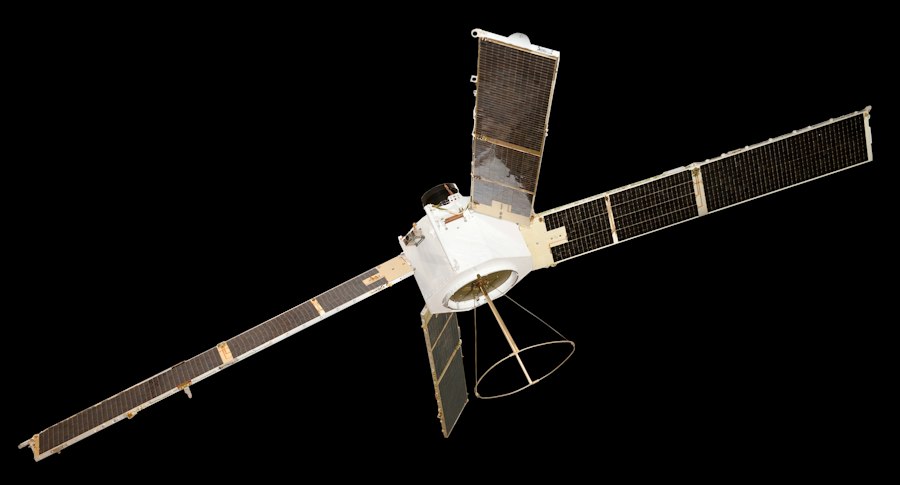
Sending updates to a satellite is a complex operation. Unlike updating your laptop over Wi-Fi, there are significant constraints: limited bandwidth, signal latency, potential interference, and the sheer unforgiving environment of space. But even with these challenges, the need to update – for bug fixes, feature enhancements, and especially security patches – is undeniable. This is where over-the-air (OTA) patch verification becomes absolutely critical.
Patch verification isn’t just about ensuring the patch arrives intact; it’s about confirming its authenticity, integrity, and its intended purpose. Without it, a malicious actor could intercept an update, modify it to introduce malware or backdoors, and then send the compromised version to the satellite. Or, they could craft their own malicious “patch” and try to trick the satellite into installing it. The consequences of such an event could range from temporary service disruption to permanent loss of the satellite, or even using it as a platform for further attacks.
Consider the potential for supply chain attacks: a compromised software developer workstation could inject malicious code into a legitimate patch before it even leaves the ground station. Strong verification mechanisms are the last line of defense against such sophisticated attacks reaching the orbital asset.
Digital Signatures and Trust Chains
The cornerstone of OTA patch verification is the use of robust cryptographic digital signatures. Here’s how it generally works:
- Code Signing: Before a patch leaves the ground, it’s cryptographically signed by the authorized satellite operator or manufacturer using a private key. This private key is a highly protected asset, never leaving a secure environment.
- Public Key On-Board: The corresponding public key (or its hash) is securely embedded within the satellite’s firmware during manufacturing, usually in a hardware root of trust (more on this later).
- Verification on Reception: When the satellite receives an OTA patch, it first verifies the digital signature using the embedded public key. If the signature is valid, it means two things:
- Authenticity: The patch truly originated from the authorized source (the holder of the private key).
- Integrity: The patch has not been tampered with or altered since it was signed. Even a single bit change would invalidate the signature.
- Acceptance/Rejection: Only if the signature is valid will the satellite proceed with the patch installation. If the signature is invalid, the patch is rejected, preventing the installation of unauthorized or corrupted software.
This creates a “chain of trust” from the developer to the satellite. The security of this chain hinges entirely on the security of the private key and the integrity of the public key stored on the satellite.
Versioning and Rollback Capabilities
Beyond basic authenticity and integrity, effective patch management requires careful consideration of versioning and rollback.
- Secure Versioning: Patches should always include clear versioning information. The satellite’s firmware should be designed to only accept updates that are cryptographically signed and represent a newer, authorized version. This prevents “downgrade attacks,” where an adversary attempts to force the satellite to revert to an older, potentially vulnerable software version.
- Atomic Updates: Ideally, updates should be atomic, meaning they either fully succeed or completely fail, without leaving the system in an inconsistent or partially updated state. This often involves techniques like A/B partitioning, where a new update is written to an inactive partition, verified, and then swapped as the active partition. If anything goes wrong, the system can simply revert to the previous, known-good active partition.
- Rollback Mechanisms: Despite rigorous testing, sometimes an update introduces unforeseen issues. A secure rollback mechanism allows the satellite to revert to a previous, stable firmware version if problems arise post-update. This rollback process itself must be secure and verified, preventing an attacker from forcing a rollback to a vulnerable version. The ability to safely revert to a prior state is crucial for operational resilience and mission continuity.
These capabilities are essential for maintaining the operational health and security of the satellite throughout its lifecycle, acknowledging that even legitimate updates can sometimes have unintended consequences.
The Foundation: Firmware Security

If OTA patch verification is the shield against malicious updates, then firmware security is the bedrock upon which that shield stands. Firmware is the low-level software that provides fundamental control over the satellite’s hardware. It’s the first code that runs when the satellite powers on, responsible for booting the operating system and managing critical components.
If the firmware is compromised, all higher-level security measures can be bypassed or rendered useless. An attacker with control over firmware has essentially taken over the entire satellite.
Think of it like the foundation of a house. If the foundation is weak or compromised, no matter how strong the walls or roof are, the entire structure is at risk.
Similarly, a compromised firmware means an attacker can alter the boot process, inject malicious code that persists across reboots, disable security features, or even brick the device entirely. This makes securing the firmware an absolutely paramount concern, starting from the very first moments the satellite powers up.
Hardware Roots of Trust (HRoT)
The most robust approach to firmware security involves establishing a Hardware Root of Trust (HRoT). An HRoT is a dedicated, immutable hardware component (often a specialized chip or section of a microcontroller) that is inherently trusted and cannot be modified.
It serves as the anchor for the entire trust chain.
Here’s how an HRoT typically functions:
- Immutable Identity: The HRoT contains unique cryptographic keys and security features programmed during manufacturing. These keys are burned into the hardware and cannot be changed or extracted.
- First-Stage Boot: When the satellite powers on, the HRoT is the very first piece of code to execute. Its primary job is to verify the integrity and authenticity of the next stage of boot code (e.g., the bootloader).
- Secure Boot Chain: The HRoT cryptographically verifies the bootloader.
If valid, the bootloader is allowed to execute. The bootloader then verifies the operating system kernel, and so on, creating a “chain of trust” from the hardware up to the application software. Each stage verifies the next before passing control.
If any link in this chain is broken (i.e., a component’s signature is invalid), the boot process halts, preventing the execution of compromised code.
- Secure Storage: HRoTs often include secure storage for cryptographic keys, certificates, and other sensitive information, protecting them from unauthorized access or modification.
By establishing trust in hardware that cannot be tampered with, the HRoT provides an incredibly strong defense against attempts to introduce malicious code at the lowest levels of the software stack, safeguarding the integrity of the entire system.
Secure Boot and Measured Boot
Building upon the HRoT, Secure Boot and Measured Boot are critical firmware security mechanisms:
- Secure Boot: This process ensures that only authenticated and authorized software is loaded during the boot sequence. Each component in the boot chain (from bootloader to kernel) is cryptographically signed, and its signature is verified by the preceding trusted component. If a signature check fails at any stage, the boot process is halted, preventing malicious or unverified code from executing.
This directly leverages the digital signature principles discussed for OTA patches, but applies them to the initial power-on sequence. It’s a fundamental barrier against persistent malware and rootkits.
- Measured Boot: While Secure Boot prevents unauthorized code from running, Measured Boot focuses on recording what code actually ran. During the boot process, cryptographic hashes (measurements) of each loaded component are securely stored in a Trusted Platform Module (TPM) or similar secure element.
These measurements provide an unforgeable log of the boot state. This log can then be remotely attested to by ground systems. If the measured boot sequence deviates from an expected “known good” sequence, it indicates a potential compromise, even if the system still booted.
This provides a valuable forensic capability and allows ground operators to detect subtle tampering that might not be immediately obvious.
Together, Secure Boot and Measured Boot provide a robust defense-in-depth strategy for firmware integrity, making it extremely difficult for an attacker to implant persistent malware or subvert the satellite’s fundamental operations.
Protected Firmware Updates
Even the firmware itself needs to be updated sometimes – for bug fixes, performance improvements, or even to patch vulnerabilities found in the bootloader or other low-level components. However, updating firmware is an extremely sensitive operation, as a failed or malicious update can permanently disable the satellite.
Protected firmware updates rely heavily on the same cryptographic principles as OTA patch verification, but with even stricter controls:
- Cryptographically Signed Updates: All firmware updates must be digitally signed by the satellite operator or manufacturer using a highly secure private key. The satellite’s HRoT verifies this signature before allowing any update to proceed.
- Rollback Protection (Anti-Rollback): This is a critical feature that prevents an attacker from forcing the satellite to revert to an older, potentially vulnerable firmware version.
Firmware versions are often incremented with a monotonically increasing counter, and the HRoT or a secure element only allows updates to versions with a higher counter value. This ensures that once a security patch is applied, it cannot be undone by an adversary.
- Dual-Bank Updates: Similar to A/B partitioning for application patches, firmware updates often utilize dual-bank storage. The satellite has two identical firmware storage areas.
A new update is written to the inactive bank, verified, and then activated. If the update fails or introduces issues, the system can revert to the previous, known-good firmware in the other bank, preventing permanent bricking.
- Secure Over-the-Air Delivery: The communication channel used for firmware updates must also be highly secured, typically employing strong encryption and authentication to protect the update package in transit from interception or modification.
By combining these measures, protected firmware updates allow for essential maintenance and security enhancements while minimizing the risk of accidental bricking or malicious subversion of the satellite’s core functionality.
Operationalizing Security: Deployment and Management
Implementing robust patch verification and firmware security isn’t a one-time task; it’s an ongoing operational process that requires careful planning, secure infrastructure, and continuous vigilance. The challenges are compounded by the unique environment of space, where physical access is impossible and communication links are constrained.
Effective operationalization means integrating security considerations into every stage of the satellite lifecycle, from design and development to operations and decommissioning.
It’s about creating a secure pipeline for software updates and maintaining a strong security posture throughout the satellite’s mission.
Secure Development Practices
The journey to secure satellites begins long before launch. Embracing secure development practices is foundational:
- Secure Coding Standards: Developers must adhere to established secure coding guidelines to minimize the introduction of vulnerabilities. This includes avoiding common pitfalls like buffer overflows, improper input validation, and insecure cryptographic implementations.
- Static and Dynamic Analysis: Code should be regularly subjected to static application security testing (SAST) tools to identify potential vulnerabilities before compilation. Dynamic application security testing (DAST) can be used to test the software during execution, looking for runtime issues.
- Threat Modeling: Regularly performing threat modeling helps identify potential attack vectors and vulnerabilities early in the design and development phases. This involves understanding what an attacker might target and how they might do it.
- Security by Design: Integrating security into the very architecture of the satellite software from the outset, rather than trying to bolt it on later, is far more effective and cost-efficient. This includes principles like least privilege, defense in depth, and separation of concerns.
- Supply Chain Security: Verifying the integrity and security of all third-party components (both hardware and software) used in the satellite is critical. This includes vetting suppliers, auditing their security practices, and ensuring that no malicious code or hardware has been introduced during manufacturing.
By embedding security into the development process, the number of vulnerabilities that need to be patched later can be significantly reduced, leading to a more resilient satellite from day one.
Secure Ground Infrastructure and Processes
The ground segment – the mission control centers, data processing facilities, and communication ground stations – is often the most accessible part of the satellite system for an adversary. Therefore, securing this infrastructure is paramount:
- Hardened Systems: All ground systems involved in command, control, and data handling must be rigorously hardened, with strong access controls, network segmentation, intrusion detection systems, and regular vulnerability assessments.
- Secure Key Management: The private keys used for signing OTA patches and firmware updates are the crown jewels of the system. They must be stored in highly secure hardware security modules (HSMs) or similar secure enclaves, with strict access protocols, multi-factor authentication, and audited usage logs. Key rotation policies should also be implemented.
- Isolated Update Environments: The process of preparing, signing, and distributing patches should occur in highly isolated and secure environments, separate from general operational networks. This minimizes the risk of a compromised ground system affecting the update process.
- Personnel Security: Human factors are often the weakest link. Comprehensive background checks, regular security awareness training, and strict adherence to security protocols are essential for all personnel with access to sensitive systems or information.
- Incident Response Planning: Even with the best defenses, compromises can occur. A well-defined incident response plan, specifically tailored for space systems, is crucial for detecting, containing, and recovering from security breaches in a timely and effective manner.
These measures ensure that the ground segment doesn’t become the weakest link, protecting the integrity of commands and updates sent to the satellite.
In the ever-evolving landscape of satellite technology, ensuring the security of software-defined satellites is paramount. A related article discusses the importance of affiliate marketing strategies, particularly on platforms like Instagram, which can be crucial for tech companies looking to promote their innovations in satellite security. For more insights on effective marketing approaches, you can read the article here: best niche for affiliate marketing in Instagram. This connection highlights the intersection of technology and marketing in promoting advancements such as over-the-air patch verification and firmware security.
Future Directions and Remaining Challenges
| Metric | Description | Value / Range | Unit | Notes |
|---|---|---|---|---|
| Patch Verification Time | Time taken to verify an over-the-air patch before deployment | 5 – 15 | minutes | Depends on patch size and cryptographic complexity |
| Firmware Update Success Rate | Percentage of successful firmware updates without rollback | 99.5 | % | Measured over 1000 update attempts |
| Cryptographic Algorithm Used | Type of encryption algorithm for patch verification | RSA-2048 / ECC-256 | N/A | Ensures authenticity and integrity of patches |
| Patch Size Limit | Maximum size of OTA patch supported | 2 – 10 | MB | Depends on satellite memory and bandwidth |
| Firmware Integrity Check Frequency | How often firmware integrity is verified | Every 24 | hours | Automated integrity checks to detect tampering |
| Authentication Latency | Time delay introduced by authentication during OTA update | 1 – 3 | seconds | Minimal impact on update speed |
| Rollback Capability | Ability to revert to previous firmware version if update fails | Yes | N/A | Critical for maintaining satellite functionality |
| Security Breach Incidents | Number of detected security breaches related to OTA updates | 0 | Incidents | Reported in last 12 months |
While the importance of OTA patch verification and firmware security is well-understood, the field is constantly evolving, and significant challenges remain. The drive towards more autonomous, interconnected, and resource-constrained satellites introduces new complexities that demand innovative solutions.
The very nature of space operations – long mission durations, extreme environments, and limited physical access – makes security inherently more difficult than for terrestrial systems. What works on a data center floor doesn’t always translate directly to geosynchronous orbit.
Addressing these future directions and overcoming remaining challenges will require continuous research, international collaboration, and a commitment to integrating cutting-edge security technologies into every aspect of satellite design and operation. We can’t afford to be complacent as the orbital threat landscape becomes more sophisticated.
AI/ML for Anomaly Detection and Self-Healing
The sheer volume of telemetry data generated by modern satellites, combined with the increasing autonomy of these systems, presents an opportunity for leveraging Artificial Intelligence and Machine Learning (AI/ML) for advanced security functions:
- Anomaly Detection: AI/ML algorithms can analyze satellite telemetry, command sequences, and internal system logs to establish a baseline of “normal” behavior. Deviations from this baseline – unusual power draws, unexpected CPU spikes, anomalous communication patterns, or uncharacteristic responses to commands – could indicate a cyberattack or system compromise. These systems could provide early warnings that human operators might miss.
- Predictive Maintenance and Security: Beyond just detecting anomalies, AI/ML could predict potential vulnerabilities or hardware failures based on observed trends, allowing for proactive patching or system adjustments before a critical incident occurs.
- Autonomous Response: In situations where communication with the ground is delayed or interrupted, future highly autonomous satellites might use AI/ML to initiate limited self-healing or defensive actions, such as isolating a compromised module, reverting to a known-good configuration, or temporarily shutting down non-essential services, while awaiting further instructions from the ground. Of course, such autonomous actions require careful validation and fail-safes to prevent unintended consequences.
The integration of AI/ML, while promising, also introduces new security considerations. The AI models themselves become potential targets for adversarial attacks, where subtle data manipulation could lead to misidentification of threats or even erroneous autonomous actions. Securing the AI/ML models and their data inputs will be a crucial area of research.
Quantum-Resistant Cryptography
Today’s digital signature and encryption schemes, primarily based on RSA and ECC (Elliptic Curve Cryptography), rely on the computational difficulty of certain mathematical problems. However, the advent of sufficiently powerful quantum computers poses a significant threat to these cryptographic foundations. A large-scale quantum computer could potentially break these algorithms, rendering current secure boot mechanisms and patch verification systems vulnerable to compromise.
- Post-Quantum Cryptography (PQC): The development and standardization of quantum-resistant (or post-quantum) cryptographic algorithms are actively underway. These algorithms are designed to remain secure even against attacks from quantum computers.
- Transition Planning: The transition to PQC will be a monumental effort, especially for long-lifecycle assets like satellites. Satellite operators need to start planning now for how they will upgrade their cryptographic infrastructure, including the hardware roots of trust and key management systems, to incorporate PQC algorithms. This could involve software updates to support new algorithms or even hardware refreshes for future satellite generations.
- Hybrid Approaches: During the transition period, hybrid cryptographic schemes (combining classical and PQC algorithms) might be employed to provide a layer of protection against both classical and nascent quantum attacks, offering a pathway to future-proof the security architecture.
Addressing the quantum threat proactively is essential to ensure the long-term security and resilience of space assets against future capabilities of sophisticated adversaries.
Global Collaboration and Standardization
The security of space assets is not an issue that any single nation or entity can tackle alone. Satellites often provide global services, and a compromise in one region can have worldwide ramifications.
- Information Sharing: Establishing robust frameworks for sharing threat intelligence, vulnerability disclosures, and best practices among satellite operators, manufacturers, and government agencies is crucial for a collective defense.
- International Standards: Developing and adhering to common international security standards and certifications for satellite hardware, software, and operational practices can help raise the baseline security level across the industry. Organizations like the Space Information Sharing and Analysis Center (Space ISAC) and various ISO working groups are already playing a role here.
- Regulatory Harmonization: As the commercial space industry grows, there will be a greater need for harmonized international regulations and policies that address cyber security for space systems, ensuring a consistent level of protection across different jurisdictions.
- Testing and Validation: Collaborative efforts for independent security testing, penetration testing, and red-teaming exercises specific to space systems can help uncover vulnerabilities and validate the effectiveness of security measures before launch.
By fostering a culture of collaboration and working towards common security goals, the global space community can collectively enhance the resilience of its vital orbital infrastructure against evolving cyber threats. The future of secure space operations depends on these concerted efforts.
FAQs
What are software-defined satellites?
Software-defined satellites are spacecraft that utilize software to control their operations and functionalities, allowing for greater flexibility and adaptability compared to traditional hardware-based systems. This technology enables updates and modifications to be made via software, which can enhance performance and extend the satellite’s operational life.
Why is over-the-air patch verification important for satellites?
Over-the-air patch verification is crucial for satellites as it ensures that any software updates or patches deployed remotely are authentic and have not been tampered with. This process helps maintain the integrity and security of the satellite’s operations, protecting it from potential cyber threats and ensuring reliable performance in space.
What are the main security challenges faced by software-defined satellites?
Software-defined satellites face several security challenges, including vulnerabilities to cyberattacks, unauthorized access to software updates, and the risk of malware being introduced through over-the-air updates. Additionally, the complexity of satellite systems can make it difficult to implement robust security measures effectively.
How can firmware security be enhanced in software-defined satellites?
Firmware security in software-defined satellites can be enhanced through various measures, such as implementing strong encryption for data transmission, using secure boot processes to verify firmware integrity, and regularly conducting security audits and vulnerability assessments. Additionally, employing multi-factor authentication for access to satellite systems can further strengthen security.
What role does encryption play in securing satellite communications?
Encryption plays a vital role in securing satellite communications by protecting data transmitted between the satellite and ground stations from interception and unauthorized access. By encrypting communication channels, sensitive information can be safeguarded against eavesdropping and cyber threats, ensuring the confidentiality and integrity of the data being transmitted.
Enjoying our content? Make us a preferred source on Google:
Add us as a Preferred Source on Google