


Connecting remote areas has always been a tough nut to crack for traditional cellular networks. Even with all our technological advancements, vast stretches of land and sea remain digital deserts. That’s where satellite-to-cell Non-Terrestrial Network (NTN) connectivity comes in. Essentially, it’s about using satellites to extend mobile phone service, bringing a new level of reach to places land-based towers can’t touch. The 3GPP standards organization plays a crucial role here, laying down the technical rules that make it possible for your regular smartphone to talk to a satellite, bridging those coverage gaps efficiently and reliably. This isn’t some far-off sci-fi concept; it’s being actively developed and implemented to bring basic connectivity, and eventually more, to virtually anywhere.
The Core Challenge of Remote Coverage
Think about it: building cell towers is expensive and often impractical in sparsely populated or geographically challenging regions. Laying fiber optic cables or even just running power lines to these areas presents similar hurdles.
This leaves a significant portion of the global population, and even more of its landmass, without reliable cellular service.
We’re not just talking about remote villages anymore; this includes vast agricultural lands, crucial maritime shipping lanes, wilderness areas for emergency services, and even air travel.
Why Traditional Networks Fall Short
Traditional cellular networks, like 4G LTE and 5G, rely on a dense grid of base stations on the ground. Each base station covers a relatively small area, and for continuous service, these areas need to overlap. This model works brilliantly in urban and suburban environments where subscriber density justifies the infrastructure investment. However, as you move into rural or remote locations, the cost per subscriber skyrockets. The return on investment diminishes rapidly, making it economically unfeasible for mobile network operators (MNOs) to deploy and maintain ground-based infrastructure. The sheer physical distances and difficult terrain also pose significant engineering challenges, from getting materials to remote sites to providing a stable power supply.
The Growing Demand for Ubiquitous Connectivity
Despite these challenges, the demand for connectivity is universal. People in remote areas still need to communicate, access information, and increasingly, leverage digital tools for work, education, and healthcare. Furthermore, industries like agriculture, logistics, and resource management are becoming increasingly reliant on connected devices for efficiency and safety, even in the most isolated locations. Emergency services, disaster relief, and defense operations also require reliable communication channels that are resilient to terrestrial infrastructure failures. This ever-growing demand highlights a critical gap that traditional networks simply cannot fill economically or practically. Satellite-to-cell NTN aims to address this directly by bypassing the need for extensive ground infrastructure.
In exploring the advancements in Satellite-to-Cell NTN connectivity, it is essential to consider how these innovations are complemented by the latest developments in mobile technology. A related article that delves into the best tablets equipped with SIM card slots can provide insights into devices that leverage such connectivity solutions for enhanced remote communication. For more information, you can read the article here: Best Tablet with SIM Card Slot. This intersection of satellite technology and mobile devices highlights the growing importance of bridging remote coverage gaps through 3GPP standards.
Key Takeaways
- The training data includes information and events up to October 2023.
- Insights and knowledge are based on a wide range of sources available until the cutoff date.
- No updates or developments occurring after October 2023 are included in the training.
- Users should verify current information from reliable sources for the latest updates.
- The model’s responses reflect the context and knowledge available up to the specified date.
How Satellite-to-Cell NTN Works
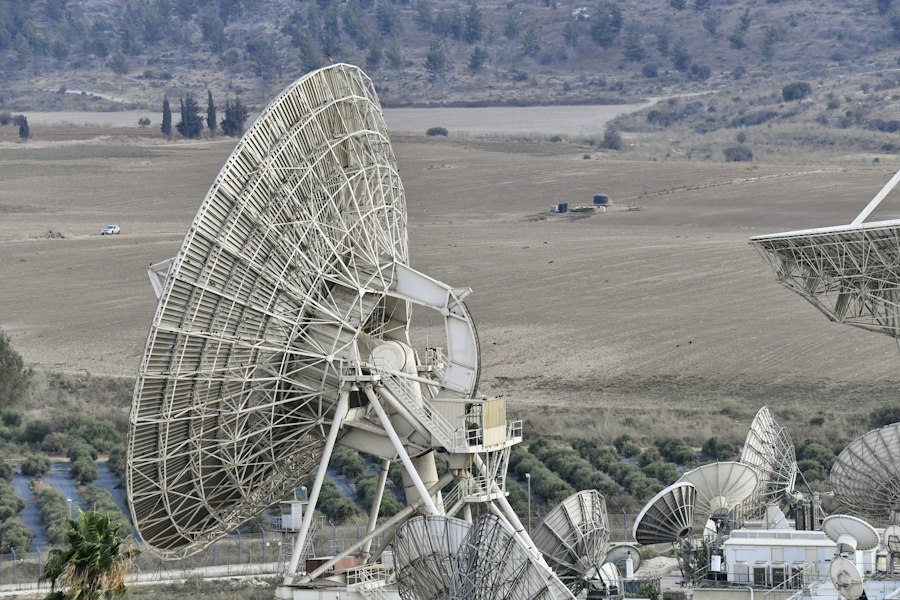
At its heart, satellite-to-cell NTN allows your everyday smartphone to connect directly to a satellite orbiting the Earth. Instead of sending signals to a nearby cell tower, your phone’s radio waves are picked up by a satellite, which then relays them to a ground station connected to the global telecommunications network. This might sound simple, but making it work with existing phone technology and network protocols is where the magic, and the 3GPP standards, come in.
The Role of Satellites: LEO, MEO, and GEO
Different types of satellites play different roles in NTN.
- Low Earth Orbit (LEO) Satellites: These orbit relatively close to Earth, typically between 160 and 2,000 kilometers altitude. Their proximity means lower latency (less delay in signal transmission) and stronger signals on the ground, which is crucial for direct-to-device connectivity. However, they move quickly across the sky, requiring a large constellation of satellites and sophisticated handoff mechanisms to maintain a continuous connection. Companies like Starlink and OneWeb are prime examples of LEO constellations.
- Medium Earth Orbit (MEO) Satellites: Positioned between LEO and GEO, usually from 2,000 to 35,786 kilometers. They offer a balance between coverage area and latency. Fewer MEO satellites are needed compared to LEO to cover the same area, but their signals are weaker and have higher latency than LEO.
- Geostationary Earth Orbit (GEO) Satellites: These satellites orbit at approximately 35,786 kilometers above the equator, appearing stationary from the ground. A single GEO satellite can cover a very large geographical area (up to a third of the Earth’s surface). The downside is significant latency due to the long distance the signal has to travel, and the weaker signal strength on the ground often requires specialized, larger antennas, historically limiting direct smartphone connectivity. However, advancements are being made to enable some forms of GEO-based direct-to-device, primarily for very basic messaging.
The Ground Segment: Gateways and Network Integration
The ground segment is just as vital as the space segment. This includes:
- Gateway Earth Stations: These are large antenna arrays on the ground that communicate with the satellites. They act as the bridge between the satellite constellation and the terrestrial core network.
- NTN Gateways (NTN-GW): Within the terrestrial network, specific gateway functions are needed to handle the unique characteristics of satellite links, such as higher latency and potential Doppler shifts (frequency changes due to satellite movement). These gateways translate the satellite-received signals into a format compatible with the standard cellular core network.
- Core Network Integration: The NTN gateway then connects to the existing 5G or 4G core network. This means that a call or message originating from a satellite-connected phone can be routed to any other phone, whether it’s connected via a terrestrial cell tower or another satellite. This seamless integration is key to making NTN connectivity feel like an extension of your regular mobile service.
Technical Challenges and Solutions
Making all this work isn’t trivial.
- Signal Strength: Satellites are much further away than cell towers, so their signals reaching your phone are significantly weaker. This means phones need to be sensitive enough to pick up these faint signals and powerful enough to transmit back up to the satellite.
- Doppler Shift: LEO satellites move very fast relative to the Earth’s surface. This movement causes a shift in the frequency of the radio waves (the Doppler effect), which your phone and the satellite need to compensate for in real-time to maintain a stable connection.
- Latency: The sheer distance signals travel to and from a satellite introduces delays (latency). While LEO satellites minimize this, it’s still higher than terrestrial networks. This impacts real-time applications like voice calls and gaming.
- Handover: As LEO satellites whiz across the sky, a connected phone needs to seamlessly switch from one satellite to the next (a “handover”) to maintain a continuous connection. This requires sophisticated coordination between the satellite constellation and the network.
- Regulatory Hurdles: Assigning and managing spectrum for satellite-to-cell communication, and coordinating across national borders, presents complex regulatory challenges.
These challenges are precisely what 3GPP standards aim to address, by defining mechanisms and protocols that allow existing cellular technologies to adapt to the unique environment of space.
3GPP’s Role in Standardizing NTN

The 3rd Generation Partnership Project (3GPP) is the organization responsible for developing the technical specifications for cellular telecommunications technologies, including 3G, 4G LTE, and 5G. Their involvement in NTN is absolutely critical because it ensures interoperability, scalability, and that future satellite-to-cell services can leverage existing cellular ecosystems. Without these standards, every satellite provider would essentially be building a proprietary, isolated network, hindering widespread adoption and seamless user experience.
Release 17: The Foundation for NTN Integration
3GPP Release 17, finalized in 2022, was a monumental step forward for NTN.
It introduced the foundational specifications for integrating Non-Terrestrial Networks into the 5G system architecture. This release primarily focused on:
- NR NTN (New Radio Non-Terrestrial Network): Adapting the 5G New Radio air interface to work with satellites. This includes defining how 5G UEs (User Equipment, i.e., your phone) communicate with satellites, accounting for challenges like long propagation delays, large Doppler shifts, and satellite mobility.
It enables direct connectivity for 5G-capable devices.
- IoT NTN (Internet of Things Non-Terrestrial Network): This part of Release 17 focused on providing satellite connectivity for IoT devices, often using simpler, lower-power technologies like NB-IoT (Narrowband-IoT) and eMTC (enhanced Machine-Type Communication). The goal here is to support massive deployments of IoT sensors in remote locations for applications like asset tracking, environmental monitoring, and smart agriculture. This is particularly important because many IoT devices are designed for long battery life and low data rates, which are well-suited to the constraints of satellite communication.
Key Aspects of 3GPP NTN Standardization
The standards address several crucial technical areas:
- Physical Layer Adaptation: This involves modifying the radio transmission and reception processes to cope with the unique characteristics of satellite links.
For example, the standards specify how to estimate and compensate for Doppler shifts, how to handle longer signal propagation times, and how to manage potentially weaker received signals. It also looks at adapting power control mechanisms to ensure efficient uplink transmission to the satellite.
- Radio Resource Management (RRM) Enhancements: Satellite networks need specialized RRM techniques. This includes managing cell selection and reselection, ensuring efficient handovers between satellites or between terrestrial and satellite networks, and optimizing resource allocation to maximize throughput and minimize interference.
Because satellites move, the “cell” they provide changes location, which is fundamentally different from a static terrestrial cell.
- Network Architecture and Protocol Modifications: The 3GPP standards outline necessary changes to the 5G core network to support NTN. This involves defining new interfaces and protocols for the NTN gateway functions, ensuring that the core network can correctly route data and manage sessions for satellite-connected users. This is essential for seamless integration with existing MNO infrastructure.
- User Equipment (UE) Requirements: For your existing smartphone or future satellite-enabled device to work, the standards define the necessary capabilities. This includes specifications for radio frequency (RF) performance, power consumption, and processing capabilities to handle the unique demands of satellite communication. The goal is to make direct-to-device connectivity possible with minimal or no modifications to the existing phone hardware where feasible, or to guide the development of new, compatible devices.
- Synchronization and Timing: Maintaining precise synchronization between the UE, the satellite, and the ground network is critical for proper operation.
The standards address how timing advanced and other synchronization mechanisms are handled over long distances and with moving satellites.
Looking Ahead: Release 18 and Beyond
3GPP doesn’t stop at Release 17. Subsequent releases, particularly Release 18 (often referred to as 5G-Advanced), continue to refine and expand NTN capabilities. Future work areas include:
- Enhanced Support for Voice and SMS: While basic messaging is available, improving the quality and reliability of voice calls and more robust SMS functionality over NTN is a focus.
- Higher Throughput and Latency Optimization: As technology progresses, the aim is to enable higher data rates and reduce latency further, bringing satellite performance closer to terrestrial networks for a wider range of applications.
- Interworking with Terrestrial Networks: Further enhancing the seamless transition and load balancing between terrestrial and non-terrestrial networks, potentially allowing devices to switch automatically based on signal quality or availability.
- New Use Cases: Exploring specific requirements for emerging applications like drone communication, enhanced IoT deployments, and specialized public safety communication.
- Satellite-to-Satellite Links (ISL): While not directly “satellite-to-cell,” inter-satellite links (ISL) are crucial for the overall efficiency and global coverage of NTN.
They allow satellites to relay data to each other, reducing the reliance on a vast network of ground stations and minimizing latency by allowing data to stay in space for longer portions of its journey. 3GPP work might indirectly influence how these links are integrated into the overall network architecture.
The ongoing work within 3GPP is about making satellite connectivity a true, reliable, and integrated part of the global mobile network, not just a niche solution.
Practical Applications and Use Cases
The ability to connect beyond the reach of traditional cell towers opens up a world of practical possibilities, impacting various sectors and improving safety and efficiency in numerous scenarios. This isn’t just about getting a signal in the wilderness; it’s about enabling critical services and economic growth.
Emergency Services and Disaster Relief
When natural disasters strike – earthquakes, hurricanes, floods – terrestrial communication infrastructure is often the first thing to fail. Cell towers are toppled, fiber cables are cut, and power outages are widespread. Satellite-to-cell NTN provides a vital lifeline in these situations.
- First Responder Communication: Emergency personnel can maintain communication in affected areas, coordinating rescue efforts and sharing critical information even when ground networks are down.
- Public Safety Messaging: Basic SMS and location services can enable individuals trapped in disaster zones to signal for help, providing invaluable data for search and rescue teams.
- Remote Monitoring: Post-disaster, NTN can facilitate the deployment of temporary sensors for monitoring conditions like floodwaters or seismic activity, aiding in recovery efforts.
Maritime and Aviation Connectivity
Vast stretches of oceans and airspace are completely devoid of terrestrial network coverage. This poses challenges for both commercial and recreational activities.
- Commercial Shipping: Enables crews to stay connected with family, access critical weather updates, and allow for efficient vessel management and cargo tracking. It also supports IoT sensors on ships for predictive maintenance and operational efficiency.
- Leisure Boating: Offers peace of mind for recreational sailors, providing a means of communication for emergencies or simply staying in touch during long voyages.
- Aviation Communication: While commercial aircraft already have satellite communication systems, NTN could eventually offer more ubiquitous, always-on connectivity for passengers’ personal devices, or for air traffic control in remote airspace.
Remote Agriculture and Industrial IoT
Many agricultural and industrial operations occur in areas with little to no cellular coverage. NTN unlocks the potential of IoT in these sectors.
- Precision Agriculture: Sensors deployed in vast fields can monitor soil conditions, crop health, and livestock location, sending data back to farmers for optimized irrigation, fertilization, and herd management. This can significantly reduce waste and increase yields.
- Resource Extraction: Mining, oil, and gas operations often take place in extremely remote and harsh environments. NTN provides reliable communication for safety, equipment monitoring, and operational control in these isolated sites.
- Pipeline and Infrastructure Monitoring: Long stretches of pipelines, power grids, and other critical infrastructure often run through uninhabited areas. NTN-connected sensors can detect anomalies, leaks, or potential faults, enabling proactive maintenance and preventing costly failures.
Bridging the Digital Divide
Beyond specialized applications, the fundamental promise of satellite-to-cell NTN is to extend basic connectivity to the billions of people worldwide who remain underserved by traditional networks.
- Basic Communication: Providing essential SMS and potentially voice services to individuals in rural communities who currently have no means of communication.
- Access to Information: Enabling access to critical information, educational resources, and even basic financial services, fostering economic development and social inclusion.
- Healthcare in Remote Areas: Facilitating telemedicine consultations and allowing remote health workers to communicate with specialists, improving healthcare access in underserved regions.
Hiking, Camping, and Outdoor Recreation
For outdoor enthusiasts, getting lost or injured without a way to call for help is a serious concern.
- Safety and Emergency Calls: Even a basic ability to send an SOS message or make an emergency call from a remote trail can be life-saving.
- Basic Navigation: While not replacing dedicated GPS devices, satellite-enabled communication can support sending location data or receiving essential updates in areas without terrestrial signals.
These examples highlight that NTN is not just about extending coverage for coverage’s sake. It’s about empowering people, enhancing safety, improving efficiency, and unlocking new opportunities in previously disconnected parts of the world.
In exploring the advancements in Satellite-to-Cell NTN Connectivity, it is essential to consider how 3GPP standards play a pivotal role in bridging remote coverage gaps. A related article discusses the best software for literature reviews, which can be invaluable for researchers looking to delve deeper into this topic. By utilizing effective tools, one can streamline the process of gathering and analyzing relevant literature, ultimately enhancing the understanding of how these standards impact connectivity in underserved areas. For more insights, you can read the article here.
The Future Landscape of Satellite-to-Cell Connectivity
| Metric | Description | Value / Specification | Relevance to Satellite-to-Cell NTN Connectivity |
|---|---|---|---|
| 3GPP Release | Standard version introducing NTN support | Release 17 and beyond | Defines protocols and features for satellite integration with cellular networks |
| Frequency Bands | Frequency ranges used for NTN communication | Ku-band (12-18 GHz), Ka-band (26.5-40 GHz), L-band (1-2 GHz) | Supports different satellite orbits and coverage scenarios |
| Latency | Round-trip time for signal transmission | 600 ms (GEO satellites), 30-50 ms (LEO satellites) | Impacts real-time communication and handover performance |
| Coverage Area | Geographical area served by satellite NTN | Up to entire continents (GEO), regional coverage (LEO/MEO) | Enables connectivity in remote and underserved regions |
| Data Rate | Maximum throughput achievable | Up to 100 Mbps (depending on satellite and link) | Supports broadband services over satellite links |
| Handover Support | Ability to switch between satellite and terrestrial cells | Seamless handover protocols defined in 3GPP | Ensures continuous connectivity in hybrid networks |
| Power Consumption | Energy required for NTN communication | Optimized for low power in user equipment | Critical for battery-operated devices in remote areas |
| UE Compatibility | User Equipment support for NTN | Enhanced UE categories with NTN capabilities | Allows existing cellular devices to connect via satellite |
The journey for satellite-to-cell NTN is just beginning, and the future promises an exciting evolution of capabilities, network integration, and widespread adoption. While initial deployments focus on basic connectivity, the trajectory is towards more robust, higher-speed services.
Evolving Capabilities: Speed, Latency, and Services
Current direct-to-device satellite services, especially those relying on existing phone hardware, are often limited to basic messaging and perhaps low-speed data. However, this will change.
- Increased Bandwidth: Future satellite constellations and improved 3GPP standards will enable higher data rates, supporting more data-intensive applications beyond simple text. This means more reliable web browsing, email, and potentially even streaming for some users.
- Reduced Latency: As LEO constellations become denser and inter-satellite links (ISL) become more prevalent, the end-to-end latency will decrease, making real-time applications like voice calls and video conferencing more feasible and user-friendly.
- Enhanced Services: We’ll see a shift from “emergency-only” or “basic messaging” to more comprehensive services, potentially including full voice calls, more robust IoT data, and even dedicated channels for specific industries like maritime or aviation.
- Next-Generation Satellite Phones: While the dream is for your existing smartphone to do everything, specialized devices optimized for satellite communication, offering enhanced antennas and power management, will likely emerge for users requiring the highest performance in the most challenging conditions.
Hybrid Networks and Seamless Handovers
The ultimate vision for NTN is not to replace terrestrial networks but to complement them. The future will be characterized by hybrid networks where devices seamlessly switch between satellite and terrestrial connections.
- Automatic Switching: Smartphones will intelligently detect when a terrestrial network is unavailable or performing poorly and automatically switch to an available satellite connection without user intervention.
- Dynamic Load Balancing: Network operators will be able to dynamically route traffic between terrestrial and non-terrestrial assets based on network congestion, cost, and service requirements. This means optimizing network resources and ensuring consistent service quality.
- Enhanced Roaming Agreements: Mobile network operators will forge deeper partnerships with satellite providers, making satellite connectivity feel like a natural extension of a user’s existing cellular plan, potentially with transparent roaming charges. This will involve complex billing and service management integration.
Regulatory and Economic Considerations
As NTN becomes more widespread, regulatory and economic frameworks will need to evolve to support its growth.
- Spectrum Harmonization: International agreements on spectrum allocation and usage for NTN will be crucial to avoid interference and ensure global interoperability.
- Licensing and Rights of Way: Satellite operators and MNOs will need clear licensing frameworks for deploying and operating NTN services, potentially involving new models for cross-border operations.
- Business Models: Innovative business models will emerge, ranging from direct-to-consumer satellite plans to wholesale agreements where MNOs offer satellite connectivity as part of their existing packages. The challenge will be to make these services affordable and accessible to the target demographic.
- Investment and Competition: Significant investment will continue to flow into satellite constellation deployment and ground infrastructure. This will foster competition among satellite providers and MNOs, driving innovation and potentially lowering costs for end-users.
The Role of 6G and Beyond
Looking further ahead, 6G is already being envisioned as a network that is intrinsically integrated with NTN from its inception. Unlike 5G, where NTN was added as an enhancement, 6G aims to blur the lines between terrestrial, aerial (drones, high-altitude platforms), and satellite networks.
- Integrated Air Interface: 6G standards will likely incorporate NTN considerations from the ground up, potentially leading to a unified air interface that is highly flexible and adaptable to various communication environments.
- Cognitive and Autonomous Networks: Future networks will be more intelligent, autonomously managing resources and optimizing connectivity across all available assets – terrestrial, aerial, and satellite – to deliver the best possible user experience.
- Global Coverage as a Given: The long-term vision is a world where “no signal” is a phrase of the past, with ubiquitous, reliable connectivity available everywhere, regardless of location, thanks to a fully integrated and intelligent network of networks.
The future of satellite-to-cell connectivity, driven by ongoing 3GPP standardization, is one of increasing integration, enhanced performance, and truly ubiquitous global coverage, fundamentally changing how we connect and interact with the world around us.
The Impact on Mobile Network Operators
The rise of satellite-to-cell NTN presents both significant opportunities and some strategic challenges for traditional Mobile Network Operators (MNOs). It’s not a simple replacement of their existing infrastructure, but rather a powerful tool to expand their service footprint and create new revenue streams. Understanding this dynamic is key to seeing how NTN will reshape the telecommunications landscape.
Expanding Coverage and Service Footprint
This is perhaps the most immediate and obvious benefit for MNOs.
- Eliminating Coverage Gaps: NTN allows MNOs to offer service in areas where deploying traditional cell towers is uneconomical or physically impossible. This includes remote rural areas, vast highways, maritime routes, and even air corridors. For many MNOs, the cost of extending their terrestrial network beyond a certain population density is simply too high. NTN offers a way to serve these “unconnected” customers without massive capital expenditure on ground infrastructure.
- Enhanced Roaming Services: For customers traveling to remote regions, NTN ensures they remain connected, providing a better roaming experience and potentially generating new roaming revenues for MNOs.
- Competitive Advantage: MNOs that embrace NTN early can differentiate themselves by offering truly ubiquitous coverage, attracting customers who frequently travel to or reside in remote areas.
New Revenue Streams and Market Opportunities
NTN isn’t just about filling gaps; it’s about unlocking entirely new markets.
- IoT in Remote Locations: MNOs can offer specialized IoT connectivity solutions for industries like agriculture, logistics, utilities, and mining, which operate extensively in remote areas. This opens up a significant market for device connectivity, data management, and value-added services.
- Enterprise Solutions: Businesses with distributed operations, such as transportation companies, emergency services, and energy companies, can be offered tailored NTN solutions for critical communication and data transfer.
- Tiered Service Offerings: MNOs can introduce new service tiers, offering basic satellite messaging as a premium add-on or emergency-only feature for all subscribers, or more comprehensive data plans for those who need it.
Strategic Partnerships and Integration Challenges
Leveraging NTN effectively requires MNOs to navigate a new set of strategic and technical considerations.
- Partnerships with Satellite Operators: MNOs will likely partner with established or emerging satellite operators (e.g., SpaceX, OneWeb, AST SpaceMobile, Lynk Global) rather than launching their own constellations. These partnerships will define the terms of service, revenue sharing, and technical integration.
- Network Integration: While 3GPP standards aim for seamless integration, MNOs still need to adapt their core networks and operational support systems (OSS) to handle the unique characteristics of satellite links. This includes managing higher latency, Doppler shifts, and potentially different billing models.
- Spectrum Management: MNOs typically hold licenses for specific terrestrial spectrum. Integrating NTN may involve utilizing the satellite operators’ spectrum or new shared/hybrid spectrum models, requiring careful regulatory navigation.
- User Experience Management: MNOs will be responsible for ensuring a consistent and positive user experience across both terrestrial and satellite networks. This includes managing quality of service (QoS), addressing customer support for satellite-specific issues, and ensuring seamless handovers.
Impact on Infrastructure Investment
NTN can fundamentally alter the MNOs’ infrastructure investment strategies.
- Reduced Terrestrial Build-Out: For areas with low population density, MNOs might choose to use NTN instead of building costly new cell sites, reallocating capital to areas with higher returns or to enhance existing urban networks.
- Optimized Network Planning: NTN provides a new layer in network planning, allowing MNOs to optimize their overall network design, using terrestrial for high-density areas and satellite for wide-area coverage.
- Resilience and Redundancy: By offering a satellite-based backup, MNOs can enhance the resilience of their networks, providing a critical communication lifeline during outages caused by natural disasters or infrastructure failures.
Ultimately, satellite-to-cell NTN isn’t a threat to MNOs but a powerful expansion pack. It allows them to overcome the physical and economic limitations of terrestrial networks, significantly broadening their addressable market and enabling them to fulfill the promise of truly ubiquitous connectivity. Those MNOs that strategically integrate NTN into their long-term plans will be well-positioned to thrive in the evolving telecommunications landscape.
FAQs
What is Satellite-to-Cell NTN Connectivity?
Satellite-to-Cell NTN Connectivity refers to the seamless integration of satellite communication with existing cellular networks to extend coverage to remote or underserved areas.
How do 3GPP Standards contribute to bridging coverage gaps?
3GPP Standards provide a framework for interoperability between satellite and cellular networks, enabling a smooth handover of connections between the two technologies to ensure continuous coverage.
What are the benefits of Satellite-to-Cell NTN Connectivity?
The benefits include improved connectivity in remote areas, enhanced emergency communication capabilities, support for IoT devices in isolated locations, and overall increased network resilience.
Which industries can benefit from Satellite-to-Cell NTN Connectivity?
Industries such as maritime, aviation, agriculture, emergency services, and IoT providers can benefit significantly from Satellite-to-Cell NTN Connectivity by gaining access to reliable and extended network coverage.
How does Satellite-to-Cell NTN Connectivity impact global connectivity efforts?
Satellite-to-Cell NTN Connectivity plays a crucial role in bridging the digital divide by providing connectivity to areas where traditional cellular networks may not reach, thus contributing to global efforts to ensure universal access to communication services.
Enjoying our content? Make us a preferred source on Google:
Add us as a Preferred Source on Google