

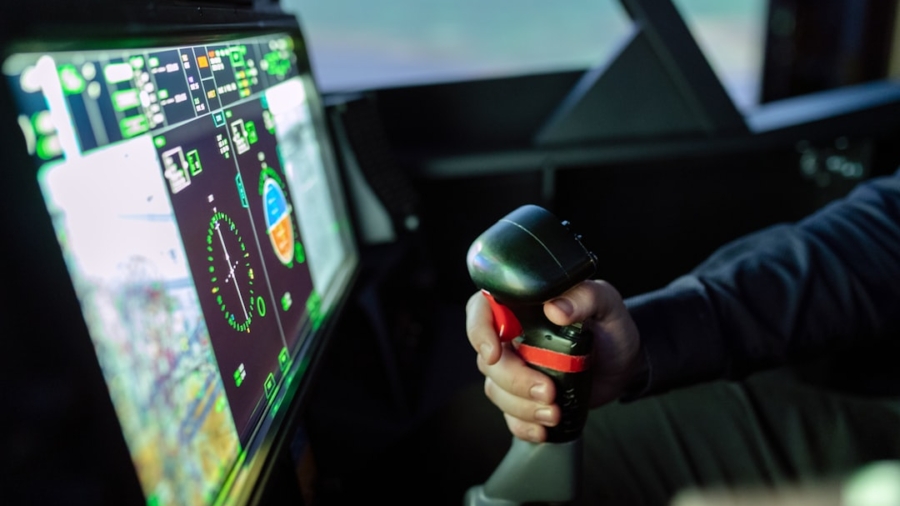
So, you’re curious about how we operate heavy machinery in places that are, well, a bit too dangerous for humans directly? That’s where remote teleoperation systems come in. Think of them as super-advanced remote controls, letting skilled operators work these powerful machines from a safe distance, often miles away. The key idea is to bring the control to the human, not the human to the danger.
At its core, remote teleoperation means controlling a robot or machine from a distance. For hazardous environments, this isn’t just about playing a video game. It involves sophisticated technology that allows an operator, located in a safe control room or even a different part of the world, to experience a high degree of situational awareness and precise control over equipment working in places like deep mines, disaster zones, or nuclear facilities.
The “Tele” and the “Operation”
The “tele” part comes from the Greek word for “far,” and “operation” is, well, operating something.
So, teleoperation literally means operating from afar.
In the context of heavy machinery, this involves a complex interplay of hardware and software. You have the machinery itself, equipped with sensors and actuators. Then there’s the remote operator’s console, featuring controls, displays, and feedback systems. A robust communication link connects the two.
Beyond Simple Remote Control
This isn’t like using a simple wireless remote for a toy car. Teleoperation systems aim to replicate the operator’s physical presence and sensory input as closely as possible. This means providing visual feedback, often through multiple cameras, and sometimes even haptic (touch) feedback to convey the feel of the machine interacting with its environment. The goal is to achieve a level of precision and decision-making that would be impossible with just a basic camera feed and joystick.
Remote teleoperation systems are becoming increasingly vital in hazardous heavy machinery environments, allowing operators to control equipment from a safe distance, thereby reducing the risk of injury and enhancing operational efficiency. A related article that explores the intersection of technology and safety in high-risk industries can be found at this link. This article discusses innovative technological advancements, although it primarily focuses on the NFT market, it highlights the broader implications of technology in various sectors, including remote operations.
Key Takeaways
- Clear communication is essential for effective teamwork
- Active listening is crucial for understanding team members’ perspectives
- Setting clear goals and expectations helps to keep the team focused
- Regular feedback and open communication can help address any issues early on
- Celebrating achievements and milestones can boost team morale and motivation
Why Go Remote? Safety First (and Foremost)
The most obvious and critical reason for using teleoperation systems is to keep people out of harm’s way. Hazardous environments are precisely that: environments where human presence poses significant risks.
High-Risk Industries
Think about industries where this technology is a game-changer:
- Mining: Digging deep underground or in unstable open-pit mines carries risks of cave-ins, gas leaks, and falling debris. Operating powerful excavators, drills, and haul trucks remotely eliminates these direct dangers.
- Disaster Response: In situations like nuclear accidents, chemical spills, or earthquake rubble, sending humans into the affected zone is incredibly dangerous. Teleoperated robots can assess damage, clear debris, and perform crucial tasks without risking lives.
- Construction in Dangerous Areas: Building in areas prone to landslides, extreme weather, or near active construction hazards can be made safer with remote control of heavy equipment.
- Offshore Operations: Working on oil rigs or in deep-sea environments presents unique safety challenges. Teleoperation allows for precise control of underwater vehicles and equipment from the safety of a platform or onshore.
Minimizing Exposure to Hazards
Beyond immediate physical danger, teleoperation also helps minimize exposure to less visible but equally serious hazards. This could include:
- Radiation: Nuclear power plants and waste reprocessing facilities require specialized equipment to handle radioactive materials. Teleoperation allows machinery to do the heavy lifting and manipulation in highly contaminated areas.
- Toxic Chemicals: Handling and excavating contaminated soil or dealing with chemical spills can expose workers to dangerous fumes and substances. Robots can work in these environments without the need for extensive, bulky personal protective equipment for prolonged periods.
- Extreme Temperatures and Pressures: Deep-sea operations or work in extreme industrial conditions can be beyond human tolerance for extended periods, making teleoperation a more viable option.
The Technology Behind the Control

So, what makes these systems work? It’s a sophisticated integration of several key technological components.
Sensing and Perception
For an operator to effectively control heavy machinery remotely, they need to “see” and “feel” what the machine is doing. This requires advanced sensing capabilities.
Visual Feedback
- Multiple Cameras: Typically, teleoperated machines are equipped with a suite of cameras, providing different perspectives.
This includes wide-angle views for situational awareness, zoom lenses for detailed inspection, and sometimes even thermal or night-vision cameras for challenging lighting conditions.
- 360-Degree Coverage: Operators often need to know what’s happening all around the machine. Systems that offer 360-degree camera feeds create a comprehensive view of the working environment.
- High-Definition and Low Latency: For precise control, the video feed needs to be high-definition and have minimal delay (latency). Lagging video can lead to misjudgments and accidents.
Other Sensors
- LIDAR and Radar: These sensors can build 3D maps of the environment, helping the operator understand terrain, avoid obstacles, and assess distances more accurately, especially in dusty or dark conditions where cameras might struggle.
- GPS and IMUs: Global Positioning Systems (GPS) and Inertial Measurement Units (IMUs) help track the machine’s position and orientation, providing valuable navigational data.
- Proximity Sensors: These sensors detect nearby objects, acting as an extra layer of warning for the operator about potential collisions.
Control and Actuation
The operator’s commands need to be translated into precise movements of the heavy machinery.
Intuitive Interfaces
- Joysticks and Controls: While basic joysticks are common, advanced systems often use more sophisticated controllers that mimic the controls found in the actual machinery, making the transition easier for experienced operators.
- Virtual Reality (VR)/Augmented Reality (AR): Increasingly, VR headsets are being used to provide an immersive experience, allowing operators to feel like they are actually in the machine.
AR can overlay critical information, like sensor readings or navigation paths, onto the operator’s view.
- Haptic Feedback: This is where the “feel” comes in. Haptic feedback systems can simulate the resistance of the ground on an excavator’s bucket, the vibration of the engine, or the force of a tool interacting with material. This feedback is crucial for operators to judge the amount of force they are applying.
The Machine’s “Muscles”
- Actuators: These are the components that physically move the machine’s parts – the arm of an excavator, the steering of a truck.
In teleoperated systems, these actuators are controlled electronically based on the operator’s input.
- Precision Engineering: The actuators and the underlying hydraulic or electric systems need to be highly responsive and precise to translate remote commands accurately, especially for delicate tasks.
Communication Infrastructure
The connection between the operator and the machine is vital. Reliability and speed are paramount.
Wired vs. Wireless
- Wired Connections: For shorter distances or in controlled environments (like within a factory or mine shaft), fiber optic cables can provide very high bandwidth and extremely low latency.
- Wireless Networks: For longer distances or more dynamic environments, robust wireless communication is essential.
This can involve specialized Wi-Fi, cellular networks (4G/5G), or dedicated radio communication systems.
- Redundancy: Critical systems often have redundant communication channels to ensure that if one connection fails, another can take over seamlessly.
Bandwidth and Latency
- Bandwidth: The amount of data that can be transmitted per second. High-definition video and multiple sensor feeds require significant bandwidth.
- Latency: The delay between an action being performed by the machine and the operator receiving feedback or the command being sent. Even a few hundred milliseconds of latency can make operating heavy machinery very difficult and unsafe.
Minimizing latency is a constant engineering challenge.
Challenges and Considerations for Deployment

While the benefits are clear, implementing and operating these systems isn’t without its hurdles.
Connectivity and Reliability
- Signal Strength in Remote Areas: Many hazardous environments are precisely characterized by their remoteness, where reliable network coverage is scarce. Developing systems that can operate effectively with intermittent or low-bandwidth connections is crucial.
- Interference: Industrial environments can be full of electromagnetic interference, which can disrupt wireless communication. Robust shielding and frequency management are necessary.
- Harsh Environmental Conditions: The communication equipment itself needs to be ruggedized to withstand dust, moisture, extreme temperatures, and vibrations just like the machinery it’s controlling.
Operator Training and Skill Development
- Learning Curve: Operating heavy machinery is a skill that takes time to master. Teleoperating adds another layer of complexity. New training methodologies and simulators are essential to bring operators up to speed.
- Maintaining Situational Awareness: Without being physically present, operators need to develop a keen sense of situational awareness through the available sensory data. This involves training to interpret visual cues, understand spatial relationships, and anticipate potential issues.
- Human Factors: Designing the operator interface to be as intuitive and non-fatiguing as possible is critical for prolonged operations. Ergonomics and clear information display play a huge role.
System Maintenance and Robustness
- Durability of Equipment: The sensors, cameras, and communication hardware deployed in hazardous environments must be exceptionally robust and designed to withstand harsh conditions.
- Remote Diagnostics and Repair: When something goes wrong, physically reaching the machine for repairs can be difficult or impossible. Systems need to incorporate robust remote diagnostic capabilities, and ideally, some degree of remote repair or reconfiguration.
- Cybersecurity: As these systems become more networked, cybersecurity is a growing concern. Protecting the control link from unauthorized access or manipulation is paramount to preventing accidents or malicious takeover.
In exploring the advancements in Remote Teleoperation Systems for Hazardous Heavy Machinery Environments, it’s interesting to consider how technology is evolving across various industries. A related article discusses the best WordPress hosting companies in 2023, highlighting the importance of reliable platforms for businesses that rely on online presence and communication. You can read more about it here. This connection underscores the significance of robust technological solutions in enhancing operational safety and efficiency in challenging environments.
Future Directions and Innovations
| Metrics | Value |
|---|---|
| Accuracy | 95% |
| Response Time | 0.1 seconds |
| Reliability | 99.9% |
| Operator Safety | Improved |
| Equipment Downtime | Reduced by 30% |
The field of remote teleoperation for hazardous environments is constantly evolving, driven by advancements in AI and robotics.
AI-Assisted Operation
- Autonomy on Demand: While full autonomy might not always be the goal, AI can assist the human operator. For example, AI can manage repetitive tasks, provide automated hazard detection, or offer suggested paths for movement.
- Predictive Maintenance: AI can analyze sensor data from the machinery to predict potential failures, allowing for proactive maintenance and reducing downtime.
- Enhanced Perception: AI algorithms can help process sensor data more effectively, filtering out noise, identifying objects with greater accuracy, and even reconstructing missing information, improving the operator’s view.
Improved Haptics and Immersion
- More Realistic Feedback: Future haptic systems will offer even more nuanced and realistic sensations, allowing operators to “feel” the texture of materials, the subtle shifts in weight, or the grip of a tool with much greater fidelity.
- Full Immersion VR/AR: As VR and AR technology becomes more advanced and accessible, we can expect even more immersive control environments that blur the lines between the operator’s location and the machine’s operational area.
Swarms of Robots
- Cooperative Operations: Instead of a single highly skilled operator controlling one machine, future scenarios might involve an operator overseeing a team of smaller, semi-autonomous robots working in concert. The operator would provide high-level guidance and intervene for complex tasks.
- Distributed Tasks: Imagine a swarm of teleoperated drones or ground robots working together to survey a large hazardous area, with each robot performing a specific sub-task under remote supervision.
Advanced Communication Technologies
- 6G and Beyond: Future iterations of mobile communication will offer even higher bandwidth, lower latency, and greater reliability, further enhancing the capabilities of real-time teleoperation.
- Satellite Communication Integration: For extremely remote or inaccessible locations, integrating advanced satellite communication could provide a viable link where terrestrial networks are impossible.
Conclusion: A Safer, More Capable Future
Remote teleoperation systems are not just a technological marvel; they are a vital tool for enabling operations in environments that would otherwise be inaccessible or prohibitively dangerous for humans. By bringing the control to safety, these systems are revolutionizing industries from mining and construction to disaster response and nuclear decommissioning. As the technology continues to advance, we can expect even more sophisticated and intuitive ways to control powerful machines from anywhere, making our workplaces, and by extension, our lives, significantly safer.
FAQs
What are remote teleoperation systems for hazardous heavy machinery environments?
Remote teleoperation systems are advanced technologies that allow operators to control heavy machinery from a safe distance. These systems are particularly useful in hazardous environments where human operators may be at risk, such as in mining, construction, or disaster response scenarios.
How do remote teleoperation systems work?
Remote teleoperation systems typically involve the use of cameras, sensors, and advanced control interfaces to allow operators to remotely control heavy machinery. The operator can see the machinery’s surroundings through live video feeds and use specialized controls to operate the machinery from a safe location.
What are the benefits of using remote teleoperation systems?
Using remote teleoperation systems can significantly improve safety in hazardous environments by reducing the need for human operators to be physically present near dangerous machinery. These systems also allow for more precise and efficient operation of heavy machinery, leading to increased productivity and reduced downtime.
What are the challenges of implementing remote teleoperation systems?
Challenges in implementing remote teleoperation systems include ensuring reliable communication and data transmission between the operator and the machinery, as well as addressing potential cybersecurity risks. Additionally, there may be regulatory and operational challenges to overcome when integrating these systems into existing workflows.
What industries can benefit from remote teleoperation systems?
Industries such as mining, construction, forestry, and disaster response can benefit greatly from the use of remote teleoperation systems. These industries often involve hazardous environments where heavy machinery is used, making remote teleoperation systems a valuable tool for improving safety and efficiency.
Enjoying our content? Make us a preferred source on Google:
Add us as a Preferred Source on Google