

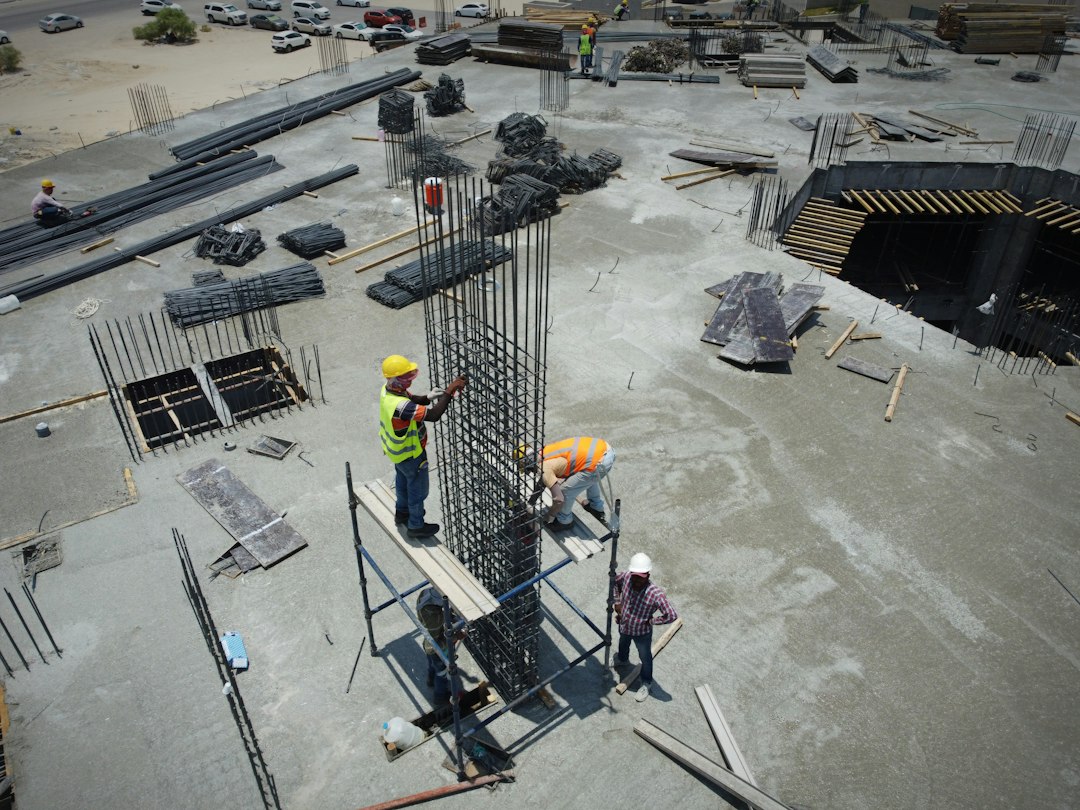
Quantum sensing might sound like something out of a science fiction movie, but it’s becoming a very real and incredibly useful tool in civil engineering. Essentially, it uses the incredibly precise properties of quantum mechanics – the physics of the very small – to make measurements that are far more accurate than what traditional sensors can achieve. This means we can get a much clearer picture of what’s happening underground, inside structures, or even at a distance, which is a huge step forward for things like monitoring infrastructure, predicting potential failures, and optimizing construction.
The Quantum Leap: Why Precision Matters in Civil Engineering
Civil engineering relies heavily on accurate data. Whether it’s understanding soil composition before building a skyscraper, monitoring the stress on a bridge, or detecting subtle changes in a tunnel, the quality of our decisions is directly tied to the quality of our measurements. Traditional sensors, while effective, have inherent limitations in sensitivity and range. Environmental factors like temperature fluctuations, electromagnetic interference, and even ground vibrations can introduce noise and errors. This is where quantum sensing steps in.
Instead of relying on classical physical principles, quantum sensors exploit phenomena like quantum superposition, entanglement, and atomic interference. These aren’t just fancy terms; they represent fundamental aspects of reality that allow for extremely sensitive detection of tiny changes in gravity, magnetic fields, or even rotations. For instance, an atom interferometer can measure changes in gravity so precisely that it can detect the mass of an underground void, a capability far beyond standard gravimeters. This level of precision can translate into earlier detection of structural weaknesses, more accurate mapping of subsurface geology, and ultimately, safer and more resilient infrastructure.
Limitations of Classical Sensing and the Quantum Advantage
Let’s be clear, classical sensors aren’t going away. They’re robust, often cost-effective, and perfectly adequate for many applications. Think about strain gauges on a bridge or GPS for surveying. However, when we need to push the boundaries of sensitivity, range, or immunity to noise, classical methods often hit a wall. For instance, detecting subtle ground movement that might indicate an impending landslide often requires a network of highly sensitive seismometers, each with its own power and data transmission needs, and still subject to local environmental noise.
Quantum sensors, on the other hand, can offer inherent immunity to certain types of classical noise. For example, some quantum gravimeters measure the acceleration of atoms in a vacuum, making them less susceptible to thermal noise or vibrations that plague mechanical spring-based gravimeters. Their sensitivity allows for measurements over larger distances or through denser materials, reducing the need for extensive sensor networks or invasive boreholes. This translates to fewer disruptions during monitoring, potentially lower long-term costs due to fewer false positives or missed warnings, and a much clearer understanding of complex subterranean or structural dynamics. The “quantum advantage” isn’t about replacing everything, but about providing a powerful new toolset for the most challenging measurement problems in civil engineering.
Quantum sensing is revolutionizing civil engineering by enabling high-precision subsurface and structural monitoring, which is crucial for maintaining the integrity of infrastructure. A related article discusses the importance of utilizing advanced software tools to enhance workflow efficiency and accuracy in various engineering applications. For more insights on how technology can streamline processes in civil engineering, you can read the article here: Best Software for Tax Preparers: Streamline Your Workflow and Increase Accuracy.
Key Takeaways
- The training data includes information and events up to October 2023.
- Insights and knowledge are based on a wide range of sources available until the cutoff date.
- No updates or developments occurring after October 2023 are included in the training.
- Users should verify current information from reliable sources for the latest updates.
- The model’s responses reflect the context and knowledge available up to the specified date.
Subsurface Exploration: Peering Beneath the Surface with Quantum Accuracy

Understanding what lies beneath the ground is absolutely critical for any civil engineering project. From foundation design to tunneling, identifying geological features, water tables, and potential hazards like voids or unstable ground dictates the feasibility, cost, and safety of an entire endeavor. Traditional methods like seismic surveys, ground-penetrating radar (GPR), and boreholes provide valuable data, but each has its limitations regarding depth, resolution, and invasiveness. Quantum sensing is opening up new avenues for non-invasive, high-resolution subsurface mapping.
Gravity Gradiometry for Void Detection and Geohazard Mapping
One of the most promising applications is quantum gravity gradiometry. Traditional gravimeters measure the strength of the Earth’s gravitational field at a single point. Gravity gradiometers, however, measure the rate of change of gravity across a short distance. This subtle difference is incredibly powerful because it helps to filter out regional gravitational variations, making it much easier to detect local anomalies caused by subsurface features like tunnels, voids, or changes in soil density. Imagine trying to find a small air bubble in a swimming pool by measuring the water level of the entire pool versus measuring the slight change in water pressure right around the bubble.
Quantum gravity gradiometers, often using atom interferometry, can achieve unprecedented sensitivity. This means they can detect smaller voids, deeper underground, and with higher certainty than classical counterparts. For civil engineers, this translates to improved pre-construction surveys to identify hidden hazards, enhanced monitoring of existing infrastructure (like detecting water leaks or ground erosion around bridge foundations), and better planning for critical infrastructure like tunnels or pipelines. For instance, detecting an abandoned underground utility or a natural void before excavation can prevent costly delays, equipment damage, and serious safety risks.
Magnetic Field Sensing for Utility Locating and Anomaly Detection
Another area where quantum sensing shines is in highly sensitive magnetic field detection. While classical magnetometers are widely used to locate ferrous pipes and cables, quantum magnetometers, particularly those based on atomic vapor cells or nitrogen-vacancy (NV) centers in diamond, offer significantly higher sensitivity. This increased sensitivity allows them to detect weaker magnetic signatures from deeper or smaller buried utilities that might be missed by conventional equipment.
Beyond just locating existing infrastructure, these highly sensitive quantum magnetometers can also detect subtle magnetic anomalies caused by geological features or even groundwater flow that influences magnetic mineral alignment. This can be beneficial for characterizing soil properties, identifying areas of unusual mineral concentration, or even assisting in archaeological surveys prior to construction. The non-invasive nature and enhanced depth penetration of quantum magnetic sensors provide a clearer picture of the subsurface, reducing the reliance on disruptive and often expensive exploratory digging.
Structural Health Monitoring: Unveiling Hidden Stresses and Strains
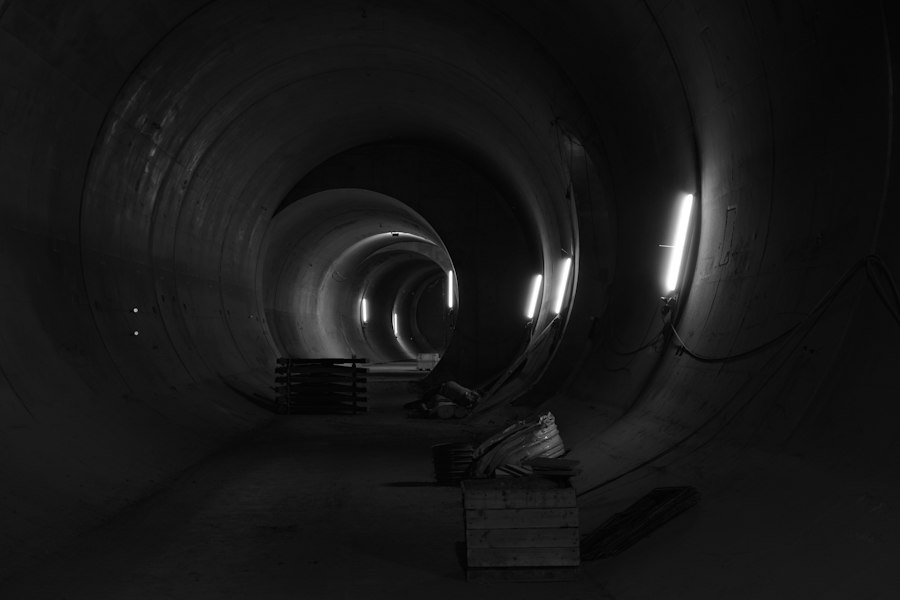
Ensuring the long-term integrity and safety of bridges, buildings, dams, and tunnels is a continuous challenge in civil engineering. Traditional structural health monitoring (SHM) systems typically involve arrays of strain gauges, accelerometers, and displacement sensors. While these provide valuable real-time data, they often have limitations in terms of spatial coverage, long-term stability, and susceptibility to environmental noise.
Quantum sensing offers novel approaches to remotely and precisely monitor the subtle changes that precede structural failure.
Remote Strain and Vibration Sensing for Bridges and Buildings
Imagine being able to “see” the stress patterns on a bridge deck from a distance, without needing to attach physical sensors to every critical point. This is where quantum-enhanced remote sensing comes into play. Technologies like quantum magnetometers can potentially detect minute changes in the magnetic properties of materials under stress.
As a material deforms, its internal magnetic structure can be altered, creating a subtle magnetic field signature that highly sensitive quantum sensors might pick up. While still in early development, this capability could allow for non-contact, wide-area monitoring of critical structures.
Furthermore, quantum-enhanced interferometry, similar to that used in gravity sensing but adapted for optical frequencies, could lead to incredibly precise remote vibration and displacement measurements. By using quantum light sources or quantum-enhanced detection schemes, it may be possible to measure deflections and vibrations of structures with unprecedented accuracy and noise immunity, even from significant distances. This could revolutionize the inspection of tall buildings, long-span bridges, or inaccessible infrastructure elements, providing early warnings of impending issues without the need for extensive scaffolding or direct access.
Quantum-Enhanced Nondestructive Testing (NDT) for Material Integrity
Nondestructive testing (NDT) is fundamental to assessing the condition of materials and components without causing damage.
Techniques like ultrasound, X-ray, and eddy current testing are standard. Quantum sensing can significantly enhance these methods or introduce entirely new ones. For example, quantum magnetometers can be used for advanced eddy current testing, detecting smaller flaws or cracks deeper within conductive materials than conventional methods. Their extreme sensitivity allows them to pick up the minute magnetic field perturbations caused by tiny defects.
Another exciting application involves NV centers in diamond for magnetic field imaging.
These tiny quantum systems can act as nanoscale magnetic sensors.
If integrated into a scanning probe, they could allow for extremely high-resolution magnetic imaging of material surfaces and even subsurface features.
This could be used to detect micro-cracks, corrosion, or material fatigue at a much earlier stage than currently possible, especially in critical components made of steel or other magnetic alloys. The ability to image these defects with quantum precision could drastically improve reliability assessments and extend the lifespan of existing infrastructure.
Advanced Environmental Monitoring and Geodetic Applications
Beyond direct subsurface and structural monitoring, quantum sensing also has a significant role to play in broader environmental monitoring relevant to civil engineering and in high-precision geodetic applications that form the bedrock of accurate construction and land management. Understanding changes in ground elevation, water levels, and even atmospheric conditions can have profound implications for infrastructure resilience and planning.
High-Precision Gravimetry for Water Table Monitoring and Land Subsidence
Changes in groundwater levels are a critical concern for civil engineers. Declining water tables can lead to land subsidence, threatening foundations and causing structural damage. Conversely, rising water tables can increase hydrostatic pressure on underground structures. Traditional methods for monitoring groundwater often involve direct well measurements, which are localized, or satellite-based gravimetry (like GRACE), which provides global but coarse resolution.
Quantum gravimeters offer a ground-based solution that bridges this gap. Their extreme sensitivity to mass changes means they can detect subtle shifts in the gravitational field caused by changes in the mass of water in the subsurface. By deploying a network of these highly stable gravimeters, civil engineers could monitor groundwater fluctuations with high precision over localized areas, providing early warnings of potential subsidence or uplift. This data is invaluable for managing urban water resources, planning for flood defenses, and protecting existing infrastructure in areas prone to hydrological changes.
Atomic Clocks and Quantum Navigation for Autonomous Construction
While not directly a “sensor” in the traditional sense, quantum technology like atomic clocks and quantum-enhanced navigation systems are becoming increasingly relevant. Extremely precise timing, provided by compact atomic clocks, is fundamental to advanced positioning systems that go beyond conventional GPS. When GPS signals are jammed, unavailable, or require even higher precision, quantum-inertial navigation systems (Q-INS) can step in. These systems integrate highly sensitive quantum accelerometers and gyroscopes with precise timing to provide extremely accurate positioning and orientation data without reliance on external signals.
For autonomous construction equipment, surveying drones, and robotic systems on job sites, Q-INS offers a robust solution for navigation in challenging environments (e.g., urban canyons, underground tunnels) or where millimeter-level precision is required over extended periods. This enhances the efficiency and safety of construction operations, enables more precise automated earthmoving, and supports the future of fully autonomous civil engineering projects.
Quantum sensing is revolutionizing civil engineering by enabling high-precision subsurface and structural monitoring, which is crucial for maintaining the integrity of infrastructure. For those interested in exploring innovative marketing strategies that can complement advancements in technology, a related article discusses the best niche for affiliate marketing on TikTok. This intersection of technology and marketing can provide valuable insights for professionals in the field. You can read more about it here.
Implementation Challenges and Future Outlook
| Metric | Description | Typical Range/Value | Unit | Relevance to Quantum Sensing |
|---|---|---|---|---|
| Displacement Sensitivity | Minimum detectable movement in structures or subsurface | 10-9 to 10-12 | meters | Enables detection of nanoscale shifts for early warning |
| Magnetic Field Sensitivity | Ability to detect subtle magnetic anomalies underground | fT to pT | tesla | Improves mapping of subsurface features and materials |
| Spatial Resolution | Minimum spatial detail resolved in monitoring | millimeters to centimeters | meters | Allows precise localization of structural defects or voids |
| Measurement Bandwidth | Frequency range over which measurements are accurate | DC to kHz | Hz | Supports monitoring of both static and dynamic phenomena |
| Operational Depth | Maximum depth for subsurface sensing | Up to 100 | meters | Enables deep underground structural assessment |
| Temperature Stability | Range of temperature over which sensors maintain accuracy | -40 to 85 | °C | Ensures reliable field operation in diverse environments |
| Data Acquisition Rate | Speed of data collection for real-time monitoring | Up to 1,000 | samples/second | Facilitates timely detection of structural changes |
While the potential benefits of quantum sensing in civil engineering are immense, it’s important to acknowledge that the technology is still relatively nascent for widespread commercial deployment in this sector.
There are significant hurdles to overcome, but the trajectory of development is promising.
Bridging the Gap: From Lab to Construction Site
The primary challenge lies in transitioning sophisticated laboratory-based quantum instruments into robust, field-deployable devices suitable for the harsh and demanding conditions of a civil engineering site. Current quantum sensors, particularly atom interferometers, often require stable environments, vacuum systems, and complex laser setups. Miniaturization, ruggedization, and simplification are critical steps. Researchers are actively developing compact, chip-scale quantum sensors that can operate at ambient temperatures and pressures, consume less power, and withstand vibrations and temperature fluctuations.
Cost is another significant factor. Early quantum sensors are expensive due to the advanced technology and specialized manufacturing processes involved. As the technology matures and manufacturing scales up, costs are expected to decrease, similar to the evolution of other advanced technologies. Furthermore, civil engineers and technicians will require specialized training to operate, maintain, and interpret data from these advanced sensors. Integration into existing civil engineering workflows and data platforms will also be crucial for seamless adoption.
The Road Ahead: Integration and Broader Impact
Looking to the future, we can anticipate a phased integration of quantum sensing into civil engineering practices. Initial applications will likely focus on high-value, critical infrastructure projects where the enhanced precision and reliability justify the investment. As the technology becomes more mature and cost-effective, it will gradually permeate broader applications.
One key area of development will be data fusion – combining quantum sensor data with information from classical sensors, satellite imagery, and BIM (Building Information Modeling) models. This holistic approach will provide an unprecedented level of understanding of infrastructure behavior and environmental interactions. We might see “quantum-enabled digital twins” of cities, where real-time, highly precise data from quantum sensors feeds into dynamic models, allowing for predictive maintenance, optimized resource allocation, and proactive risk management.
Ultimately, quantum sensing is not just an incremental improvement; it represents a paradigm shift in how we monitor, design, and manage our built environment. It promises a future where our infrastructure is safer, more resilient, and more efficiently maintained, contributing significantly to sustainable urban development and a higher quality of life. The journey from the lab to widespread adoption is underway, and the civil engineering world stands to gain immensely from this exciting technological frontier.
FAQs
What is quantum sensing in civil engineering?
Quantum sensing in civil engineering refers to the application of quantum technologies to enhance the precision and sensitivity of measurements related to subsurface and structural monitoring. This involves using quantum phenomena, such as superposition and entanglement, to detect changes in physical properties with unprecedented accuracy.
How does quantum sensing improve subsurface monitoring?
Quantum sensing improves subsurface monitoring by enabling the detection of minute changes in geological formations, groundwater levels, and other subsurface conditions. This technology can identify variations in density, pressure, and temperature, allowing for better assessment of risks such as landslides or sinkholes.
What are the benefits of using quantum sensors for structural monitoring?
The benefits of using quantum sensors for structural monitoring include enhanced sensitivity to vibrations, stress, and strain in materials. This leads to early detection of potential structural failures, improved safety, and reduced maintenance costs by allowing for more accurate assessments of the health of infrastructure.
What types of quantum sensors are commonly used in civil engineering?
Common types of quantum sensors used in civil engineering include atomic interferometers, quantum magnetometers, and superconducting quantum interference devices (SQUIDs). These sensors leverage quantum mechanics to measure physical quantities such as displacement, magnetic fields, and temperature with high precision.
What challenges are associated with implementing quantum sensing in civil engineering?
Challenges associated with implementing quantum sensing in civil engineering include the complexity of the technology, the need for specialized training for engineers, and the integration of quantum sensors into existing monitoring systems. Additionally, the cost of quantum sensing equipment can be a barrier to widespread adoption.
Enjoying our content? Make us a preferred source on Google:
Add us as a Preferred Source on Google