

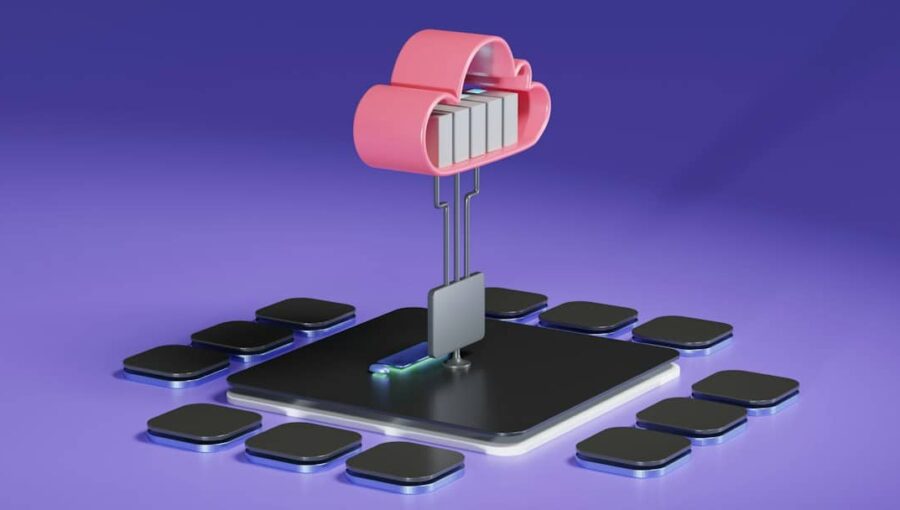
Quantum Key Distribution (QKD) is definitely out of the lab and making its way into the real world. While it’s not yet a plug-and-play solution for everyone, we’re seeing actual deployments by governments, critical infrastructure providers, and some financial institutions who are serious about long-term data security against even future quantum computing threats. They’re primarily using it to secure sensitive data transmissions over fiber optic networks, especially for inter-data center communication or between secure government facilities. The main limitation right now? Distance, cost, and integration complexity, but we’ll dive into those details.
Why QKD is Gaining Traction
Even with the advancements in classical encryption, the looming threat of quantum computers capable of breaking current asymmetric cryptographic algorithms (like RSA and ECC) is a serious concern for anyone with data that needs to remain secure for decades. QKD offers a fundamentally different approach to key exchange, relying on the laws of quantum mechanics rather than mathematical complexity. This means its security is theoretically guaranteed even against a quantum adversary, which is a big deal for information with a long shelf-life.
The Quantum Advantage for Key Exchange
Classical cryptography, while robust today, faces a future where quantum algorithms like Shor’s algorithm could render widely used public-key cryptography obsolete. This is a problem not just for military secrets, but also for financial transactions, medical records, and intellectual property. QKD doesn’t encrypt the data itself, but rather provides an uncompromisable way to establish a shared secret key between two parties. This key can then be used with conventional, symmetric encryption algorithms (like AES-256) which are generally considered quantum-resistant. The beauty of QKD is that any attempt by an eavesdropper to intercept the quantum signals inevitably perturbs them, alerting the legitimate users to the intrusion and causing the session to be aborted or a new key generated.
This “eavesdropping detection” is the core principle.
Addressing Long-Term Security Needs
Organizations with extremely sensitive data, often referred to as “forward-secrecy-critical” data, are the primary drivers for QKD adoption. Think about intelligence agencies, national defense departments, or financial institutions handling high-value transactions. They need to ensure that today’s encrypted communications can’t be stored and decrypted years or decades from now by a sufficiently powerful quantum computer. QKD provides a strong answer to this “harvest now, decrypt later” threat model, offering a layer of protection that classical post-quantum cryptography (PQC) schemes, while promising, are still striving to achieve with mathematical proofs. PQC is designed to be resistant to quantum attacks using classical computers, but its security relies on the hardness of new mathematical problems, which could potentially be broken in the future. QKD’s security, however, is based on the fundamental laws of physics.
Quantum Key Distribution (QKD) has garnered significant attention for its potential to enhance secure communications, yet its real-world deployments face various limitations. For a deeper understanding of the practical challenges and advancements in this field, you may find the article on mobility and technology trends insightful. It discusses the broader implications of emerging technologies, which can be related to the advancements in QKD. You can read more about it here: Mobility 2021: Early Bird Price Extended for One More Day.
Key Takeaways
- The training data includes information and events up to October 2023.
- Insights and knowledge are based on a wide range of sources available until the cutoff date.
- No updates or developments occurring after October 2023 are included in the training.
- Users should verify current information for accuracy beyond the training period.
- The model’s responses reflect the context and knowledge available up to the specified date.
Real-World QKD Deployments and Their Applications
We’re seeing QKD move beyond experimental setups into operational networks. These deployments are often pilot projects or strategic implementations by organizations with specific high-security requirements.
Government and Defense Sector Initiatives
Unsurprisingly, government and defense organizations are at the forefront. They have the most to lose from future decryption capabilities and often have the resources to invest in cutting-edge security.
European Union’s Quantum Communication Infrastructure (EuroQCI)
The EU is building a continent-wide secure communication infrastructure, EuroQCI, which integrates QKD to secure sensitive data transmission between government institutions, critical infrastructure, and even within secure data centers. This ambitious project aims to provide an ultra-secure communication layer across Member States, using both terrestrial fiber and space-based segments. Initial deployments are focused on national government networks, linking key strategic sites and demonstrating the feasibility of long-distance QKD links. For instance, specific national projects within EuroQCI are establishing secure QKD links between government ministries and central banks, demonstrating its practical application for state-level secure communications.
South Korea’s Quantum Internet Rollout
South Korea has been a significant player, investing heavily in a “quantum internet” backbone. They’ve deployed QKD in various sectors, including government agencies and critical infrastructure. One notable project involves securing communications for the Korean Electric Power Corporation (KEPCO), ensuring the integrity and confidentiality of data critical for national energy supply. This prevents potential malicious actors from disrupting the power grid or stealing sensitive operational information. Another application has been in securing communications for local government bodies, such as city halls, to protect citizen data and inter-departmental communications.
UK and US Defense Applications
Both the UK and US have ongoing research and development into QKD for defense applications. While specific details are often classified, public information indicates interest in securing command and control networks, protecting intelligence gathering, and ensuring the integrity of critical military communications. The US Department of Energy has also explored QKD for securing its national labs and the sensitive research conducted there, including nuclear weapons stewardship. These applications often involve short-range, highly secure links within controlled environments or point-to-point connections over dedicated fiber.
Financial Sector and Critical Infrastructure
Beyond government, industries with high-value transactions and critical operations are also adopting QKD.
Swiss Financial Network Security
Switzerland, with its strong financial sector and emphasis on data privacy, has seen QKD deployed by companies like ID Quantique. They’ve implemented QKD solutions to secure communication links for financial institutions, protecting inter-bank transactions and data center synchronization. The focus here is on ensuring the long-term confidentiality of financial records and preventing any future decryption of sensitive financial data, which could lead to massive economic disruption or fraud. Specific examples include securing data replication between primary and disaster recovery data centers for major Swiss banks, ensuring that even if data is intercepted, it cannot be compromised.
Energy Grid Protection
As mentioned with KEPCO, protecting energy grids is a prime application. QKD helps secure the communication channels that control power distribution, monitor infrastructure, and transmit sensitive operational data. This prevents cyberattacks that could lead to widespread blackouts or manipulation of energy markets. Ensuring the integrity of SCADA (Supervisory Control and Data Acquisition) systems through QKD-secured communication is a major driver, as these systems are often targeted by state-sponsored actors.
Data Center Interconnects
One of the most practical and immediate applications of QKD is securing data center interconnects (DCIs). As organizations increasingly rely on multiple data centers for redundancy, load balancing, and disaster recovery, the secure transfer of massive amounts of data between these facilities is paramount.
Point-to-Point Fiber Links
QKD is well-suited for point-to-point fiber optic connections, which are common for DCI. Companies are deploying QKD hardware to establish ultra-secure links between their main data centers and their backup or disaster recovery sites. This ensures that sensitive data, from customer records to proprietary algorithms, remains fully protected even if a fiber cable is tapped. These deployments often integrate QKD devices directly into existing optical transport networks, leveraging dark fiber where available. For instance, a major cloud provider might use QKD to secure the fiber link between two of its data centers located within a metropolitan area, protecting petabytes of customer data in transit.
Current Limitations and Challenges
Despite its promise, QKD isn’t a universally deployable solution yet. Several practical limitations hinder its widespread adoption.
Distance and Signal Loss
The biggest challenge for QKD is distance. Quantum signals, often single photons, are incredibly fragile.
They suffer significant loss when traveling through optical fibers.
Fiber Attenuation
Optical fiber attenuates light over distance. For every kilometer of standard telecommunications fiber, a significant percentage of photons are absorbed or scattered. This means that after a certain distance, too few photons arrive at the receiver to establish a secure key.
Practical limits for continuous fiber links are currently around 100-150 kilometers, though some research pushes this further under ideal conditions. This makes QKD ideal for metropolitan area networks or data center interconnects, but challenging for long-haul national or international links.
Trusted Relays and Repeaters
To overcome distance limitations, QKD deployments currently rely on “trusted relays” or “trusted nodes.” These are intermediate points where the quantum key is decrypted, stored, and then re-encrypted using a new quantum key for the next segment. While this extends the reach, it introduces “trust points” – locations where the key exists in classical form and is vulnerable to attack if the node itself is compromised.
This somewhat diminishes the end-to-end security promise of QKD, as the security now depends on the trustworthiness and physical security of these intermediate nodes. True quantum repeaters, which could amplify quantum signals without measuring them and thus without compromising security, are still very much a research endeavor.
Cost and Infrastructure Requirements
QKD hardware is specialized and relatively expensive compared to traditional cryptographic solutions.
Dedicated Hardware and Expertise
Deploying QKD requires specialized optical equipment (photon sources, detectors, modulators) and often dedicated fiber optic lines, or at least dedicated wavelength channels on existing fiber. This hardware is not off-the-shelf IT equipment.
Additionally, installing, configuring, and maintaining QKD systems requires highly specialized expertise in quantum optics and quantum communication, which is a scarce skill set. This increases both capital expenditure and operational costs.
Integration with Existing Networks
Integrating QKD into existing classical communication networks can be complex. While QKD generates keys for symmetric encryption, it doesn’t directly replace IPsec, SSL/TLS, or other network protocols.
It acts as a key provisioning layer. Therefore, solutions need to be developed to seamlessly feed QKD-generated keys into existing encryption devices or network functions (e.g., encryptors for Layer 2 or Layer 3). This integration requires careful planning and often custom development, adding to the deployment challenges.
Key Rate and Throughput
The rate at which QKD can generate keys is another practical consideration.
Low Key Generation Rates
Compared to the massive data rates of modern fiber optic networks, QKD typically generates keys at relatively low rates (e.g., kilobits or megabits per second, depending on distance and system). While this is usually sufficient for generating keys for high-speed symmetric encryption algorithms (which only need a new key occasionally), it means QKD isn’t directly encrypting all traffic.
It provides the secure seed for other encryption methods. This low key rate can be a limiting factor in scenarios requiring very frequent key refreshes or for very high-speed, short-duration communication sessions.
Managing Key Rotation
Organizations need robust key management systems to handle the distribution, storage, and rotation of keys generated by QKD. While QKD ensures the secure distribution of keys, the lifecycle management of those keys (when to refresh, how long to use, how to revoke) still falls on classical key management infrastructure.
Ensuring seamless integration between the QKD system and the existing Key Management System (KMS) is crucial but can be complex.
The Role of Satellite QKD and Future Directions
While terrestrial QKD faces distance limits, satellite-based QKD offers a promising solution for global reach.
Overcoming Terrestrial Limitations with Space-Based QKD
Satellites bypass the significant fiber attenuation issue. A quantum signal sent from a satellite to an optical ground station (or vice versa) primarily travels through the vacuum of space, where photon loss is minimal. The main challenges become atmospheric turbulence and precise pointing of the quantum signal from orbit.
China’s Micius Satellite
China has been a pioneer in satellite QKD with its Micius satellite, launched in 2016. Micius has successfully demonstrated QKD links over thousands of kilometers, establishing secure keys between the satellite and ground stations in China and even Europe. It’s proven the feasibility of intercontinental QKD, allowing for a truly global quantum communication network. This is a game-changer for long-distance, high-security communications, potentially forming the backbone of a future global quantum internet. These experiments have shown key generation rates sufficient for practical applications over distances exceeding 1200 km.
Future Satellite Constellations
Inspired by Micius, several countries and commercial entities are developing their own satellite QKD capabilities. The vision is to build constellations of QKD satellites that can provide global coverage, acting as “untrusted relays” in space. Unlike terrestrial trusted relays, these satellites could potentially forward quantum states without fully measuring them (or at least provide very high assurance that the quantum state is not compromised). This would enable truly end-to-end secure quantum key exchange across continents, offering a level of security unprecedented for long-haul links. Projects like the EuroQCI are looking at integrating satellite components to extend their reach.
Hybrid Approaches and Integration with PQC
The future of quantum-safe security likely involves a hybrid approach, combining the best aspects of QKD and Post-Quantum Cryptography (PQC).
Complementary Strengths
QKD provides physical layer security based on quantum mechanics for key distribution, offering immediate, provable security against quantum attacks on key exchange. PQC, on the other hand, comprises new classical algorithms designed to be resistant to quantum attacks and can be deployed in software, offering flexibility and broader applicability across various network layers (e.g., for digital signatures, authentication, and encryption of bulk data). QKD is about distributing the key, while PQC is often about authenticating keys or encrypting bulk data. They are not direct competitors but rather complementary technologies.
“Quantum-Safe” Hybrid Security Architectures
Many organizations are exploring “quantum-safe” hybrid architectures. This involves using QKD to establish and refresh a shared secret key, and then using this key in conjunction with PQC algorithms (or even current classical symmetric algorithms like AES-256) for data encryption and authentication. This provides a multi-layered defense: the QKD ensures the key exchange is secure against quantum attacks, while PQC can secure other cryptographic functions and also act as a fallback or parallel layer of security. The idea is to build robustness against both known and unknown future threats by leveraging diverse security principles. This approach offers a pragmatic path forward, allowing organizations to deploy quantum-resistant solutions today while the quantum landscape continues to evolve.
Quantum Key Distribution (QKD) is gaining traction in real-world applications, yet it faces several limitations that need to be addressed for broader adoption. A related article discusses the advancements in technology and the challenges that come with integrating QKD into existing systems.
For those interested in exploring how emerging technologies like smartwatches are evolving, you can read more about it in this
5G Innovations (13) Wireless Communication Trends (13) Article (343) Augmented Reality & Virtual Reality (896)
- Metaverse (263)
- Virtual Workplaces (35)
- VR & AR Games (34)
Cybersecurity & Tech Ethics (805)
- Cyber Threats & Solutions (3)
- Ethics in AI (33)
- Privacy Protection (32)
Drones, Robotics & Automation (485)
- Automation in Industry (33)
- Consumer Drones (33)
- Industrial Robotics (33)
EdTech & Educational Innovations (343)
- EdTech Tools (18)
- Online Learning Platforms (4)
- Virtual Classrooms (34)
Emerging Technologies (1,981) FinTech & Digital Finance (448) Frontpage Article (1) Gaming & Interactive Entertainment (382) Health & Biotech Innovations (710)
- AI in Healthcare (3)
- Biotech Trends (4)
- Wearable Health Devices (506)
News (97) Reviews (129) Smart Home & IoT (446)
- Connected Devices (3)
- Home Automation (4)
- Robotics for Home (33)
- SmartPhone (48)
Space & Aerospace Technologies (344)
- Aerospace Innovations (4)
- Commercial Spaceflight (3)
- Space Exploration (62)
Sustainable Technology (780) Tech Careers & Jobs (339) Tech Guides & Tutorials (1,141)
- DIY Tech Projects (3)
- Getting Started with Tech (60)
- Laptop & PC (58)
- Productivity & Everyday Tech Tips (324)
- Social Media (64)
- Software (321)
- Software How-to (3)
Uncategorized (146)