

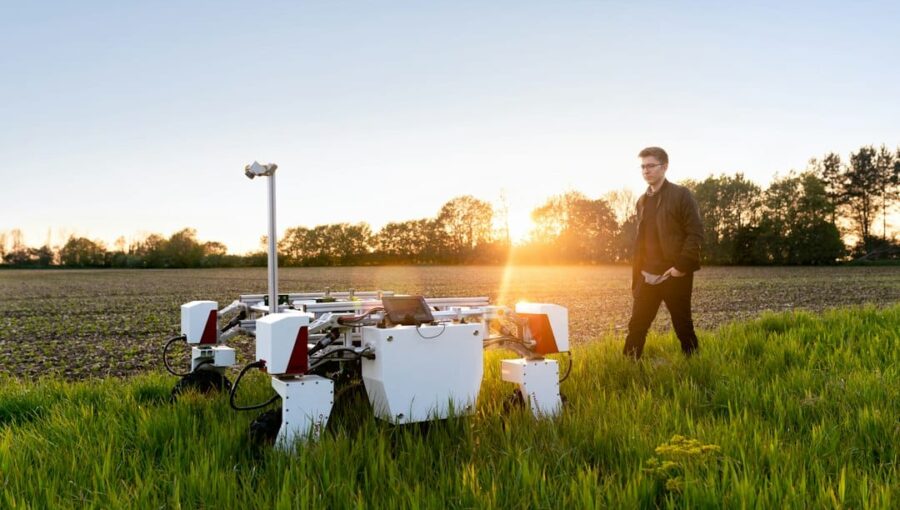
Precision agriculture, with drones and IoT sensors at its core, is making zero-waste farming not just a dream, but a practical reality. By providing incredibly detailed, real-time insights into every aspect of a farm, these technologies allow farmers to apply resources exactly where and when they’re needed, eliminating waste of water, fertilizer, pesticides, and even energy. It’s about getting smarter with farming, not just working harder.
Understanding the Zero-Waste Farming Goal
When we talk about “zero-waste farming,” it’s not just a trendy phrase. It’s a comprehensive approach aimed at minimizing, and ideally eliminating, any negative environmental impact from agricultural practices while maximizing resource efficiency. Think of it as a closed-loop system where everything has a purpose and nothing is truly discarded. This isn’t just about reducing landfill waste; it extends to preventing runoff of chemicals into waterways, minimizing greenhouse gas emissions, optimizing water usage, and even improving soil health by returning organic matter.
Beyond the Landfill: A Broader Definition of Waste
Many people associate “waste” primarily with physical trash. In farming, however, waste is a much broader concept. It includes:
- Nutrient Runoff: Excess fertilizer that doesn’t get absorbed by plants and instead washes into rivers and lakes, causing algal blooms and harming aquatic life. This is a significant form of environmental waste and pollution.
- Water Overuse: Irrigating fields uniformly when only certain areas need water leads to massive water wastage, especially in drought-prone regions. This depletes aquifers and strains water resources.
- Pesticide Drift: Applying pesticides broadly when only localized pest infestations exist means chemicals are wasted and potentially harm non-target organisms, including beneficial insects.
- Energy Inefficiency: Running large machinery across entire fields unnecessarily, or using inefficient irrigation pumps, consumes more fossil fuels than needed, leading to wasted energy and higher carbon emissions.
- Crop Loss: Pests, diseases, and improper growing conditions that lead to damaged or unsellable crops represent wasted labor, land, water, and nutrients.
- Soil Degradation: Practices that deplete soil organic matter or lead to erosion waste the very foundation of productive agriculture, requiring more inputs over time to maintain yields.
Zero-waste farming seeks to address all these points by becoming incredibly precise and responsive. The goal is to produce healthy, abundant food with the least possible input and environmental footprint.
Why Zero-Waste Farming Matters Now More Than Ever
The drive towards zero-waste farming isn’t just an idealistic pursuit; it’s a critical necessity driven by several converging factors:
- Resource Scarcity: Freshwater is becoming increasingly scarce in many agricultural regions, and the finite nature of certain mineral fertilizers is a growing concern. Efficient use is no longer optional.
- Environmental Degradation: Agriculture is a major contributor to greenhouse gas emissions, water pollution, and biodiversity loss. Moving towards zero-waste practices can significantly mitigate these impacts.
- Climate Change: Erratic weather patterns, prolonged droughts, and increased pest pressures demand more resilient and adaptable farming systems. Wasteful practices only exacerbate these challenges.
- Economic Viability: For farmers, every wasted input—water, fertilizer, fuel—is a direct hit to their bottom line. Reducing waste directly translates to cost savings and increased profitability.
- Consumer Demand: There’s a growing global consumer demand for sustainably produced food, putting pressure on the agricultural sector to adopt more environmentally friendly methods.
Achieving this ambitious goal requires a fundamental shift in how farming is practiced, moving away from broad-stroke applications to highly targeted interventions. This is where precision agriculture, powered by drones and IoT sensors, truly shines.
In the realm of sustainable farming practices, the integration of Precision Agriculture Drones and IoT Sensors is revolutionizing the concept of zero-waste farming. These technologies enable farmers to monitor crop health, optimize resource usage, and minimize waste effectively. For a deeper understanding of how technology is reshaping various industries, including agriculture, you can explore a related article on the features of the Samsung Notebook 9 Pro, which highlights advancements in portable computing that support agricultural innovations. For more information, visit this link.
Key Takeaways
- The training data includes information and events up to October 2023.
- Insights and knowledge are based on a wide range of sources available until the cutoff date.
- No updates or developments occurring after October 2023 are included in the training.
- Users should verify current information from reliable sources for the latest updates.
- The model’s responses reflect the context and knowledge available up to the specified date.
The Role of IoT Sensors in Granular Farm Monitoring

IoT (Internet of Things) sensors are the silent, ever-vigilant eyes and ears of a smart farm. They collect a continuous stream of data from various points across the agricultural landscape, providing an unprecedented level of detail about the growing conditions. This isn’t just a periodic check; it’s often real-time monitoring that allows for immediate adjustments and proactive management. These sensors form the bedrock of any precision agriculture system aiming for zero waste.
Ground-Based Sensors: The Micro-Level View
These sensors are typically placed directly in the soil or very close to the plants, giving farmers a hyper-local understanding of specific conditions.
- Soil Moisture Sensors: These are crucial for efficient irrigation. Instead of irrigating an entire field based on a general assumption, these sensors measure the exact water content at various depths. This allows farmers to deliver water only when and where it’s needed, preventing over-watering (which wastes water and can leach nutrients) and under-watering (which stresses crops). Technologies range from simple tensiometers to more advanced time-domain reflectometry (TDR) sensors.
- Nutrient Sensors: While still evolving, in-field nutrient sensors can measure the levels of key nutrients like nitrogen, phosphorus, and potassium directly in the soil. This allows for variable-rate fertilization, applying precise amounts of specific nutrients only to areas that show a deficiency, rather than blanketing the entire field. This significantly reduces fertilizer waste and prevents nutrient runoff.
- pH Sensors: Soil pH dictates nutrient availability. Maintaining optimal pH is vital for plant health. Sensors provide continuous monitoring, allowing for targeted application of amendments (like lime or sulfur) to correct imbalances in specific zones, rather than treating the whole field uniformly.
- Temperature and Humidity Sensors: Placed in the soil or near plants, these sensors help monitor microclimates. This data is essential for predicting disease outbreaks (many fungal diseases thrive in specific temperature/humidity ranges), optimizing planting schedules, and even managing greenhouse environments for optimal growth and reduced energy consumption.
- Leaf Wetness Sensors: These specialized sensors detect how long plant leaves remain wet, which is a key indicator for the risk of certain fungal and bacterial diseases. By understanding these conditions, farmers can apply preventative treatments more strategically and only when necessary, minimizing fungicide use.
Weather Stations: Localized Climate Insights
While broader weather forecasts are helpful, localized micro-weather stations provide invaluable on-farm data that impacts daily operations.
- Rainfall Gauges: Precisely measure actual rainfall on the farm, preventing unnecessary irrigation after a natural downpour.
- Wind Speed and Direction Sensors: Critical for deciding when to spray pesticides or herbicides. Spraying in high winds leads to significant drift, wasting product and causing off-target contamination.
- Solar Radiation Sensors: Help farmers understand the energy available for photosynthesis, which can influence irrigation needs and growth predictions.
Water Flow and Level Sensors: Irrigation Optimization
Beyond just measuring soil moisture, monitoring the irrigation system itself is key to preventing waste.
- Flow Meters: Installed in irrigation lines, these measure the exact volume of water being delivered to different zones. This helps identify leaks, blockages, or inefficiencies in the system.
- Water Level Sensors: In reservoirs, tanks, or wells, these monitor available water resources, helping farmers manage their supply effectively and prevent depletion.
All this sensor data is typically transmitted wirelessly to a central platform, often cloud-based, where it’s analyzed and presented to the farmer in an understandable format, often through dashboards or mobile apps. This allows for data-driven decisions that are far more precise than traditional methods.
Drones: The Aerial Perspective and Application Platform

If IoT sensors are the detailed ground-level scouts, drones are the high-flying observers and, increasingly, the precision applicators. They offer a unique, bird’s-eye view of the farm, capable of covering large areas quickly and collecting data that would be impossible or impractical to gather on foot or with traditional machinery. Their versatility makes them indispensable in the quest for zero-waste agriculture.
High-Resolution Imagery and Data Collection
Drones equipped with various types of cameras and sensors can capture detailed information about crop health, growth patterns, and potential issues.
- RGB (Visible Light) Cameras: Standard cameras provide high-resolution images that can be stitched together to create detailed maps of the farm.
These are useful for identifying stand counts (how many plants have germinated), spotting areas of uneven growth, identifying bare patches, or observing physical damage to crops. While simple, they offer a foundational visual overview.
- Multispectral Cameras: These are a significant leap forward. They capture light across several specific bands, including visible light and near-infrared (NIR). Plants reflect NIR light strongly when healthy, making it a key indicator of plant vigor and stress.
By analyzing the differences in reflectance across these bands, drones can generate indices like NDVI (Normalized Difference Vegetation Index). NDVI maps visually represent plant health, highlighting areas that are thriving (high NDVI) versus those that are stressed due to nutrient deficiency, disease, or water shortage (low NDVI). This allows for targeted intervention before problems become widespread.
- Hyperspectral Cameras: Even more advanced, hyperspectral cameras capture data across hundreds of very narrow spectral bands.
This provides an incredibly detailed spectral signature for each pixel, allowing for the identification of very specific issues, such as early-stage disease detection, specific nutrient deficiencies (e.g., nitrogen, potassium), and even the presence of particular weed species. This level of detail enables extremely precise, proactive management.
- Thermal Cameras: These cameras measure the temperature of plants and the surrounding soil. Stressed plants, particularly those lacking water, often have a higher leaf temperature due to reduced transpiration.
Thermal imagery can therefore identify areas of water stress or even detect early signs of disease that cause localized heating before visible symptoms appear. This is crucial for optimizing irrigation and minimizing water waste.
- Lidar (Light Detection and Ranging): Lidar drones use laser pulses to create highly accurate 3D models of the terrain. This is invaluable for precision land leveling, designing efficient irrigation systems with optimal water flow, and calculating biomass volume in orchards or vineyards, which can inform pruning and yield estimation.
Precision Application: Delivering Exactly What’s Needed
Beyond just data collection, drones are increasingly being deployed as versatile application platforms, directly contributing to reducing waste.
- Spot Spraying: Armed with small tanks and precise nozzles, drones can apply pesticides, herbicides, or even targeted nutrients only to the affected areas identified by prior drone surveys or ground sensors.
This drastically reduces the total amount of chemicals used, minimizing environmental impact, protecting beneficial insects, and saving farmers money. Instead of spraying an entire field for a few patches of weeds, the drone targets only those patches.
- Targeted Seeding: Drones can precisely deposit seeds in specific patterns or refill gaps in rows where germination failed. This optimizes plant spacing, maximizes yield potential for each acre, and avoids wasting seeds in unsuitable areas.
- Pollination Assistance: In some specialized crops or challenging conditions, drones equipped with electrostatic dusters can even assist with pollination, a growing area of research and application as natural pollinators face decline.
- Variable-Rate Fertilization (Micro-Applications): While large-scale variable-rate fertilizer application is often done with ground machinery, drones can apply micro-doses of specialized nutrients or biostimulants to very specific zones, further refining nutrient management and preventing excess.
The agility of drones allows them to access difficult terrains, operate rapidly, and respond quickly to dynamic conditions, making them ideal tools for implementing the highly targeted interventions required for zero-waste farming.
Integrating Data for Actionable Insights
Having sophisticated sensors and high-tech drones collecting vast amounts of data is only half the battle. The true power of precision agriculture for zero-waste farming lies in effectively integrating, analyzing, and interpreting this data to generate actionable insights. Without this crucial step, the technology is just an expensive gadget. This is where software platforms, artificial intelligence, and smart decision-making tools come into play.
Centralized Data Platforms
The first step in making sense of the data is to bring it all together. Modern precision agriculture systems rely on centralized cloud-based platforms. These platforms act as a hub, ingesting data from:
- IoT Sensors: Soil moisture, nutrient levels, pH, temperature, humidity.
- Drones: Multispectral imagery, thermal maps, RGB imagery, Lidar data.
- Weather Stations: Localized rainfall, wind speed, temperature.
- Farm Equipment: Telemetry data from tractors, harvesters, and sprayers (e.g., fuel consumption, application rates).
- Manual Inputs: Farmer observations, scouting reports, historical yield data.
This integration provides a holistic view of the farm, allowing for cross-referencing and a more complete understanding of cause-and-effect relationships. For example, low NDVI in a certain zone might be correlated with low soil moisture readings from a nearby sensor, pinpointing water stress as the issue.
Analytics and Artificial Intelligence (AI)
Once data is centralized, powerful analytical tools and AI algorithms get to work.
- Geospatial Analysis: Overlaying different data layers (e.g., soil type maps, yield maps, NDVI maps) allows for spatial correlation. This helps identify patterns and zones within fields that behave differently.
- Predictive Modeling: AI algorithms can learn from historical data and current conditions to predict future outcomes. For instance, based on current weather patterns, soil moisture, and crop growth stage, AI can predict the likelihood of a disease outbreak or the optimal timing for irrigation. This shifts farming from reactive to proactive.
- Pattern Recognition: AI can identify subtle patterns in multispectral imagery that human eyes might miss, detecting early signs of pest infestations or nutrient deficiencies days or even weeks before they become visible, allowing for earlier and more targeted intervention.
- Prescription Map Generation: This is a key output. Based on all the analyzed data, the system generates “prescription maps” for various farm operations. These maps dictate precisely what to do and where. For example, an irrigation prescription map will specify exactly how much water to apply to each square meter of the field, or a fertilization map will indicate the precise blend and quantity of nutrients for different zones.
Decision Support Systems
The goal of all this data and analysis is to empower the farmer with better decisions. Decision support systems (DSS) present complex information in an understandable, actionable format.
- Dashboards and Alerts: Farmers can view real-time data through intuitive dashboards on their computers or smartphones. Automated alerts can notify them of critical conditions (e.g., soil moisture dropping below a threshold, early signs of disease).
- Recommendations: The system can provide specific recommendations, such as “Irrigate Zone 3 with 5mm of water,” “Scout Section A for fungal infection,” or “Apply nitrogen supplement to Field 2, Sector NW.”
- Scenario Planning: Some advanced systems allow farmers to model the potential outcomes of different management decisions, helping them choose the most efficient and sustainable path.
By seamlessly integrating data from diverse sources and using advanced analytics, farmers can move away from generalized, often wasteful, farming practices. Every decision, from planting to harvesting, can be precisely tailored to the specific needs of each micro-environment on the farm, making zero-waste farming not just an ideal, but a manageable reality.
In the realm of sustainable farming, the integration of Precision Agriculture Drones and IoT Sensors is revolutionizing the way we approach zero-waste practices. A fascinating article that delves into the latest trends in technology and its impact on agriculture can be found here. This resource highlights how innovative tools are enabling farmers to optimize their resources, reduce waste, and enhance crop yields, ultimately contributing to a more sustainable future.
Real-World Impact and Future Outlook
| Metric | Precision Agriculture Drones | IoT Sensors | Impact on Zero-Waste Farming |
|---|---|---|---|
| Data Collection Frequency | Daily to weekly aerial surveys | Real-time soil and crop monitoring | Enables timely decision-making to reduce waste |
| Coverage Area | Up to 500 acres per flight | Distributed across entire farm fields | Comprehensive monitoring reduces resource overuse |
| Types of Data Collected | NDVI, thermal imaging, crop health | Soil moisture, temperature, nutrient levels | Improves precision in irrigation and fertilization |
| Accuracy | High-resolution imaging (cm-level) | Sensor accuracy within 1-5% | Minimizes input waste by targeting specific needs |
| Energy Consumption | Battery-powered, 20-30 minutes per flight | Low power, often solar-assisted | Supports sustainable farming practices |
| Cost Efficiency | Reduces labor and input costs by 15-30% | Enables automated resource management | Decreases waste and increases yield profitability |
| Waste Reduction Potential | Up to 25% reduction in pesticide use | Up to 30% reduction in water and fertilizer waste | Contributes significantly to zero-waste goals |
The integration of precision agriculture drones and IoT sensors isn’t just theoretical; it’s delivering tangible benefits to farms around the globe, making significant strides towards zero-waste farming. These technologies are fundamentally changing agricultural practices and promise an even more impactful future.
Tangible Benefits for Zero-Waste Farming
Farmers adopting these technologies are seeing measurable improvements in various areas:
- Reduced Water Usage: By irrigating only when and where necessary, often guided by soil moisture sensors and drone-derived vegetation health maps, farms report water savings of 20-50%. This is critical in water-stressed regions and contributes directly to environmental sustainability.
- Optimized Fertilizer Application: Variable-rate fertilization, based on nutrient sensors and multispectral imagery, ensures that plants receive only the nutrients they need. This can lead to a 10-30% reduction in fertilizer use, cutting costs and, more importantly, drastically reducing nutrient runoff into waterways.
- Minimized Pesticide and Herbicide Use: Spot spraying with drones, informed by detailed pest/weed maps, can reduce pesticide/herbicide application by 50-90% in some cases. This protects beneficial insects, reduces chemical residues, lowers environmental contamination, and saves significant operational costs.
- Decreased Fuel Consumption and Emissions: More efficient use of resources means fewer passes with heavy machinery, leading to reduced fuel consumption and lower greenhouse gas emissions. Optimized planting and harvesting routes also contribute to this.
- Improved Yield and Quality: Healthier plants, receiving optimal inputs, are less stressed and produce higher yields of better quality. Early detection and intervention of issues prevent widespread crop loss, maximizing the output from the land.
- Enhanced Soil Health: Reduced chemical inputs and more precise management practices contribute to healthier soil ecosystems, fostering biodiversity and long-term farm productivity. Preventing erosion through better water management also conserves topsoil, a vital resource.
These benefits translate directly into greater economic sustainability for farmers and a significantly reduced environmental footprint for agriculture as a whole.
Challenges and Considerations
While the promise is great, implementing these technologies isn’t without its hurdles:
- Initial Investment: The upfront cost of drones, sensors, and the necessary software can be substantial for many farmers, especially small-scale operations.
- Technical Expertise: Operating drones, maintaining sensors, and interpreting complex data requires a certain level of technical skill, which may necessitate training or hiring specialized personnel.
- Connectivity and Infrastructure: Reliable internet access and sufficient cellular coverage are crucial for transmitting sensor data and operating cloud-based platforms, which can be an issue in remote agricultural areas.
- Data Overload and Integration: Managing and making sense of vast amounts of data from multiple sources can be overwhelming without well-designed platforms and clear guidance.
- Regulatory Hurdles: Drone operation is subject to regulations that can vary by region, impacting their use for commercial agricultural purposes.
- Privacy and Security: Data security and ownership are growing concerns as more farm data is collected and stored digitally.
Addressing these challenges through accessible financing, improved training programs, robust infrastructure, and user-friendly interfaces will be key to widespread adoption.
The Future of Zero-Waste Farming
Looking ahead, the evolution of precision agriculture promises even more profound impacts on zero-waste farming:
- Increased Autonomy: Fully autonomous drones and ground robots will perform tasks like planting, weeding, and harvesting with minimal human intervention, further optimizing resource use and labor.
- Hyper-Localization: Sensors and drones will become even smaller, cheaper, and more pervasive, providing real-time data at an ultra-fine granularity, potentially down to individual plants.
- Advanced AI and Machine Learning: AI will become even more sophisticated, capable of making real-time, self-optimizing decisions, predicting problems with greater accuracy, and managing complex interactions between various farm elements.
- Integration with Biotechnology: Combining precision agriculture data with insights from plant genomics and biotechnology could lead to even more resilient, resource-efficient crop varieties tailored to specific environments.
- Closed-Loop Systems: Further development towards truly closed-loop systems where all agricultural by-products are repurposed on-farm (e.g., advanced composting, biochar production, insect farming for feed) will further minimize waste.
- Blockchain for Traceability: Blockchain technology could enhance transparency and traceability throughout the food supply chain, verifying sustainable, zero-waste practices from farm to fork.
The journey towards entirely zero-waste farming is ongoing, but precision agriculture, driven by drones and IoT sensors, has laid down an indispensable foundation. It’s empowering farmers to be better stewards of their land and resources, producing food more efficiently and sustainably than ever before, which benefits everyone.
FAQs
What is precision agriculture?
Precision agriculture is a farming management concept that uses technology to optimize crop yields and reduce waste by monitoring and responding to variability in crops.
How do drones contribute to precision agriculture?
Drones equipped with sensors and cameras can collect data on crop health, soil conditions, and irrigation needs, allowing farmers to make informed decisions to improve efficiency and productivity.
What are IoT sensors and how are they used in farming?
IoT sensors are devices that collect and transmit data over the internet. In farming, these sensors can monitor soil moisture levels, temperature, humidity, and other factors to help farmers make data-driven decisions for better crop management.
How can precision agriculture technologies help reduce waste in farming?
By providing real-time data on crop health, soil conditions, and weather patterns, precision agriculture technologies enable farmers to optimize resource use, reduce over-application of fertilizers and pesticides, and minimize environmental impact.
What are the benefits of zero-waste farming practices supported by drones and IoT sensors?
Zero-waste farming practices supported by drones and IoT sensors can lead to increased crop yields, reduced production costs, improved sustainability, and minimized environmental impact, ultimately contributing to a more efficient and eco-friendly agricultural industry.
Enjoying our content? Make us a preferred source on Google:
Add us as a Preferred Source on Google