

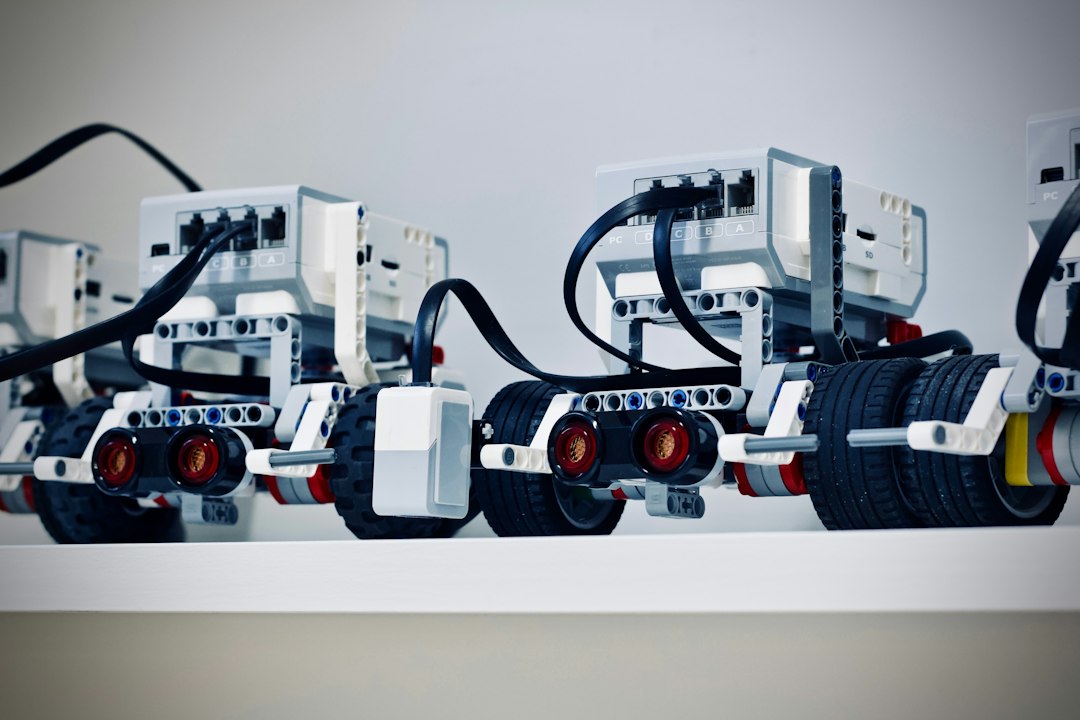
Let’s talk about physical AI in modern manufacturing – specifically, how those big-picture foundation models are starting to make a real difference in how industrial robots work. Simply put, physical AI is about empowering robots to understand, adapt, and perform tasks in the real world with a level of intelligence and flexibility that goes far beyond traditional, pre-programmed automation. It’s moving from rigid instructions to intelligent, responsive action.
Understanding Physical AI
Physical AI isn’t just a fancy term for ‘smarter robots.’ It represents a fundamental shift in how we approach robotic automation in manufacturing. Traditionally, industrial robots have been incredibly precise but incredibly rigid. They perform exactly the tasks they’re programmed for, in exactly the environment they’re designed for. Any variation – a slight change in part position, a new product variant, or even a different lighting condition – can throw them off. This requires extensive, time-consuming, and often costly re-programming.
Physical AI, by integrating advanced AI capabilities, particularly foundation models, aims to address these limitations. It gives robots the ability to perceive their environment, understand the context of a task, learn from experience (both real and simulated), and adapt their actions dynamically. Think of it as giving robots a more human-like capacity for problem-solving and improvisation, albeit within a highly specialized industrial context.
The Evolution from Traditional Robotics
For decades, industrial robots have been the workhorses of manufacturing. Spot welding, paint spraying, assembly – they’ve excelled at repetitive, high-volume tasks. Their precision and speed are unparalleled for these specific jobs. However, their intelligence was essentially encoded in their programming. If you wanted a robot to pick up a different type of screw, you’d rewrite or extensively modify the code.
If a part was slightly misaligned on the conveyor, the robot might just try to pick it up in the wrong spot, potentially causing damage or halting the line.
This “deterministic” nature, while excellent for controlled environments, becomes a bottleneck in more dynamic or complex scenarios. Manufacturers are increasingly facing demands for greater product customization, shorter production runs, and more agile supply chains. This requires automation that can handle variability, learn new tasks quickly, and even collaborate safely with humans. Traditional robotics, by itself, struggles to meet these demands without significant human intervention and retooling. Physical AI is the bridge to that more flexible future.
Why Foundation Models are a Game Changer
You might have heard about foundation models in the context of large language models (LLMs) like GPT-3, which can generate human-like text, or image generation models like Stable Diffusion. These models are characterized by their massive scale, being trained on vast amounts of diverse data, and their ability to generalize across many tasks, even those they weren’t explicitly trained for. They learn underlying patterns and relationships.
Bringing this concept to the physical world of robotics is revolutionary. Instead of training a robot for every single specific task it might encounter (e.g., “pick up bolt A,” “pick up bolt B,” “insert into hole X,” “insert into hole Y”), a foundation model for robotics can learn a broader understanding of “picking,” “manipulation,” “assembly,” or even “tool use.” It learns about objects, forces, textures, and spatial relationships.
This means a single, well-trained foundation model could potentially enable a robot to perform a wide variety of tasks with minimal or no additional explicit programming. It could adapt to new objects it’s never seen before, deal with minor variations in its environment, and even understand high-level instructions like “assemble the engine” rather than a precise sequence of joint movements. It provides a generalized intelligence that can be fine-tuned or adapted for specific industrial applications far more efficiently than building task-specific AI from scratch every time.
In the realm of modern manufacturing, the integration of Physical AI into industrial robotics is revolutionizing production processes by leveraging foundation models to enhance automation and efficiency.
A related article that explores the intersection of technology and marketing strategies is available at
5G Innovations (13) Wireless Communication Trends (13) Article (343) Augmented Reality & Virtual Reality (945)
- Metaverse (287)
- Virtual Workplaces (35)
- VR & AR Games (34)
Cybersecurity & Tech Ethics (830)
- Cyber Threats & Solutions (3)
- Ethics in AI (33)
- Privacy Protection (32)
Drones, Robotics & Automation (510)
- Automation in Industry (33)
- Consumer Drones (33)
- Industrial Robotics (33)
EdTech & Educational Innovations (368)
- EdTech Tools (18)
- Online Learning Platforms (4)
- Virtual Classrooms (34)
Emerging Technologies (2,104) FinTech & Digital Finance (473) Frontpage Article (1) Gaming & Interactive Entertainment (407) Health & Biotech Innovations (759)
- AI in Healthcare (3)
- Biotech Trends (4)
- Wearable Health Devices (531)
News (97) Reviews (129) Smart Home & IoT (470)
- Connected Devices (3)
- Home Automation (4)
- Robotics for Home (33)
- SmartPhone (48)
Space & Aerospace Technologies (369)
- Aerospace Innovations (4)
- Commercial Spaceflight (3)
- Space Exploration (62)
Sustainable Technology (829) Tech Careers & Jobs (364) Tech Guides & Tutorials (1,215)
- DIY Tech Projects (3)
- Getting Started with Tech (60)
- Laptop & PC (58)
- Productivity & Everyday Tech Tips (349)
- Social Media (64)
- Software (346)
- Software How-to (3)
Uncategorized (146)