

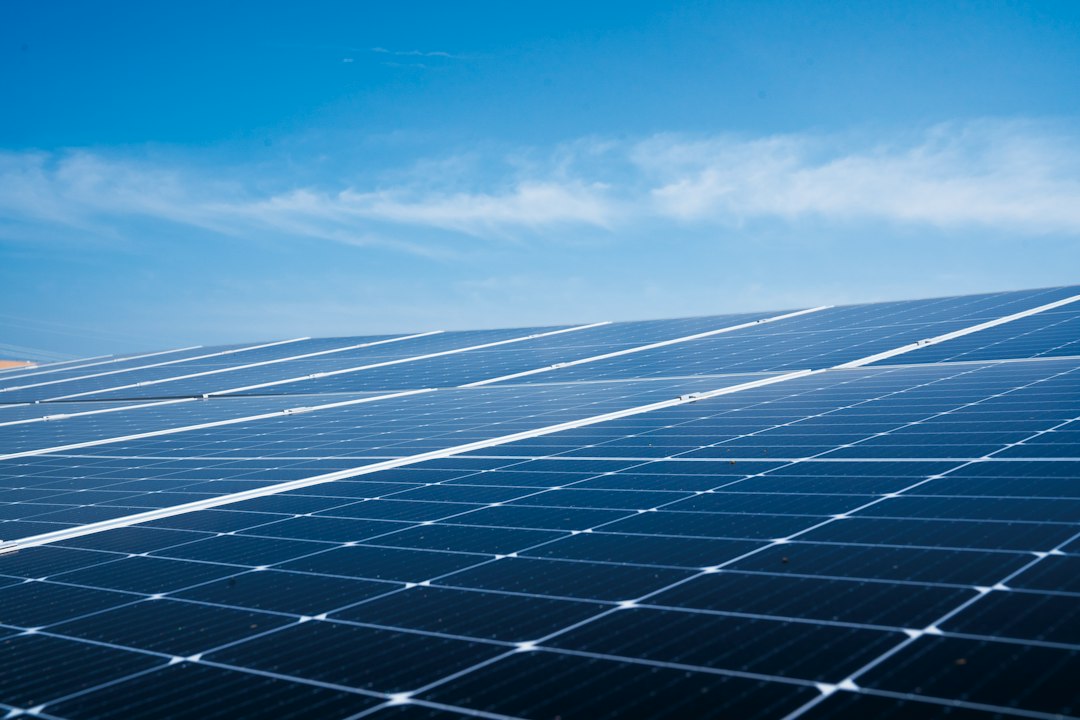
Perovskite tandem solar cells are a really exciting development, promising to push solar energy efficiency past what we thought was possible with traditional silicon.
While they’ve shown incredible efficiency in the lab, getting them out into the real world for widespread use is proving to be quite a complex challenge.
We’re talking about hurdles ranging from long-term stability to manufacturing at scale. However, the consistent breakthroughs in efficiency are a huge motivator, continually demonstrating their immense potential.
Unpacking the Perovskite Tandem Concept
Let’s start by quickly clarifying what we mean by “perovskite tandem.” Imagine two solar cells stacked on top of each other, each designed to capture different parts of the sun’s spectrum. That’s essentially what a tandem cell does. One layer, typically made of perovskite, is excellent at absorbing higher-energy blue and green light. The bottom layer, usually conventional silicon, then captures the lower-energy red and infrared light that passes through the perovskite. This clever combination allows them to convert a much broader range of sunlight into electricity, leading to higher overall efficiency compared to either cell type on its own. It’s a bit like having two specialized nets for fishing, catching different sizes of fish that a single net might miss.
Why Tandem Cells Are a Big Deal
The reason this is such a focus area in solar research boils down to efficiency limits. Single-junction silicon solar cells, the kind you typically see on roofs, are approaching their theoretical maximum efficiency, known as the Shockley-Queisser limit, which is around 29.4%. While impressive, there’s not much room left for significant improvement. Perovskite tandem cells, however, smash through this limit. By combining materials with different bandgaps, they can theoretically reach efficiencies well over 40%. This isn’t just a marginal gain; it’s a game-changer for how much electricity a given area of solar panel can generate, making solar power even more cost-effective and viable in diverse applications.
The Role of Perovskites
Perovskite materials themselves are a class of compounds characterized by a specific crystal structure. For solar cells, hybrid organic-inorganic lead-halide perovskites are the most common. They’re amazing light absorbers, can be made into very thin films, and have tuneable bandgaps, meaning we can adjust which parts of the light spectrum they absorb best. This tunability is key for tandem applications, allowing researchers to optimize the top perovskite layer to perfectly complement the silicon bottom layer. Their ability to be processed from solution also hints at potentially lower manufacturing costs compared to traditional silicon, which requires high-temperature, energy-intensive processes.
In the ongoing exploration of renewable energy technologies, Perovskite Tandem Solar Cells have garnered significant attention due to their potential for high efficiency and cost-effectiveness. However, the path to commercialization is fraught with challenges, as highlighted in the article “Perovskite Tandem Solar Cells: Commercialization Roadblocks and Efficiency Breakthroughs.” For those interested in understanding the broader implications of technological advancements, a related article discussing the best tablets for kids in 2023 can be found here: Best Tablets for Kids 2023. This article provides insights into how technology continues to evolve and impact various sectors, including education and energy.
Key Takeaways
- The training data includes information and events up to October 2023.
- Insights and knowledge are based on a wide range of sources available until the cutoff date.
- No updates or developments occurring after October 2023 are included in the training.
- Users should verify current information from reliable sources for the latest updates.
- The model’s responses reflect the context and knowledge available up to the specified date.
Persistent Commercialization Roadblocks
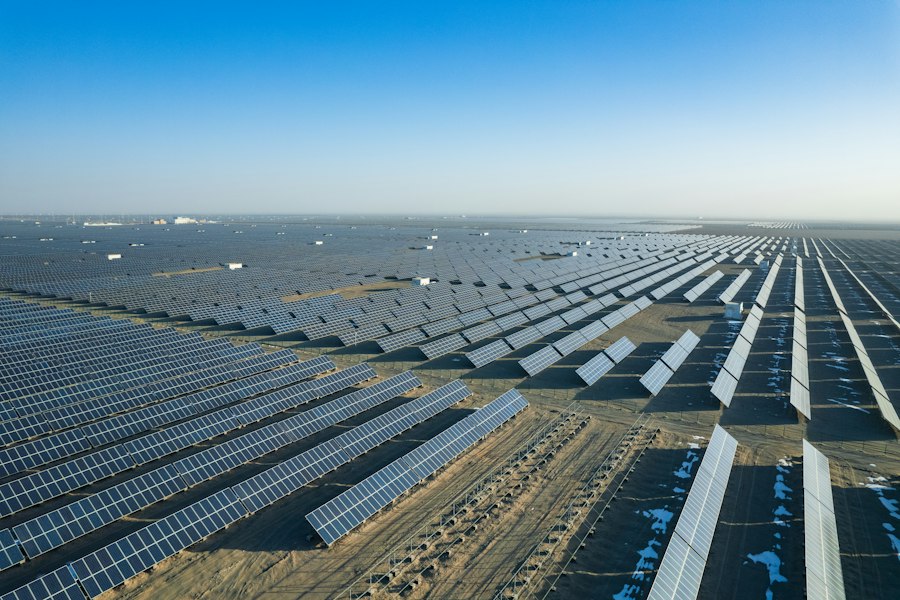
Despite the exciting efficiency numbers, getting perovskite tandem cells from the lab bench to mass production lines is proving to be quite a journey. There are several significant hurdles that need to be cleared before these advanced cells can truly compete with or augment conventional silicon on a large scale.
Stability Challenges
This is arguably the most talked-about roadblock. Traditional silicon solar panels are expected to last 25-30 years with minimal degradation.
Perovskite cells, especially the lead-halide types, are much more susceptible to degradation from environmental factors like moisture, oxygen, heat, and UV light.
These elements can break down the perovskite material, leading to a significant drop in performance over time.
Moisture and Oxygen Sensitivity
Water vapor and oxygen are particularly problematic. They can react with the perovskite layer, forming defects and non-conductive compounds that hinder charge extraction. Researchers are tackling this through various encapsulation techniques, barrier layers, and by developing more intrinsically stable perovskite compositions. However, achieving silicon-like long-term durability in real-world conditions remains a major R&D focus.
Thermal and UV Stress
High temperatures, which are common for solar panels exposed to direct sunlight, can accelerate perovskite degradation. Similarly, prolonged exposure to UV light can also damage the material. Strategies here include incorporating UV filters, designing more robust device architectures, and exploring new perovskite formulations that are more resilient to heat and UV radiation.
Manufacturing Scalability
Even if stability issues are resolved, producing these tandem cells efficiently and cost-effectively at gigawatt scale presents a whole new set of challenges. The fabrication methods used in labs often involve small-scale, precise techniques that aren’t easily translated to large-area, high-throughput manufacturing.
Large-Area Uniformity
Achieving uniform perovskite films over large areas is tricky. Techniques like spin coating, common in labs, aren’t practical for large panels. Roll-to-roll processing or slot-die coating are promising candidates for scalability, but ensuring consistent film quality, thickness, and crystal structure across meters of material is a substantial engineering feat. Non-uniformity leads to defects and reduced performance.
Lead Encapsulation and Toxicity
Most high-performing perovskite formulations contain lead, a toxic heavy metal. While the amount in a single cell is small, the sheer volume needed for widespread adoption raises environmental concerns regarding manufacturing waste, potential leakage during operation (especially if stability is compromised), and end-of-life disposal. Robust encapsulation is critical, not just for performance but also for safety and environmental acceptance. Researchers are also actively exploring lead-free perovskite alternatives, though these currently lag behind in efficiency.
Integration with Silicon Manufacturing
For tandem cells to truly take off, they need to be integrated seamlessly into existing silicon solar cell manufacturing lines, or at least be compatible with them. This means considering aspects like cell size, module assembly processes, and compatibility with current inverter and balance-of-system components. Adding a perovskite layer shouldn’t significantly complicate or increase the cost of the entire module assembly process beyond the efficiency gains.
Recent Efficiency Breakthroughs

Despite the commercialization hurdles, the pace of efficiency improvement in perovskite tandem solar cells has been nothing short of phenomenal. It’s this rapid progress that keeps the field incredibly dynamic and promising. Every few months, a new record is announced, pushing the limits further and further.
Laboratory Record Efficiencies
Just a few years ago, tandem cells were in the low 20s for efficiency.
Now, lab-scale perovskite-on-silicon tandem cells have surpassed 33% certified efficiency, and some uncertified results are even higher. This is a crucial milestone, as it demonstrates that the material combination can achieve efficiencies far beyond single-junction silicon. These record-breaking cells are typically small (often less than 1 cm²), but they serve as proof-of-concept for the fundamental physics and material science.
Interface Engineering
A significant portion of these efficiency gains comes from meticulous interface engineering.
This involves carefully designing the layers between the perovskite and silicon, and between the perovskite and its charge transport layers, to minimize recombination losses and maximize charge extraction. Passivation layers, self-assembled monolayers, and optimized interlayers are all playing a role in reducing defects and improving contact quality, allowing more of the generated charge carriers to be collected as useful electricity.
Bandgap Optimization
The ideal scenario for a two-terminal tandem cell (where both layers are connected in series) is for the current generated by each sub-cell to be perfectly matched. This requires careful tuning of the perovskite’s bandgap to ensure it absorbs the right amount of high-energy light, leaving enough lower-energy light for the silicon.
Researchers are refining perovskite compositions to achieve optimal bandgaps, often around 1.6 to 1.8 eV, for current matching with silicon.
Module-Level Progress
While lab cell records are exciting, the real test is how well these efficiencies translate to larger areas and full modules. This is where the challenges of uniformity and large-area deposition become critical. Nevertheless, significant progress is being made here too.
Companies and research groups are reporting perovskite tandem mini-modules with efficiencies well over 20%, sometimes exceeding 25% for smaller areas. While still shy of lab records, these represent much more practical devices.
Scalable Deposition Techniques
The development of scalable deposition techniques is vital for this module-level progress. Slot-die coating, blade coating, and even vapor deposition methods are being refined to produce high-quality, uniform perovskite films over larger areas.
These methods are more amenable to industrial production than lab-scale spin coating, bringing the technology closer to commercial reality.
Advanced Encapsulation Strategies
As module sizes increase, so does the surface area exposed to environmental stressors. Researchers are developing multi-layer encapsulation schemes, often incorporating inorganic barrier layers and advanced polymers, to protect the sensitive perovskite. The goal is to create a hermetic seal that can withstand decades of outdoor exposure, much like current silicon modules.
The Path to Market: Strategies and Timelines
So, when can we expect to see perovskite tandem solar cells on our roofs or in utility-scale farms? The timeline is still somewhat uncertain, but various strategies are being pursued to accelerate commercialization.
Early Adopter Markets
It’s likely that perovskite tandem cells won’t initially replace standard silicon across the board. Instead, they might find their first commercial applications in niche markets where high power density is at a premium, and the higher cost (initially) can be justified.
Building-Integrated Photovoltaics (BIPV)
Imagine solar panels that are seamlessly integrated into building facades or windows, perhaps even with some transparency. For BIPV, where aesthetics and space are critical, the higher efficiency and potentially tuneable transparency of perovskite tandems could offer a significant advantage, offsetting their current cost premium.
Specialized High-Performance Applications
Think about applications like drones, electric vehicles (integrated solar charging), or even certain portable electronics where maximizing power output from a limited area is crucial. Here, the superior efficiency could provide a compelling value proposition, even if the long-term durability isn’t yet 30 years.
Manufacturing Strategies
Companies are exploring different manufacturing approaches, each with its own advantages and challenges.
Monolithic Tandem Cells
This approach involves fabricating the perovskite layer directly on top of a finished silicon solar cell. This integrates both layers very closely, which can lead to higher performance and a more compact device. However, it requires careful optimization to ensure the perovskite processing doesn’t damage the underlying silicon and that the intermediate layers are perfectly matched.
Mechanically Stacked Tandem Cells
Another strategy is to produce the perovskite cell and the silicon cell separately, then mechanically stack them together to form the tandem device. This offers more flexibility, as both components can be individually optimized. It also potentially simplifies manufacturing integration, as existing silicon lines might not need as much modification. However, optical losses at the interface between the two separate cells and precise alignment are potential challenges.
Projected Timelines
Most experts anticipate that initial commercial products featuring perovskite tandem technology will emerge within the next 3-7 years, likely starting with specialized applications. Widespread, cost-competitive adoption in the general solar market is probably a 5-10 year outlook, depending heavily on how quickly the stability and manufacturing scalability challenges can be overcome. Significant investment from major solar manufacturers and governments will be critical in accelerating this timeline. The current energy transition imperative certainly provides strong motivation.
Perovskite tandem solar cells have garnered significant attention for their potential to revolutionize the solar energy market, yet challenges remain in their commercialization. A related article discusses the complexities surrounding technological advancements and market readiness, shedding light on the broader implications of emerging technologies in various sectors. For instance, the article highlights how companies are navigating hurdles similar to those faced by the solar industry, particularly in the realm of autonomous driving. To explore these themes further, you can read about Tesla’s response to Elon Musk’s ambitious timeline for full self-driving technology in this insightful piece here.
The Future Landscape of Solar Energy
| Metric | Value / Description | Notes |
|---|---|---|
| Current Record Efficiency | 29.5% | Highest certified efficiency for perovskite/silicon tandem cells as of 2024 |
| Commercial Stability | ~1000 hours under standard test conditions | Stability remains a major challenge for long-term deployment |
| Manufacturing Scale | Lab-scale to pilot-scale | Large-scale manufacturing processes are still under development |
| Key Roadblock: Moisture Sensitivity | High | Perovskite layers degrade rapidly in humid environments without encapsulation |
| Key Roadblock: Lead Toxicity | Environmental concern | Lead content requires careful handling and recycling strategies |
| Efficiency Breakthrough: Interface Engineering | +1.5% absolute efficiency gain | Improved charge extraction and reduced recombination |
| Efficiency Breakthrough: Tandem Architecture | Potential >30% | Optimized bandgap combinations for top and bottom cells |
| Projected Commercialization Timeline | 5-10 years | Dependent on overcoming stability and manufacturing challenges |
The arrival of perovskite tandem solar cells isn’t about entirely replacing silicon, but rather about enhancing and complementing it. They represent a significant leap forward, offering a path to efficiencies that can truly reshape our energy future.
Complementing, Not Replacing Silicon
It’s important to view perovskite tandems as a next-generation technology that works with silicon, at least initially. The vast infrastructure for silicon production is already in place, and it’s highly cost-effective. Adding a high-efficiency perovskite layer on top leverages this existing base, providing an incremental but substantial efficiency boost without reinventing the entire wheel. This hybrid approach is likely the most practical route to market.
Potential for Diverse Applications
Beyond traditional rooftop panels, the unique properties of perovskites could unlock entirely new solar applications. Their semi-transparency potential, flexibility, and ability to be fabricated on various substrates open doors for integrated solar solutions in architecture, consumer electronics, and even novel off-grid power systems. Imagine a future where nearly every surface exposed to sunlight can efficiently generate electricity.
Continued Innovation Drivers
The research community isn’t slowing down. We’ll likely see continued innovation in several key areas:
Novel Perovskite Compositions
Researchers are constantly exploring new perovskite materials, including inorganic perovskites and lead-free alternatives, to address stability and toxicity concerns while maintaining high efficiency. The discovery of more robust and environmentally benign materials will be a game-changer.
Advanced Device Architectures
Beyond the basic tandem stack, new device architectures are being investigated to further reduce losses and improve performance. This includes things like multi-junction tandems (three or more layers) and more sophisticated light management strategies within the cell.
AI and Machine Learning for Material Discovery
The sheer complexity of perovskite chemistry and device physics makes it an ideal candidate for AI and machine learning. These computational tools can accelerate the discovery of new stable materials, predict optimal compositions, and streamline the design of high-performance devices, potentially shortening the R&D cycle significantly.
The journey of perovskite tandem solar cells from groundbreaking lab results to widespread commercialization is a testament to scientific ingenuity and perseverance. While the road ahead has its share of bumps, the extraordinary efficiency gains and the sheer potential of this technology make it one of the most exciting areas in renewable energy today. It’s not a matter of if, but when, these advanced solar cells will play a pivotal role in our transition to a cleaner, more sustainable energy future.
FAQs
What are perovskite tandem solar cells?
Perovskite tandem solar cells are a type of photovoltaic technology that combines perovskite materials with traditional silicon solar cells to enhance overall efficiency. The perovskite layer absorbs different wavelengths of light than the silicon layer, allowing for greater energy conversion and improved performance compared to single-junction solar cells.
What are the main efficiency breakthroughs in perovskite tandem solar cells?
Recent advancements in perovskite tandem solar cells have led to efficiencies exceeding 30%, with some laboratory tests reporting efficiencies as high as 32.5%. These breakthroughs are attributed to improved material stability, better light absorption, and optimized layer structures that maximize energy conversion.
What commercialization roadblocks do perovskite tandem solar cells face?
Commercialization roadblocks for perovskite tandem solar cells include issues related to long-term stability, scalability of production processes, regulatory approvals, and the need for cost-effective manufacturing techniques. Additionally, concerns about the environmental impact of certain materials used in perovskite cells pose challenges for widespread adoption.
How do perovskite tandem solar cells compare to traditional silicon solar cells?
Perovskite tandem solar cells generally offer higher efficiency rates than traditional silicon solar cells, which typically max out around 26% efficiency. However, silicon cells have a more established manufacturing process and proven long-term stability, making them currently more reliable for large-scale deployment.
What is the future outlook for perovskite tandem solar cells?
The future outlook for perovskite tandem solar cells is promising, with ongoing research aimed at overcoming existing challenges. As technology matures and production methods improve, perovskite tandem cells could play a significant role in the renewable energy market, potentially leading to lower costs and higher efficiency solar solutions.
Enjoying our content? Make us a preferred source on Google:
Add us as a Preferred Source on Google