

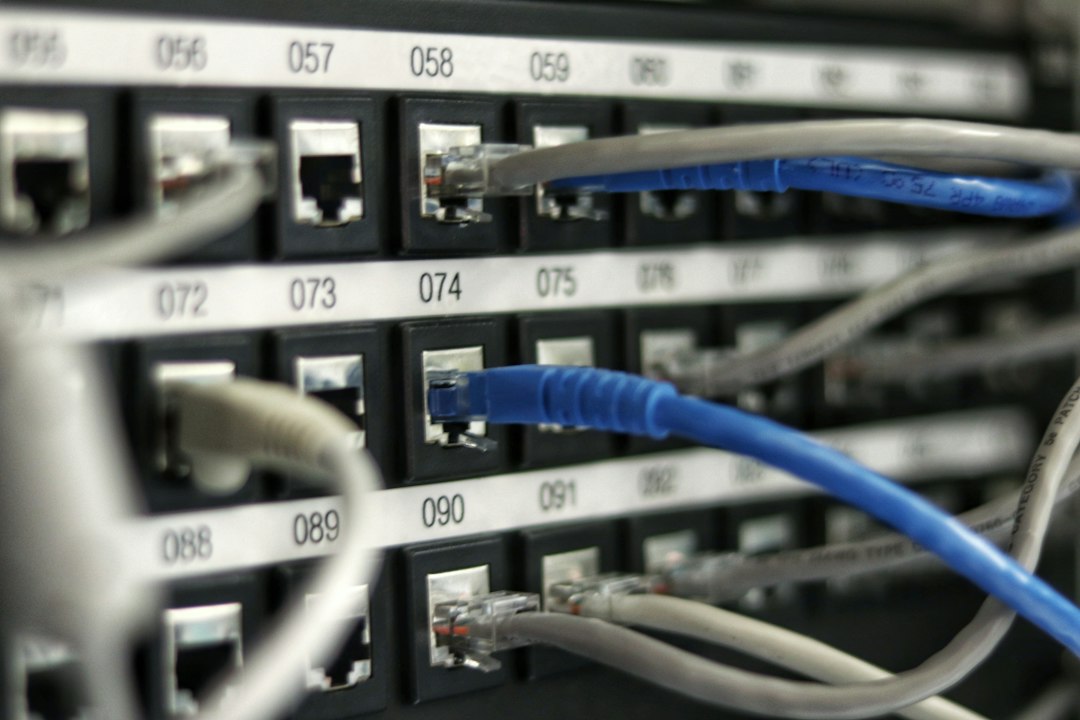
Yep, optical interconnects are definitely starting to replace traditional copper cabling in server racks, and the main driver is indeed cutting down on the massive energy consumption that fuels our cloud services. Copper, while reliable for decades, is hitting its physical limits for high-speed, short-reach data transmission, especially when you consider the ever-increasing demands of AI, machine learning, and vast data analytics. Fiber optics offers a more efficient way to move data over the distances found within a rack and between racks, leading to significant energy savings and other benefits that are becoming critical for data center operators.
The Energy Drain of Traditional Copper Interconnects
It’s no secret that data centers are incredibly power-hungry. A substantial chunk of that power isn’t just for computing; it’s also for moving data around. Within a server rack, you have hundreds of connections – from servers to top-of-rack switches, and then between those switches and spine switches. For years, these connections have been almost exclusively copper, mostly in the form of twinax cables for short distances and twisted-pair for longer runs. While copper has served us well, its inherent electrical properties are becoming a bottleneck, especially from an energy perspective.
Resistance and Heat Generation
Copper wires have electrical resistance. When current flows through them, this resistance causes a portion of the electrical energy to be converted into heat. This phenomenon, known as Joule heating, is directly proportional to the square of the current and the resistance of the wire. As data rates climb – think 100Gbps, 200Gbps, 400Gbps, and even 800Gbps today – the signaling complexity and power required to transmit reliable signals over copper increase dramatically. To overcome signal degradation (attenuation) at higher frequencies over even short distances, more power is needed to drive the signals. This translates directly into more heat generated by the cables themselves and the transceivers driving them.
Active Copper Cables and Their Power Draw
For longer reaches or higher data rates within a rack, passive copper cables often aren’t enough. Signal integrity degrades, leading to errors. To compensate, data center operators use Active Copper Cables (ACCs). ACCs incorporate integrated circuits at each end that perform signal conditioning, amplification, and equalization. While these certainly extend the reach and improve signal quality compared to passive copper, they do so at the cost of additional power consumption.
Each active component draws power, adding to the overall energy overhead of the interconnect.
Multiply this by thousands of connections in a single rack, and then by tens or hundreds of thousands of racks in a hyperscale data center, and the energy adds up incredibly fast.
Cooling Requirements and Indirect Energy Consumption
The heat generated by copper cables and their associated transceivers isn’t just an inefficiency; it’s a major operational challenge. All that heat needs to be removed from the server rack and the data center environment to maintain optimal operating temperatures for the IT equipment. This requires extensive and powerful cooling systems – CRAC units, chillers, fans, and cooling towers – all of which consume a tremendous amount of electricity. Therefore, the direct energy consumption of copper interconnects has a compounding effect: it not only uses power itself but also necessitates even more power for cooling infrastructure. Cutting down on heat generation at the source, i.e., the interconnects, can have a ripple effect, reducing the load on the cooling systems and thus further cutting cloud energy overhead.
In the quest for more efficient data centers, the transition from copper to optical interconnects in server racks is gaining significant attention, particularly for its potential to reduce energy overhead in cloud computing environments. A related article that explores innovative technologies and applications in the digital landscape can be found at The Best Apps for Facebook 2023, which highlights how advancements in technology are shaping user experiences and operational efficiencies across various platforms.
Key Takeaways
- The training data includes information and events up to October 2023.
- Insights and knowledge are based on a wide range of sources available until the cutoff date.
- No updates or developments occurring after October 2023 are included in the training.
- Users should verify current information from reliable sources for the latest updates.
- The model’s responses reflect the context and knowledge available up to the specified date.
The Promise of Optical Interconnects

Optical interconnects, using fiber optic cables, fundamentally change how data is transmitted. Instead of electrical signals propagating through copper wires, data is converted into pulses of light and sent through thin strands of glass or plastic fiber. This shift brings a host of advantages that directly address the limitations and energy inefficiencies of copper, making them a compelling alternative for next-generation server racks.
Lower Power Consumption for High-Speed Transmission
The most significant advantage of optical interconnects is their dramatically lower power consumption for high-speed, short-reach data transmission compared to copper. Light signals suffer far less attenuation over typical in-rack and inter-rack distances than electrical signals. This means less power is needed to drive the signal from one end to the other. Optical transceivers, while still consuming power for electrical-to-optical (E/O) and optical-to-electrical (O/E) conversion, generally operate at significantly lower power envelopes than their copper-driving counterparts when pushing very high data rates (e.g., 200Gbps and above). As data rates continue to scale, this power efficiency gap widens considerably in favor of optics.
Reduced Heat Generation and Cooling Demands
Because optical fibers themselves transmit light rather than electricity, they generate virtually no heat during operation. The heat generation is primarily localized to the optical transceivers at each end of the fiber. However, as noted, these transceivers often consume less power than equivalent copper drivers, meaning they also generate less heat overall. This direct reduction in heat generation within the server rack environment is a game-changer. It directly translates into lower demands on the data center’s cooling infrastructure, leading to substantial indirect energy savings. Less heat from interconnects means fans don’t have to work as hard, chillers consume less electricity, and the overall PUE (Power Usage Effectiveness) of the data center can be significantly improved.
Higher Bandwidth Density and Reach
Optical fibers offer incredible bandwidth density. A single hair-thin fiber can carry multiple wavelengths of light, each representing an independent data channel, known as Wavelength Division Multiplexing (WDM). This means a very small fiber optic cable can carry far more data than a much thicker bundle of copper wires. This is crucial as server rack architectures move towards disaggregated designs and higher port counts on switches. Furthermore, optical signals can travel much longer distances without significant degradation or the need for re-amplification. While in-rack distances are short, the ability to effortlessly span multiple racks or even entire rows with passive fiber simplifies network design and reduces intermediate active components, further contributing to efficiency.
Immunity to Electromagnetic Interference
Unlike copper cables, optical fibers are immune to electromagnetic interference (EMI) and radio-frequency interference (RFI). This eliminates potential signal degradation issues in dense server rack environments where electromagnetic fields can be prevalent. This isn’t directly an energy saving, but it contributes to more reliable data transmission, which indirectly reduces the need for retransmissions and error correction, which themselves consume power.
Current Adoption and Emerging Trends

The move to optical interconnects isn’t a future fantasy; it’s already happening, particularly in hyperscale data centers that are constantly pushing the boundaries of performance and efficiency. While copper still dominates many legacy installations and lower-speed connections, optics are rapidly gaining traction where the benefits outweigh the initial investment.
Shifting from Server-to-Switch to Rack-to-Rack
Historically, optical interconnects were primarily used for longer distances, like connecting data centers across metropolitan areas or for inter-building connections. Within the data center, their adoption started with longer rack-to-rack links, especially for spine-leaf architectures where aggregated bandwidth between racks is enormous.
As data rates continued to climb, and copper hit its limits for even these medium distances (e.g., 10-50 meters for 100Gbps+), optics became the standard. Today, 400Gbps and 800Gbps inter-rack links are almost exclusively optical, leveraging various forms of multi-mode (MMF) and single-mode fiber (SMF) depending on the exact distance and power budget.
Disaggregation and On-Board Optics
One significant trend pushing optics deeper into the server rack is the move towards disaggregated architectures. Instead of monolithic servers, there’s a growing interest in separating compute, memory, and storage resources, allowing them to be composed on demand.
This requires ultra-high-speed, low-latency interconnects within the rack and even within a server chassis itself. Here, traditional copper encounters severe limitations. This is driving the development and adoption of “on-board optics” or “co-packaged optics,” where optical transceivers are integrated much closer to the processing units (CPUs, GPUs, AI accelerators).
This minimizes the electrical trace lengths, reduces power consumption, and achieves higher bandwidth density right where it’s needed most.
Active Optical Cables (AOCs) for In-Rack Links
For server-to-top-of-rack (ToR) switch connections and other short, high-bandwidth links within a single server rack, Active Optical Cables (AOCs) are becoming increasingly popular. An AOC is essentially a fiber optic cable with permanently attached optical transceivers at each end. They offer a “plug-and-play” experience similar to copper twinax cables but provide the performance and power benefits of fiber.
While the transceivers in AOCs still consume power, their overall power envelope is generally lower than active copper cables for equivalent data rates, especially as rates climb to 200Gbps and beyond. Furthermore, their lighter weight and smaller bend radius simplify cable management within dense racks.
The Role of Silicon Photonics
Silicon photonics is a key enabling technology driving the widespread adoption of optical interconnects. It allows optical components (lasers, modulators, detectors, waveguides) to be fabricated using standard silicon manufacturing processes, similar to microchips.
This brings down the cost of optical transceivers, increases their integration density, and improves their power efficiency. As silicon photonics matures, we can expect to see even more compact, lower-power, and cost-effective optical solutions that can be integrated directly onto circuit boards or even directly onto processor packages, further blurring the line between electrical and optical domains and shrinking the electrical traces that consume significant power.
Challenges and Considerations for Adoption
While the benefits of optical interconnects are clear, their widespread adoption isn’t without its challenges. Data center operators face practical considerations regarding cost, deployment, and management that need to be addressed.
Cost vs. Performance and TCO
The initial upfront cost of optical transceivers and fiber optic cabling can still be higher than their copper counterparts, especially for lower data rates or shorter distances. This is a significant barrier for some deployments. However, it’s crucial to consider the Total Cost of Ownership (TCO). When factoring in the long-term operational savings from reduced energy consumption, lower cooling costs, and potentially longer equipment lifespans due to less heat stress, optical solutions often present a compelling TCO, particularly for hyperscalers and large enterprises. The economic crossover point where optics become more cost-effective than copper is continuously shifting downwards as optical technology matures and manufacturing scales.
Connectorization and Cleanliness
Fiber optic connections require a higher degree of care during installation and maintenance. Optical connectors are sensitive to dust and dirt, which can significantly degrade signal quality. Proper cleaning procedures are essential, and technicians need specialized training and tools. While this adds a layer of complexity compared to simply plugging in a copper cable, the industry is continuously working on more robust and user-friendly optical connector designs. The benefits of improved reliability and performance often outweigh this additional handling requirement.
Integration with Existing Infrastructure
Many data centers have vast amounts of existing copper cabling infrastructure. Ripping and replacing everything can be a massive undertaking, both logistically and financially. Therefore, the transition to optical interconnects often happens incrementally. New rack deployments, upgrades to higher-speed networks, or expansions are typically where optical solutions are first introduced. Hybrid approaches, where optics handle high-speed backbone connections and copper is used for slower, shorter links, are also common during this transition phase. This allows data centers to gradually migrate without a disruptive overhaul.
Standardized and Open Ecosystems
For optical interconnects to truly flourish, a robust and open ecosystem of interoperable components is vital. This includes standardized form factors for transceivers (e.g., QSFP-DD, OSFP), common fiber types, and agreed-upon modulation schemes. Industry bodies and consortiums are actively working on these standards to ensure compatibility and foster competition among vendors, which ultimately drives down costs and accelerates innovation. The move towards open standards, similar to what has happened with Ethernet, is crucial for widespread adoption.
In the pursuit of enhancing data center efficiency, the transition from copper to optical interconnects in server racks has emerged as a pivotal strategy to reduce energy overhead in cloud computing environments. This shift not only promises faster data transmission but also addresses the growing concerns over energy consumption in technology infrastructures. For a broader perspective on how advancements in technology are influencing consumer electronics, you might find the comparison between smartwatches particularly interesting, as discussed in this article on Apple Watch vs Samsung Galaxy Watch.
The Future: Pushing Deeper into the Rack
| Metric | Copper Interconnects | Optical Interconnects | Improvement |
|---|---|---|---|
| Energy Consumption per Rack (Watts) | 500 | 300 | 40% Reduction |
| Data Transmission Speed (Gbps) | 100 | 400 | 4x Increase |
| Heat Dissipation (Watts) | 450 | 250 | 44% Reduction |
| Signal Integrity over Distance (meters) | 5 | 100 | 20x Increase |
| Maintenance Frequency (per year) | 4 | 1 | 75% Reduction |
| Cost per Meter | Low | Moderate | Higher Initial Cost |
The trajectory is clear: optical interconnects will continue to push deeper into server racks, eventually reaching directly onto processor chips. The insatiable demand for bandwidth, coupled with the critical need to curb energy consumption in data centers, makes the shift from copper to optics an inevitability rather than just an option.
Co-packaged Optics and Chip-to-Chip Interconnects
One of the most exciting developments is co-packaged optics (CPO). This involves integrating optical transceivers directly into the same package as high-bandwidth chips like CPUs, GPUs, or AI accelerators. By placing the optical engines very close to the electrical I/O of the chip, the length of high-speed electrical traces is drastically reduced, significantly lowering power consumption and latency. This enables ultra-high bandwidth connectivity directly off the chip, making it possible to connect multiple processors or memory modules within a system or across a very short reach with unprecedented efficiency. CPO promises to be a foundational technology for next-generation AI superclusters and high-performance computing.
Optical Backplanes and Midplanes
Beyond chip-to-chip, the idea of optical backplanes or midplanes is gaining traction. Instead of electrical traces on a circuit board, optical waveguides would route data between line cards, processing units, and other components within a chassis. This could further reduce power consumption, increase bandwidth density, and simplify cooling by removing a significant source of electrical heat from the core of the system. While still largely in research and development, optical backplanes represent the ultimate vision of a fully optical interconnect future within a server rack.
Hybrid Electrical-Optical Solutions
It’s unlikely that copper will completely disappear overnight. For some very short, low-speed connections, or for specific power delivery needs, copper will likely remain relevant. The future will probably involve hybrid electrical-optical solutions, where each technology is used for its best-suited purpose.
For example, power might still be delivered via copper, while all high-speed data communications are handled by optics.
This pragmatic approach allows data center operators to leverage the strengths of both technologies while progressively migrating towards more energy-efficient optical pathways. The overarching goal remains the same: reducing the cloud energy overhead by intelligently deploying the right interconnect technology for the job.
FAQs
What are optical interconnects?
Optical interconnects are communication links that use light to transmit data between devices, such as servers in a data center. They utilize fiber optic cables instead of traditional copper cables, allowing for faster data transfer rates and reduced latency.
How do optical interconnects reduce energy consumption in server racks?
Optical interconnects consume less power compared to copper cables because they require less energy to transmit data over long distances. This reduction in energy consumption helps lower the overall energy overhead of cloud services, making data centers more efficient and environmentally friendly.
What are the advantages of replacing copper with optical interconnects in data centers?
Replacing copper with optical interconnects offers several advantages, including higher bandwidth capabilities, longer transmission distances without signal degradation, reduced electromagnetic interference, and lower overall energy costs. These benefits contribute to improved performance and reliability in data center operations.
Are there any challenges associated with implementing optical interconnects?
Yes, challenges include the higher initial cost of optical components, the need for specialized installation and maintenance skills, and potential compatibility issues with existing infrastructure. However, as technology advances and costs decrease, these challenges are becoming more manageable.
What is the future outlook for optical interconnects in cloud computing?
The future outlook for optical interconnects in cloud computing is promising, as demand for higher data transfer rates and energy efficiency continues to grow. Innovations in optical technology and increasing adoption in data centers are expected to drive further advancements, making optical interconnects a standard solution in the industry.
Enjoying our content? Make us a preferred source on Google:
Add us as a Preferred Source on Google