

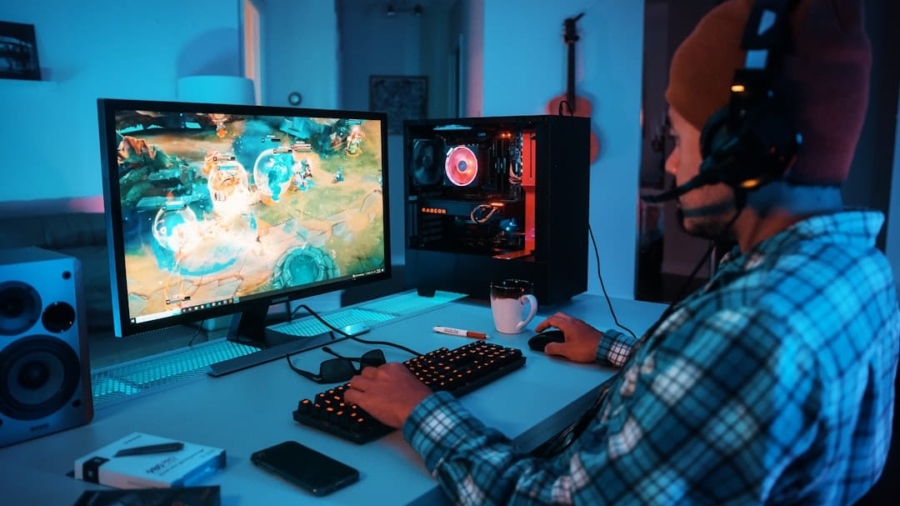
Cloud gaming is changing the game for competitive esports, and understanding how is key. The shift offers exciting possibilities for accessibility and performance, but it also brings its own set of challenges. This article dives into what you actually need to know about navigating this evolving landscape, from the technical foundations to the player experience.
At its heart, cloud gaming for esports means the game itself isn’t running on your local hardware. Instead, it’s being processed on powerful servers in a data center, and the video and audio output is streamed to your device. Your inputs – button presses, mouse movements – are sent back to the servers as commands. This fundamental difference has ripple effects throughout the entire esports ecosystem.
Deconstructing the Cloud Gaming Model
Think of it like this: instead of a console or PC doing all the heavy lifting, that burden is shifted to a remote server farm. When you launch a cloud-streamed game, you’re essentially connecting to a virtual machine that’s ready to go. This machine handles the game’s rendering, physics, AI, and everything else that makes the game tick.
The results are then compressed and sent to your screen in real-time.
The Latency Imperative: It’s Not Just About Speed, It’s About Responsiveness
For traditional gaming, lag is an annoyance. In esports, it’s a deal-breaker. Cloud gaming’s biggest hurdle, and therefore the primary focus of its development for competitive play, is latency. This is the delay between when you perform an action and when you see that action reflected on your screen. In fast-paced esports titles, even milliseconds can determine victory or defeat.
- Input Lag: This is the time it takes for your controller or mouse input to be registered by the game. In cloud gaming, this includes the time it takes for your input to travel to the server, be processed, and then for the updated frame to be sent back.
- Rendering Lag: This is the time it takes for the game to actually render the frame on the server. While often optimized on powerful cloud hardware, it’s still a factor.
- Network Lag (Ping): This is the most significant and variable component for cloud gaming. It’s the time it takes for data to travel from your device to the server and back.
Processing Power: The Server-Side Advantage
One of the major draws of cloud gaming is the potential for consistently high-end performance, regardless of your local hardware. Servers in data centers are typically equipped with top-tier CPUs and GPUs, capable of running games at high resolutions and frame rates with all graphics settings maxed out. This can level the playing field in terms of visual fidelity and raw processing power.
In the rapidly evolving landscape of competitive esports, understanding the technological advancements that support gameplay is crucial. A related article that delves into the integration of technology in gaming environments is “Discover the Best Tablet for On-Stage Lyrics Today,” which highlights how tablets can enhance performance and engagement during live events. For more insights on this topic, you can read the article here: Discover the Best Tablet for On-Stage Lyrics Today.
Key Takeaways
- Clear communication is essential for effective teamwork
- Active listening is crucial for understanding team members’ perspectives
- Conflict resolution skills are necessary for managing disagreements
- Trust and respect are the foundation of a successful team
- Collaboration and cooperation are key for achieving common goals
Reimagining Esports Infrastructure: The Network is King
The backbone of cloud gaming for esports is an incredibly robust and low-latency network infrastructure. This isn’t just about having a fast internet connection at home; it’s about the entire chain from the player’s device to the cloud servers and back.
Edge Computing and Proximity
To combat latency, cloud gaming providers are increasingly deploying servers closer to users. This concept is called edge computing. Instead of a single, massive data center serving an entire continent, smaller, more distributed data centers are being used.
- Data Center Placement: Strategic placement of data centers in or near major metropolitan areas where esports viewership and participation are high is crucial.
- Content Delivery Networks (CDNs): CDNs play a vital role in distributing game assets and streaming data efficiently, ensuring a smoother experience.
Bandwidth Demands: More Than Just Basic Streaming
Cloud gaming, especially at high resolutions and frame rates for competitive play, requires significant bandwidth. It’s not just about downloading game files; it’s about the constant, real-time stream of high-quality video.
- Resolution and Frame Rate: Higher resolutions (1080p, 4K) and higher frame rates (60fps, 120fps+) demand more data transmission.
- Compression Technologies: Sophisticated video compression algorithms are essential to reduce bandwidth requirements without sacrificing visual quality.
Network Protocols and Optimization
Beyond raw bandwidth, the protocols used to transmit data are critical. Services are constantly optimizing these to minimize delays.
- UDP vs. TCP: While TCP is reliable for downloads, UDP is often preferred for real-time streaming due to its lower overhead, even though it might sacrifice some packet order guarantees.
- Proprietary Protocols: Many cloud gaming providers develop their own specialized network protocols tailored for their specific services and optimizations.
The Player Experience: Adapting to a New Reality

For esports players, the shift to cloud gaming means adapting to a different control feel and a new set of performance considerations. It’s not simply a matter of plugging in and playing.
Input Consistency and Perceived Latency
Even with the best infrastructure, some level of input lag is unavoidable. The key for competitive play is to make this delay as consistent and as low as possible, so players can develop muscle memory and anticipate it.
- Controller vs.
Keyboard/Mouse:
The nature of input devices can affect perceived latency. Certain peripherals might have inherent processing times that add to the overall delay. - Adaptive Sync Technologies: Technologies like NVIDIA Reflex and AMD Anti-Lag are being integrated into cloud gaming solutions to minimize input lag and frame pacing issues.
Visual Fidelity and Performance Tiers
While cloud gaming offers the potential for high-end graphics, the actual experience can vary depending on your internet connection and the provider’s server load. Players might need to make choices about resolution and graphical settings.
- Dynamic Resolution Scaling: The service might automatically adjust the game’s resolution on the fly to maintain a stable frame rate, which can sometimes be noticeable.
- Graphics Presets: Similar to local hardware, players might need to choose between performance-oriented graphics presets (lower detail, higher frame rate) and quality-oriented ones.
Accessibility and Hardware Independence
One of the most significant benefits is the removal of expensive hardware barriers.
This opens up esports to a much wider audience.
- Ubiquitous Access: With a decent internet connection and a compatible device (even a smartphone or low-spec laptop), players can access high-fidelity gaming experiences.
- Reduced Technical Barriers: Players don’t need to worry about hardware upgrades, driver issues, or compatibility problems with game settings.
Challenges and Opportunities for Esports Organizations

Esports organizations face a unique set of hurdles and exciting new avenues as cloud gaming matures.
Team Infrastructure and Practice Environments
Replicating dedicated LAN environments for cloud gaming practice requires a different approach to network management and hardware selection.
- Dedicated Network Segments: Organizations might invest in dedicated network infrastructure within their training facilities to ensure optimal routing and minimize interference.
- Local Caching and Synchronization: Strategies to minimize local data loading and ensure synchronized game states across multiple players are crucial for team practice.
Talent Scouting and Player Development
The accessibility of cloud gaming could democratize talent scouting, but it also introduces new factors to consider when evaluating potential players.
- Performance Benchmarking: Developing standardized methods to assess player performance on cloud platforms, factoring in network variability, is essential.
- Adaptability Training: Players need to be trained to perform optimally in cloud environments, understanding how to cope with potential latency fluctuations.
Tournament Operations and Event Management
Running competitive esports tournaments on cloud platforms presents distinct operational challenges and opportunities for innovation.
- Server Stability and Reliability: Ensuring rock-solid server uptime and performance during critical tournament matches is paramount.
- On-Site Infrastructure: Even with cloud gaming, on-site infrastructure for broadcasting, spectator experience, and player management will still be necessary. However, the need for powerful gaming PCs at the venue might diminish.
- Anti-Cheat Solutions: Developing robust anti-cheat mechanisms that are effective in a cloud-streamed environment is a critical concern.
In the rapidly evolving landscape of competitive esports, understanding the technological advancements that support cloud gaming architectures is crucial for both players and developers. A related article that provides insights into the best hardware options for gaming is available at the best Toshiba laptops for 2023, which highlights devices that can enhance the gaming experience and ensure smooth performance in cloud-based environments. As esports continues to grow, staying informed about the right tools can make a significant difference in competitive play.
The Future of Competitive Cloud Gaming
| Metrics | Data |
|---|---|
| Latency | 20-30 milliseconds |
| Bandwidth | 10-20 Mbps |
| Packet Loss | Less than 1% |
| Server Locations | Global presence |
| Player Count | Thousands simultaneously |
The trajectory of cloud gaming in esports is one of continuous refinement and expansion. As the technology matures, so too will its impact.
Advancements in Network Technology
Ongoing innovations in 5G, Wi-Fi 6E, and other networking technologies will further reduce latency and increase bandwidth, making cloud gaming even more viable for competitive play.
- 5G’s Role: Mobile cloud gaming, powered by 5G, could revolutionize esports accessibility, allowing for high-level play on the go.
- Fiber Optic Expansion: Continued investment in fiber optic infrastructure globally will provide the necessary lower-latency, higher-bandwidth connections.
Cloud-Native Esports Titles
We may see the emergence of esports titles specifically designed from the ground up to leverage the strengths of cloud architecture, potentially incorporating features and gameplay mechanics that are not feasible on traditional client-server models.
- Massive Player Counts: Games with truly massive player counts where server-side computation is a necessity could become more common.
- Dynamic and Evolving Game Worlds: Cloud infrastructure could enable more dynamic and persistent in-game worlds that evolve based on player actions.
Hybrid Models and Player Choice
It’s likely that we’ll see hybrid approaches where players can choose between installing a game locally or streaming it from the cloud, offering flexibility based on their hardware, internet connection, and preferences.
- Seamless Transitions: The ability to seamlessly switch between local and cloud play for the same game could become a reality.
- Data Synchronization: Ensuring that progress and game states are perfectly synchronized across both local and cloud instances will be a key development.
The Evolving Role of Peripheral Hardware
While high-end PCs may become less critical for playing cloud games, high-quality peripherals like mice, keyboards, and controllers that offer precise input and minimal internal processing delay will remain essential.
- Input Device Innovation: Manufacturers will continue to innovate in input devices to minimize their own contribution to overall latency.
- Integration with Cloud Services: Peripherals might offer better integration with cloud gaming services for things like custom button mapping and profile switching.
The transition to cloud gaming architectures in competitive esports is an ongoing evolution, not an overnight revolution. While challenges remain, particularly concerning latency and network consistency, the opportunities for increased accessibility, enhanced visual fidelity, and innovative gameplay are immense. For players, organizations, and developers, understanding and adapting to these changes will be the key to thriving in the future of competitive gaming.
FAQs
What is cloud gaming architecture in competitive esports?
Cloud gaming architecture in competitive esports refers to the use of cloud-based infrastructure to deliver high-performance gaming experiences to players. This allows gamers to access and play games remotely without the need for powerful local hardware.
How does cloud gaming architecture impact competitive esports?
Cloud gaming architecture has the potential to level the playing field in competitive esports by reducing the hardware barrier to entry. It also enables seamless cross-platform play and can improve the overall gaming experience by reducing latency and increasing accessibility.
What are the challenges of transitioning to cloud gaming architectures in competitive esports?
Challenges of transitioning to cloud gaming architectures in competitive esports include concerns about latency, data security, and the need for robust internet infrastructure. Additionally, there may be resistance from players who are accustomed to traditional gaming setups.
What are the benefits of cloud gaming architectures in competitive esports?
The benefits of cloud gaming architectures in competitive esports include increased accessibility, reduced hardware costs for players, and the potential for more immersive and seamless gaming experiences. It also allows for easier scalability and updates to game infrastructure.
How are esports organizations adapting to the shift to cloud gaming architectures?
Esports organizations are adapting to the shift to cloud gaming architectures by exploring partnerships with cloud gaming providers, investing in infrastructure to support cloud gaming, and reevaluating their tournament and event setups to accommodate remote play. Additionally, they are working to address concerns about latency and data security.
Enjoying our content? Make us a preferred source on Google:
Add us as a Preferred Source on Google