

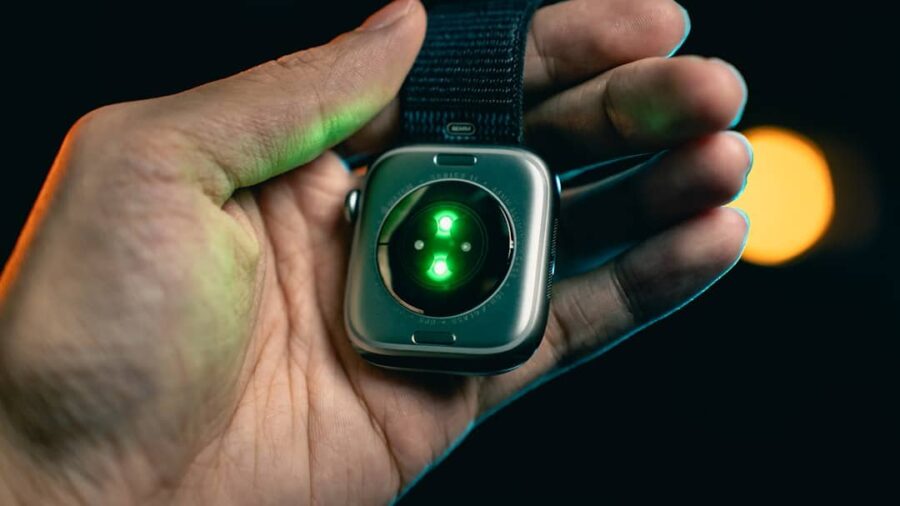
So, you’re curious about what it takes for a wearable health tracker to actually get the FDA’s nod of approval, especially when we’re talking about clinical validation. In a nutshell, it’s about proving that the device does what it claims to do, accurately and reliably, and that its data is meaningful for health decisions. It’s not just about a fancy algorithm or sleek design; it’s about robust scientific evidence.
The FDA’s Role: More Than Just a Stamp of Approval
The FDA isn’t just handing out gold stars for innovative gadgets. Their primary job is to protect public health. When it comes to wearable health trackers, this means ensuring that these devices are safe and effective. It’s a nuanced process, and the level of scrutiny depends heavily on how the device is marketed and what health claims it makes.
In the quest for reliable wearable health trackers, understanding the intricacies of FDA approvals is crucial. For those interested in exploring this topic further, the article titled “Understanding the FDA Approval Process for Medical Devices” provides valuable insights into the regulatory landscape that governs wearable technology. You can read it here: Understanding the FDA Approval Process for Medical Devices. This resource complements the discussion on what constitutes clinical validation for health trackers, shedding light on the standards and requirements that developers must meet to ensure their products are both safe and effective.
Understanding Device Classification: Where Does Your Tracker Fit In?
Before diving into validation, it’s crucial to understand how the FDA classifies medical devices. This classification dictates the regulatory pathway and the kind of evidence needed.
Class I Devices: Low Risk, General Controls
Think of these as the simplest devices. They pose the least potential risk to users. For many wearable health trackers that simply monitor general wellness (like step counters or basic heart rate monitors without diagnostic claims), they might fall into this category, or even be considered a “general wellness product” outside of traditional medical device regulation. For Class I devices, the FDA typically requires what they call “general controls,” which include things like good manufacturing practices, proper labeling, and reporting adverse events. Clinical validation in the formal sense is often not a primary requirement here.
Class II Devices: Moderate Risk, Special Controls
This is where things start to get more involved. Many wearable health trackers that make more specific health claims – for instance, detecting atrial fibrillation or monitoring blood oxygen saturation for medical purposes – often land in this category. For Class II devices, beyond general controls, the FDA requires “special controls.” These can include performance standards, post-market surveillance, and, importantly, clinical validation studies. This is where the rubber meets the road for proving accuracy and reliability.
Class III Devices: High Risk, Pre-Market Approval
These are the big guns – devices that support or sustain life, are implanted, or present a potential unreasonable risk of illness or injury. Examples include pacemakers or HIV diagnostic tests. While less common for consumer-grade wearables, if a tracker were to make life-critical diagnostic claims, it could theoretically fall into this category. Class III devices require Pre-Market Approval (PMA), which is the most stringent regulatory pathway, demanding extensive clinical trials and robust data.
The Nuances of “Clinical Validation”: What Does It Actually Mean?
“Clinically validated” is a term often thrown around, but its meaning is quite specific in the FDA context. It’s not just about a few people testing the device; it’s a systematic, scientific process.
Defining the Clinical Endpoint: What Are You Measuring?
Before any study begins, the manufacturer needs to clearly define what their device is supposed to measure and how accurately it needs to measure it. For example, if a device claims to detect atrial fibrillation, the clinical endpoint would be its ability to accurately identify AFib episodes compared to a gold-standard diagnostic method like an ECG. This clarity is paramount.
Establishing a Gold Standard: The Benchmark for Accuracy
You can’t validate something without comparing it to something else that’s already known to be accurate. This “gold standard” is typically an established, FDA-approved medical device or diagnostic method. For heart rate, it might be a medical-grade ECG. For blood pressure, an oscillometric cuff. The wearable tracker’s measurements are then compared against this gold standard.
Robust Study Design: Not Just Anecdotes
Clinical validation isn’t about collecting a few user testimonials. It involves rigorously designed studies.
Prospective vs. Retrospective Studies
- Prospective studies involve enrolling participants and collecting data moving forward in time. This is generally preferred for validation as it allows for better control over variables.
- Retrospective studies look back at existing data. While sometimes useful, they often have limitations in terms of data quality and control.
Sample Size and Diversity
The number of participants in a study is critical. It needs to be statistically significant enough to draw meaningful conclusions. Equally important is the diversity of the participant pool. Does the device work accurately across different age groups, skin tones, body types, and health conditions? A device might work perfectly on a young, healthy individual but struggle with an elderly patient with poor circulation or a dark-skinned individual where optical sensors might have difficulty.
Blinding and Control Groups
To minimize bias, studies often employ blinding (where participants or researchers don’t know who is receiving which intervention) and control groups (a group that does not receive the intervention, used for comparison). While not always perfectly applicable to wearable validation in the same way as drug trials, the principles of minimizing bias are still vital.
Data Analysis and Statistical Significance: Crunching the Numbers
Once data is collected, it needs to be rigorously analyzed.
This isn’t just about showing a few similar numbers; it’s about statistical proof.
Sensitivity and Specificity: Detecting and Excluding
- Sensitivity measures how well the device correctly identifies positive cases (e.g., how many actual AFib episodes it correctly detects). A high sensitivity means fewer false negatives.
- Specificity measures how well the device correctly identifies negative cases (e.g., how many times it correctly identifies that AFib is not present). A high specificity means fewer false positives.
Both are crucial for a clinically validated device, especially when making diagnostic claims.
Accuracy, Precision, and Reliability
- Accuracy refers to how close a measurement is to the true value.
- Precision refers to how close repeated measurements are to each other. A device can be precise but not accurate (e.g., always giving you a blood pressure reading that’s consistently 10mmHg too low).
- Reliability means the device consistently produces the same results under the same conditions.
Equivalence to Gold Standard
The statistical analysis aims to demonstrate that the wearable device’s measurements are equivalent or non-inferior to the established gold standard. This often involves statistical tests to determine if the differences between the device and the gold standard are within an acceptable, pre-defined margin of error.
In the quest for understanding the complexities of wearable health trackers and their clinical validation, it is essential to explore various aspects of technology and design that contribute to their effectiveness. A related article discusses the importance of software solutions in enhancing product design, which can significantly impact the usability and functionality of health devices. For more insights on this topic, you can read about the best software for furniture design here. This connection highlights how advancements in design software can play a crucial role in developing clinically validated health tracking technologies.
Post-Market Surveillance and Real-World Evidence: The Ongoing Journey
FDA approval isn’t always a “one and done” deal. For many devices, especially Class II, there’s an expectation of ongoing monitoring.
Adverse Event Reporting
Manufacturers are required to report any adverse events associated with their devices. This continuous feedback loop helps the FDA monitor safety and effectiveness in real-world use.
Real-World Evidence (RWE)
As more people use these devices, the collective data can provide valuable “real-world evidence.” This data can further support or sometimes even challenge initial validation findings. The FDA is increasingly interested in leveraging RWE to understand device performance outside of controlled study environments. This doesn’t replace initial clinical trials but can complement them, especially for post-market surveillance.
Software Updates and Changes
In the world of wearables, software updates are frequent. If a software update significantly changes the device’s functionality, particularly its diagnostic or measurement capabilities, the manufacturer may need to resubmit data or even go through a new regulatory review to ensure the updated version is still safe and effective. This is a critical point as many wearables evolve rapidly.
Beyond FDA Approval: What Else to Consider
While FDA approval for clinical claims is a major milestone, it’s not the only indicator of a valuable health tracker.
Intended Use and Marketing Claims
The FDA’s focus is heavily on the “intended use” of the device and the claims made by the manufacturer. If a tracker doesn’t make medical claims (e.g., it just says it tracks “activity levels” or “sleep patterns” without diagnosing sleep disorders), it might not fall under strict medical device regulation. This is a fine line, and manufacturers are very careful about their wording. A device that simply tracks heart rate for fitness purposes is different from one that claims to detect arrhythmia.
ISO Standards and Other Certifications
Beyond the FDA, many manufacturers adhere to international standards like those from the International Organization for Standardization (ISO). These standards cover things like quality management systems (ISO 13485 for medical devices) and specific performance criteria.
While not a direct substitute for FDA approval, they demonstrate a commitment to quality and safety.
Peer-Reviewed Publications
Even if a device isn’t FDA-approved for a specific medical claim, its technology might be validated through independent, peer-reviewed scientific studies. These studies, published in reputable medical journals, lend credibility to the device’s accuracy and utility, even if they don’t lead to a formal FDA clearance. Look for these kinds of studies when evaluating devices.
In essence, navigating FDA approvals for wearable health trackers is a rigorous journey that demands scientific evidence, robust study designs, and a clear understanding of regulatory classifications. It’s about ensuring that when a device makes a health claim, it can actually deliver on that promise safely and accurately. For consumers, understanding this process helps in making informed decisions about which devices to trust with their health data.
FAQs
What is the FDA’s role in approving wearable health trackers?
The FDA regulates the approval and clearance of medical devices, including wearable health trackers. The agency evaluates the safety and effectiveness of these devices to ensure they meet certain standards before they can be marketed and sold to consumers.
What does it mean for a wearable health tracker to be clinically validated?
Clinical validation means that a wearable health tracker has been tested and proven to accurately measure the health parameters it claims to monitor. This validation involves rigorous testing and comparison to established medical devices or gold standard measurements to ensure accuracy and reliability.
What are the key factors that make a wearable health tracker clinically validated?
Key factors that contribute to the clinical validation of a wearable health tracker include accuracy in measuring health parameters, reliability in providing consistent results, and the ability to demonstrate correlation with established medical devices or gold standard measurements.
How can consumers identify clinically validated wearable health trackers?
Consumers can look for wearable health trackers that have been cleared or approved by the FDA, as this indicates that the device has met certain standards for safety and effectiveness. Additionally, consumers can review clinical studies and research that demonstrate the accuracy and reliability of the device’s measurements.
Why is it important for wearable health trackers to be clinically validated?
Clinical validation is important for wearable health trackers because it ensures that consumers can trust the accuracy and reliability of the device’s measurements. This validation also provides healthcare professionals with confidence in using the data from these devices to make informed decisions about patient care.
Enjoying our content? Make us a preferred source on Google:
Add us as a Preferred Source on Google