


Modular electronics design holds a lot of promise for making our gadgets last longer. By building devices like laptops with easily replaceable and upgradeable components, we can significantly push back against the annoying trend of premature obsolescence. Instead of tossing out a perfectly good machine because one part failed or became outdated, you can simply swap out that specific component, saving money, reducing e-waste, and keeping your technology relevant for years. It’s about giving us, the users, more control and a much more sustainable way to interact with our electronics.
The Core Concept of Modular Design
At its heart, modular design in electronics is about breaking down a complex system into smaller, independent, self-contained units – modules – that can be easily added, removed, or replaced without affecting the rest of the system. Think of it like building with LEGOs, but for your laptop or smartphone. Each brick serves a specific function, and you can swap out one brick for another without having to rebuild the entire structure.
This isn’t a completely new idea, of course. Desktop PCs have been modular for decades, allowing users to upgrade their RAM, graphics card, or storage with relative ease. The challenge and the opportunity lie in extending this principle to more compact, integrated devices where space and aesthetics are premium considerations. It’s about designing from the ground up with upgradeability and repairability in mind, rather than as an afterthought.
Defining Key Components and Interfaces
For modularity to work effectively, there needs to be a clear definition of what constitutes a “module” and standardized interfaces for how these modules connect to the main system. For example, in a laptop, potential modules could include the CPU, GPU, RAM, storage drive, battery, display panel, keyboard, trackpad, and even port modules. Each of these would need a specific connector and mounting mechanism that allows for easy removal and replacement, ideally without specialized tools.
The interface is crucial. If every module has a proprietary, unique connector, it defeats the purpose. Standardized interfaces, like M.2 slots for SSDs or SO-DIMM slots for laptop RAM, are excellent examples of how this already works. Expanding this concept to other components would involve developing industry-wide standards or at least widely adopted open standards that manufacturers could adhere to. This would foster a healthy ecosystem of component suppliers and give consumers more choice.
Benefits Beyond Longevity
While combating premature obsolescence is a primary driver for modular design, the benefits extend much further. Imagine the flexibility: a professional video editor could easily slot in a high-end GPU for intense tasks, then swap it back to a more power-efficient integrated GPU for travel. Or someone could upgrade their battery as its capacity degrades over time, rather than buying a whole new laptop.
This approach also significantly simplifies repairs. If a screen cracks, you don’t need to send the entire device away for a costly repair or consider it totaled. You simply order a replacement display module and install it yourself. This empowers users, reduces repair costs, and keeps devices in circulation longer, which is a win for both wallets and the planet. It also opens up possibilities for customization, allowing users to tailor their devices to their exact needs and preferences, rather than being stuck with fixed configurations.
In the realm of technology, the concept of modular electronics design is gaining traction as a solution to combat premature obsolescence in laptops and devices. This innovative approach not only allows for easier upgrades and repairs but also promotes sustainability by reducing electronic waste. For further insights into how such trends are shaping the future of technology and business, you can explore a related article on the top trends in e-commerce at this link.
Key Takeaways
- The training data includes information and events up to October 2023.
- Insights and knowledge are based on a wide range of sources available until the cutoff date.
- No updates or developments occurring after October 2023 are included in the training.
- Users should verify current information from reliable sources for the latest updates.
- The model’s responses reflect the context and knowledge available up to the specified date.
Engineering Challenges in Modular Device Design

While the concept of modularity is appealing, bringing it to fruition in compact, high-performance electronics like laptops and smartphones presents a complex set of engineering hurdles. These aren’t insurmountable, but they require innovative solutions and a willingness to rethink traditional design paradigms.
Miniaturization and Space Constraints
Modern electronics are incredibly dense. Designers strive to pack maximum performance into the smallest possible footprint. Modular design, by its nature, can sometimes conflict with this goal. Each module needs its own housing, connector, and mounting mechanism, which can take up more space than a tightly integrated, soldered-down component. This is particularly challenging for ultra-thin laptops and smartphones where every millimeter counts.
Engineers need to find clever ways to design these modules and their interfaces so that they are as compact as possible without sacrificing durability or ease of installation. This might involve new connector technologies, innovative stacking arrangements, or even flexible printed circuits to connect modules in a highly space-efficient manner. The trade-off between modularity and ultimate thinness/lightness is a key design decision.
Thermal Management and Power Delivery
Performance generates heat. In a tightly integrated system, designers can meticulously optimize heat dissipation pathways using custom heat pipes and thermal pads. With modular components, especially those with varying power profiles (like different CPUs or GPUs), managing heat becomes more complex. Each module needs to be able to efficiently dissipate its own heat, and the overall system must be able to handle the cumulative thermal load, regardless of which modules are installed.
Similarly, power delivery needs to be robust and flexible.
Different CPUs or GPUs might have different power requirements, and the motherboard’s power regulation system needs to accommodate these variations.
Over-specifying power delivery for all potential future upgrades could lead to inefficiency or increased cost in the base model. Striking the right balance between flexibility and efficiency is a significant engineering challenge.
Interconnect Reliability and Signal Integrity
Every connection point is a potential point of failure. In a modular system, there are inherently more connectors than in a fully integrated one. These connectors need to be extremely reliable, capable of thousands of insertions and removals, and maintain excellent signal integrity for high-speed data transfer (e.g., PCIe for GPUs, DDR for RAM). Looser connections or those prone to wear could lead to performance issues or device instability.
Developing connectors that are both robust, compact, and easy for an end-user to manipulate without damaging pins or sockets is critical. Materials science for these connectors and the mechanical design of how they latch and unlatch will play a huge role in the success of modular platforms.
Firmware and Software Compatibility
It’s not just about hardware; the software needs to be ready too. When a user swaps out a component, the operating system and device firmware need to recognize the new hardware, load the correct drivers, and ensure seamless operation. This requires a much more dynamic and adaptable firmware architecture than typically found in fixed-configuration devices.
The firmware needs to be able to identify different versions or models of a module (e.g., CPU A vs. CPU B) and adjust system parameters accordingly. This level of abstraction and flexibility in the low-level software adds another layer of complexity to the development process and requires close collaboration between hardware and software engineers. Ensuring future compatibility for modules that haven’t even been invented yet is an ongoing balancing act.
Practical Examples and Early Adopters
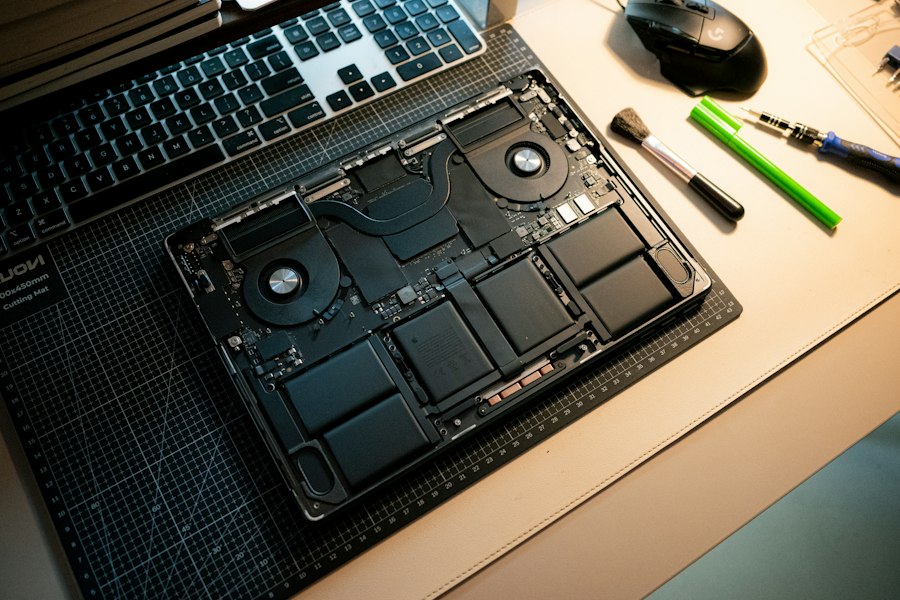
While truly comprehensive modularity in consumer electronics is still evolving, there are several promising examples and companies that have already embraced aspects of this design philosophy, offering a glimpse into a more upgradeable future.
Desktop PCs and Workstations
The most obvious and long-standing example of modular electronics is the desktop personal computer. Users have been building and upgrading their own desktops for decades. Components like CPUs, GPUs, RAM, storage drives (HDDs/SSDs), power supplies, and motherboards are all designed to be interchangeable using industry-standard sockets and slots (e.g., LGA/AM4 for CPUs, PCIe for GPUs, DIMM for RAM, SATA/M.2 for storage).
This extensive modularity has created a robust ecosystem of component manufacturers, allowing consumers immense choice and the ability to tailor their machines precisely to their needs, or upgrade specific parts as technology evolves.
The longevity of a well-built desktop PC, often spanning a decade or more with judicious upgrades, stands as a testament to the power of modular design. Workstations, which often have even more demanding requirements for flexibility and power, also heavily leverage this modular approach.
Framework Laptop: A Pioneering Approach
The Framework Laptop is perhaps the most prominent and exciting example of a fully modular laptop designed from the ground up for repairability and upgradeability. It allows users to easily swap out major components like the display, battery, keyboard, RAM, storage, and even the motherboard (which contains the CPU) using standard tools.
What makes Framework particularly innovative is its “Expansion Card” system.
Instead of fixed ports, users can insert various modules for USB-C, USB-A, HDMI, DisplayPort, Ethernet, or even additional storage, allowing for extreme customization of the laptop’s I/O. This level of user-serviceability and choice is a game-changer and directly combats premature obsolescence by enabling users to upgrade or replace almost any part that might fail or become outdated. Framework’s commitment to publishing repair guides and selling spare parts further solidifies its position as a leader in this space.
Project ARA and Other Modular Phone Concepts
While not a commercial success, Google’s Project Ara was an ambitious attempt to bring modularity to smartphones.
The idea was to have a “endoskeleton” base unit to which users could attach various functional modules – camera, battery, speaker, additional storage, specific sensors – via electro-permanent magnets.
While the project ultimately faced significant technical and logistical challenges (e.g., space constraints, thermal management, software integration, economic viability) and was cancelled, it demonstrated the potential and sparked considerable interest in the concept.
Other initiatives, like the Fairphone, also prioritize repairability and module replacement, albeit with a more practical and less extreme approach than Ara.
Fairphone focuses on user-replaceable batteries, display units, and other commonly failing parts, aiming to extend the lifespan of the device and promote ethical sourcing. These examples, despite their varying degrees of success, highlight the industry’s ongoing exploration of modularity as a solution to electronic waste and planned obsolescence.
The Broader Impact on Sustainability and E-Waste
The implications of widespread modular electronics design extend far beyond individual user convenience; they represent a significant shift towards a more sustainable model of technology consumption and a powerful weapon against the global crisis of electronic waste.
Reducing Resource Consumption and Manufacturing Footprint
Currently, when a non-modular device reaches the end of its perceived useful life, often due to a single failed component or outdated processing power, the entire device is discarded. This means that all the raw materials (precious metals, rare earth elements, plastics) and the energy expended in manufacturing that entire device are effectively wasted. Producing new devices consumes vast amounts of resources and energy, contributing to carbon emissions and environmental degradation.
With modular designs, only the failed or outdated component needs to be replaced. This drastically reduces the demand for new complete devices, thereby lowering the overall consumption of raw materials and the energy required for manufacturing. If a user only needs to replace a CPU module, that’s significantly less material and energy than producing a whole new laptop. It’s about optimizing resource use at a systemic level.
Extending Product Lifespan and Reducing E-Waste
The most direct and impactful benefit is the extension of product lifespans. If a device can be easily upgraded or repaired, it stays relevant and functional for much longer. This directly combats premature obsolescence, which is a major contributor to the growing mountain of e-waste. E-waste contains hazardous materials that can pollute soil and water if not disposed of properly, and even when recycled, the process itself requires energy and resources.
By keeping devices in circulation for longer, modular design directly reduces the volume of e-waste generated. It shifts the paradigm from a “throwaway” culture to one of “maintain and upgrade.” This also benefits consumers by reducing the frequency with which they need to purchase new, expensive devices, leading to long-term cost savings.
Fostering a Circular Economy
Modular design is a cornerstone of the circular economy model. Instead of a linear “take, make, dispose” approach, a circular economy aims to keep products and materials in use for as long as possible. Modular electronics facilitate this by making it easier to:
- Repair: Replace broken parts instead of discarding the whole product.
- Upgrade: Extend functionality and performance, keeping the product relevant.
- Refurbish: Easier to service and resell used devices with fresh components.
- Recycle: Individual modules might be easier to disassemble and recycle specific materials than complex, glued-together devices.
This shift encourages businesses to design for durability and repairability, fostering a market for spare parts and upgrades. It creates a more resilient system where resources are valued and reused, minimizing waste and environmental harm.
In the pursuit of sustainable technology, the concept of modular electronics design is gaining traction, particularly in the development of upgradeable laptops and devices aimed at combating premature obsolescence. This innovative approach not only allows users to replace or upgrade individual components but also extends the lifespan of their devices, making them more environmentally friendly. For those interested in exploring the best options available, a related article discusses some of the top laptops for graphic design in 2023, which may also benefit from modular designs. You can read more about it here.
Economic and Business Model Implications
| Metric | Description | Value / Data | Impact on Obsolescence |
|---|---|---|---|
| Average Laptop Lifespan | Typical duration before device replacement | 3-5 years | Short lifespan increases electronic waste |
| Modular Component Replacement Rate | Percentage of components designed for easy replacement | 70-85% | Higher rates reduce need for full device replacement |
| Upgrade Cycle Frequency | Average time between hardware upgrades | 1.5-2 years | Frequent upgrades contribute to premature obsolescence |
| Repairability Score | Measure of ease to repair or upgrade device (scale 1-10) | Modular laptops: 8-9 Traditional laptops: 3-5 |
Higher scores correlate with longer device usability |
| Electronic Waste Reduction | Estimated reduction in e-waste due to modular design | Up to 30% less e-waste over device lifecycle | Significant environmental benefit |
| Cost of Upgrades vs Replacement | Relative cost comparison of upgrading parts vs buying new device | Upgrade: 20-40% of replacement cost | Cost-effective upgrades encourage longer use |
| Consumer Adoption Rate | Percentage of users choosing modular devices | Currently ~15% | Growing adoption can drive industry change |
The move towards modular electronics isn’t just an engineering challenge or an environmental imperative; it also presents significant economic and business model shifts that manufacturers and retailers would need to navigate.
Shifting Revenue Streams
Traditional electronics manufacturers often rely heavily on the continuous sale of new, fully integrated devices. A modular approach could potentially reduce the frequency of full device purchases, requiring a re-evaluation of revenue generation. Instead of just selling new laptops, companies might need to focus more on selling individual upgrade modules, spare parts, and potentially even subscription services for certain components or maintenance.
This isn’t necessarily a bad thing; it diversifies revenue streams and builds customer loyalty through ongoing support and choice. However, it requires a strategic pivot and a willingness to move away from the current planned obsolescence model that often drives repeat purchases. The profit margins on individual components versus a whole device might differ, necessitating careful pricing strategies.
The Rise of a Parts and Services Ecosystem
A truly modular ecosystem would foster a vibrant market for individual components and repair services. This opens opportunities for smaller businesses specializing in component manufacturing, third-party repairs, and even customization services. Companies like Framework already embrace this by providing schematics and encouraging third-party module development.
This competition could drive innovation in component design and potentially lower prices for upgrades over time. For consumers, it means more options and potentially more affordable ways to maintain their devices. Manufacturers would need to decide whether to maintain tight control over their parts supply or embrace an open ecosystem, each with its own advantages and disadvantages.
Intellectual Property and Open Standards
For modularity to truly flourish, especially for cross-brand compatibility, there needs to be a balance struck between proprietary designs and open standards. Companies traditionally guard their intellectual property closely, but a future where components are interchangeable might require more collaboration and the adoption of common interfaces and specifications.
The success of standards like USB-C, PCIe, and M.2 demonstrates that open standards can drive innovation and benefit the entire industry. However, extending this to more complex components like CPUs or display panels would involve significant negotiations and a shift in mindset for many established players. Companies like Framework show that a semi-open approach, where key interfaces are documented and encouraged for third-party development, is possible and can build a loyal user base.
Longevity as a Brand Differentiator
In a market saturated with similar-looking devices, longevity and upgradeability could become powerful brand differentiators. Consumers are increasingly conscious of environmental impact and the financial burden of frequent upgrades. Brands that openly embrace modularity, repairability, and long-term support could build a strong reputation and attract a specific segment of the market that values these attributes.
This means a shift from marketing “newness” and “disposability” to marketing “durability,” “sustainability,” and “empowerment.” It’s a long-term play, but one that could foster deeper customer relationships and a more stable business foundation built on trust and environmental responsibility. The success of companies like Patagonia in the apparel industry, which heavily emphasizes repair and longevity, provides a potential model for the electronics sector.
Enjoying our content? Make us a preferred source on Google:
Add us as a Preferred Source on Google